One blink pattern, dozens of meanings
The same two flashes mean a low refrigerant charge on one brand and a frozen coil sensor on another. The wall unit alone will not tell you which.
A blinking light on a mini split usually means the system has caught an error and is trying to tell you something, but without the manual in hand, the pattern of flashes does not mean much on its own. You just want to know what it is trying to say and whether it is something to worry about tonight or something that can wait until morning.
Mini splits use that blinking light to report a fault because most of them do not have a screen to spell it out. The number of blinks and the pattern between them correspond to a specific problem the indoor or outdoor unit has detected, anything from a clogged filter to a refrigerant issue to a sensor that is reading wrong. In a Wisconsin winter, a common cause is the outdoor unit struggling with frost buildup or a defrost cycle that is not completing. In summer, it is more often tied to airflow or drainage. The light does not tell you how serious it is. A contractor who services your brand can read the pattern and know which part needs attention before opening anything up.




The same two flashes mean a low refrigerant charge on one brand and a frozen coil sensor on another. The wall unit alone will not tell you which.
No digging up a PDF, no matching flash counts to a chart, no calling around Wisconsin for someone who knows your brand. Send the details once and let a contractor sort out what the blinking means.

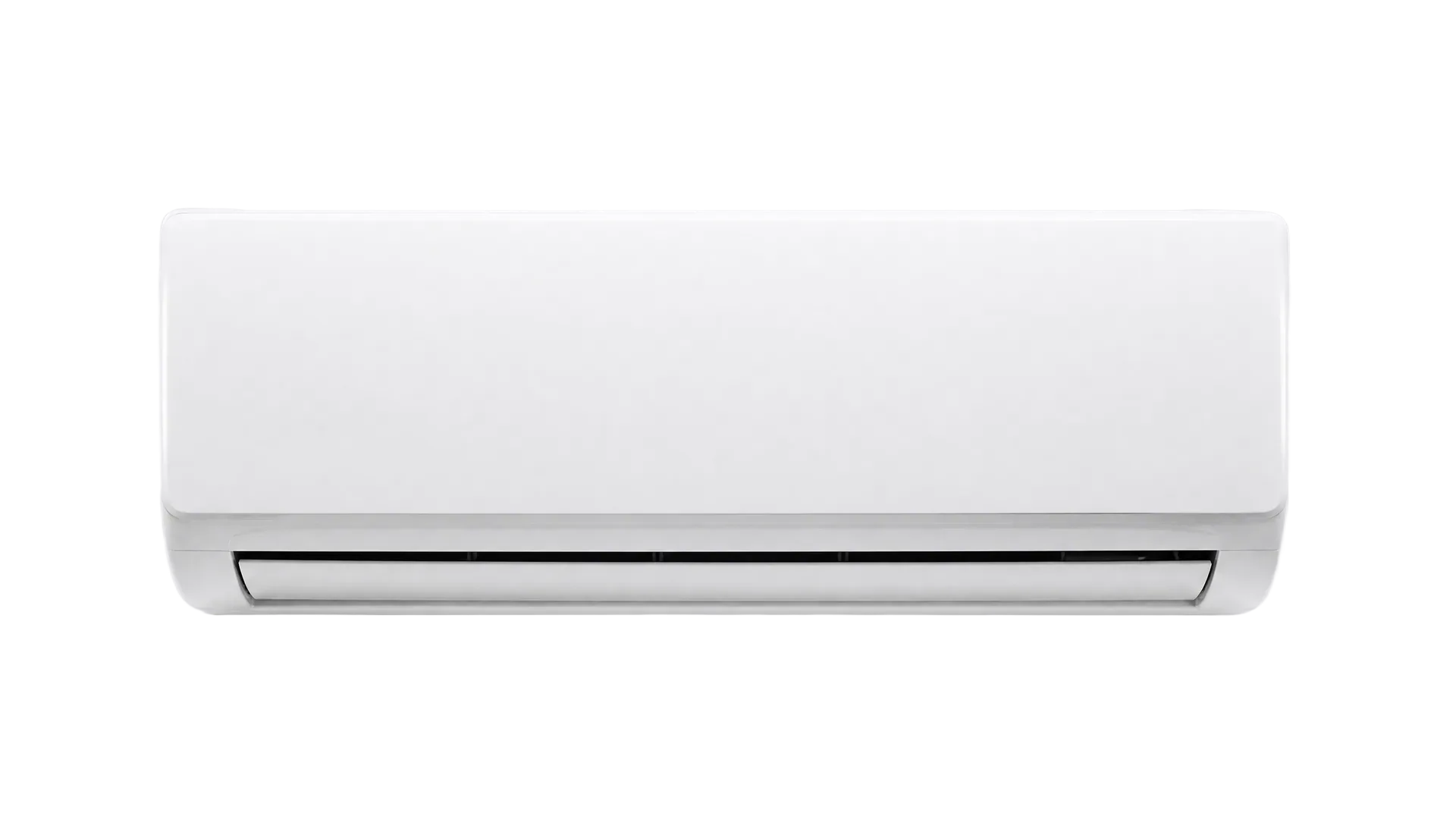
This is what a mini split looks like when nothing is wrong. Steady light, quiet operation, air moving across the room. No codes, no flashing, nothing to watch for. You walk past it and don't think about it, which is the point.

Dust and yellowing like this build up over years, and a blinking light often shows up around the same time. The casing alone won't tell you if it's a dirty filter or a failing part. That takes someone who can open it up and check.

If your mini split is the one keeping a bedroom or a finished basement livable in July, a blinking light now is worth paying attention to before the sticky stretch of summer sets in. A unit stuck on a fault code either shuts itself down or keeps running badly, pulling power without actually cooling the room, and with what electricity costs in Wisconsin that's not a small thing to ignore for weeks.
Most homes here lean on gas for heat, so the mini split is often doing one job: keeping a specific room comfortable when the rest of the house runs on something else. When it's down, there's no backup for that room. You could spend an evening searching for who even works on your brand, calling a few places, explaining the blink pattern over and over, then sitting on quotes trying to tell them apart. Send the form instead and that part of it is off your plate.

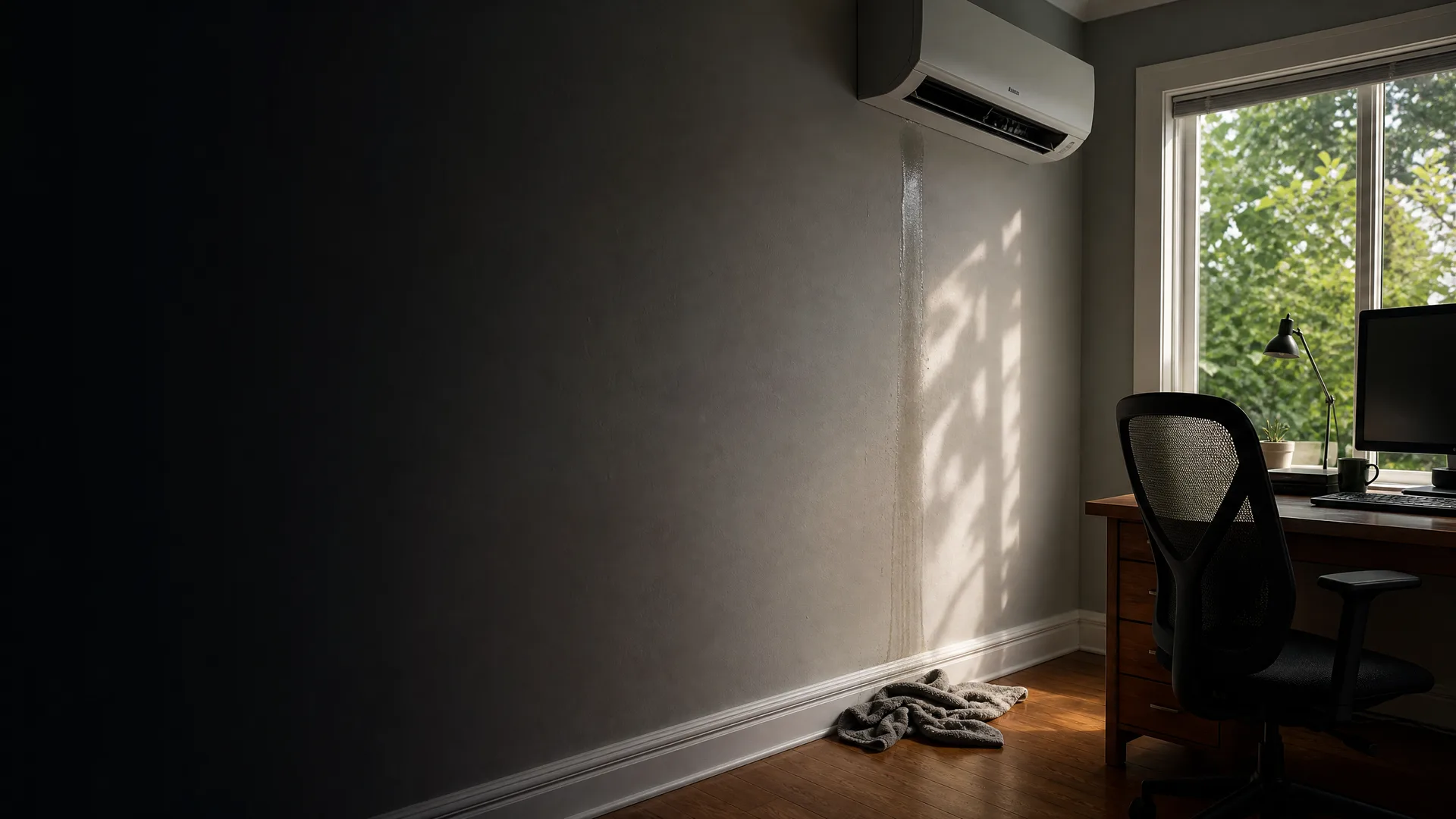
You've been at the desk since lunch, laptop open, the mini split humming over your shoulder the way it always does. Around three the light on the indoor unit starts flashing. You almost don't look up. Then you catch the wall underneath it, a dark streak running down from the unit toward the baseboard, and you're up out of the chair grabbing a towel off the bathroom rack. You lay it along the floor and stand there watching the light blink, waiting to see if the streak gets any longer. Outside it's the kind of sticky Wisconsin afternoon where closing this room off isn't really an option.


Look at the indoor unit before you do anything else. Is the light steady or still flashing. Hold your hand under the vent and feel for air moving, warm or cold. Listen for a clicking or a hum that cuts in and out instead of running steady. Check the wall and the floor below the unit for a wet spot or a dark streak, which points to a drain line backing up rather than a simple fault. If the room it serves is one you count on, a spare bedroom you rent out, a basement office, a space you shut the door on and forget about otherwise, a mini split stuck on a fault code will let that room drift from comfortable to unusable without much warning.


Answer a few questions instead of calling shop after shop.
You only hire the pro if you want to.
NOAA puts the average summer dew point across Wisconsin at 60°F for June, July and August. That is heavy, sticky air, and your mini split has to wring more water out of it to keep a room feeling right. The harder it works, the more likely a coil loaded with moisture trips a sensor and sets that light blinking. If the flashing started on one of the muggier days, that is not a coincidence. A unit already struggling with a fault has less room to handle what a Wisconsin summer is asking of it.
NASA POWER T2MDEW county cells weighted by homes


Inside the indoor unit, a control board reads signals from several sensors: one on the coil, one in the room, sometimes one on the drain pan. When a reading falls outside what the board expects, it stops the compressor and starts counting out the fault on the light, because the board has no screen to spell it out in words. The count is a number of blinks, a pause, then the same count again, over and over, until power is cut or the fault clears. That repeating count is the board's only way of pointing at one sensor or one circuit out of several. A frozen coil sensor and a failed drain float can trigger counts only one digit apart on the same board, which is why two mini splits blinking what looks like the same pattern can be pointing at entirely different problems. The board does not know what caused the reading, only that it is outside range. Finding the cause past that point means testing the part the code points to, not reading the light longer.
A mini split stuck blinking tends to run its compressor in short, strained bursts instead of shutting off clean, and at 18.08 cents a kilowatt-hour that shows up on your bill before anyone looks at the unit. Letting it run while you wait just adds to the cost.
EIA-861 2025 statewide residential average
A blinking light is the board telling you it stopped the compressor on purpose, not a random glitch. That much you know now. What you don't know from the wall unit is which sensor tripped it, and guessing wrong wastes the time you'd rather spend elsewhere in the evening. A breaker reset is worth trying once. If the light comes back, the fault is real and it needs someone who can read the board properly, not another reset. Wisconsin's muggy summers make a struggling coil worse faster than a dry week would, so a unit that's already flashing in July is working against more than usual. Left alone, it keeps pulling power at 18.08 cents a kilowatt hour while it runs in short bursts and never quite cools the room. None of that gets better by waiting it out. The part that's actually in your control right now is how much work finding help takes. Instead of searching for who repairs mini splits in your area, calling a few of them, and walking through the same blinking light story each time, one form puts that in front of someone qualified to look at it. You stop comparing quotes and waiting to hear back. The room gets checked by someone who can tell a sensor fault from a dirty filter, and you're not the one sorting that out at nine at night.

Let someone else find the pro