

Running clean
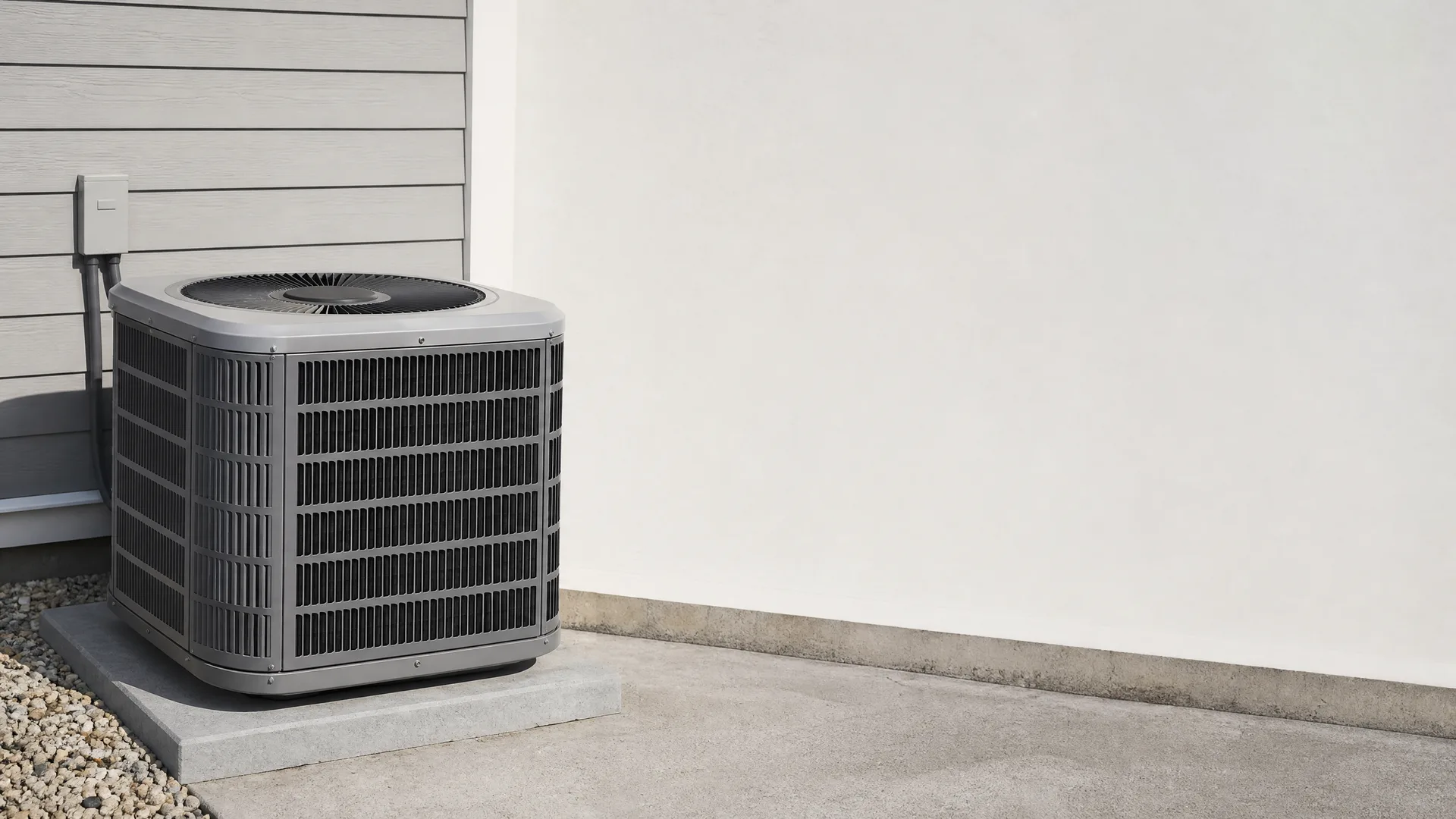
This is what a condenser looks like when it's not the problem. The cabinet is clear, the disconnect box is intact, and nothing is blocking airflow around it. A unit kept like this can still fail, but dirt and debris aren't why.
Tell a local repair pro what your air conditioner is doing.
Get a local proIt's the middle of a sticky Wisconsin summer and you go to the thermostat expecting cool air, and nothing happens. No hum, no click, no fan. You catch these things early, so you're already checking the breaker and the thermostat before anyone sees a repair bill. You just want to know what's actually stopping it from starting.
Most of the time a unit that won't start at all has lost power somewhere between the thermostat and the outdoor condenser. A breaker can trip from a hot run on a 90 degree day. A thermostat can lose its setting or its batteries. Some systems have a float switch near the indoor coil that shuts the whole unit down if the condensate line backs up, and in a humid Wisconsin summer that line works hard and clogs more often. None of these point to the compressor itself, which is the expensive part to replace. A system that won't turn on is often an easier fix than one that runs and doesn't cool.
A central air unit pulls a lot of current when the compressor starts. If the breaker trips once and holds after you reset it, that can be a fluke. If it trips again within a few minutes, something downstream is drawing too much power, often the compressor or the fan motor. Resetting it a second or third time doesn't fix anything and can stress a part that's already failing.
If your thermostat screen is blank, check its batteries first, since many run on them even when wired into the system. If the screen is lit and set below room temperature but the system still doesn't respond, the thermostat is likely just relaying a signal that something past it isn't receiving. Low voltage transformers and bad contactors both stop that signal from ever reaching the compressor.

This is what a condenser looks like when it's not the problem. The cabinet is clear, the disconnect box is intact, and nothing is blocking airflow around it. A unit kept like this can still fail, but dirt and debris aren't why.

Dust and grime built up over the mesh like this choke off airflow across the coil. The compressor can overheat and trip its own safety switch before the breaker ever does. Hosing off what you can reach from outside won't hurt, but caked-on buildup like this usually means the coil underneath needs a real cleaning.


You've already checked the breaker and the thermostat. If the air conditioner still won't start, the problem is probably past what you can see from outside the cabinet, in the capacitor, the contactor, or the compressor itself, and those need a meter and a trained eye to sort out. That's not a weekend you want to spend sweating through a Wisconsin summer while you wait and guess. Power here costs real money, and running a system that keeps tripping or short cycling while you troubleshoot it yourself only adds to that bill without fixing anything. A licensed contractor can open the disconnect, test the actual parts, and tell you in one visit what's actually wrong instead of you replacing pieces one at a time. Send the request and let someone who does this for a living take over from here. You get your house cool again, and you get your evenings back.
A dead AC in July doesn't wait for a convenient day. The house holds heat fast once the sun's been on it all afternoon, and a day or two without cooling is enough to make upstairs rooms miserable by evening. If anyone in the house doesn't handle heat well, that matters sooner than you'd think. And a unit that's struggling, tripping breakers or short cycling, usually isn't getting better on its own. The longer a bad capacitor or a failing contactor runs the system hard, the more likely it takes the compressor down with it.
With gas heat, your furnace doesn't touch this bill, but the AC still runs on some of the most expensive power in the country, and a unit that's limping along draws more of it than one running right. A compressor replacement costs a lot more than the part that was failing before it. Letting a tripped breaker reset itself over and over, or ignoring a short cycle, trades a small fix now for a bigger one later. Catching it at the capacitor or contactor stage is cheaper than catching it at the compressor.





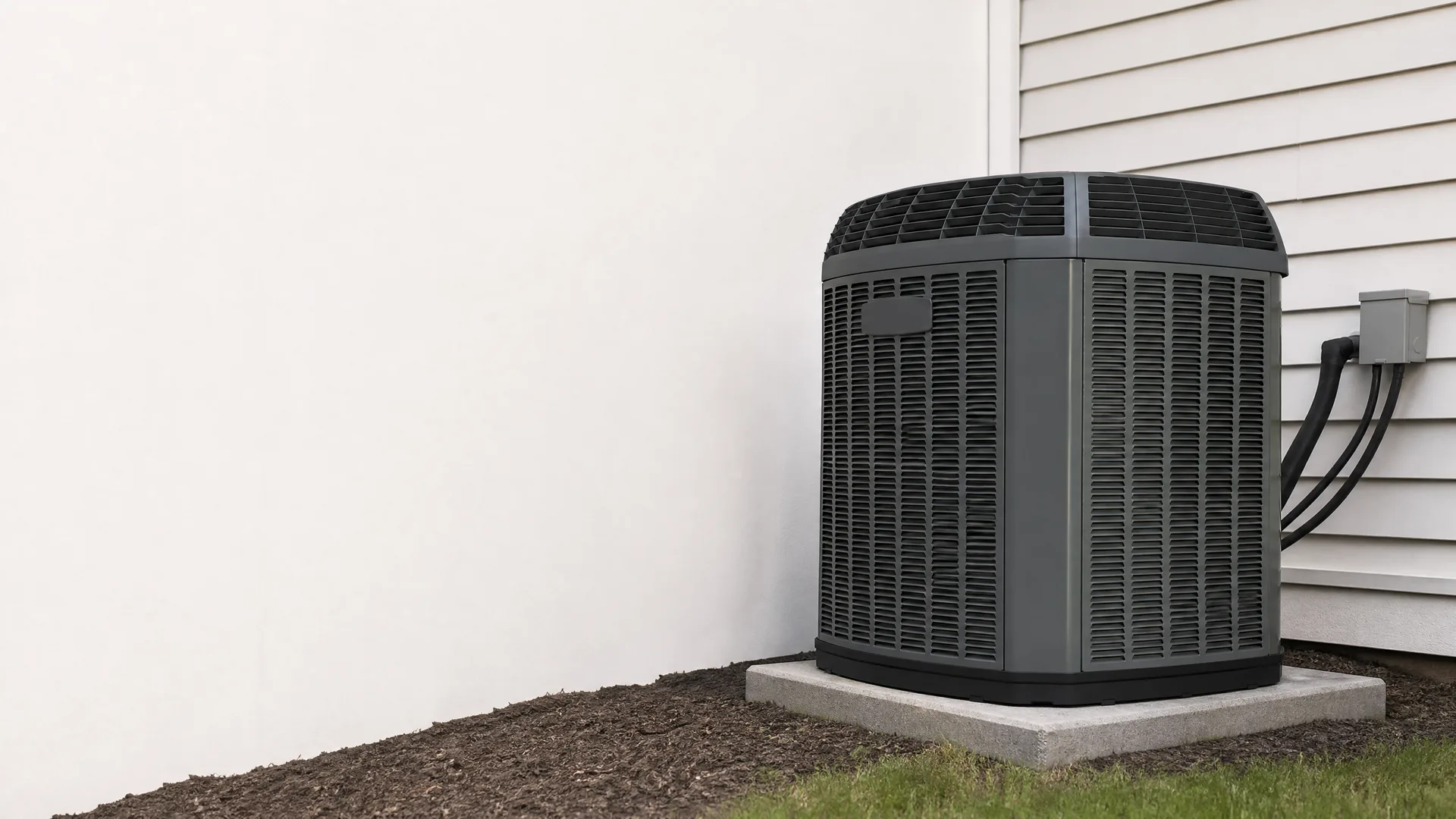
This is a condenser that starts every time you ask it to. The conduit and refrigerant lines run straight to the disconnect box, the pad is clear, and the cabinet isn't fighting anything to pull air through it. Nothing here explains a no-start.

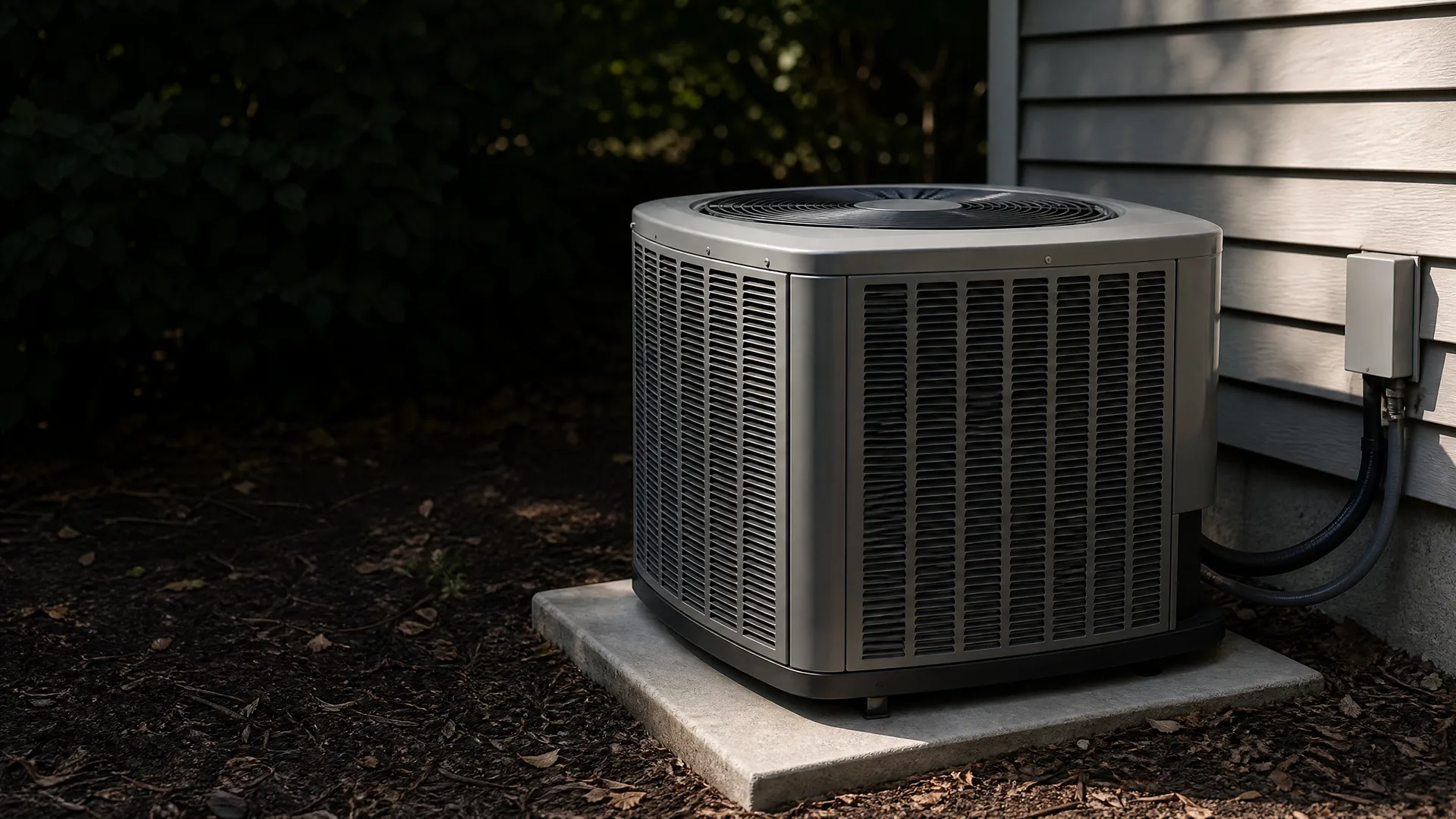
The grille on this one is caked with grit and weathered from sitting outdoors season after season. Pine needles and mulch sit right up against the side, which cuts off the airflow the unit needs to run. A compressor working against that kind of buildup is a lot more likely to trip out or quit.
You've reset the breaker, checked the thermostat, maybe swapped the batteries, and the unit still hasn't started. Upstairs is already a few degrees warmer than downstairs. The air feels thick instead of moving. You might notice the condenser outside is just sitting there silent, no hum from the compressor, no fan turning, nothing. If anyone in the house doesn't handle heat well, a kid, an older parent, a pet, that matters more by the hour than it did this morning. The humidity Wisconsin summers carry makes a warm house feel worse than the thermostat number suggests, and it keeps building as long as the system stays off.
Summer air in Wisconsin carries a dew point around 60°F on average across June, July and August, per NOAA climate data. That's humid enough that your air conditioner isn't just cooling the house, it's pulling a steady load of moisture out of the air every time it runs. A system that's already weak, a low charge or a failing capacitor, feels that load first and gives out on the muggiest afternoons rather than a mild one. If your AC has been short-cycling or straining before this, a sticky stretch is often what finally stops it from starting at all.
NASA POWER T2MDEW county cells weighted by homes




At 18.08 cents a kilowatt-hour, a struggling AC costs you more than a working one. A unit that's short cycling or running constantly because it won't start cleanly pulls power without getting your house cool, and you pay full price for that either way.
EIA-861 2025 statewide residential average
A no-start usually comes down to one of a few things: a breaker that keeps tripping, a thermostat that isn't calling for cooling, or a capacitor, contactor, or compressor that's failed past the point of a reset. You've already ruled out what you can see from the panel and the wall. What's left needs a meter and someone who knows where to put it. That's not a weekend project, and in a Wisconsin summer it's not one to sit on while the house climbs a few degrees an hour. Send the form and the search for a contractor stops being yours to carry. You won't be told exactly when they'll call, but once it's sent, you're no longer the one checking the breaker, guessing at parts, or wondering who to trust with the unit. Someone who works on these for a living takes it from here.
A pro who works on air conditioners