

Still doing its job
If your unit cools the house evenly, cycles on and off without a fuss, and the outside cabinet is clean, you're likely fine waiting another summer. A unit that still runs this way is worth repairing if something small goes wrong.
Send the form and stop researching installers for the new air conditioner.
Hand off the searchYour air conditioner is getting older, or it's starting to act up, and you're trying to figure out if this is the year to replace it instead of calling for another repair. Maybe it struggled to keep up last summer, or a repair tech already mentioned the unit's age. You want a straight answer about what actually signals it's time, not a vague rule of thumb.
Most central air conditioners last 12 to 15 years before the compressor or other major parts start failing for good. If yours is in that range and you've had more than one repair in the past couple of years, replacing it usually makes more sense than fixing it again. Age matters here because Washington County summers put real hours on a unit even without the heavy humidity other places get. A system that struggles to cool the house on a warm, dry afternoon is already working harder than it should. Power here isn't cheap, so an aging unit running long cycles costs you more to run every summer it stays in, on top of whatever the next repair bill adds.

If your unit cools the house evenly, cycles on and off without a fuss, and the outside cabinet is clean, you're likely fine waiting another summer. A unit that still runs this way is worth repairing if something small goes wrong.

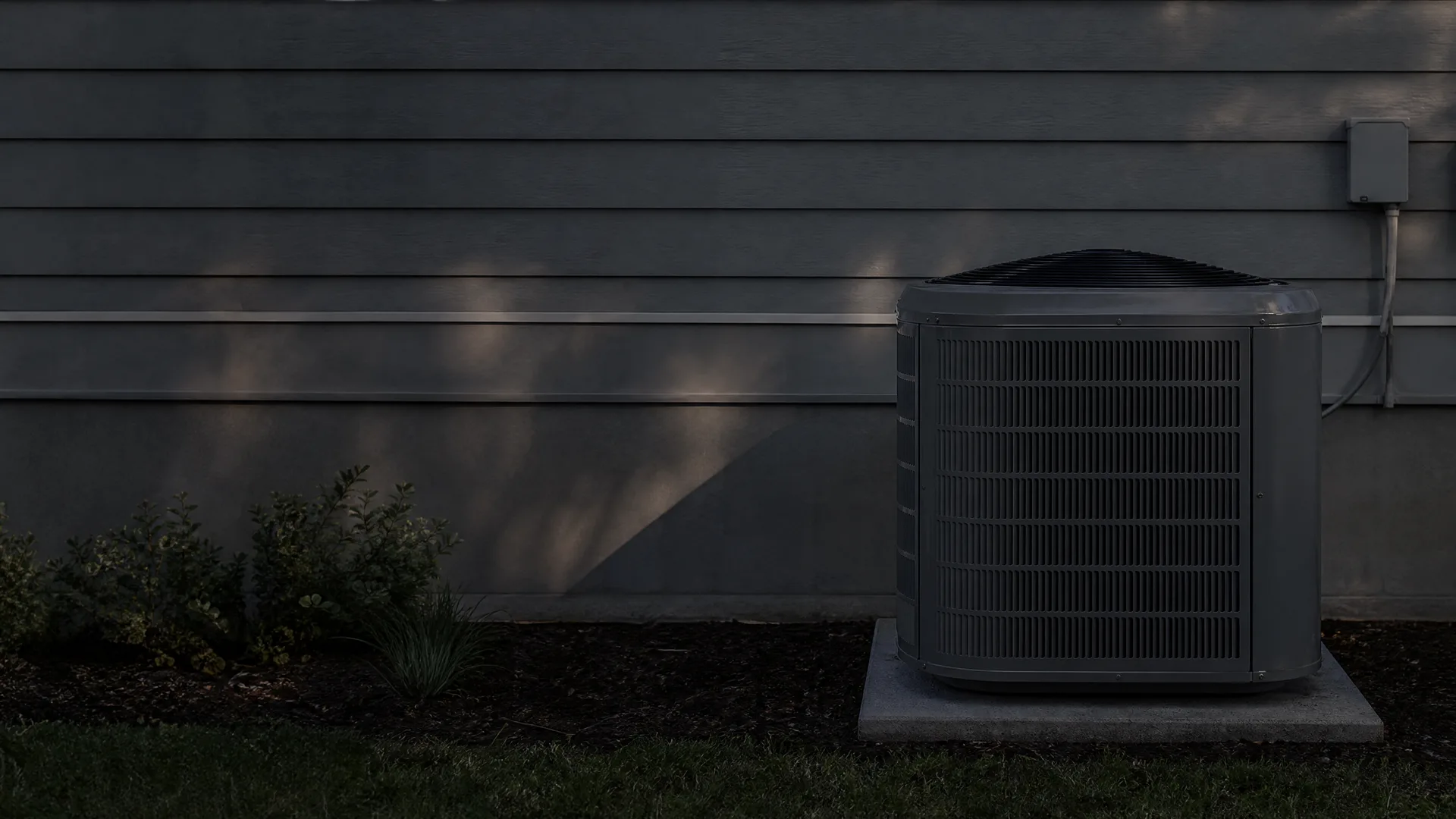
Grime caked on the grille and top cover usually means years of dirt pulled through a coil that's working harder than it should. Combined with weak cooling or frequent repair calls, this is the kind of unit that costs you more to keep than to replace.




A Washington County summer isn't brutal, but it's not short either, and an AC that's already struggling in June has months of work still ahead of it. If yours is cycling on and off more than it used to, or the house never quite feels right upstairs, that's usually the compressor losing its ability to keep up, not something a new capacitor fixes. Once a unit gets to that point, the question isn't whether it'll fail, it's when, and whether that happens on a mild afternoon or during a stretch where every AC contractor in the area has a full schedule. Getting ahead of it means one call now instead of a scramble later. The form above goes to a contractor working on these systems around West Bend right now, someone who sees this same decision every season and knows what a unit at this age usually needs. Send it while you're still choosing on your own terms, not scrambling after a hot night with no cold air.
A new unit's SEER2 number tells you how efficiently it runs, not how much cooling it can put out, so a higher rating alone doesn't mean a better match for your house. Most central air conditioners on the market still use a single-speed compressor. It has two settings, on and full blast, or off. That cools the air fast but shuts off before it has time to pull much humidity out, which is why a house can feel cold and still feel damp. A two-stage or variable-speed compressor runs longer at a lower output instead, and that slower run time is what actually dries the air out over a Washington County summer. None of this works if the parts don't match. The coil and refrigerant lines are sized for a specific compressor, so putting in a new condenser without swapping the coil to match can strain the whole system instead of fixing it. Low refrigerant does something similar from the other direction. It makes the compressor work harder and pull more power while the house stays just as warm. And if the unit is short cycling, turning on and off every few minutes instead of running a full cycle, that's not a quirk to live with. It wears out the compressor and the start components years before they'd otherwise fail. Any of these are worth knowing before you decide whether this is a repair or a replacement.


Three months is short, but it's hard use. Your system goes from sitting all spring to running most of the day in June, July, and August, and an aging compressor that's already weak feels that jump fast. If it's going to fail, those are the weeks it happens.
NOAA nClimDiv 1991-2020
A contractor checks the refrigerant charge and the compressor's amp draw.
They look at the coil condition and the age of the compressor together.
A load calculation confirms the new unit matches your house.
They size the line set and confirm the refrigerant type matches your system.
If your air conditioner is old, struggling, or costing more to keep running than it's worth, replacing it before next summer is the right call. If it's still cooling the house evenly and the repairs have been minor, there's no reason to rush. Either way, you don't have to figure out the rest on your own. A contractor who works on these systems all over Washington County every summer knows what tends to fail first on a unit your age, and what's worth fixing versus replacing. When you request service, it goes to one licensed local contractor, not a handful of companies competing for the job, so you're not stuck fielding calls all week. You'll just hear from someone who already knows what to look for when they get to your house.
The pro who gets in touch is licensed in Wisconsin and works in Washington County.