

Running the way it should
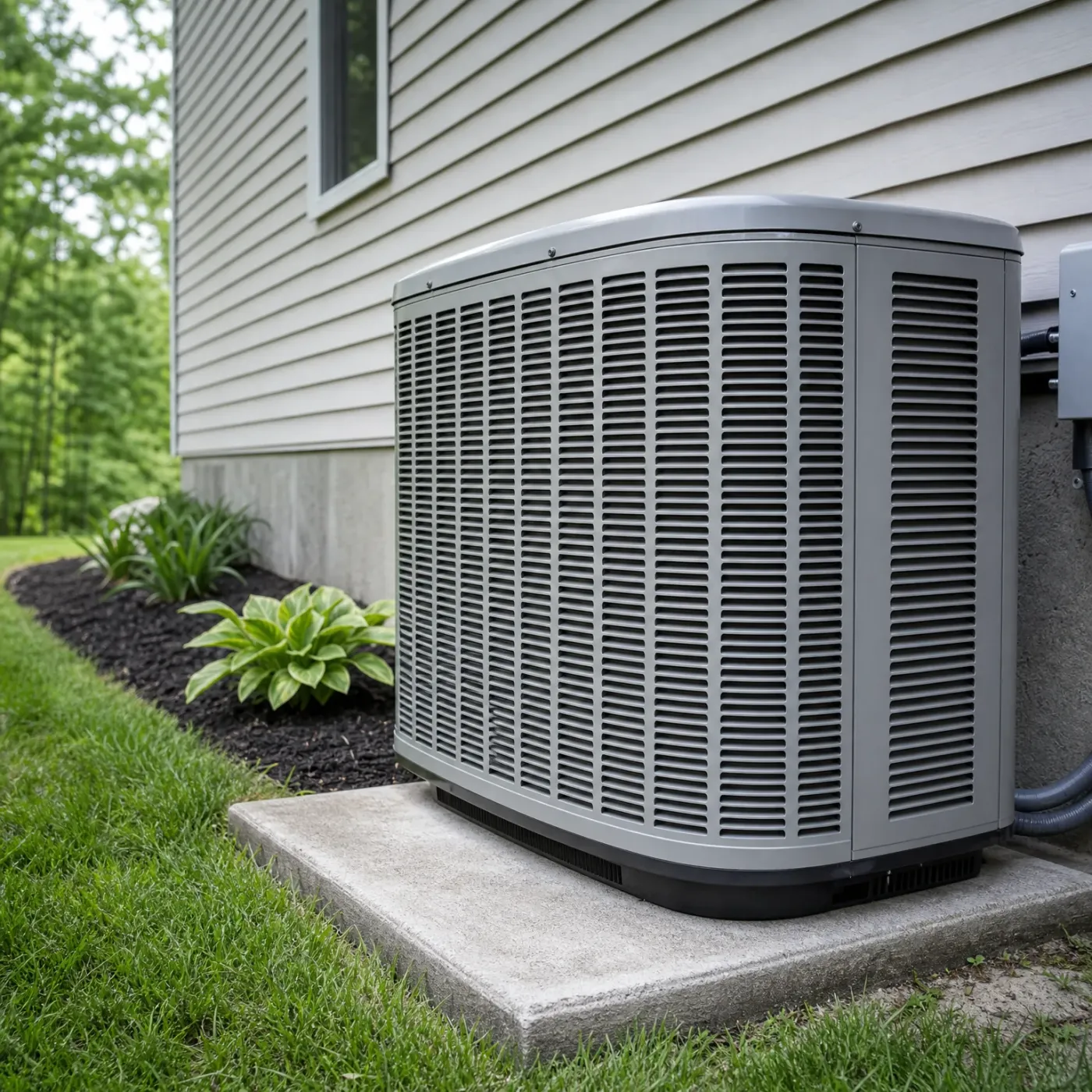
This is what a healthy system looks like outside your house: clean fins, a steady hum, nothing leaking at the lines. If yours looks like this and the repair is small, fixing it is still the right call.
Answer a few questions instead of calling shop after shop.
Start one formYour air conditioner is getting older and something just broke, or the repairs keep coming back. You're trying to figure out if this is the one that's worth fixing or if you're throwing money at a unit that's done. With Wisconsin summers turning muggy and power rates what they are, the cost of getting this wrong runs both directions, a replacement you didn't need or a repair that just delays the next one.
A compressor or coil failure on a unit that old usually isn't worth fixing on its own. Parts for older units get harder to find and cost more when they do turn up, and a unit nearing the end of its life tends to need something else within a year or two anyway. In Wisconsin, summer humidity makes a struggling AC work harder just to keep a house comfortable, and an inefficient unit shows that strain on the power bill since electricity here isn't cheap. A newer unit handles that humidity with less strain and lower running cost. If the unit is under 10 years old and the repair is minor, fixing it is usually the better call.

Most central air conditioners run 12 to 15 years before something major gives out. Past that point, the compressor or coil failing costs close to what a new system runs, so a repair just delays the same decision. If your unit is in that range and the fix is a big-ticket part, you're paying to keep an old machine alive one more summer, not fixing it for good.

A new air conditioner is sized and charged to match your home, not patched to keep an old charge running. Wisconsin summers put a real load on a system for a few months and then it sits. A unit matched to that load cools evenly and shuts off less, which matters when power here costs more than it used to. An oversized or aging unit short cycles, cooling fast but never pulling the humidity down.

This is what a healthy system looks like outside your house: clean fins, a steady hum, nothing leaking at the lines. If yours looks like this and the repair is small, fixing it is still the right call.

Grime packed into the fins, a casing that's pitted and worn, lines running into the wall that have seen better days. A unit in this shape is working harder to do less, and the next failure may be the compressor itself.




One installer gets your project, so there's no bidding war over it.
Describe your air conditioner job once, to one pro.
It costs nothing to send, and you don't have to hire anyone.


Swapping the outdoor unit for a new box isn't the job. A proper install starts with a load calculation, figuring the right tonnage for your house instead of assuming the old system had it right. A lot of old systems were oversized to begin with, which is part of why they short-cycled and never quite dried the air out on a muggy day. Once the size is settled, the coil has to match the new condenser. Mismatched equipment runs the compressor harder than it should, and that shortens its life before it's had a chance to earn out. The refrigerant lines usually get resized too, since the lines sized for an old refrigerant don't always suit what the new unit runs on. Airflow gets checked against the ductwork and blower, because a bigger or more efficient unit moving through the same old ducts can end up starved for air no matter how good the equipment is. The electrical side matters as much as the mechanical side. The disconnect, the breaker, the wiring, all of it gets checked against what the new unit actually draws before it's allowed to run. Last comes the charge, weighed out to the manufacturer's spec for your specific line length, not eyeballed. Skip any one of these steps and the new system can end up running worse, or failing sooner, than the one it replaced.


An old air conditioner laboring through a Wisconsin summer runs longer to hit the same temperature, and in a state where power already costs more, that extra runtime shows up on your bill every month from June through September.
A new system sized and installed correctly cycles less, keeps the house steady on the muggy days, and you stop wondering if tonight is the night the old one finally quits for good.
At that rate, an aging air conditioner working overtime to cool your house through a muggy Wisconsin summer costs real money every month it runs. A unit that's lost efficiency doesn't just cool worse, it pulls more power doing it, and here that difference shows up fast on the bill.
EIA-861 2025 statewide residential average

If the repair is small and the unit is still within its working years, fix it. If the compressor or coil is what failed, or the unit is old enough that the next breakdown is a matter of when, replacement is the one that holds up. That's the whole decision.
What's left is finding someone to size and install the new system correctly, which usually means calling around, explaining the same problem to each one, and lining up quotes to compare. Converting here skips that part. The request goes to a licensed Wisconsin contractor who works on these systems every summer and knows what tends to fail first in units like yours, and you hear back from that one contractor instead of fielding calls from several.

Only one pro gets your request, so you hear from one company.