 Hand off the search
Should you cover your AC unit in a Wisconsin winter
Send the form, and lining up the air conditioner tune-up stops being yours to chase.
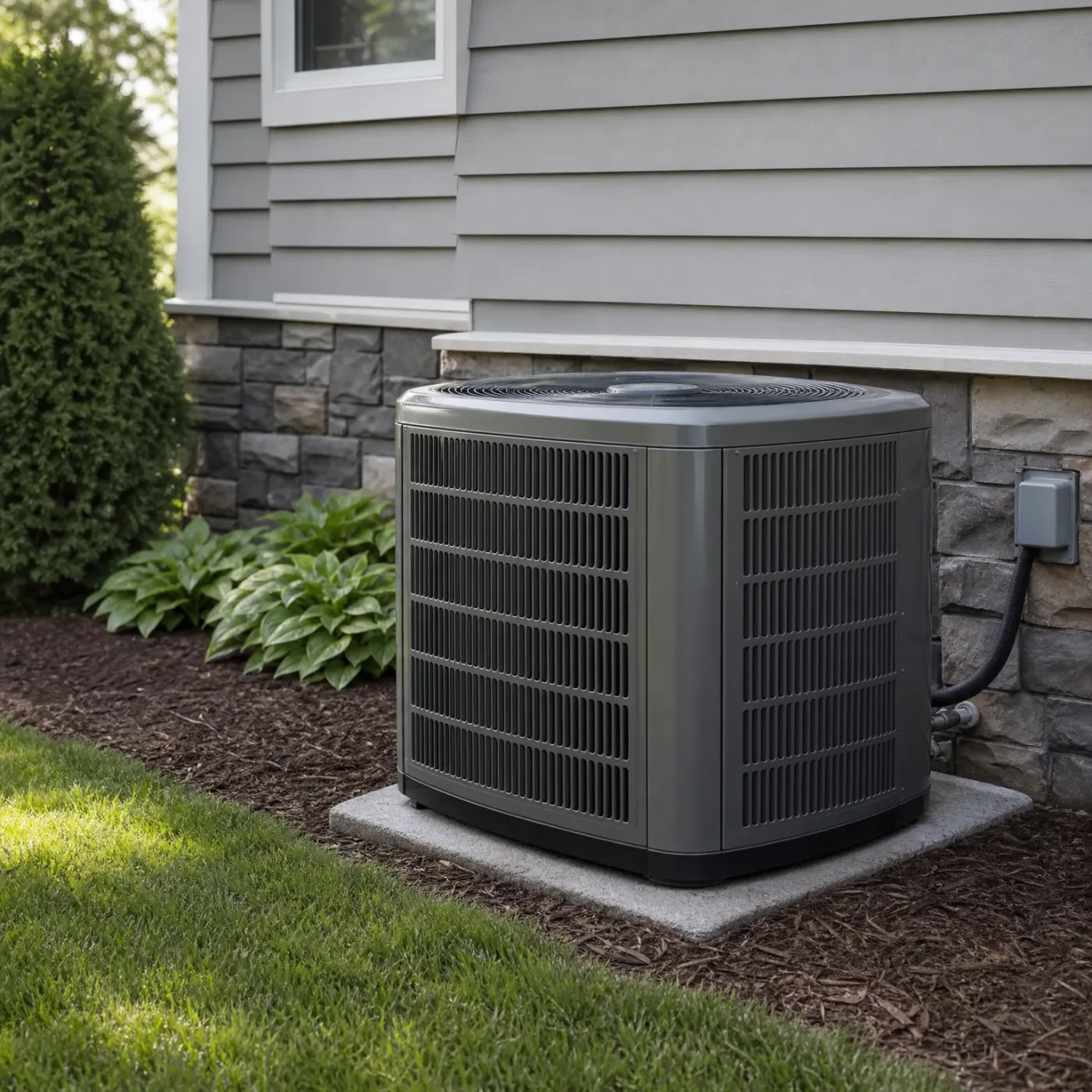
You don't need to cover your AC unit for a Wisconsin winter. The cabinet is built to sit outside year round, through snow, ice and everything a January wind can throw at it. A full cover actually causes more problems than it prevents, since it traps moisture against the cabinet and gives mice a dry place to nest. If you want to protect it, a flat piece of plywood on top, weighed down, keeps falling ice off the fan without sealing in dampness.
What matters more going into winter is whether the unit is running clean when you shut it down for the season. A coil caked with summer dust, a contactor that's been arcing, a capacitor that's weak but still limping along, none of that gets better sitting idle for five months. It gets found in May, usually on the first hot day, when you need the house cool and the part finally gives out.
That's the piece worth handling now, while nobody's in a hurry. A local contractor who services this equipment every season knows what tends to fail on units that sat through a Wisconsin winter, because they're the one who gets the call every spring. Checking it in the fall or early spring, before the heat comes back, means it's done on your schedule instead of theirs.
Send the request and that search becomes someone else's job instead of yours. You're not left sorting through a handful of companies calling at once. It goes to one licensed contractor local to you, and from there it's off your plate. No pricing out three different outfits, no explaining your situation twice. Just one call to make when the time comes.
You don't need to cover your central AC unit for winter, and a full cover can do more harm than good. The cabinet is built for outdoor weather in every season, including the ice and snow a Wisconsin winter brings. The real risk with a cover is moisture. Covering the whole unit traps humid air underneath, and that moisture has nowhere to go. It sits against the coil and the metal cabinet through months of freezing and thawing, which is a better setup for rust and mold than the open air would ever be. Mice and other small animals also look for a dry, enclosed space to nest in once the weather turns, and a snug cover gives them exactly that. If you want to protect the unit, a flat piece of plywood over just the top, weighed down and open on the sides, keeps falling ice and debris off without sealing in moisture.


One request and it's handed off
A licensed local pro takes the request for your air conditioner tune-up.
Send the form and the air conditioner tune-up stops being something to remember.
There's no charge for the request.
Why does your AC unit look rough every spring
You walk out in April and the top of the unit is matted with leaves, maybe a few acorns worked down into the fan grille. Snow sat on it all winter and the cabinet has a ring of rust starting near the base, or the fins look bent in one corner where ice built up and let go. None of that came from being uncovered. It came from not being looked at. A unit that sits outside from October to April without anyone checking it can hide a cracked fin, a nest started in the housing, or a wire chewed by something looking for shelter, and you won't know until you flip it on for the first muggy week and it doesn't keep up.
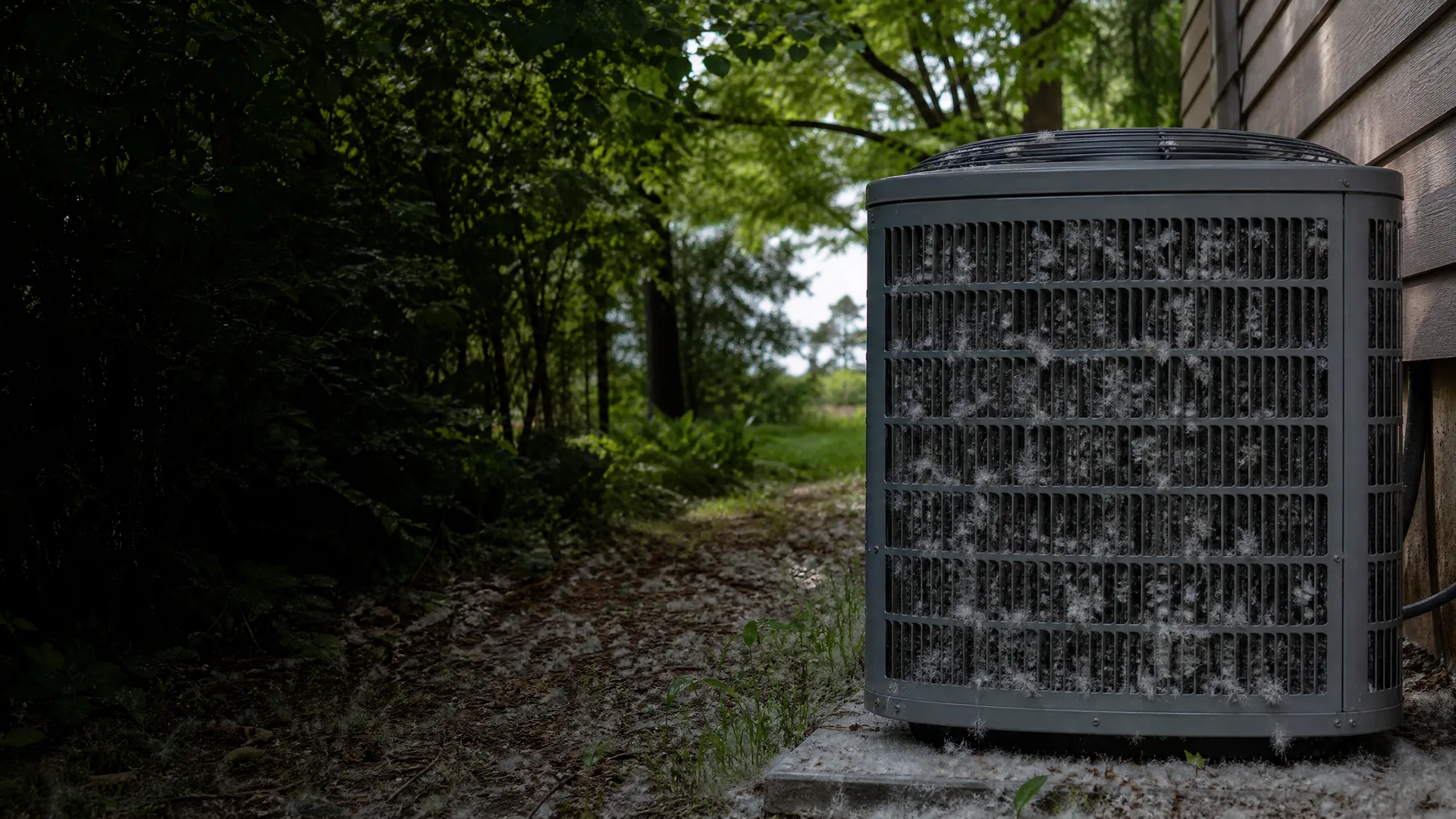
You're out pinning tomato stakes in late May when you notice it, that pale fuzz caught all over the condenser fins, like the unit grew a coat of lint overnight. The cottonwoods a few yards over have been shedding for a week, and the fluff drifts across the yard and catches on anything with a screen. You run a hand along the fins and it comes away dusty white. The fan still turns when the unit kicks on, but the airflow through the coil has to push through that mat first, and you can see it's thick enough to matter.
Power costs 18.08 cents per kilowatt-hour statewide
At just over 18 cents a kilowatt-hour, a struggling air conditioner costs you more here than in most states. A dirty coil or a low charge makes the compressor run longer to cool the same house, and that extra runtime shows up on the bill every month it's working.
EIA-861 2025 statewide residential average
Skip the Cover, Keep the Maintenance
- A full winter cover traps moisture against the cabinet and does more harm than the weather it's meant to block.
- A top panel or flat board over the unit keeps snow and ice off the coil without sealing in damp air.
- Leaves, acorns and cottonwood fluff build up on the fins whether the unit is covered or not.
- Rust at the base and a matted fan grille come from fall debris sitting through winter, not from the cold itself.
- A clean coil and a correct charge do more for your summer bill than any cover will.
- Maintenance before the season catches what a winter under snow left behind.
Leave the cover off and your AC unit will be fine. The cabinet was built to take a Wisconsin winter, and the snow and ice sitting on it through January and February won't hurt it the way a sealed cover can. If you want to keep snow load and ice off the top, a flat board or panel set loosely over the unit does that without trapping moisture against the cabinet the way a full cover does. What actually puts a unit in rough shape by spring isn't the cold. It's the leaves that packed into the fan grille in October, the acorns that worked down into the fins, the cottonwood fluff that drifted over all summer and never got cleaned off before the snow came. That debris sits there all winter, holds moisture against the metal, and that's where the rust at the base starts. None of that depends on whether the unit was covered. A cover doesn't stop leaves from blowing in before the snow, and it doesn't clean fins that were already dirty when winter started. What actually protects the unit, and your summer bill, is going into winter with the coil clean and the refrigerant charge correct, then having it checked again before the weather turns hot. A dirty coil or a low charge makes the compressor work harder all summer, covered or not. The cover question is a small one. Maintenance before the season is the part that actually matters for how the unit runs and what it costs you to run it.




Air Conditioner Maintenance
Done looking for an air conditioner pro
The pro who reaches out is licensed in Wisconsin.
