A coil that's been sitting since September
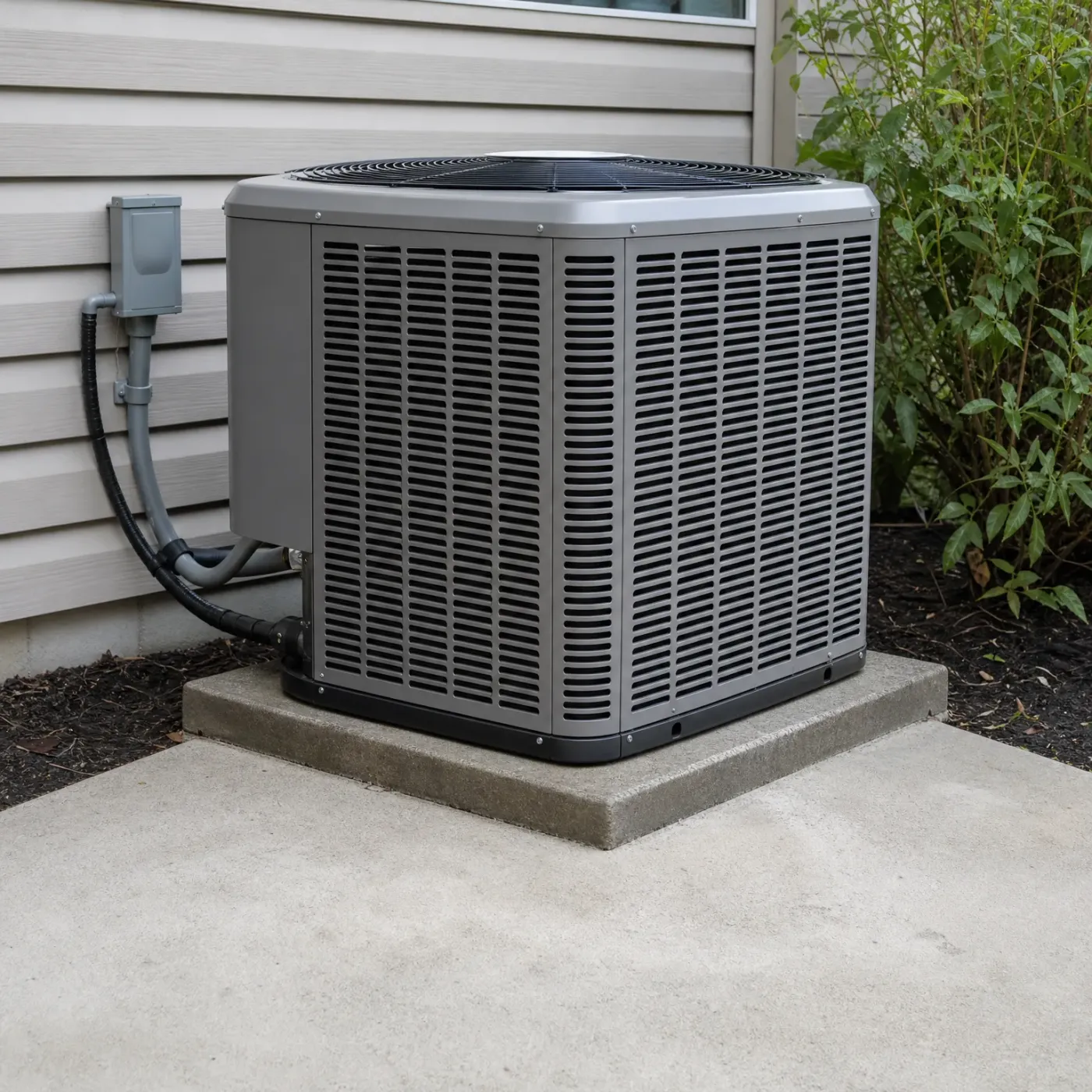
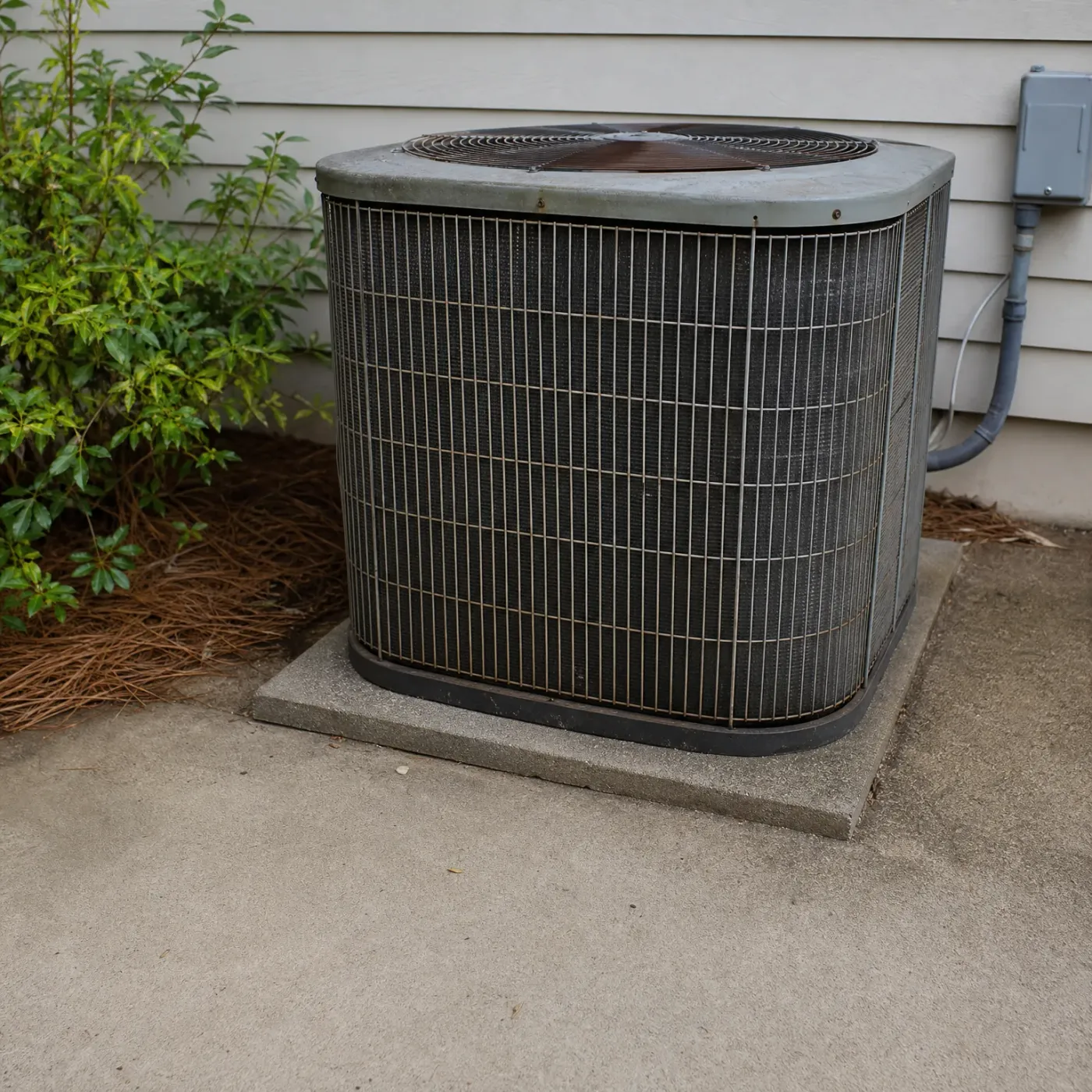
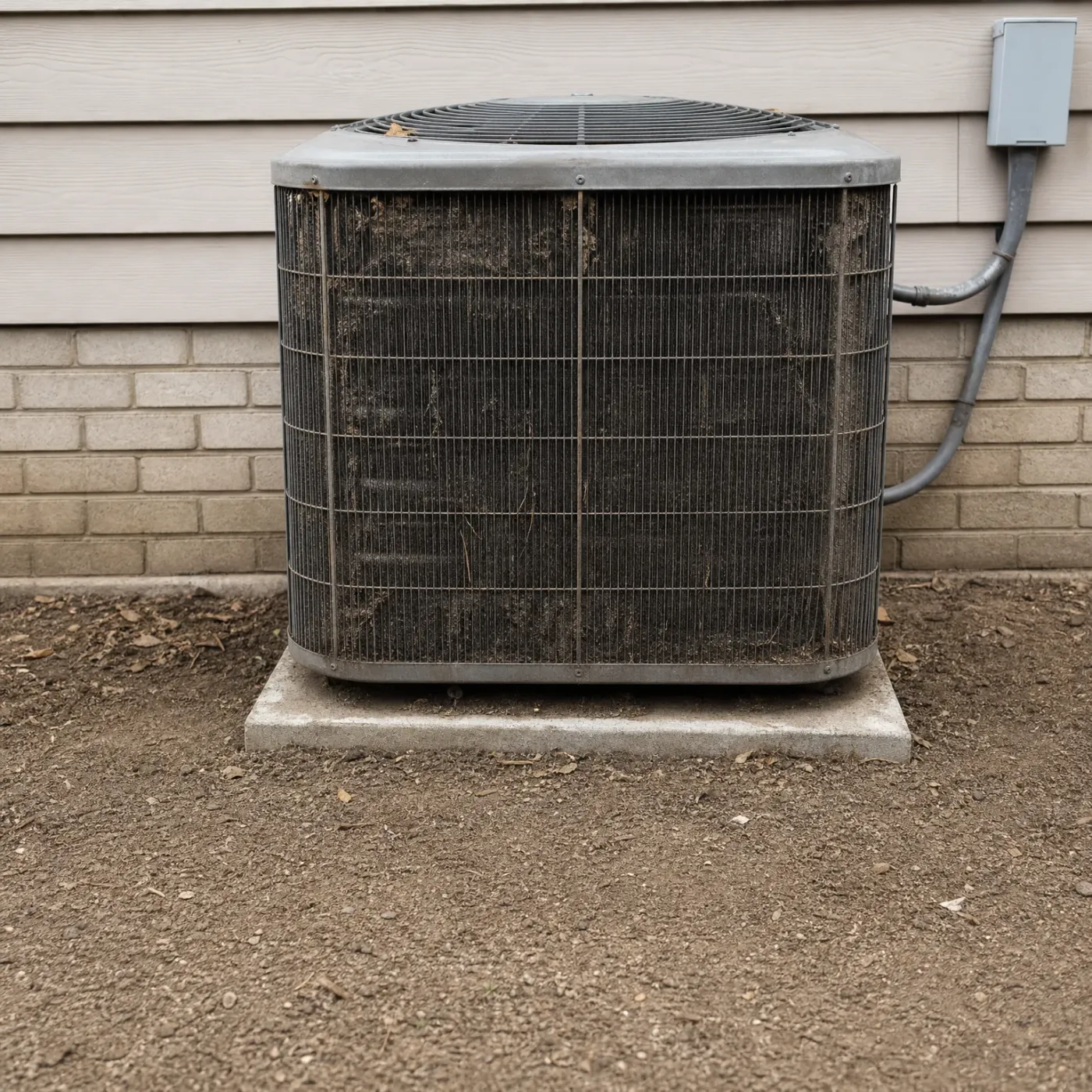
Dust and pollen settle on the condenser coil over the winter. A dirty coil makes the system work harder to dump heat outside, right when you need it to keep up.
 Hand it over
Send the form, and lining up the air conditioner tune-up stops being yours to chase.
A Wisconsin summer doesn't give your air conditioner an easy season. It can sit idle from September to May, then get asked to run hard through July heat and August humidity without any warning. A tune-up before that stretch is how a contractor catches what's worn or drifting out of range before it becomes a July breakdown.
Power here isn't cheap, and a system that's low on refrigerant or running a dirty coil works harder than it should to do the same job. A tune-up is where that gets found and corrected, before it shows up on your bill or leaves you without cooling on the one week you need it most.
Most homes in Wisconsin heat with gas and cool with a separate electric system, which means your AC has its own set of parts that need their own look. A capacitor, a contactor, a condenser coil. None of that is complicated to check, but it has to actually get checked, by someone who does this work in this climate and knows what tends to give out after a long shutdown.
That's what you get matched with here: a licensed contractor local to Wisconsin, someone who services this equipment all summer and knows what a Wisconsin winter does to a system that sat unused. Not a handful of companies competing for your callback. One contractor, sent your request.
Once you send it, the searching is done. You're not the one tracking down who's available or who answers the phone. That part moves off your plate and onto theirs.
Fill out the form below, and let someone who knows this equipment take it from there.
A tune-up has a technician check the refrigerant charge, clean the condenser coil, test the capacitor, and check the airflow across the evaporator coil. These are the parts that wear from sitting all winter and then get pushed hard once the humidity sets in. A dirty coil or a weak capacitor doesn't always stop the system outright. More often it just makes the unit run longer to reach the same temperature, which matters when a Wisconsin summer can bring a stretch of 90-degree days and your system has to keep up with no break. A contractor doing this work before the first hot week catches a capacitor on its way out or a coil losing its ability to shed heat, while it's still a quick fix instead of a breakdown in August. The point of doing it now, before the heat arrives, is that nothing here gets fixed under pressure.




Dust and pollen settle on the condenser coil over the winter. A dirty coil makes the system work harder to dump heat outside, right when you need it to keep up.
Your request goes to a local contractor who services this equipment all season and knows what tends to fail after a Wisconsin winter sitting idle.
You turn it on for the first real stretch of heat and it runs, but the house doesn't cool down the way it did last August. Maybe it's blowing air that's not as cold as you remember, or it cycles on and off more than it should. Maybe you notice the outdoor unit running longer into the evening than it used to. Some of that is just a system waking up after sitting idle since last fall. Some of it is a sign something needs attention before the humidity really sets in. Either way, a system working harder than it needs to costs you more to run, and if a real problem is building underneath, August is a bad time to find out.

The system fires up fine in May. It keeps running through June without complaint. Then July hits with a stretch of heat and humidity, and whatever was already weak, a low charge, a coil caked with dust, a capacitor on its way out, is now working against conditions it can't handle. That's when it quits, usually on the hottest day, when every other AC in Wisconsin is asking the same of its own weak parts.

A technician finds the low charge or the weak capacitor in April, while the system is only running a few hours a day and the house isn't depending on it yet. Whatever gets fixed gets fixed before the humidity shows up. You go into July with a system that's already been checked rather than one you're hoping holds together, and you're not waiting on a repair while your house sits at 85 degrees.
At that rate, a struggling AC costs you more than a tune-up ever would. A dirty coil or a weak capacitor makes the system run longer to cool the same house, and every extra hour it runs is on your bill at that price, all summer.
EIA-861 2025 statewide residential average

The cottonwood came down heavy this year, drifting off the trees along the side yard and catching on everything low to the ground. By the end of May it's piled against the condenser outside, packed into the fins like insulation. You notice it when you walk past with the hose, white fluff matted across the whole face of the unit, and you reach down to brush some off and feel how tight it's wedged in there. The unit's still running, you can hear it from the yard, but air isn't moving through that coil the way it should. Send the request in and the search for someone is done. A local contractor who clears this same fluff off coils every spring already knows what a season of it does to a unit.
A tune-up only helps if someone finds what's actually wrong with your unit before July does. That takes a technician who knows what fails on a system that's sat idle since September and gets slammed with humidity by August, and one who's local enough to know what Wisconsin winters do to a coil or a capacitor over six quiet months. Send the request once and it goes to one contractor, not five companies competing for the job. No sorting through calls, no repeating your situation to a handful of strangers. You get someone who works on this equipment all season, every season, and a scheduled visit instead of a scramble the week your house stops cooling down. That's worth setting up now, while the system is still idle and there's time before the heat arrives.

Wisconsin summers average a dew point of 60°F across June, July and August, according to NOAA climate data. That's the kind of air where your skin stays damp even standing still, and it changes what your AC has to do. The system isn't just dropping the temperature, it's pulling moisture out of the air before the house feels right. When the coil is dirty or the charge is low, that extra work shows up fast: the house feels cool enough by the thermometer but still feels sticky. A tune-up checks whether the unit can actually keep up with air this heavy, not just air that's hot.
NASA POWER T2MDEW county cells weighted by homes
Right now the system is running on whatever shape it was in last September. If the capacitor was weak then, it's weaker now. If the coil was dusty then, it's had all winter to collect more. None of that shows up as a problem yet because the system isn't being asked for much. A mild May afternoon doesn't push it. You can run the thermostat down a few degrees and the air coming out still feels cold enough, even if the unit is working harder than it should to get there. The strain is there, but it's quiet. It stays quiet right up until the first real stretch of heat and humidity asks the system for everything it has.
A technician has checked the refrigerant charge, cleaned the coil, tested the capacitor, and confirmed air is moving the way it should across the evaporator. Whatever was already failing has either been fixed or flagged before it had the chance to pick July to quit. The system goes into the first humid week running the way it's supposed to, not the way it happened to end up after a winter of sitting. You still get the same hot stretch everyone else in Wisconsin gets. The difference is the air conditioner meets it already checked over, instead of you finding out what was wrong with it the hard way, mid-afternoon, with the house climbing past where you set it.


The question underneath all of this is simple. Is your air conditioner ready for the first stretch of heat and humidity, or is it carrying the same weak part it had last September. A tune-up answers that question in May instead of July, while there's still time to fix what needs fixing.
Someone who services these systems every summer in Wisconsin has seen what a winter of sitting idle does to a capacitor, a coil, a refrigerant line. They know a dirty coil when they see one and they know what a weak capacitor sounds like before it quits. That's the kind of contractor your request goes to, not a call center, not a bidding war between five companies competing for the job. One technician, local to you, who works on this equipment all season long.
Your system doesn't need to be new to get through the summer. It needs whatever was already wrong with it caught and handled before the humidity sets in. The coil that collected dust since September is still dusty. The capacitor that was weak then is weaker now. None of that changes on its own. What changes is whether a technician finds it in May, on a schedule you control, or whether you find it yourself in July, when the house won't cool down and the system is already running flat out.
That's what the tune-up is for. Not a new unit, not a guess about what might fail, just a check of the parts that carried your house through last summer, to see if they can do it again.

It's off your list after this