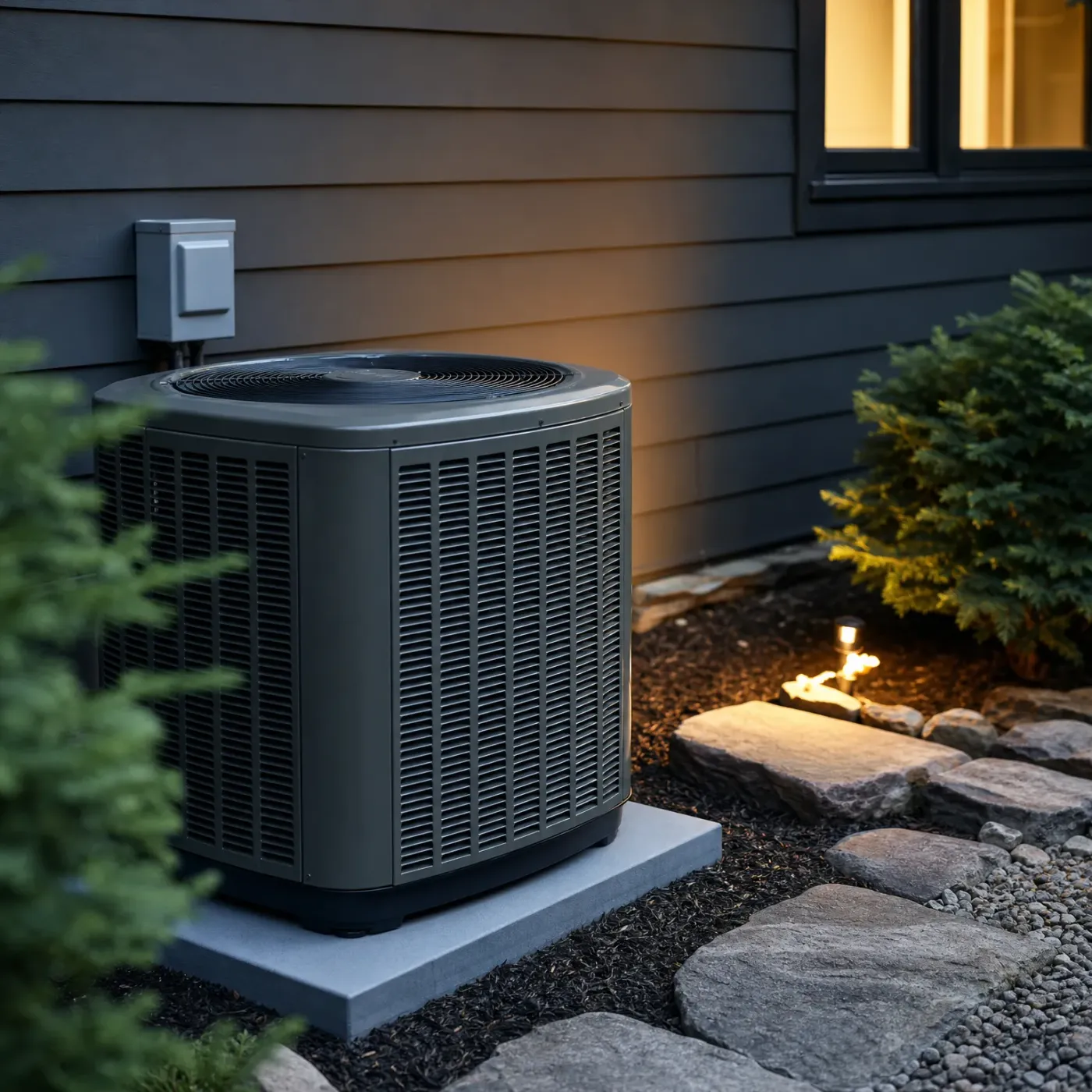










An outdoor air conditioner condenser unit on a concrete pad beside a dark horizontal-sided house, with a gray electrical disconnect box on the wall, shrubs, mulch, stone pavers and a lit landscape light nearby.

Get the right pro for your air conditioner

AC tune-up before summer in Milwaukee, WI

Muggy summers put real strain on an AC that sat idle all winter, and a spring checkup is how you catch a weak part before it quits on the first 90 degree day. This page covers what a tune-up actually looks at, and what it doesn't fix. Skip the search through reviews and phone calls, and get matched with a contractor near you who'll reach out directly.

Get a local pro

A spring tune-up gets your AC ready before Milwaukee's heat and humidity hit. The system sat unused since last September, and over a cold Wisconsin winter, parts can seize up, refrigerant can seep out slowly, and electrical connections can loosen from the cold. None of that shows up until the unit has to run hard, which in Milwaukee usually means June or July. A tune-up has the contractor check refrigerant charge, clean the condenser coil, test the capacitor, and check electrical connections before that first stretch of 90 degree days. It won't fix a unit that's already failing, but it catches the small problems, a weak capacitor, a coil caked with a winter's worth of dirt, before they turn into a system that won't cool your house when you need it most.

An older man with gray hair and a beard, wearing a dark snow-dusted jacket and scarf, stands smiling in a warmly lit interior hallway with a lit table lamp, a vase of dried branches, and a framed picture in the background.
An older man in a dark snow-flecked overcoat and scarf stands smiling in a warmly lit home entryway, with a glass-paned door showing darkness outside and a lamp-lit room visible through a doorway behind him.
An older man with grey hair and a beard, wearing a dark coat dusted with snow, stands in a dimly lit entryway with a ceiling lamp, a side table with two shaded lamps, and a lit fireplace visible in a room beyond.
An older man with gray hair and a beard, wearing a dark coat dusted with snow, stands smiling in a doorway of a warmly lit home with a sofa, lamp and window visible behind him.

What a Tune-up Covers

  • A tech checks refrigerant charge against the manufacturer spec rather than just topping it off.
  • The condenser coil outside gets washed clean since a season of pollen and grass clippings blocks airflow across it.
  • Electrical connections at the contactor and capacitor get tightened, since loose ones arc and burn over time.
  • The capacitor gets tested under load, because a weak one makes the compressor work harder to start.
  • Condensate drain line gets cleared so the system doesn't back up and shut itself off on a humid day.
  • Blower motor and fan get checked for worn bearings that show up as noise before they show up as failure.

A tune-up follows a sequence, not a checklist run in random order. It starts with refrigerant, since a system low on charge will run long and still come up short on cold air, so the tech measures it against what the manufacturer specs for that unit rather than guessing. Outside, the condenser coil has been sitting through a Wisconsin spring collecting pollen, grass clippings, and whatever blew in during mowing season. A coil caked with debris can't shed heat the way it's built to, so it gets washed down before anything else is judged. Inside the electrical panel, the contactor and capacitor get attention next. Connections there loosen over months of the unit cycling on and off, and a loose connection arcs, which wears the contact points until they fail outright. The capacitor itself gets tested under an actual load, not just a quick visual, because a capacitor can look fine and still be too weak to get the compressor started without strain. The condensate line gets cleared, since a clog there backs up and trips the system's safety switch on the exact kind of humid day you need the AC running. Last comes the blower motor and fan, checked for bearing wear that shows up first as a faint noise, long before it shows up as a motor that won't turn.

A gray outdoor air conditioning condenser unit on a concrete pad beside a house with horizontal lap siding, with a wall-mounted electrical disconnect box and refrigerant lines, shrubs, mulch and lawn around it.
Clean coil fins, clear space around the pad, and a disconnect box that's been checked let the unit pull air through without a fight.
An outdoor air conditioner condenser unit on a concrete pad beside a house wall with stucco lower section, horizontal siding above, and a white downspout to the right.
Caked-on grime across the fins makes the unit work harder to move the same air, and that shows up on the electric bill.

Is your AC ready for the first hot week?

After sitting all winter, your AC might run for a while when you first switch it on in May. Listen for it short-cycling, shutting off and restarting every few minutes, or blowing air that never gets quite cold. Check the outdoor unit for a coil caked with grass clippings or buried in last fall's leaves. Inside, a weak capacitor or a loose wire at the contactor can keep the compressor from starting at all on the morning you need it most. None of this shows up as a problem in April. It shows up in July, when Milwaukee hits 90 and humid and the unit that struggled quietly all along finally quits.

A woman wrapped in a thick textured blanket sits on a sofa with an open book on her lap, beside a lit lamp and bookshelf, with a frost-patterned window behind her.
A woman in a cream knit sweater sits with eyes closed in an armchair beside an open window showing orange and yellow autumn foliage, with a mug and books on a small side table.

A pro who works on air conditioners

One form instead of hunting for a pro who does air conditioner tune-ups.

No charge to send it. You decide if you hire them.

A gray outdoor air conditioning condenser unit on a composite pad beside a house with horizontal lap siding, with a wall-mounted disconnect box, refrigerant lines, and a wooden fence and shrubs to the left.

Running the way it should

This is a condenser doing its job. The pad is clear, the lines running up to the disconnect are intact, and nothing around the unit is blocking airflow. Nearby mulch and plants stay a few inches back so the coil can breathe.


An outdoor air conditioning condenser unit on a concrete pad beside a house with light vinyl siding, with electrical conduit running to a wall-mounted disconnect box and a shrub in mulch to the right.

Signs something's off

Here the unit sits tight against the siding with a shrub crowding the pad. A condenser boxed in like this pulls in less air across the coil and has to work harder to cool the same house. Wiring and conduit that look fine from a few feet off can still hide a loose connection a tech would catch on the panel.

An outdoor air conditioning condenser unit sits on a concrete pad beside a house with horizontal vinyl siding, with a gray electrical disconnect box and insulated refrigerant line on the wall above, surrounded by bare mulched ground.
Before you get your air conditioner maintenance
A gray outdoor air conditioning condenser unit sits on a concrete pad beside a house with horizontal siding, connected by insulated lines to a wall-mounted disconnect box, with a shrub and gravel bed to the right.
After you get your air conditioner maintenance
A gray outdoor air conditioning condenser unit on a concrete pad beside a house with horizontal vinyl siding, a brick foundation, downspout, electrical disconnect box, mulch bed and a green shrub.

A unit that's kept up

The fins are clean and the airflow around the pad is open, so the coil gives off heat the way it was built to. A unit like this holds its charge longer and doesn't strain to keep the house cool on a 90 degree day.

An outdoor air conditioning condenser unit with a dirty mesh coil guard sits on a concrete pad beside a house with horizontal lap siding, a wall vent, and conduit running to an electrical disconnect box.

A unit left alone

Grime across the fins and grille chokes off airflow, so the compressor works harder to move the same air. Left like this through enough summers, a unit runs longer, pulls more power, and wears out parts sooner than it should.

Cooling runs June through August

Three months of that is all your AC gets to prove itself, and most of that falls in July and August when Milwaukee humidity peaks. A spring tune-up means it's not finding problems for the first time during the one stretch of the year you actually need it.

NOAA nClimDiv 1991-2020

A gray outdoor air conditioning condenser unit on a concrete pad beside a house with vinyl siding and a large blank light-colored wall, surrounded by dark mulch and grass.

Why the charge matters so much

An AC cools by moving refrigerant through a closed loop, and that loop is sealed at the factory. It should never need refrigerant added unless there's a leak somewhere in the lines or the coil. A system low on charge still runs, the compressor still turns on, but it moves less heat out of the house per hour. That's why a unit can run constantly on a mild day and still leave the house warmer than the thermostat setting.

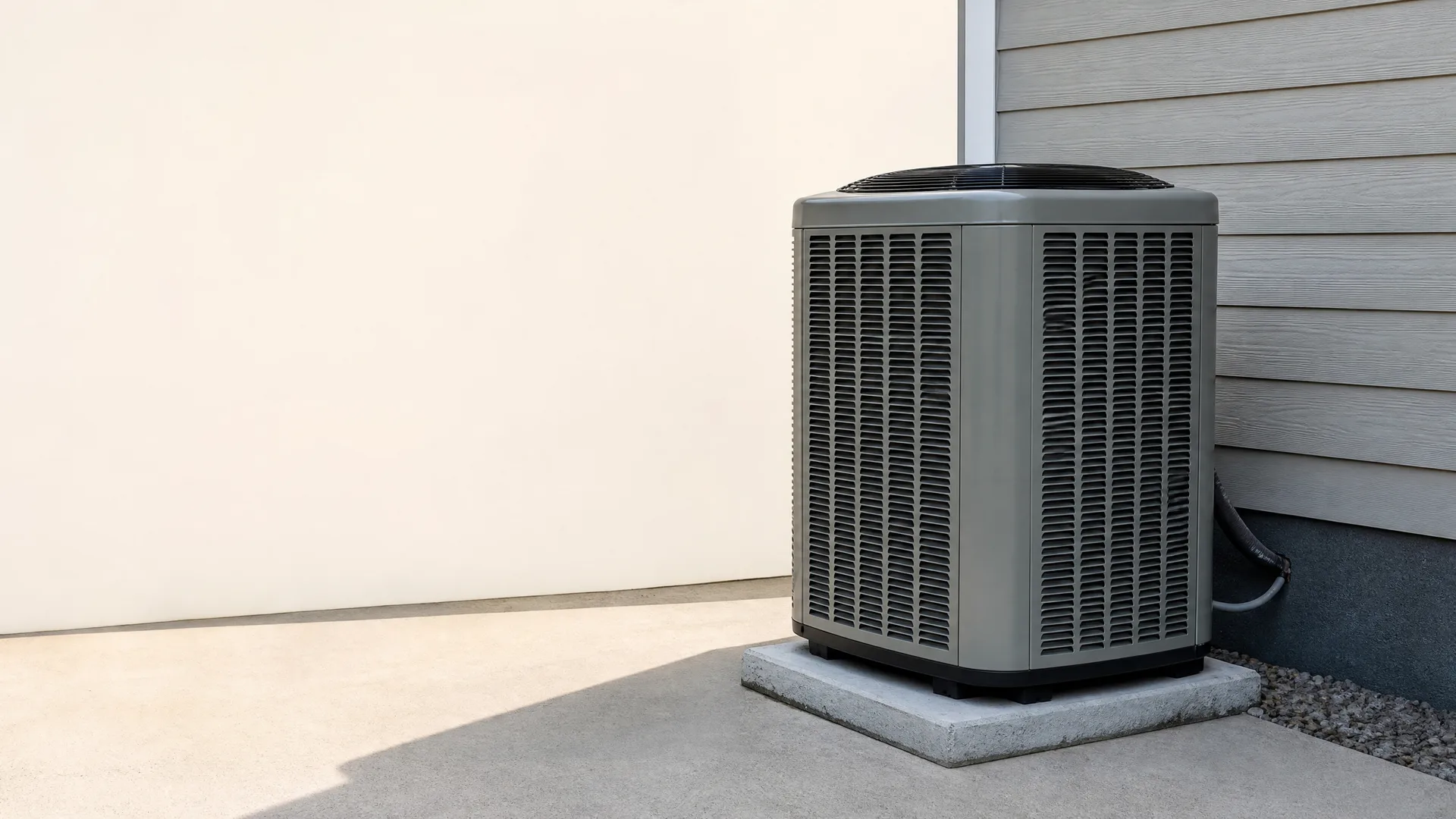
An outdoor air conditioner condenser unit on a concrete pad beside a house with horizontal lap siding, next to a plain light-colored wall and gravel bed.

What the filter has to do with it

The blower pushes air through the filter before it ever reaches the coil inside. A filter clogged with a winter's worth of dust makes the blower work against resistance, so less air crosses the coil each minute. Less airflow means the coil can ice up even on a hot afternoon, and once it ices, it stops cooling altogether until it thaws. Swapping the filter is one of the few things on this list a homeowner can also do between visits.

A woman in a cream sweater and jeans stands in the open doorway of a white stucco house, holding the dark door, while a man in a dark quilted jacket seen from behind walks toward the entry past potted plants.

Get it looked at before the heat does

A tune-up before summer comes down to one thing: catching a weak part while it's still cheap and easy to fix, not in August when everyone else's AC is down too. Milwaukee gives your system maybe three good months to do its job, and that's not much room for a bad capacitor or a dirty coil to cost you comfort you were counting on.

If you'd rather not spend an evening searching contractors, calling around, and explaining the same thing to three different companies, you don't have to. Answer a few questions about your system and a contractor who covers your part of Milwaukee County will reach out directly. You pick who you talk to from there.

Interior corner of a living room with a beige upholstered armchair holding a textured pillow and throw, a eucalyptus arrangement in a ceramic vase on a wooden table in the foreground, a blurred glass-front cabinet behind, and a potted plant on a sunlit window sill.
A white clapboard house with black-trimmed windows and a dormer, photographed at dusk with lit windows, an illuminated porch and dark front door, flanked by potted hydrangeas, a stone walkway, clipped hedges and lawn.

Air Conditioner Maintenance

Get your air conditioner to the right pro

Tune-up, service, or cleaningCentral ACMilwaukee County, WI
Step 1 of 2

What ZIP code is the job in?

  • A pale ceramic vase holding dried hydrangea blooms sits on a wooden windowsill in sunlight, with green foliage blurred beyond the window glass.
    • A local pro who services air conditioners gets in touch about the tune-up.
    • Get matched with a pro who works on air conditioners in Milwaukee County.
  • Sunlit window seat with a cushioned bench and three textured throw pillows beside a dark wooden round side table holding a small stone bowl and a potted green plant.
    • Send the form, and lining up the air conditioner tune-up stops being yours to chase.
    • Send the form and the air conditioner tune-up stops being something to remember.
  • A potted olive-like tree in a wide beige ceramic planter sits on a pale stone ledge beside a black-framed window with blurred greenery outside.
    • Skip calling around to set up an air conditioner tune-up.
    • Skip searching for an air conditioner pro and answer a few questions instead.
  • A wooden bench by a black-framed window holds a beige striped pillow, a fringed knit throw, and a pale ceramic vase with olive branches, with green foliage and a white house visible outside.
    • A licensed local pro takes the request for your air conditioner tune-up.
    • The pro who gets in touch is licensed in Wisconsin and works in Milwaukee County.