Below 5 degrees
Most heat pumps lean hard on backup heat strips once the outdoor temperature drops this low, and those strips run on electricity, not gas.
 I'm done searching
One request and the search for a pro is handled.
A heat pump works harder once Wisconsin temperatures drop into the teens and below. Most homes here were built around a gas furnace, so if yours runs on a heat pump, you're probably wondering if it can really carry the house through January, or if you need a backup plan before the cold settles in.
The honest answer depends on the equipment and how it was installed. Cold climate heat pumps are built to keep producing heat well below zero, but a unit sized or installed for a milder climate will struggle here. Getting a straight answer means someone looking at your system, your ductwork, and what backup heat you have, not a guess based on the brand name.
That's where the work usually gets frustrating. You end up searching for contractors who know heat pumps specifically, not just furnaces, since plenty of techs in gas-furnace territory haven't installed many of them. Then there's the calling around, the explaining your situation to three or four different people, and the waiting on quotes that are hard to compare because nobody looked at the same things.
Send the form on this page and that search stops being something you have to manage. You explain your situation once. Finding someone who installs heat pumps and understands what a Wisconsin winter demands of one becomes someone else's job, not another thing on your list between now and the next cold snap.
With power rates here higher than in a lot of places, getting the sizing and setup right matters more than it would somewhere cheaper to run the backup heat. That's a conversation worth having with someone qualified, not worth guessing about on your own.
A heat pump can heat your home through a Wisconsin winter, but below the teens it loses capacity, and most units lean on backup heat strips to make up the difference once temperatures drop that low. That backup heat runs on electricity, and with power priced the way it is here, a cold snap can push a bill up fast. Ice on the outdoor unit during a long stretch of cold is normal too, and the system should melt it off on its own through a defrost cycle. Whether yours is keeping up or straining depends on the equipment itself, how it was sized for your house, and whether it has backup heat that can actually cover a hard freeze. A heat pump sized and installed for this climate holds up through January. One sized for somewhere milder will not.




Most heat pumps lean hard on backup heat strips once the outdoor temperature drops this low, and those strips run on electricity, not gas.
A contractor can check whether your system is sized right for Wisconsin winters, so you're not stuck calling around to find out.

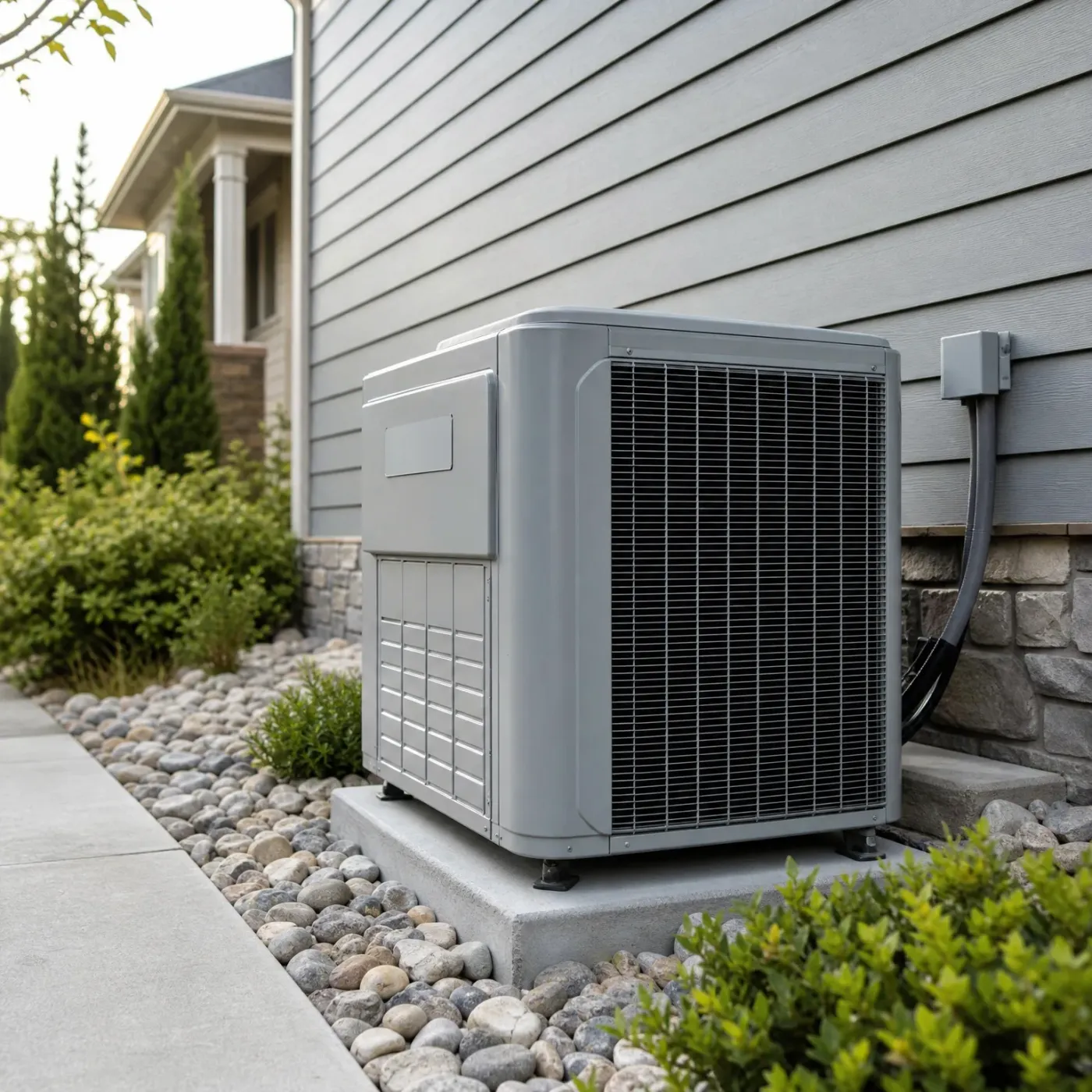
This is the unit doing its job, running steady on a mild day with nothing blocking the coil. Air moves through it the way it's supposed to, and the system pulls what heat it can from the outside air. A clear unit like this is most of the winter, not the worst of it.

Dirty fins and leaves piled against the base choke off airflow, and a unit working that hard to breathe loses capacity it can't spare once it's already in the teens. A contractor can clear this and check the charge, so the system isn't fighting itself on top of the cold.

You'll feel this on the thermostat before you see it on the bill. On a zero degree night, the heat pump runs close to constantly, and the backup strips cycle in to cover what it can't deliver on its own. Those strips are straight electric resistance heat, and with what power costs in Wisconsin, a run of nights like that shows up clearly the next time your bill arrives. None of this means something is broken. It means the system is sized or set up in a way that leans harder on the strips than it needs to.
Whether that's normal for your house or a sign something's off is hard to tell on your own, and most people don't have the time to call around to a handful of contractors, describe the system, and wait on quotes. Send one form and a contractor who knows Wisconsin heat pump setups takes it from there, so you're not the one tracking down who's available and who knows what they're doing.

The compressor pulls heat from outside air, even cold air.
Refrigerant carries that heat inside through the coil.
The indoor coil releases heat into air moving through your ducts.
A thermostat sensor checks if the heat pump is keeping pace.


Skip the round of in-home estimates for a new heat pump.
Send the form and stop researching installers for the new heat pump.
You're not committing to anything by asking.
You'll see the strips kick on even when the heat pump itself seems to be running fine, and it can feel like something's wrong. It usually isn't. There's a specific point where the thermostat decides the heat pump alone isn't enough to hold the temperature you set, and that's when the strips take over part of the job.
A thermostat sensor tracks how close the indoor temperature is to your setpoint. When the heat pump is running but the house is falling behind, usually because outdoor temperatures have dropped and the unit's output has dropped with them, the thermostat brings on the backup strips to cover the difference. It's not a malfunction. It's the system doing what it's built to do once the heat pump can't keep pace by itself. A big setback, like dropping the temperature overnight and raising it in the morning, can trigger the same response even on a milder day, because the heat pump alone can't close a large gap quickly. The strips run on electric resistance, so they cost more per hour than the heat pump does.

Summer here isn't just hot, it's heavy. NOAA puts the average summer dew point across Wisconsin at 60°F, which is the sticky, hard-to-shake kind of air. Your heat pump has to pull more moisture out of that air to keep the house feeling dry, not just cool. That's a different job than dropping the temperature a few degrees, and it means the system runs longer on muggy days even when the thermostat number barely moves. If the house feels cool but still damp, that's the dew point talking, not the thermostat.
NASA POWER T2MDEW county cells weighted by homes




At 18.08 cents per kilowatt-hour, every hour those backup strips run adds up fast, since straight electric resistance heat pulls a lot more power than the compressor does on its own. A system sized right for your house leans on the strips less, which matters most on the coldest nights.
EIA-861 2025 statewide residential average
A heat pump holds up through a Wisconsin winter. It just doesn't do it alone once the temperature drops into the teens and below. The backup strips pick up what the compressor can't deliver on its own, and those strips run on electricity, not gas, which is why a cold snap shows up on the bill in a way a mild week doesn't. None of that means your system is failing. It means the question worth asking isn't whether a heat pump can work here, it's whether yours is sized for your house and leaning on the strips as little as it should. That's not something you can tell from the thermostat or a number on a utility bill. It takes someone standing in front of your equipment, looking at your ductwork, checking what the unit was built to handle against what your house actually needs on the coldest night of the year. That's a different question for every house, which is why a general answer only gets you so far. Rather than calling around to different contractors, explaining your system and your winter and your bill to each one, you send the form once. From there, finding someone qualified to look at the sizing and tell you straight whether it's right isn't something you have to chase down yourself anymore.

One request and it's handed off