




An outdoor air conditioning condenser unit positioned beside a blue-sided house at sunset.

AC Repair in Green Bay, WI

Tell us about the job

Takes about a minute. No obligation.

RepairCentral ACBrown County, WI
Step 1 of 2

What ZIP code is the job in?

Your air conditioner only has to work two months out of the year here, July and August. The rest of the time it sits idle while the furnace does the job. Even in those two months, the afternoon high averages just 78°F, and the air isn't as heavy as it is in most of the country. Dew points here run around 59°F, which is low enough that your system isn't fighting humidity the way AC units do further south. Less heat and less moisture both mean less strain on the compressor and coil over the life of the machine. When something does go wrong, it's rarely because the unit was overworked.

2 months
July through August, your air conditioner is on duty
78°F
the average summer afternoon it cools against
29 hail events
in ten years, and hail bends the fins on outdoor coils
78 wind events
in ten years, and wind drives debris into outdoor units
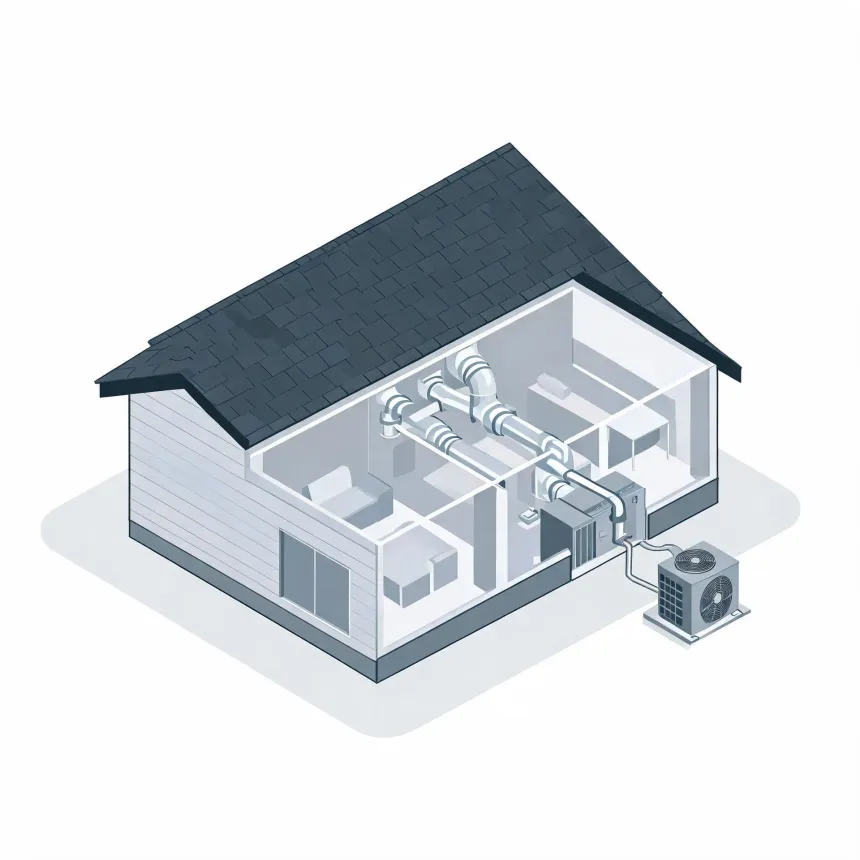
Isometric cutaway illustration of a house with a dark shingled roof, showing interior ductwork connected to an indoor air handler and an outdoor condenser unit beside the building.
Your air conditioner works hardest from July through August.

NOAA nClimDiv, 1991–2020 normals

Warm air blowing from the vents instead of cold means the system is running but not cooling.

That points to a refrigerant leak or a failing compressor, and either one needs a tech to find before the fix is obvious.

Half the homes here were built in 1981 or later, and newer houses mean newer systems

Half the homes here were built by 1981
Climate zone 6A
Power here costs 17.42 cents per kilowatt-hour

July is when problems tend to show up here, right as cooling starts up for the two months it runs. A part that was already weak, a capacitor losing its charge or a refrigerant level that's dropped, often doesn't show itself until the system has to work. June is the month it's sitting idle, and that's the better time to find a weak part than the first hot day in July when it's asked to run. If your AC is acting up now, that's this pattern playing out.

A newer home usually means a system worth fixing

If your house went up in 1981 or later, the system in it is probably within its working life too, even if this isn't the original unit. That makes repair the right starting point here, not replacement. Get the part fixed and the system will likely give you years more.

Find a contractor
A gray cylindrical air conditioning condenser unit mounted on a concrete pad next to a light-colored vinyl-sided house exterior.

Light use adds up to years, not wear

Two months of light work a year adds up slow. Since the load is light here, a system can rack up a lot of calendar years before it's actually worn out underneath. That's why a repair call makes more sense than a replacement estimate when something breaks. Fix the part that failed, whether that's a capacitor, a contactor or a low refrigerant charge, and there's usually no reason the rest of the system can't keep going.

What actually wears out

The capacitor is usually first. It stores the charge that kicks the compressor and fan motor into motion, and that charge weakens over time until the motor can't start on it. A contactor is next, the switch that sends power to the compressor. Its contacts pit and burn from years of opening and closing until it stops making a clean connection. Both are wear parts. They fail from age and cycling, not from any one bad day.

What a refrigerant leak looks like

Refrigerant doesn't get used up. If the charge is low, it's leaking out somewhere, usually at a fitting, a coil, or a joint where a line connects. A unit low on charge will still run, but it cools poorly and the compressor works harder to move heat than it should, which shortens its life. Topping off the charge without finding the leak just means doing it again later. The leak has to be found and closed first.

Overhead view of an outdoor AC condenser unit on a concrete pad next to a house with a dark shingle roof.

A new air conditioner would save little on running costs in Brown County, so the repair decision comes down to the unit's condition.

  • A new one at the federal minimum, 13.4 SEER2$120 a year
  • An older air conditioner$130 a year

Estimates for a typical Brown County home, compared with an older unit built to the previous federal minimum, from EIA household energy data, Wisconsin fuel prices and NOAA climate normals. Your home will differ.

Repair makes sense when a part like a capacitor or contactor has failed.

Replacement makes sense when the compressor has failed or the system uses R-22 refrigerant, which is no longer made.

A good rule: if the compressor itself has failed, replacement usually makes more sense than repair. That's the most expensive part in the system, and the labor to swap it is involved enough that you're often better off putting that money toward a new unit. Almost everything else is a fair repair. Capacitors, contactors, fan motors, control boards, even a coil leak, these get fixed on their own all the time without touching the compressor. The age of the system matters less than which part failed. An older unit with a bad capacitor is an easy fix. The same unit with a seized compressor is a harder call. Ask what broke before you ask how old it is.