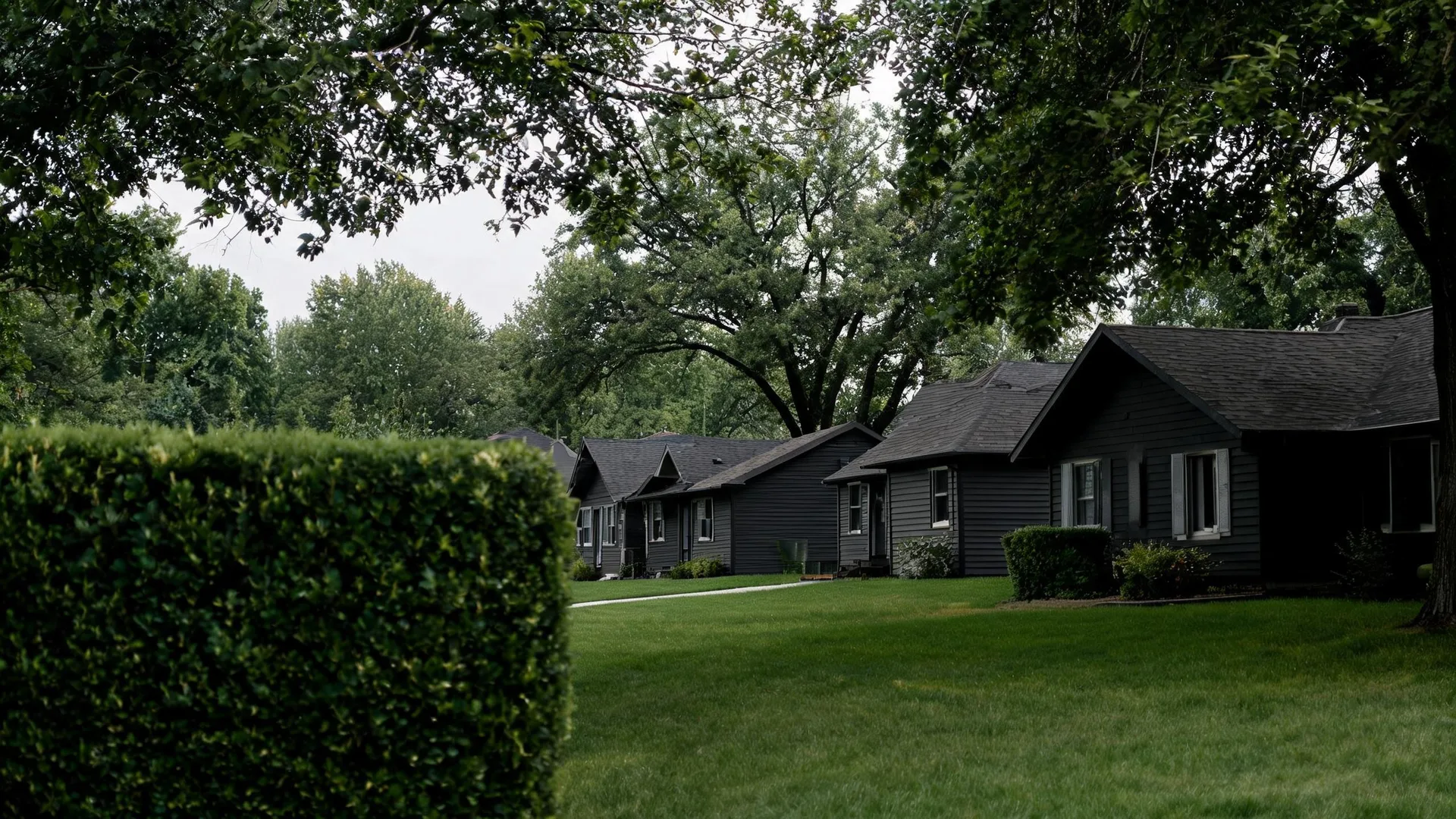
A row of dark-painted single-story cottages with gabled shingle roofs behind a mowed lawn, a trimmed hedge in the left foreground and large leafy trees overhead under an overcast sky.

AC Maintenance in Sheboygan, WI

Tell us about the job

Takes about a minute. No obligation.

Tune-up, service, or cleaningCentral ACSheboygan County, WI
Step 1 of 2

What ZIP code is the job in?

The refrigerant charge is never visible from outside

A system can look fine and still be running low on refrigerant, and a low charge makes the compressor work harder than it should. A gauge reading during a tune-up catches this before it shows up as warm air or a frozen coil.


A weak capacitor won't announce itself ahead of time

The capacitor gives the compressor and fan motor their starting kick, and it tends to fail without warning rather than fading in a way you'd notice. Testing it during a tune-up finds the weak one before it leaves you without cooling on the day you need it most.

2 months
July through August, your air conditioner is on duty
78°F
the average summer afternoon it cools against
22 hail events
in ten years, and hail bends the fins on outdoor coils
46 wind events
in ten years, and wind drives debris into outdoor units
Isometric cutaway illustration of a single-story house showing interior rooms with furniture, attic ductwork connected to an indoor air handler, and an outdoor condenser unit on a pad linked by refrigerant lines.
Your air conditioner works hardest from July through August.

NOAA nClimDiv, 1991–2020 normals

Sheboygan County asks a central air conditioner to work about two months a year, July and August, with afternoon highs around 78 degrees.

A system that only runs two months a year still needs its yearly check, because the parts that fail are failing from age, not from overwork.

Half the homes here were built by 1970, old enough that a yearly check is worth doing

Half the homes here were built by 1970
Cooling runs July through August
Summer afternoons average 78°F

July is when cooling starts working here, and June is when a tune-up still has time to catch something before that happens. Sheboygan County only asks a system to run two months a year, but that first week of July often brings the hardest pull on it, the day it has to go from off to carrying a full afternoon load. A capacitor that's been weakening all winter tends to give out right under that kind of demand. Have it checked in June and whatever's weak gets found while there's still time to fix it, not on the first hot day in July.

Book the check before July asks anything of it

Two months a year is still enough to wear a capacitor down or let a refrigerant leak go unnoticed. A June check finds those before the first hot week in July asks this system for everything it has.

Find a contractor
A man in a dark T-shirt and olive pants, seen from behind, carries a canvas tool bag up wooden porch steps toward a pale green front door beside a potted plant.
An outdoor air conditioning condenser unit mounted on a concrete pad surrounded by gravel, photographed against a partly cloudy blue sky.

If it's never been replaced, the yearly check carries more weight

If your system has been in the house since it was built, 1970 or earlier puts it well past the point where a yearly check is worth skipping. You don't need to know the exact age to act on this, just whether it ever got replaced. A contractor doing the yearly check can tell you more, looking at the capacitor and the refrigerant charge rather than guessing from the house's age alone. That's the same check that catches a weak part early no matter how old the system is, but the longer it's been running, the more there is to find.

Rinse the outdoor unit yourself

The outdoor coil collects grass clippings, cottonwood seed and dust between visits, and that buildup blocks airflow the same way a dirty filter does. A garden hose sprayed through the fins from the inside out clears most of it. Skip the pressure washer, it bends the fins instead of cleaning them.

Keep anything from growing in against the cabinet

Shrubs and tall grass pulled in close choke off the airflow the outdoor unit needs to dump heat. Leave clear space on all sides and keep the area above it open too. Beyond that, the refrigerant charge and the capacitor aren't something to check yourself, that's what the yearly visit is for.

Aerial view of a gray central air conditioning condenser unit on a concrete pad next to a house with vinyl siding.

Book your AC tune-up in June, before homes here start needing cooling in July.

  1. Jan
  2. Feb
  3. Mar
  4. Apr
  5. May
  6. Jun
  7. Jul
  8. Aug
  9. Sep
  10. Oct
  11. Nov
  12. Dec

A tune-up checks the refrigerant charge, cleans the coils, tests the capacitor and tightens the electrical connections.

A tune-up starts outside, with the coil and fins checked for the kind of buildup a hose alone won't reach, then moves to the refrigerant charge, checked with gauges rather than guessed at. The capacitor gets tested under load, not just looked at, since a weak one can still read fine sitting idle. The contractor checks that the fan motor spins freely and pulls the amperage it should, and takes a look at the contactor, the relay that sends power to the compressor every time the system cycles on. Electrical connections get tightened, because a loose one builds heat over a season and that heat is what eventually burns through. The condensate drain gets cleared too, since a clogged one backs up and spills water where it shouldn't. None of this is guesswork. Each part gets a reading, compared against what it should be, and whatever's drifting gets flagged before it fails outright.