

AC can't keep up on hot days in Janesville, WI

Get matched with someone who does this kind of work in Rock County.

Connect with a pro

When your AC can't keep up on a hot day, the unit usually isn't broken outright, it's losing a fight it can't win. A central air conditioner is sized to handle a certain amount of heat and humidity, and Rock County summers get sticky enough to push a system to its limit, especially one that's already running low on refrigerant, pulling air through a dirty filter, or working with a condenser coil caked in dirt outside. Any of those cuts how much heat the system can move, so on the mildest days you don't notice, and on the worst days it runs nonstop and still can't get the house down to the temperature you set it to. Sometimes the problem is simpler: the unit is sized wrong for the house, or a duct somewhere is leaking the cooled air before it reaches your rooms. Either way, the system needs a technician to find out which of these it is, because running it harder on your own won't fix the actual cause.

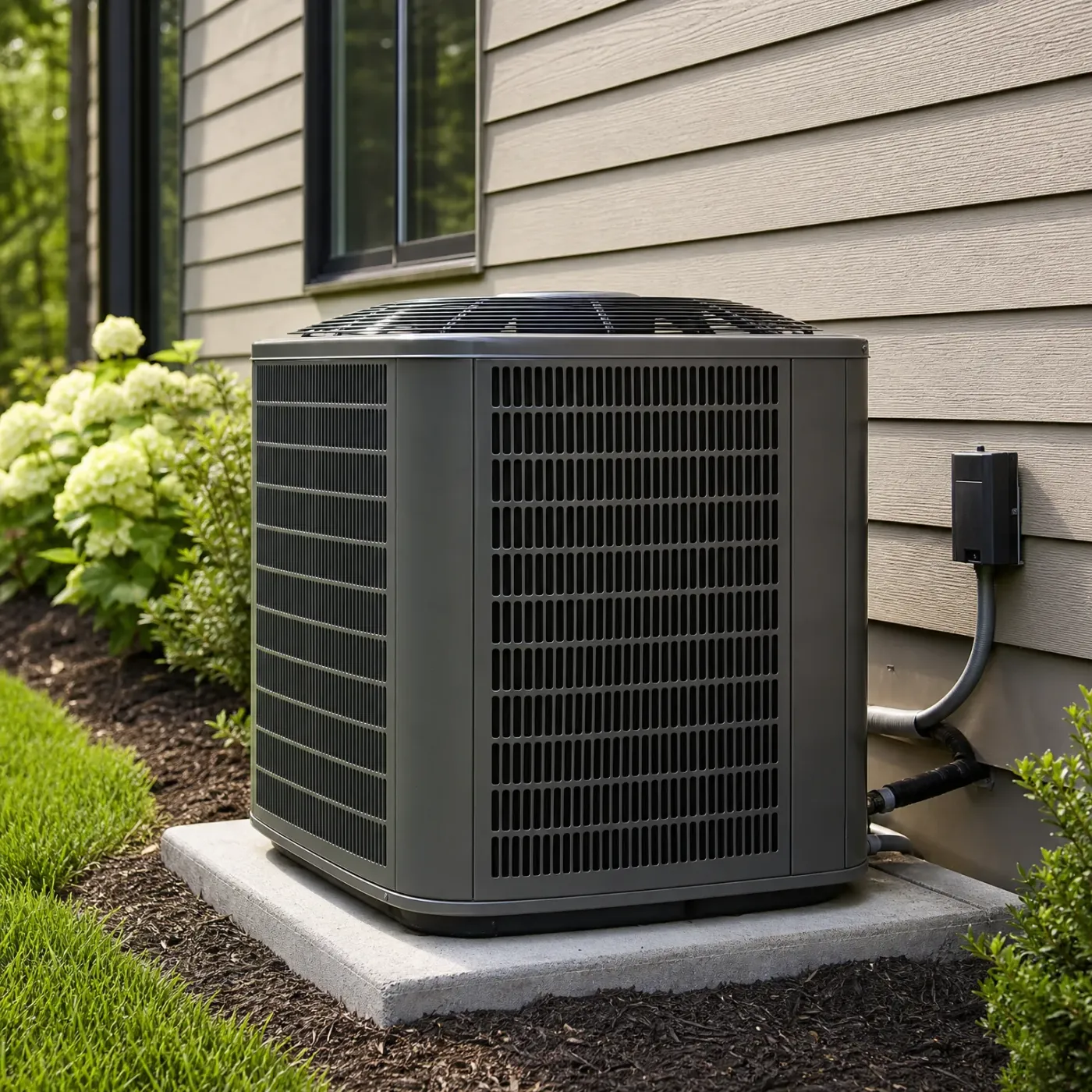
A gray outdoor air conditioning condenser unit on a concrete pad beside a house with horizontal siding and a stone veneer base, with refrigerant line and electrical disconnect box on the wall and flowering shrubs to the left.

Running the way it should

A clean condenser outside your house moves heat out of the house into the air. The fins stay clear, the coil stays clean, and on a 90 degree day it holds the house at the temperature you set it to, cycling off when it catches up.


An outdoor air conditioner condenser unit on a concrete pad beside a house with light gray horizontal siding, with mulch and green shrubs on either side and a concrete walkway in the foreground.

Losing ground

Dirt and matted fins choke the airflow a condenser needs to dump heat outside. The compressor keeps running, the house still climbs a few degrees past your setting, and on the hottest days it never catches up at all.

A smiling bearded man in a dark gray t-shirt sits on a gray couch in a living room, with a large glass bowl of popcorn on a wooden table in the foreground.
A smiling middle-aged man in a dark shirt sits on a gray sofa in a living room, with a bowl of popcorn on a side table and shelves, a window and kitchen area behind him.
A smiling man in a green long-sleeved shirt sits on a beige sofa in a living room, with a bowl of popcorn in the foreground, a large potted plant and shelving behind him.
A smiling bearded man in a dark green hooded jacket and blue t-shirt sits on a couch in a living room with shelves, a potted plant, and a bowl of popcorn on a wooden table.

Why humidity makes it worse

An air conditioner cools the house and pulls moisture out of the air at the same time. That second job takes part of its capacity. On a dry 90 degree day, most of what the system does is drop the temperature. On a sticky 90 degree day in Rock County, it's spending real capacity wringing water out of the air before the house even starts to feel cooler. That's why the same outdoor temperature can feel like two different jobs for the same unit, and why a system that kept up fine in a dry stretch starts falling behind once the humidity climbs.

What a struggling system is doing

A central air conditioner that can't keep up is usually still running, just not catching up. The compressor cycles on and stays on for hours instead of shutting off, because the house never reaches the temperature on the thermostat. Airflow through the vents feels weaker than it should, and the air coming out is cool but not cold. None of that means the unit quit. It means whatever is pulling heat out of the house, a dirty coil, a low charge, a blocked return, is slowing it down enough that it can't win on the hottest afternoons.

Cooling runs June through August

Three months isn't long, so your AC doesn't get the easy stretches to recover that it would with a longer summer. It runs hard from the first hot week in June straight through August, with little break in between. If it's already struggling to keep up, that short season is the whole test.

NOAA nClimDiv 1991-2020

What you'll notice inside

The house gets close upstairs before it does downstairs, since heat rises and the air conditioner has to work that much harder to push cold air up there. The thermostat might say 74 and the room still feels warmer than that. Doors and windows start to feel warm to the touch in the afternoon. If you run a fan just to feel some relief, that's the system telling you it isn't moving enough cold air to keep up with the heat coming through the walls and the windows.

What it costs you to wait

A system straining to keep up runs longer hours to get less cooling out of each one, and that shows up on the power bill before it shows up as a breakdown. The parts doing the extra work, the compressor and the fan motor, wear faster under that kind of load than they would running normally. Left alone through a full summer of 90 degree days, a system that's struggling now is more likely to fail outright in July or August, when a contractor has the least room on the schedule to get to you.

A woman in a cream knit sweater reclines on a sofa with her eyes closed and a slight smile, a closed dark book resting on a blanket in the foreground and a lit lamp and small potted plant behind her.
A smiling bearded man in a dark green sweater sits at a dinner table with a glass of red wine, a bowl of salad and a lit candle in the foreground, in a dimly lit room with a framed picture, lamp and potted plants behind him.
A gray outdoor air conditioner condenser unit sits on a concrete pad beside a house with horizontal lap siding, with a disconnect box and refrigerant lines on the wall and shrubs, hydrangeas, mulch and lawn nearby.

Get matched with an air conditioner pro in Rock County

Get the air conditioner repair search off your mind today.

Get matched with a pro who fixes air conditioners in Rock County.

Find a pro near me

No fee to send it, and nothing to sign.

Repair It or Replace It

Call for repair

  • A contractor can check the refrigerant charge and add what's missing if the system is low, which is a common reason a unit cools but can't keep up.
  • Cleaning the outdoor coil restores the heat transfer a clogged condenser has lost, and that alone can bring back lost capacity.
  • A failing capacitor makes the compressor or fan run weak or short cycle, and replacing it is usually a quick fix.
  • If the ductwork or airflow across the indoor coil is restricted, a contractor can find where the air is getting choked off.
  • Repair makes sense if the system kept up fine in past summers and this is a new problem.
  • A tune-up now means the unit still has the rest of the summer to prove whether the fix held.

Consider replacement

  • If the system has been falling behind for more than one summer, it may be sized wrong for the house or past the point repairs hold.
  • A unit that needed more than one repair call last summer is telling you something about where it's headed.
  • Newer systems carry a SEER2 rating that reflects efficiency gains older equipment wasn't built with.
  • Replacement resets the clock, so you're not patching a system that keeps finding new ways to fall short on the next hot day.
  • If the compressor itself is failing, that's usually the most expensive part in the system to replace on its own.
  • A contractor can size the replacement to the house itself, not just match what was there before.
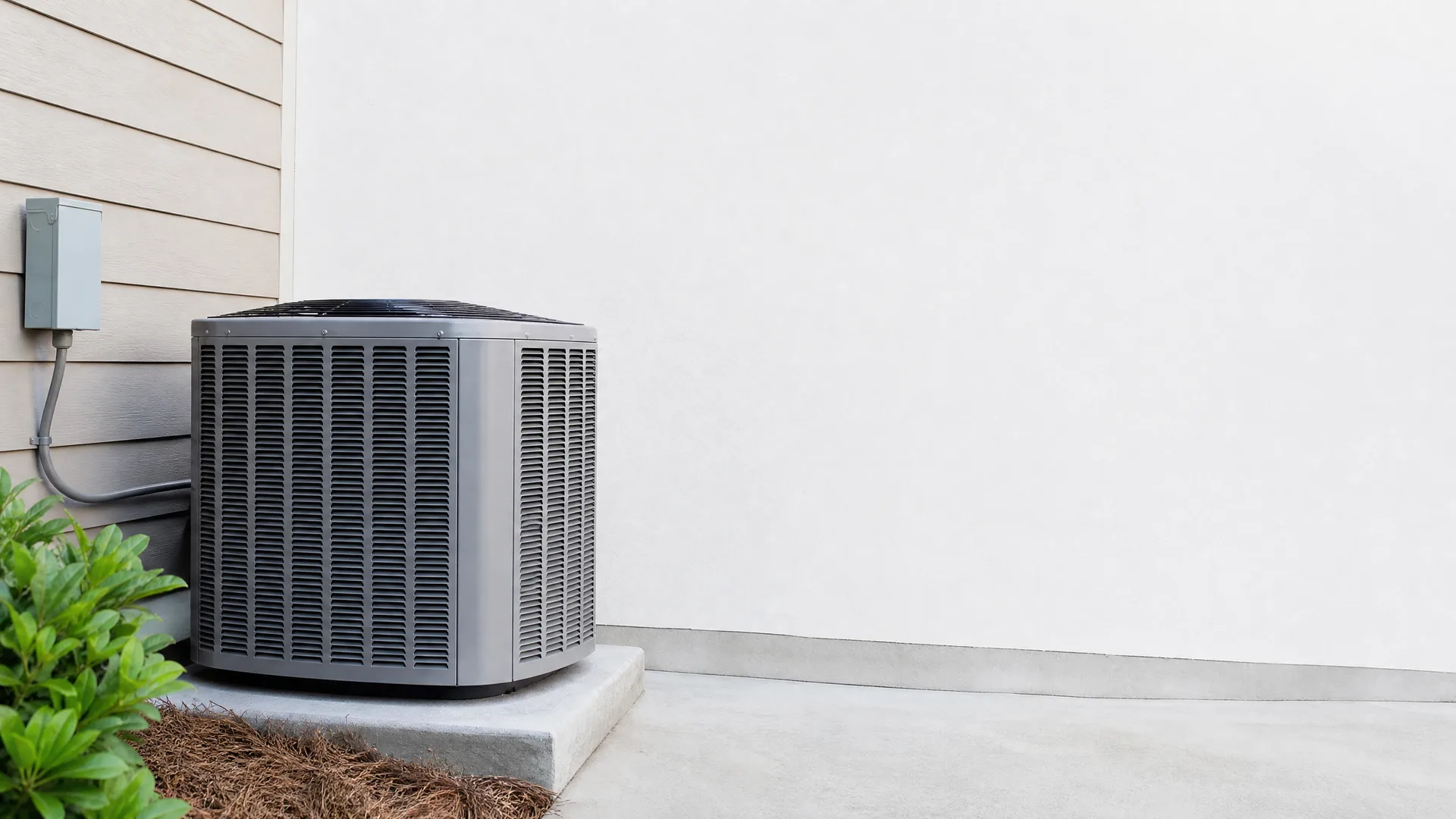
A gray outdoor air conditioner condenser unit sits on a concrete pad beside a house, with a gray electrical disconnect box and conduit on the lap-siding wall above it and a green shrub and pine straw at the lower left.

A system that still has room

If your AC is a few years old and was sized right for the house, it may just need the dirt, the low charge, or the weak part found and fixed. Once that's done it goes back to holding the line on a 90 degree day the way it used to. Nothing about the house changed. The system just needs to be brought back to the condition it was in when it still kept up.

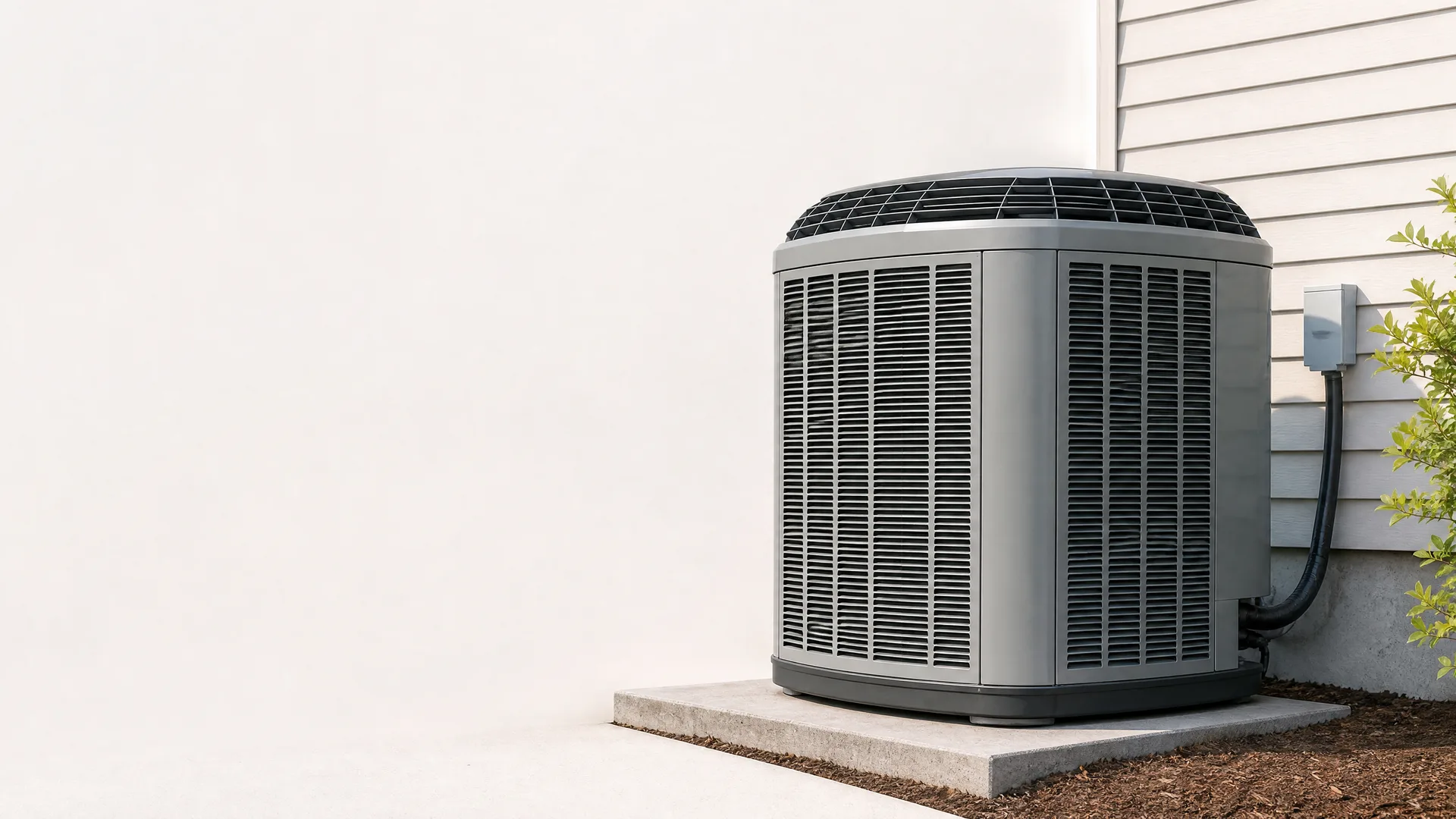
A gray outdoor air conditioner condenser unit on a concrete pad beside a light-colored stucco wall and horizontal lap siding, with an electrical disconnect box, conduit, mulch, and a shrub at right.

A system that was always short

Some houses got a system that was undersized from the start, or one that's been patched more than once already. Repair brings it back to how it performed before, and if that still wasn't enough on the hottest days, no cleaning or part swap changes that. That's a different conversation, and a contractor looking at the equipment and the house can tell you which situation you're in.

Why does the house feel warmer upstairs by evening?

By late afternoon the air coming out of the vents feels less cold than it did that morning. The thermostat might read 74 but the room feels closer to 80. Upstairs bedrooms lag behind the rest of the house, and a closed door makes it worse. You might hear the outdoor unit running almost nonstop instead of cycling off, or notice it's still going well after the sun goes down. Some households just close off the upstairs and run a fan at night. Left alone through a full summer, a system that's straining this hard tends to wear out its parts faster, turning a repair you could have made now into a bigger one later.

  1. Refrigerant inside the coil absorbs heat from the air moving over it.

  2. The compressor pulls that refrigerant in and pressurizes it.

  3. The outdoor coil releases the absorbed heat into the outside air.

  4. The blower pushes the cooled air back through the ducts into the house.

A gray outdoor air conditioner condenser unit on a concrete pad beside a house with horizontal vinyl siding, surrounded by mulch, flowering shrubs, and lawn.
A clean coil like this one has clear fins and open airflow, so the heat it pulls from the house has somewhere to go.
A weathered outdoor air conditioning condenser unit on a concrete pad beside a house with light horizontal siding, an electrical disconnect box and conduit on the wall, and mulched soil on either side.
Caked-on dirt and grime block airflow through the fins, so the heat the house generates has nowhere to go.
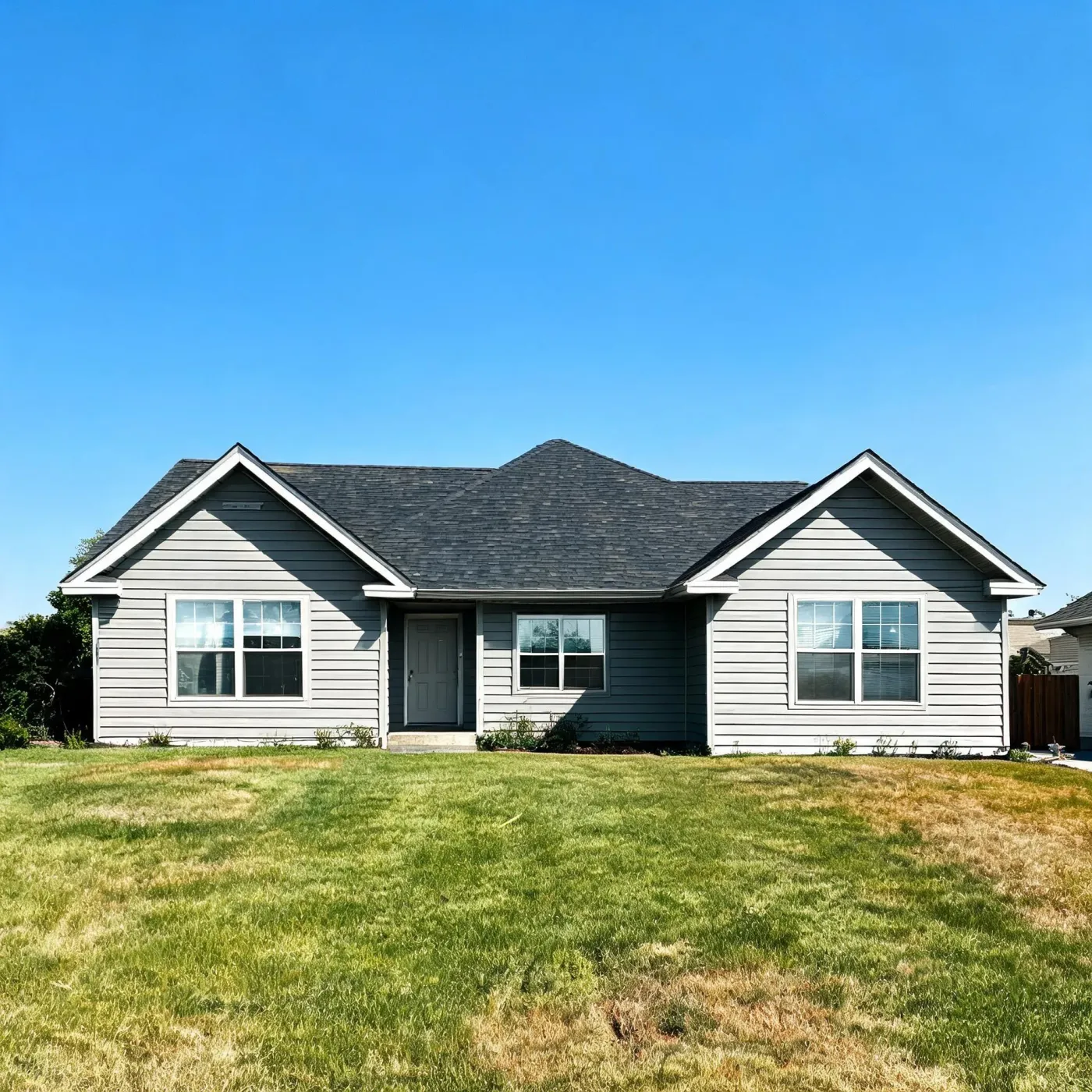
Single-story gray horizontal-siding house with two front gables, dark shingle roof, white-trimmed windows and a gray front door, fronted by a patchy green lawn under a clear blue sky.

Rock County summers run a dew point around 61°F across June, July and August, by NOAA's averages. That's heavy air, the kind that sits on your skin even in the shade. Your air conditioner has to wring that moisture out before it can drop the temperature, and at 61 it's pulling a lot of water out of the air all day long. That's capacity it isn't spending on cooling. You'll feel it as a house that gets cold enough but still feels damp, air from the vents that doesn't feel as crisp as it should, or a system that runs long stretches without shutting off even once it hits the thermostat setting.

NASA POWER T2MDEW

A woman in a tan sweater and jeans stands in the open black-framed front doorway of a white single-story house, while a blonde woman in an orange sweater and jeans walks toward her along a concrete paver path bordered by shrubs.

Where that leaves your AC

A system that can't keep up on a 90 degree day is telling you something, not failing outright. Most of the time it's a low charge, a dirty coil, or a part losing its grip, and all three get fixed rather than replaced. The house doesn't have to feel warmer upstairs every evening from June through August.

Finding out which one it is takes a contractor looking at your specific unit, not a guess. Once you send the request, that part isn't on you anymore. A contractor who covers Rock County gets matched to what you described and reaches out to you directly, so the next step is theirs to carry.

A speckled beige ceramic vase holding thin dried branches sits on a round wooden table near a window with sheer curtains, with a dark upholstered chair and draped blanket blurred in the background.
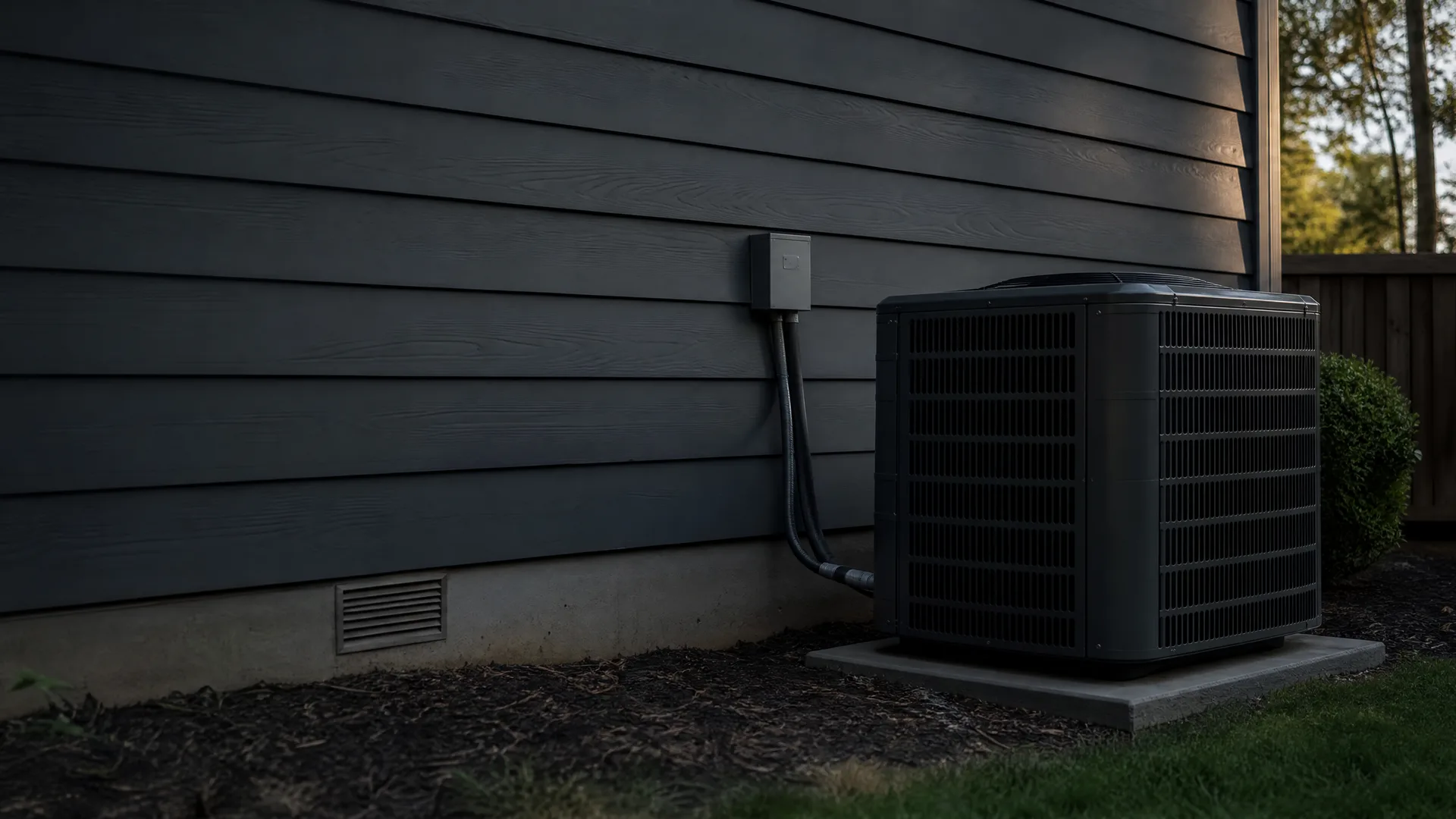
An outdoor air conditioning condenser unit on a concrete pad beside a dark gray horizontal lap-sided house wall, with a disconnect box and refrigerant lines on the wall, mulch bed and shrubs nearby.

Find an air conditioner repair pro in Rock County

Once you send the form, finding a pro is off your list.

RepairCentral ACRock County, WI
Step 1 of 2

What ZIP code is the job in?