Why one room stays hot with the AC on in Wisconsin

RepairCentral ACWisconsin
Step 1 of 2

What ZIP code is the job in?

Why is one room in my house still hot when the AC is running?

You keep the rest of the house running fine, but one room sits warm no matter how long the AC runs. It is not broken, exactly, but it bothers you enough to want to know why that one spot is different before the hot stretch of summer makes it worse.

That room is not getting its fair share of airflow

Every room on the system shares the same blower, and the duct run feeding your hot room is losing out to the others. It might be farther from the unit, have a duct that is pinched or partly closed, or sit over a register that is blocked by furniture. Summers in Wisconsin get sticky enough that a room running even a few degrees warmer stands out fast, especially upstairs where heat collects. Heat gain from sun through windows or a wall next to an unconditioned space adds to the problem on top of the airflow issue. A contractor can check the duct run and the register itself to find out which one is actually at fault.

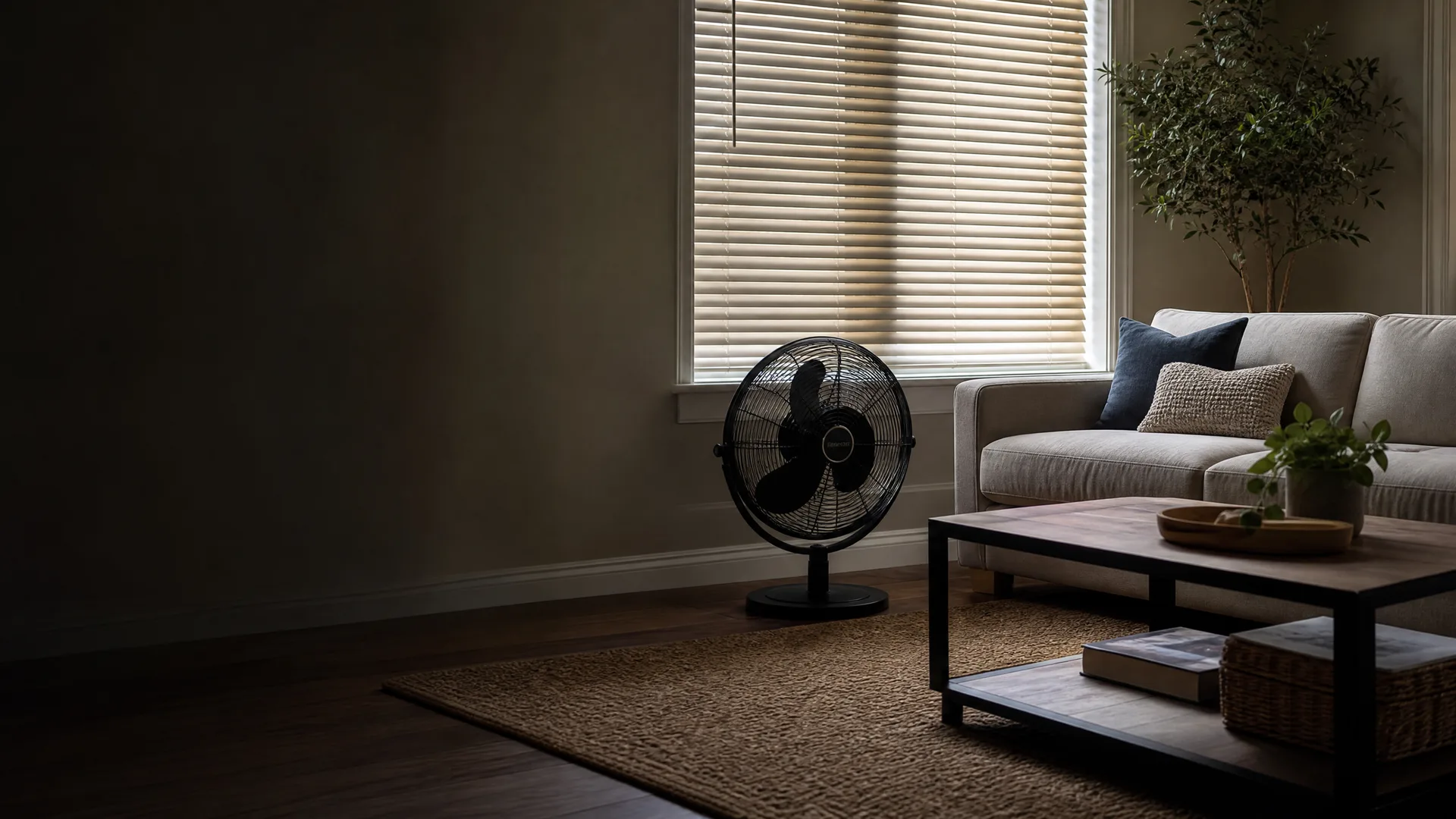
A dimly lit living room with a black table fan on the wood floor near a window with closed blinds, beside a light-colored sofa with cushions, a wooden coffee table, a woven rug, and a potted tree.

It's mid-afternoon, one of those July days where the air outside sits heavy and still. You've got the blinds down against the sun and a floor fan going next to the couch, pushing the same warm air around the room instead of cooling it. The rest of the house feels fine. This room doesn't. You can hear the AC running out in the hall, air moving steady through the vents in every other room, and you still end up back by the fan with a glass of ice water, waiting for the one room in the house that won't cool down.

One Room or the Whole System

One Room Problem

  • A single hot room usually comes down to airflow not reaching it, a closed or blocked vent, a crushed duct run, or a return that's starved for air.
  • Rooms above a garage or with a lot of west-facing windows pick up extra heat load that the rest of the house doesn't carry.
  • A duct that was sized or routed wrong when the system went in will always shortchange that one room, no matter what else gets fixed.
  • If the thermostat sits in a different, cooler part of the house, it can tell the AC to shut off before that back bedroom ever caught up.
  • Fixing this usually means balancing dampers, clearing or resizing a duct, or adding a return, not replacing anything major.
  • A contractor can check airflow at that specific vent and tell you whether the fix is in the ductwork or somewhere else.

Whole System Problem

  • If more than one room runs warm, or the whole house struggles on the hottest days, the issue is more likely the equipment itself.
  • A system that's low on refrigerant or has a weak compressor loses cooling capacity everywhere at once, not just in one spot.
  • An undersized AC for the square footage will fall behind on the hottest afternoons no matter how good the ductwork is.
  • A dirty coil or a filter that's overdue chokes airflow across the whole system, not just one branch of duct.
  • Wisconsin summers get sticky enough that a system running at the edge of its capacity shows it house-wide, not room by room.
  • Since most homes here heat with gas, the furnace blower often drives the AC airflow too, so a failing blower hits every room.
A woman in a cream turtleneck sweater stands beside a large window with snow outside, looking to the side, in a dimly lit living room with a sofa, lamps, candles and framed artwork.
A woman in a light gray cable-knit turtleneck sweater stands by a window looking outside at snow, with a living room behind her containing a stone fireplace, lit lamp, framed pictures, and a sofa with a plaid throw.
A woman in a dark gray turtleneck sweater stands by a window with snow visible outside, in a dimly lit living room with a gray sofa, lamp, framed painting, and dark-framed glass door.
A woman in a cream turtleneck sweater stands by a window looking out at falling snow and snow-covered trees, with a dimly lit living room containing a sofa, lamp and fireplace behind her.

Is this room going to keep getting worse?

Check the vent in that room. If it's half closed or sitting behind a dresser, that's worth fixing on its own. Feel the air coming out of it against the air from a vent in a room that cools fine. If it's noticeably weaker, air isn't getting there the way it should. Press a hand to the wall or ceiling near that room if it backs up to the attic or sits over the garage. Warm to the touch there, even with the AC running, means heat is coming in faster than that one vent can push cool air out. Left alone through a Wisconsin summer, that room stays the one place the window AC or a fan has to make up for, and it puts more hours on the rest of your system trying to compensate.

An outdoor air conditioner condenser unit on a concrete pad beside a house with beige horizontal siding and a stone-veneer base, with refrigerant lines running to a gray wall-mounted electrical box, surrounded by dark mulch, a flowering shrub and an evergreen on the left.

Running the way it should

A condenser like this cycles on, runs, and shuts off, keeping every room close to the thermostat setting. The disconnect box stays dry and secure, the pad is clear, and the unit isn't straining to push air through the house.

An outdoor air conditioning condenser unit on a concrete pad beside a house with light vinyl siding, an electrical disconnect box and conduit on the wall, bare shrubs and mulch to the right, and a concrete walkway in the foreground.

Running but not keeping up

The unit outside can look fine and still not be moving enough refrigerant or airflow to cool every room. A condenser that's low on charge or losing capacity will keep one room behind no matter how long it runs.

A woman stands in the open front doorway of a single-story house with a covered porch, stone column bases and a dormer window, facing a man in a dark cap and gray polo shirt seen from behind in the foreground.

What's actually happening at that vent

Your AC moves a fixed amount of air through the ductwork every time it runs. That air splits off at each branch and travels to a vent, and whatever share gets to the hot room depends on the size of that duct run, how many turns it makes, and whether anything is blocking it along the way. A long run to a far bedroom carries less air than a short run to the room next to the return. The blower doesn't know one room is falling behind. It just pushes the same total volume and lets the ductwork sort out where it goes.

That's why closing vents in other rooms to force air toward the hot one usually backfires. It raises pressure in the system and can push the blower to work harder without actually routing more air where you want it. A contractor matched to your situation can measure the airflow at that specific vent against a few others in your house, which tells you whether the duct run itself is the problem or something else is pulling heat into that room faster than the system can keep up.

A gray upholstered sofa with a textured cushion sits beside a dark round side table holding a vase of green foliage, with a table lamp and sheer-curtained window behind.
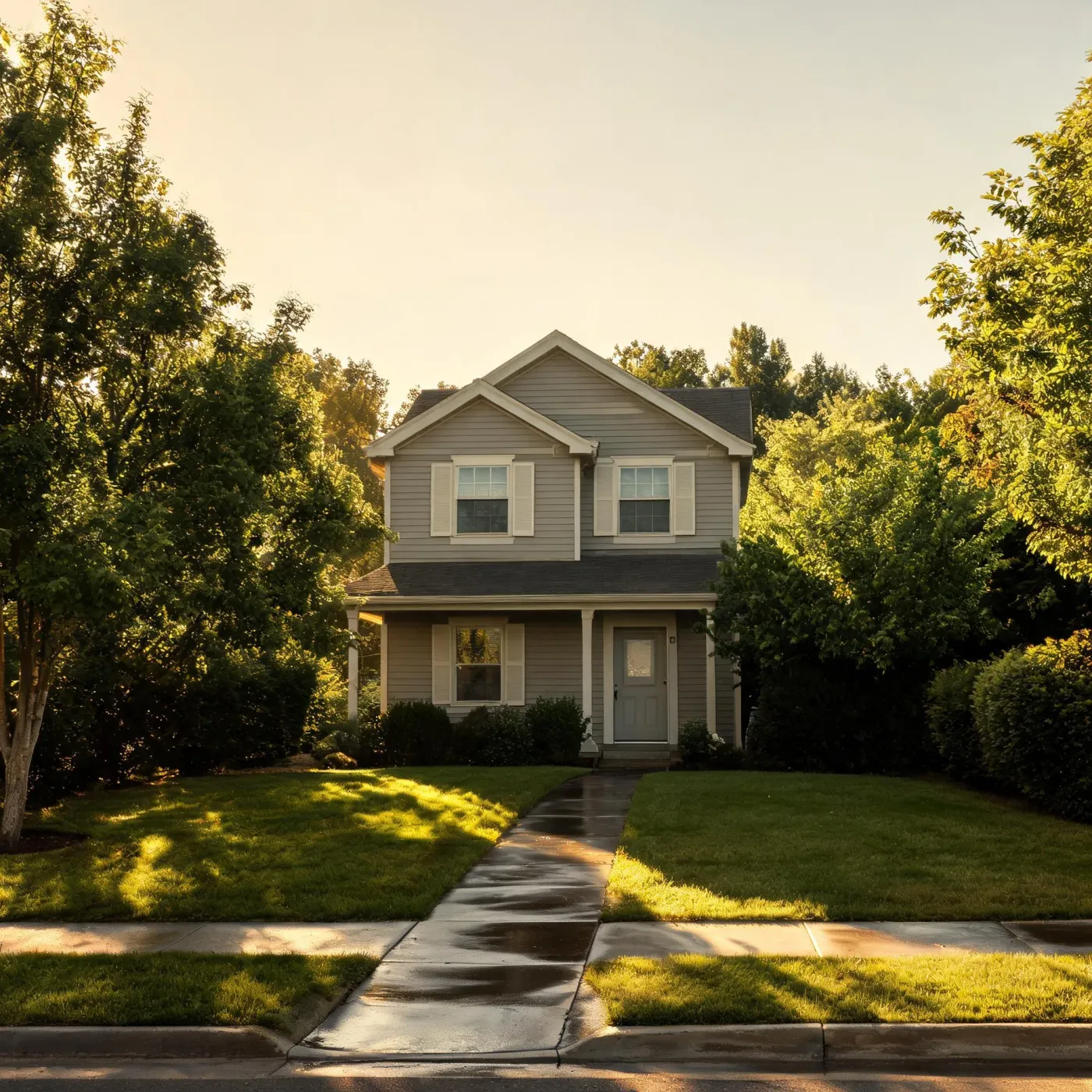
A two-story house with beige siding, white-trimmed windows with shutters, and a small covered porch, fronted by a mowed lawn and a wet concrete walkway leading to the sidewalk, with leafy trees and hedges on both sides in low golden sunlight.

Summer air in Wisconsin carries a dew point around 60°F, averaged across June, July and August, based on weather data for where homes sit in the state. That's heavy enough to feel sticky even when the temperature itself isn't that high. Your AC has to pull that moisture out of the air before the room feels comfortable, not just cool it down. A room that's already short on airflow, because of a closed vent, a long duct run, or a return that isn't pulling enough air, falls further behind on muggy days like these. The thermostat might read 72, but that one room still feels damp and warm. If you've checked the vent and the room still won't cool down, a contractor who knows your setup can look at what's actually limiting airflow there and work with you directly on it.

NASA POWER T2MDEW county cells weighted by homes

Matched to your air conditioner job

You've probably already tried the easy things, closing other vents to push more air that way, running a fan, checking the thermostat location. None of it changes what's happening inside the ductwork, and that's not something you can see or test from the room itself. Finding out whether it's a duct run that's too small, a blocked return, or a system that's undersized for the house means someone looking at the actual setup, not guessing from room temperatures. That's the part that takes time: finding a contractor who does this kind of diagnostic work, calling a few, explaining the hot room and what you've already tried to each one, then waiting on quotes to compare. Handing that off means you explain it once, to someone who shows up knowing what to check. The hot room doesn't fix itself by August, and this is the kind of problem that's worth having looked at before next summer is as far along as this one.

What a duct run actually limits

A branch duct is sized for a certain amount of airflow, and that size doesn't change because the room is harder to cool. If that run is narrow, long, or has a couple of tight turns in it, it was likely built that way to fit the framing, not to match the heat load of the room at the end of it. A contractor can measure what's coming out of that vent in cubic feet per minute and compare it against what the room needs. If the number is low, the fix is in the duct itself, not the thermostat or the condenser outside.

Why the return side matters too

Every room that gets supply air needs a way for air to leave it, back toward the return. If that room has no return vent and the door gets closed, pressure builds up and the supply air coming in slows down even though the system outside is running fine. Some homes handle this with a return in every bedroom, others rely on a gap under the door or a shared return down the hall. A contractor can tell you which setup this house has and whether that gap is doing its job.

A bearded man in a plaid flannel shirt stands indoors looking out a condensation-covered window at a snowy landscape, with a speckled mug on the sill and kitchen shelves behind him.
A bearded man in a dark blue T-shirt sits on a gray couch, smiling and looking down to his left, with a bookshelf and a bright window behind him.

Leave it alone for now

If that room only gets hot on the worst days, a few degrees above the rest of the house, you can manage it with a fan and a closed blind and move on. A room with a lot of west-facing glass or one sitting above the garage is always going to run warmer than the rest of the house, and that gap doesn't always mean something's wrong with the duct run feeding it. Plenty of homeowners live with that room the way it is for years without any damage to the system or the house.

Get someone to look at it

If the gap has grown, if it's gotten worse since last summer, or if that room is shut half the time because nobody wants to sit in it, the duct run or the register feeding it is worth having checked. A contractor can get into the ductwork, measure what's actually reaching that vent, and tell you if a run needs to be resized or rerouted. That beats spending another summer calling around, explaining the same hot room to three different companies, and guessing which quote to trust.

An outdoor air conditioner condenser unit on a concrete pad beside a house with light horizontal lap siding, with an electrical disconnect box and conduit on the wall behind it.
Before you get your air conditioner repair
An outdoor air conditioning condenser unit on a concrete pad beside a house with white horizontal lap siding, with an electrical disconnect box and insulated refrigerant line on the wall and a shrub over mulch to the right.
After you get your air conditioner repair

Power costs 18.08 cents per kilowatt-hour statewide

At 18.08 cents per kilowatt-hour, every extra hour your AC runs trying to force air into that one room costs more than it would if the airflow problem were fixed. You're paying full price to cool a room that still isn't comfortable.

EIA-861 2025 statewide residential average

  1. The blower pushes a fixed volume of air into the main duct trunk.

  2. Air splits off at each branch toward every room's vent.

  3. A narrow, long, or sharply turned run slows that room's share of air.

  4. Less air reaches the vent, so the room lags behind the thermostat reading.

One room staying hot while the rest of the house cools fine almost always comes down to airflow, a duct run that can't move enough air to keep up with that room's heat load. A fan or a closed blind can take the edge off, but it won't fix a narrow or crushed run buried in the wall. Finding that out for certain means someone looking at the actual ductwork, not guessing from the vent cover. You could spend an afternoon calling around, explaining the same hot room to three different companies, and comparing quotes that are hard to tell apart. Or you could skip that part. Answer a few questions about your house and that one room, and a contractor who handles this kind of airflow problem in Wisconsin homes will reach out to you directly. No searching, no repeating yourself, no sorting through bids on your own. You already know what's wrong. The next step is getting someone out to confirm it and fix it.

A shingled gable roof with a stone chimney in the foreground overlooks a wooded valley with a winding river and flat farmland under a hazy orange sky at dusk.

An air conditioner pro near you

Get an air conditioner pro

No fee to send it, and nothing to sign.

A contractor can check the duct run and the vent itself, something hard to judge from inside the room. Instead of searching around and explaining the problem on call after call, you answer once and a contractor who handles this reaches out to you directly.