Draining like it should
Condensate runs off the coil, down the line, and out away from the house. The pan stays dry. Nothing backs up, and the system cycles on and off without tripping its own safety switch.

It happens every August: the drain pan fills, the system shuts itself off, or you find water pooling near the furnace. You've cleared it before and it just comes back. Wisconsin summers run humid for months at a time, and your AC is pulling moisture out of the air nonstop to keep the house comfortable, which means that drain line is working harder than most people realize.
The condensate line carries off the water your AC pulls out of the air, and in a muggy Wisconsin summer that's a steady drip running through the line for hours a day. That constant moisture is exactly what algae and mold need to grow, and they build up along the inside of the pipe until the opening narrows and eventually blocks. Dust and debris that settle in the drain pan add to it. The longer the humid stretch, the faster the buildup happens, so a line that drained fine in a dry June can clog by August. Left alone, the clog backs water up into the pan and the system shuts itself off or leaks near the furnace.

Condensate runs off the coil, down the line, and out away from the house. The pan stays dry. Nothing backs up, and the system cycles on and off without tripping its own safety switch.

Algae and dirt build up inside the line until water has nowhere to go. It backs up into the pan, trips the float switch, and shuts the AC off. Some owners find the puddle near the furnace before they find the cause.
You'll usually smell it before you see it, a musty damp smell near the furnace closet on a humid afternoon. Look closer and there's a wet ring on the floor, or the pan under the coil is full again even though you emptied it last week. Sometimes the AC just stops cooling in the middle of the day with no warning. That's the float switch doing its job, shutting the system off because the pan is full. Left alone, that standing water sits against the furnace cabinet and the flooring around it, and mold starts in places you can't see until the smell is already in the house.




A licensed local pro takes the request for your air conditioner tune-up.
No fee to send it, and nothing to sign.
That coil pulls moisture out of the air for as long as the system runs, and in a Wisconsin summer that's hours every day, all summer long.
All that water has to leave through a line about as wide as your finger, and it only takes a little algae or dirt built up inside to slow it enough to back up.


A contractor flushes the line and clears algae before it builds up enough to block drainage, so the pan stays dry through the humid months.
Without a flush, algae and dirt keep narrowing the line until it stops draining, and you're back to mopping up near the furnace again.
At 18.08 cents a kilowatt-hour, every extra hour your AC runs to make up for a clogged drain line and a tripped safety switch costs you more here than almost anywhere nearby. Keeping the line clear keeps the system running the way it's supposed to, not fighting itself.
EIA-861 2025 statewide residential average
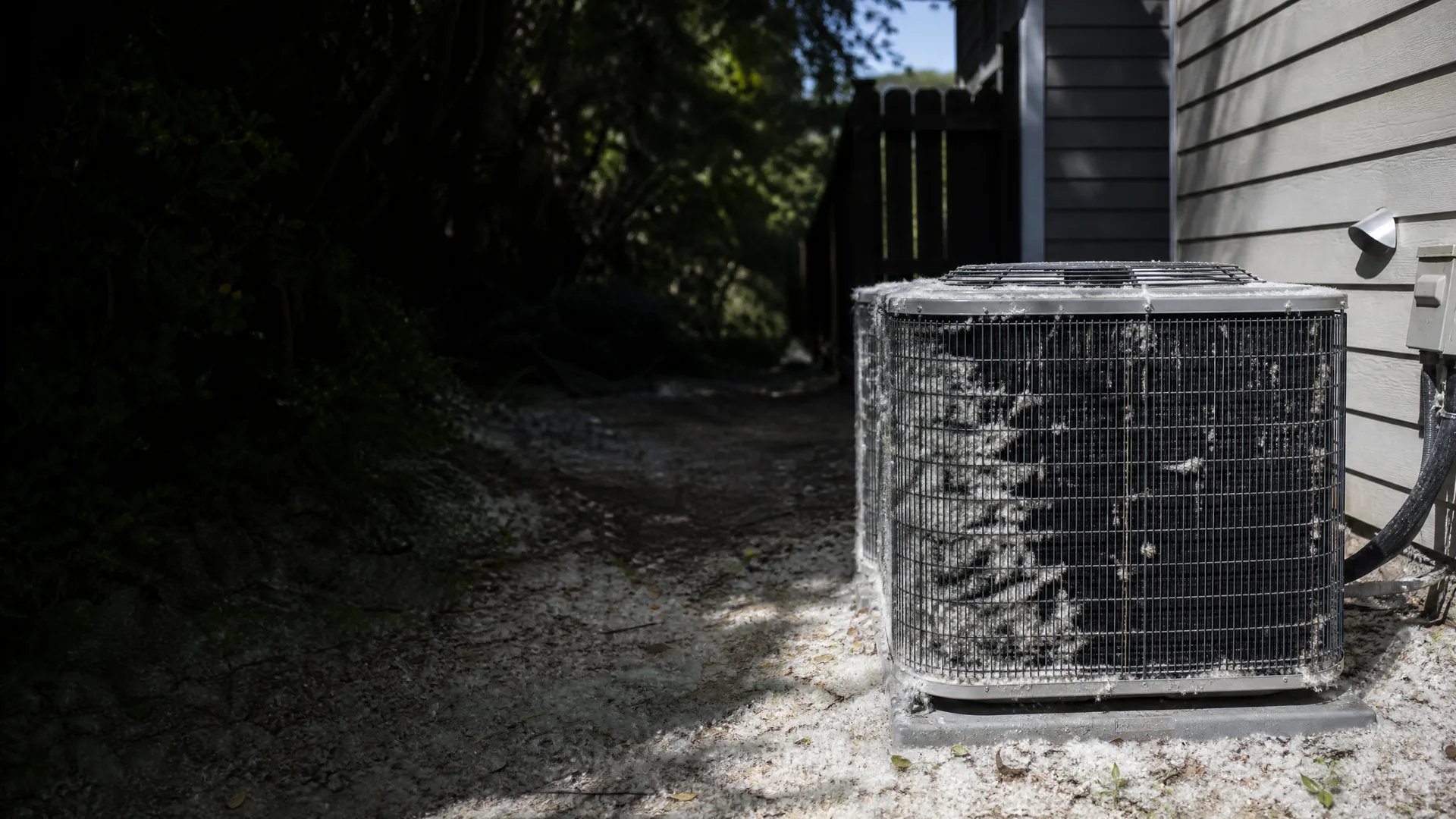
Late May, early evening, and you're out in the side yard rolling the trash bin back after pickup. The cottonwoods along the fence line have been shedding for days, and a drift of white fluff has caught against the condenser, packed into the fins like dryer lint. The unit is running, you can hear it, but the sound feels dull, like it's working through a blanket. You crouch down and brush a handful off the side, and more just takes its place from the air. You make a note to deal with it this weekend, then head back inside before the mosquitoes find you.
The drain line clogs because warm, sticky air keeps that coil working hour after hour, all summer, and the water it pulls out has nowhere to go but down a line about as wide as your finger. Clear it once and it buys you a few weeks. Clear it on a schedule and it stays clear, which is what a flush before the humid months set in actually does. A contractor who works this equipment every summer in Wisconsin knows where these lines block first and checks that spot without guessing. You'll get matched to one local contractor, not a handful of companies competing for the callback, so the person who shows up is the one who takes care of it. The pan stays dry, the switch doesn't trip, and the system runs the way it's built to instead of fighting a clog you can't see. That's the whole problem, and it has a straightforward fix.
Only one pro gets your request, so you hear from one company.
You're not committing to anything by asking.
