






A nighttime view of a tree-lined residential street with illuminated two-story brick houses and street lamps.

AC Maintenance in Shawano, WI

Tell us about the job

Takes about a minute. No obligation.

Tune-up, service, or cleaningCentral ACShawano County, WI
Step 1 of 2

What ZIP code is the job in?

AC runs here from July through August, about two months a year. June is the month before it starts, and that's when a check does the most good. Your system has been sitting unused since last summer, and the first hot days in July ask it to run at full output right away. If a capacitor is weak or the charge is low, that's usually when it shows, with the system running constantly and still not cooling the house. Catching that in June instead of July means you're not without cooling during the only two months you need it.

2 months
July through August, your air conditioner is on duty
78°F
the average summer afternoon it cools against
15 hail events
in ten years, and hail bends the fins on outdoor coils
40 wind events
in ten years, and wind drives debris into outdoor units
Isometric cutaway illustration of a single-story house with a dark shingled roof, showing interior rooms with ductwork and an indoor air handler connected to an outdoor condenser unit beside the building.
Your air conditioner works hardest from July through August.

NOAA nClimDiv, 1991–2020 normals

Two months of real cooling duty is about as light as it gets for a compressor.

Light duty here does not mean no duty, so a yearly check still matters.

Nothing here works this system harder than it has to, so once a year is enough

Half the homes here were built by 1975
Cooling runs July through August
Summer afternoons average 78°F
An easy two months, once a yearWisconsin electricity ran 17.18 cents per kilowatt-hour in 2024, so a weak capacitor or low charge shows up on the bill too.

A yearly check before June is about all this system needs here. The technician clears a year of dust off the coil, checks the refrigerant charge, and tests the capacitor before it has to carry a July afternoon at 78 degrees. None of that takes long when the unit has only been idle, not struggling. Skip a few years and small things stack up quietly, a coil caked with debris or a capacitor on its way out, until the first hot week finds them for you. One visit a year catches that early, while the fix is still small.

Book it before the season

It starts running hard in the first month of the season here. Book the check the month before.

Find a contractor
An outdoor air conditioning condenser unit mounted on a concrete pad surrounded by gravel, photographed against a partly cloudy blue sky.

What a real check covers, and what gets skipped

A thorough check starts outside, with the technician cutting power at the disconnect before anything else happens. Then the coil fins get cleaned, not just glanced at, since caked-on debris is the main reason a system runs long and cools little. The refrigerant charge gets measured against what the system calls for, not just checked for being low. The capacitor gets tested under load, because a capacitor can read fine sitting still and still fail the moment it has to start the compressor. The contactor gets looked at for pitting, since a pitted contactor is what leaves a system running nonstop down the road. A quick visit skips most of this and checks that the unit turns on and blows cold air, which tells you almost nothing about what it will do on the first real hot day.

What's hiding behind the panel

A fan motor can run fine for months with a bearing that's starting to go, making a noise that only shows up under load. Wiring connections loosen from the system cycling on and off over the years, and a loose connection builds heat at that spot every time the unit runs. None of this shows up as the system failing to cool. It shows up later, usually as a bigger repair.

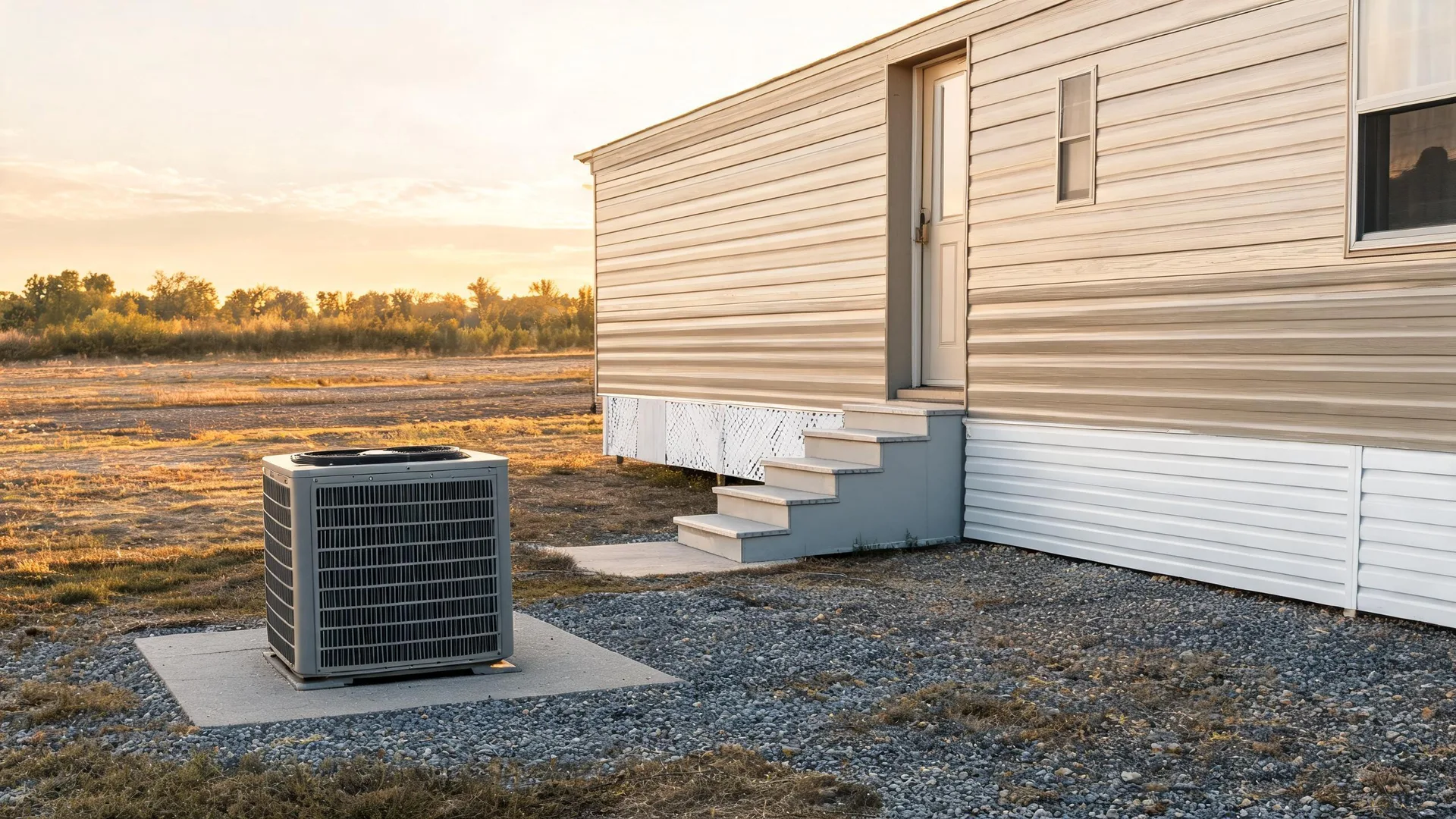
Why the inside of the unit matters more than the outside

A dirty filter is easy to spot and easy to fix. The evaporator coil inside the air handler is not something a homeowner ever sees, and it's where airflow problems actually start. A coil losing airflow makes the compressor work harder to pull the same heat out of the house, and that strain is invisible until the compressor is the thing that fails.

An outdoor air conditioning condenser unit positioned on a concrete pad next to a blue-sided house, surrounded by green shrubs and flowering hydrangeas at sunset.

Book your AC tune-up in June, before homes here start needing cooling in July.

  1. Jan
  2. Feb
  3. Mar
  4. Apr
  5. May
  6. Jun
  7. Jul
  8. Aug
  9. Sep
  10. Oct
  11. Nov
  12. Dec

A tune-up checks the refrigerant charge, cleans the coils, tests the capacitor and tightens the electrical connections.

A proper tune-up starts with the nameplate, not a guess. The technician checks the refrigerant charge against what the system is rated for, using gauges, not a glance at the lines. The condenser coil gets washed clean, since a coil coated in a season of dust can't give up heat the way a clean one does, no matter how much refrigerant is in the lines. The capacitor gets tested under load, because that's the only way to catch one that's about to fail. Drain lines get checked too, since a clogged one backs up and shuts the system down on its own, with nothing wrong with the compressor at all. Each of these is a separate check. Skipping one doesn't make the tune-up faster, it just means that part fails on its own schedule instead of yours.