






A row of illuminated two-story brick houses with front porches and mature trees photographed at twilight.

AC Maintenance in River Falls, WI

Tell us about the job

Takes about a minute. No obligation.

Tune-up, service, or cleaningCentral ACPierce County, WI
Step 1 of 2

What ZIP code is the job in?

Half the homes in Pierce County were built in 1980 or later. If yours is one of them, your air conditioner may not be the original unit, but the house itself is on the newer side by national standards. A newer system has more years ahead of it, and that's exactly the equipment a yearly check pays off on. A tech can catch a weak capacitor or a dirty coil while it's still a small job, instead of waiting for it to fail outright. Keeping a system like that running is usually the better call over replacing it.

3 months
June through August, your air conditioner is on duty
79°F
the average summer afternoon it cools against
24 hail events
in ten years, and hail bends the fins on outdoor coils
31 wind events
in ten years, and wind drives debris into outdoor units
Isometric line illustration of a cutaway single-story building showing interior rooms, ceiling ductwork, an indoor air handler, and an outdoor condenser unit connected by a line set.
Your air conditioner works hardest from June through August.

NOAA nClimDiv, 1991–2020 normals

A dirty condenser coil makes the compressor work harder to move the same heat.

A skipped tune-up lets that dirt build up until the compressor is the part that fails.

Three months of work a year is not much to ask of a compressor

Cooling runs June through August
Summer afternoons average 79°F
31 damaging wind events from 2015 to 2024
June starts the jobCooling in Pierce County runs June through August, so May is when to get it checked.

A dirty filter is the one thing a homeowner can check without a tech. If it's gray and clogged, the blower has to pull harder to move air across the coil, and that lost airflow shows up as a system that runs longer to hit the same temperature. The coil behind that filter needs to stay clean too, since it's where the heat actually leaves the house. A coil caked in dust can't shed heat well, so the compressor runs hotter and longer than it should. Then there's the drain line, which carries off the water the coil pulls out of the air. If that line clogs with algae or sludge, the water backs up and either trips a safety switch or spills out where it shouldn't. None of these three are related to each other, but a tune-up checks all of them, because any one of them left alone can shorten the life of the compressor.

A newer system is worth keeping that way

A system with years still ahead of it is worth keeping on schedule. Have it checked each spring before the heat sets in, and small problems stay small.

Find a contractor
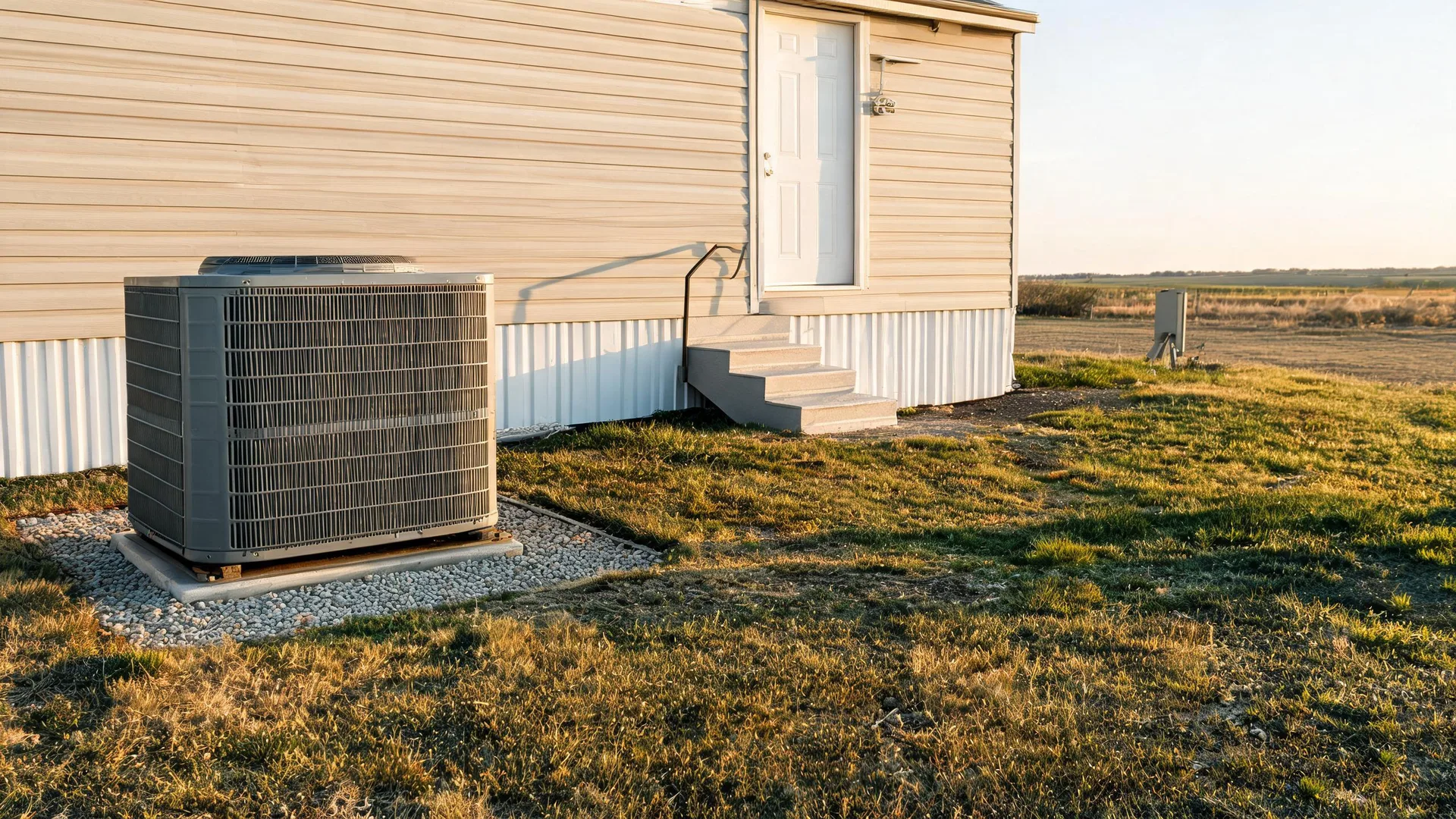
An outdoor air conditioning condenser unit mounted on a concrete pad beside a house, with electrical conduit running to a wall-mounted disconnect box.

What's wrong doesn't always make noise

Most of what wears out in an AC doesn't make noise doing it. A compressor can lose a little refrigerant through a fitting every year, slow enough that nothing trips or trips alarms, but the system still runs longer each time it cycles on. A capacitor weakens the same way. It still starts the compressor most days, until the morning it doesn't, and by then the compressor has been drawing a hard start for months without anyone knowing. A tech checks these with gauges and a meter, reading numbers against what the system is built to run at. That's the difference between a tune-up and a glance. Looking at a unit tells you if it's running. Testing it tells you if it's about to stop.

Keep the filter clean

Check the filter once a month while the system is running, and swap or wash it when it's gray. A clean filter is the one thing a homeowner can keep up with alone. Don't open the cabinet past that or go near the electrical box. The capacitor inside can hold a charge even with the power off, and that part is for a tech to handle.

Watch how it runs, not just whether it runs

Between visits, pay attention to how long the system runs to cool the house, whether water is pooling near the indoor unit, and whether the outdoor unit sounds different than it used to. A longer run time or a new noise doesn't mean wait for the next tune-up. It means call sooner, because a part working too hard now is a part that fails before its time.

Overhead view of an air conditioning condenser unit on a concrete pad next to a house with asphalt shingle roofing and vinyl siding.

Book your AC tune-up in May, before homes here start needing cooling in June.

  1. Jan
  2. Feb
  3. Mar
  4. Apr
  5. May
  6. Jun
  7. Jul
  8. Aug
  9. Sep
  10. Oct
  11. Nov
  12. Dec

A tune-up checks the refrigerant charge, cleans the coils, tests the capacitor and tightens the electrical connections.

A tune-up starts outside, at the condenser. The tech checks refrigerant charge against what the system calls for, because too little or too much makes the compressor work harder than it should. The coil gets cleaned if it's caked with dust or grass clippings, since a dirty coil can't shed heat the way it needs to. Electrical connections get checked too, and the capacitor gets tested, because a weak capacitor is one of the more common reasons a compressor struggles to start. Inside, the tech checks the blower motor and makes sure airflow across the evaporator coil is where it should be. The condensate drain gets checked for clogs, since a blocked line backs up water instead of carrying it away. Refrigerant lines, electrical connections, the thermostat calling correctly: all of it gets looked at, not just the parts that are easy to reach.