







Aerial view of a gray central air conditioning condenser unit on a concrete pad next to a house with vinyl siding.

AC Maintenance in Rice Lake, WI

Tell us about the job

Takes about a minute. No obligation.

Tune-up, service, or cleaningCentral ACBarron County, WI
Step 1 of 2

What ZIP code is the job in?

Cooling in Barron County runs about two months, July through August. That's not much time, but those two months ask a lot of a system that has sat idle since last summer. June is the month to have it checked, before the heat actually arrives. A dirty coil or a weak capacitor means the unit has to work harder right from the start, with no slow stretch in between to catch up. Get it looked at in June and it's ready when July hits.

2 months
July through August, your air conditioner is on duty
78°F
the average summer afternoon it cools against
26 hail events
in ten years, and hail bends the fins on outdoor coils
35 wind events
in ten years, and wind drives debris into outdoor units
Isometric cutaway illustration of a single-story house showing interior rooms, ductwork and an air handler in the attic space, and an outdoor condenser unit connected by lines at the exterior wall.
Your air conditioner works hardest from July through August.

NOAA nClimDiv, 1991–2020 normals

Barron County only asks for two months of real cooling each summer.

A system that light on duty usually fails from a skipped check, not from the work itself.

One AC checkup a year covers Rice Lake

Half the homes here were built by 1977
Cooling runs July through August
Summer afternoons average 78°F
One AC checkup a year covers Rice LakeWisconsin electricity ran 17.18 cents per kilowatt-hour in 2024, so a system running clean matters more than a system running often.

A yearly check before summer is what makes two light months stay light. Skip it a few years running and small things stack up, a dirty coil, a capacitor going weak, and the unit starts working harder to do the same job. That's when a compressor gives out early, and a compressor failing usually means the whole outdoor unit gets replaced. A once-a-year visit catches the small stuff while it's still small. For a system that only has to run two months a year, that's a fair trade.

Book it before the season

It starts running hard in the first month of the season here. Book the check the month before.

Find a contractor
A man in a cap, dark jacket and tan work pants carries a canvas tool bag up porch steps toward a green front door, with a potted shrub beside the entrance.
A gray cylindrical air conditioning condenser unit mounted on a concrete pad next to a light-colored vinyl-sided house exterior.

Sitting idle still wears it down

A season left unchecked doesn't mean a season without wear. A capacitor weakens sitting in the cabinet all winter the same as it would running every day. Dust settles on the coil whether the fan ever turns or not. Refrigerant can seep out slowly through a fitting all year, running or idle, and the only way to catch that is to have the charge checked before the compressor has to work against it. None of that shows up as a problem right away. It shows up as warm air on the first hot day, or the compressor straining to do what it used to do without trouble. A yearly check catches the capacitor and the coil and the charge before any of them turn into a bigger repair.

Refrigerant charge, checked with gauges

A system can be low on refrigerant and still blow cold air at the vent, just not as cold as it should. The only way to know the charge is right is to connect gauges and measure it. Run it low for a season and the compressor works harder to move the same heat, which is what shortens its life.

The start capacitor, tested under load

A weak capacitor can still kick the compressor on every time, right up until the day it doesn't. Looking at it tells you almost nothing. Testing it under load shows the one number that says whether it's still good or about to leave the compressor trying to start on its own.

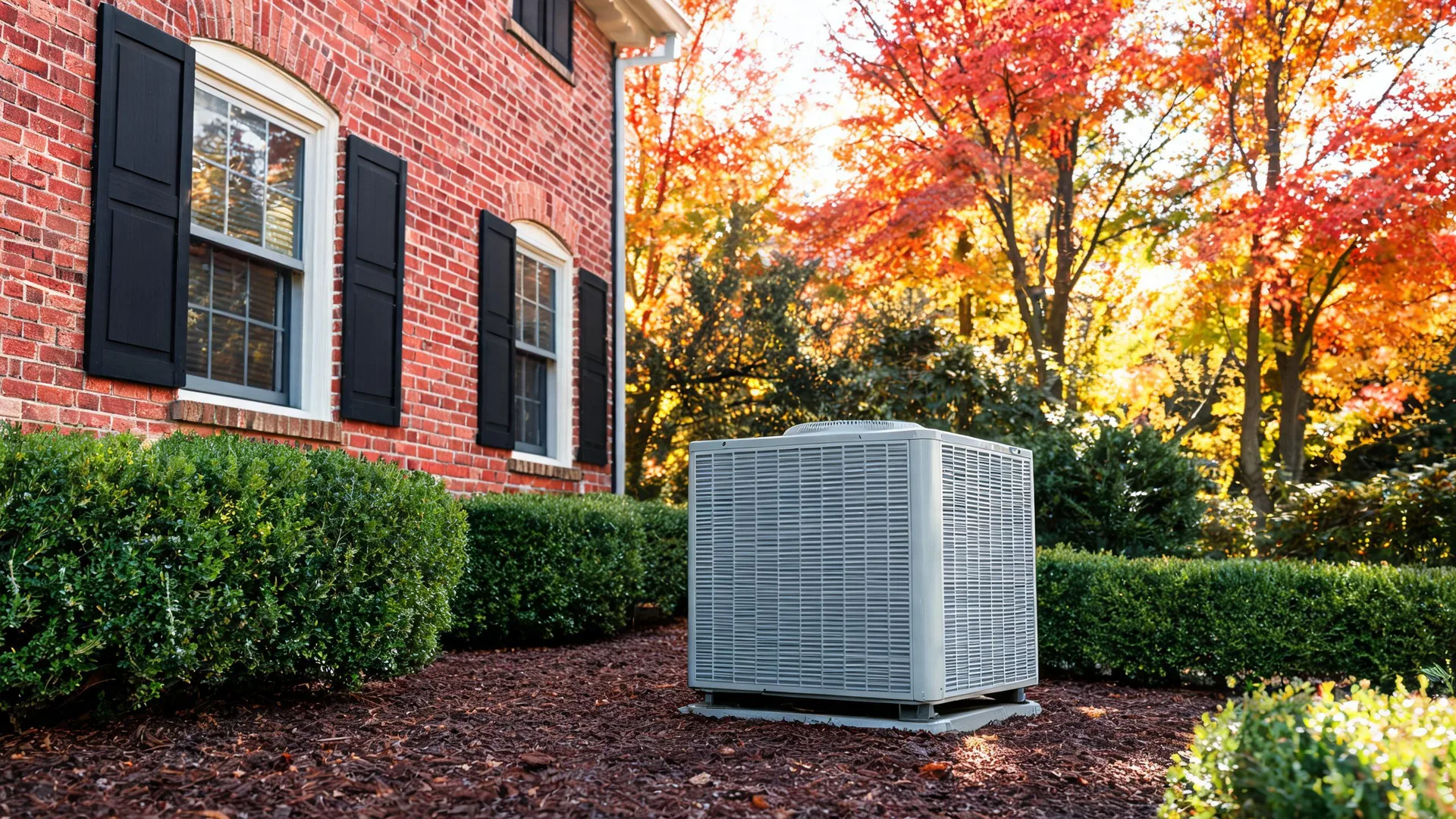
An outdoor air conditioning condenser unit on a concrete pad next to the gray vinyl siding of a residential home.

Book your AC tune-up in June, before homes here start needing cooling in July.

  1. Jan
  2. Feb
  3. Mar
  4. Apr
  5. May
  6. Jun
  7. Jul
  8. Aug
  9. Sep
  10. Oct
  11. Nov
  12. Dec

A tune-up checks the refrigerant charge, cleans the coils, tests the capacitor and tightens the electrical connections.

A tune-up starts outside at the condenser coil, the metal fins wrapped around the outdoor unit. Dirt and grass clippings pack into those fins over time, and a coil that can't shed heat makes the compressor run longer to do the same job. Cleaning it is most of the visit right there. After that comes the electrical side. The contactor gets checked for pitting, the wiring gets checked for anything vibration has loosened, and the fan motor gets watched to see that it spins freely and isn't pulling more current than it should. The condensate drain gets checked too, since a clogged one backs water up into the pan and sometimes into the house. None of this is guesswork. Each part either passes or it doesn't, and a tech who's done the check knows which one.