





An outdoor central air conditioning unit mounted on a concrete pad beside a blue-sided house at sunset.

AC Maintenance in Monroe, WI

Tell us about the job

Takes about a minute. No obligation.

Tune-up, service, or cleaningCentral ACGreen County, WI
Step 1 of 2

What ZIP code is the job in?

A quick tune-up means someone glances at the outside unit, hoses off the condenser coil, and checks the refrigerant pressure before heading out. A thorough one takes longer because there's more to check. The tech should pull the capacitor and test it under load, not just look at it, since a weak capacitor often still runs the compressor but shortens its life. They should check the refrigerant charge against the manufacturer's numbers rather than just topping it off. The contactor points get inspected for pitting, the blower wheel gets checked for dust buildup that throws off airflow, and the condensate drain gets flushed so it doesn't back up later. If the tech is in and out in a few minutes with nothing written down, that's the quick version. If they're checking electrical readings and telling you what they found, that's the one that catches problems before they become breakdowns.

3 months
June through August, your air conditioner is on duty
81°F
the average summer afternoon it cools against
28 hail events
in ten years, and hail bends the fins on outdoor coils
42 wind events
in ten years, and wind drives debris into outdoor units
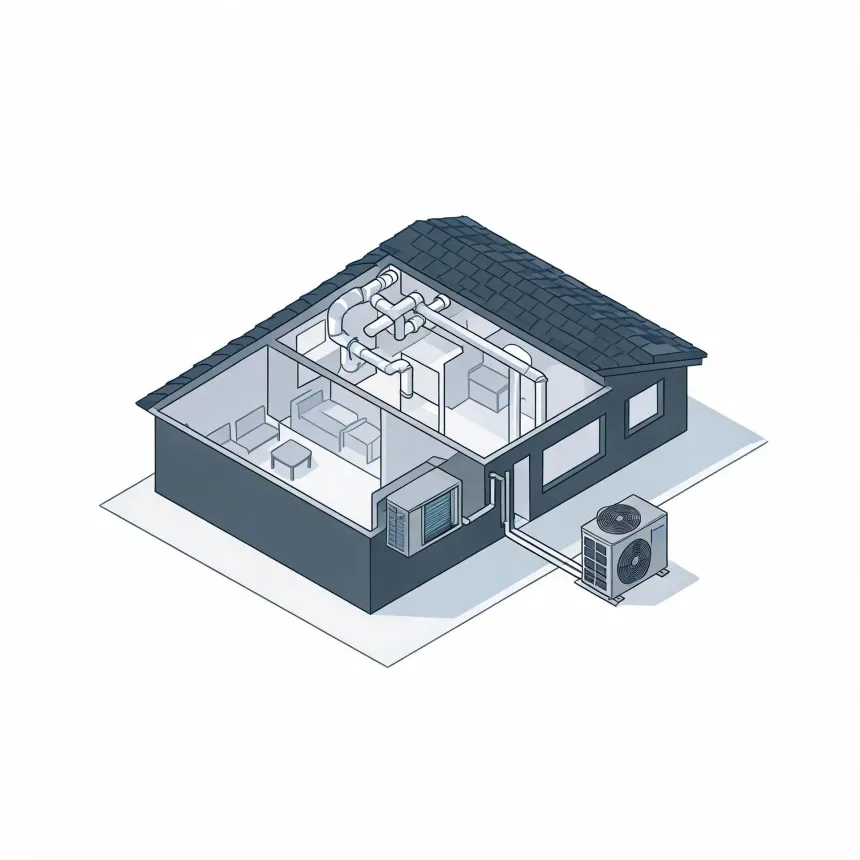
Isometric line illustration of a cutaway single-story house showing interior rooms with furniture, ceiling ductwork, an indoor air handler, and an outdoor condenser unit connected by lines along the exterior wall.
Your air conditioner works hardest from June through August.

NOAA nClimDiv, 1991–2020 normals

Monroe summers only push this system about three months a year, June through August.

A compressor that short a year still wants its yearly check, since most of what wears it out here is age, not the workload.

Half the homes in Green County date to 1972 or earlier, which is reason enough for a yearly check

Half the homes here were built by 1972
Climate zone 5A
Power costs 17.18 cents a kWh statewide

One visit a year covers it. Wisconsin electricity ran 17.18 cents per kilowatthour in 2024, and a dirty coil or a weak capacitor makes the compressor pull more of those cents to do the same job. A yearly check catches that before it shows up on the bill. This system doesn't run long enough here to need more than that. Once, done before summer, is enough to find what's changed since last year.

Three easy months still call for a yearly check

The light summer load here does not mean the compressor skips a year of aging. A check before June finds what changed since last summer, while there is still time to fix it before the system has to run.

Find a contractor
A man seen from behind in a navy T-shirt and tan work pants carries a canvas tool bag up concrete steps toward a green front door, with a potted shrub to the right.
An outdoor residential air conditioning condenser unit mounted on a concrete pad, surrounded by gravel with a blue sky in the background.

An old system only gets watched if someone watches it every year

If your system has been in the house since it was built, nobody's checked it since the day it went in unless someone made a point of it. A yearly visit is that point. The tech checks the same things every time, so this year's numbers get compared against what they find next year, not just against a spec sheet. That's how a contractor catches a capacitor that's drifting weak or a charge that's slipping before either one takes the compressor out with it.

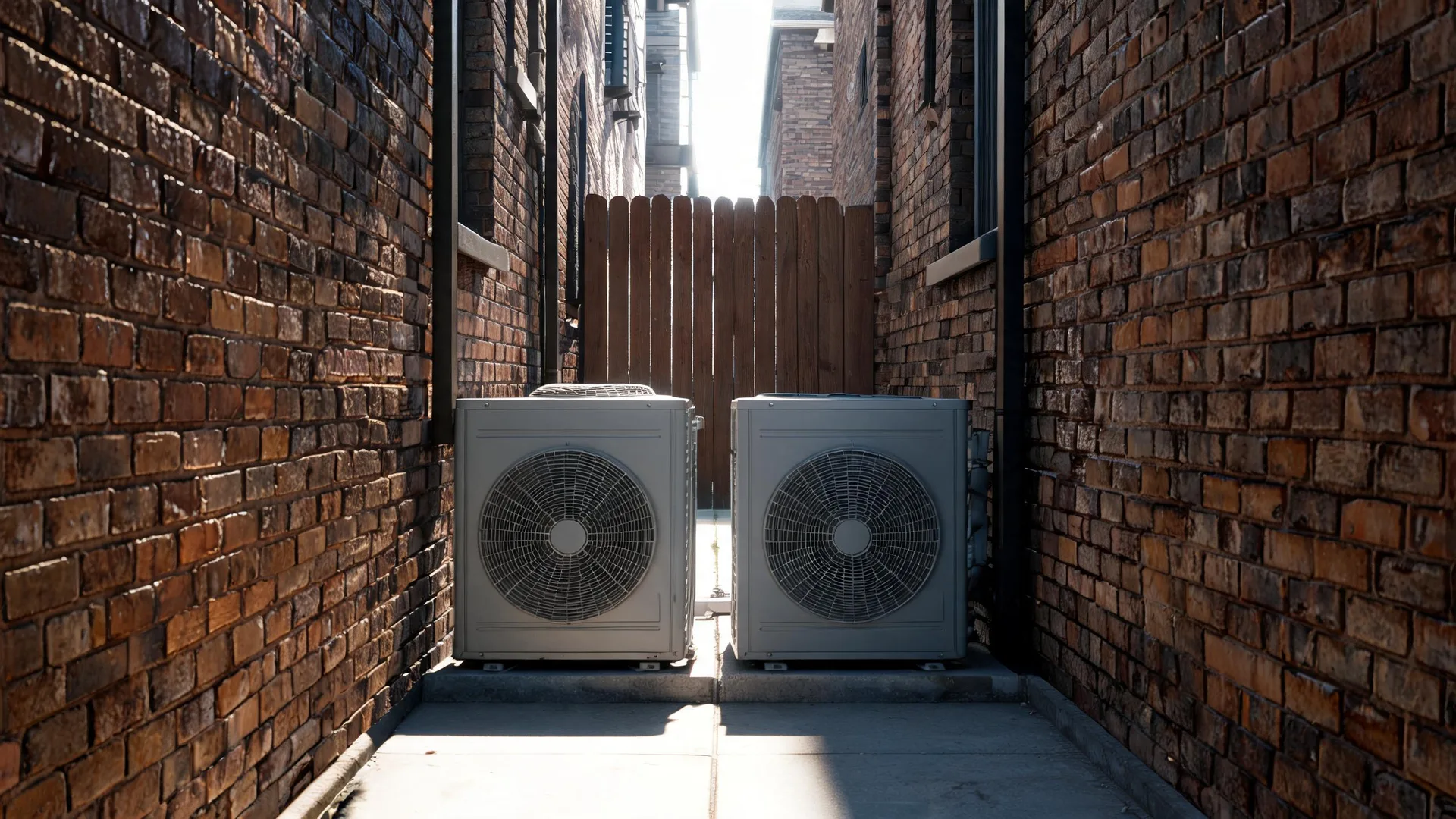
Keep the area around the outside unit clear

The condenser needs open air on all sides to shed heat. Grass clippings, leaves, and anything stacked against it make the compressor work harder than it should. Keep plants trimmed back and don't stack patio furniture or bags of mulch against it.

Change the filter, but don't go looking for trouble beyond that

A dirty filter chokes airflow across the coil, and that's the one thing worth checking yourself between visits. Pull it, hold it to the light, swap it if you can't see through it. Leave the refrigerant charge, the electrical readings, and the coil itself to the yearly check. Opening up the unit without the right gauges does more harm than the dust ever would.

An outdoor air conditioning condenser unit installed beside the exterior wall of a blue vinyl-sided house at sunset.

Book your AC tune-up in May, before homes here start needing cooling in June.

  1. Jan
  2. Feb
  3. Mar
  4. Apr
  5. May
  6. Jun
  7. Jul
  8. Aug
  9. Sep
  10. Oct
  11. Nov
  12. Dec

A tune-up checks the refrigerant charge, cleans the coils, tests the capacitor and tightens the electrical connections.

A tune-up worth paying for starts outside and ends inside, not the other way around. The tech checks the thermostat calls for cooling correctly and that the system responds within a reasonable time. Airflow gets checked at the supply vents, not just assumed, because a coil can be clean and a system can still move too little air if a duct is crushed or a damper's stuck. The outdoor fan motor gets checked for noise and end-play in the bearing, since a motor that wobbles on its shaft now is a motor that seizes later. Line set insulation gets looked over, not just for show but because bare copper sweats and that moisture finds somewhere to go. None of this takes the place of the electrical and refrigerant checks already covered. It's what separates a tech who knows the whole system from one who only knows the coil and the capacitor.