



A row of dark-sided single-story houses with gray shingled roofs behind trimmed hedges and a mown lawn, framed by overhanging tree branches under an overcast sky.

AC Maintenance in Milwaukee, WI

Tell us about the job

Takes about a minute. No obligation.

Tune-up, service, or cleaningCentral ACMilwaukee County, WI
Step 1 of 2

What ZIP code is the job in?

Your AC only has to earn its keep for about three months here, June through August, with afternoon highs averaging around 79°F. That's not hard on a system. One visit a year, timed for late spring before the first real stretch of heat, is enough to catch a weak capacitor or a dirty coil before it leaves you without cooling in July. Milwaukee does see its share of wind and hail, so it's worth a quick look at the outdoor unit after any rough storm, bent fins or a cracked fan blade are the kind of thing a contractor can spot fast. Outside of that, there's nothing about this county that wears equipment down faster than normal.

3 months
June through August, your air conditioner is on duty
79°F
the average summer afternoon it cools against
70 hail events
in ten years, and hail bends the fins on outdoor coils
71 wind events
in ten years, and wind drives debris into outdoor units
Isometric cutaway illustration of a single-story house showing interior rooms with ductwork and an air handler, connected by refrigerant lines to an outdoor condenser unit on the left.
Your air conditioner works hardest from June through August.

NOAA nClimDiv, 1991–2020 normals

June is when cooling starts working for a living in Milwaukee County.

Get the check done in May, before that first stretch of heat finds the weak part.

A quick visit usually means a gauge reading and a glance at the outdoor unit, then the contractor's back in the truck. That catches almost nothing. A thorough one means the panel comes off, the capacitor gets tested under load against its rating, and the contactor gets looked at for pitting since that's what eventually keeps the compressor from starting at all. The coil gets checked for dirt on both sides, not just a glance through the fins, and the drain line gets cleared, not just looked at. The blower wheel comes out far enough to see if it's caked with dust, because that's what throws it out of balance months later. If a visit is done in under the time it takes to do all that, something got skipped.

Keep the yearly check

Once a year is enough here.

Find a contractor
A man in a cap, gray T-shirt and tan work pants carries a worn leather tool bag up wooden porch steps toward a green front door.
A gray residential air conditioner condenser unit mounted on a concrete pad in an open grass field.

The house may be older than the AC

Half the homes in Milwaukee County went up in 1957 or earlier. A system that old has usually been swapped out at least once, but the ductwork and the electrical feeding it are often whatever came with the house. A yearly check is how a contractor catches the strain that puts on a new unit before it shows up as a bigger repair.

The refrigerant charge is never obvious from outside

A system low on refrigerant still blows air and still runs. It just stops pulling enough heat out of the house while the compressor keeps working like it's doing its full job. A gauge set on the service ports is the only way to know the charge is right. By the time you notice weak cooling, the compressor has already been straining for a while.

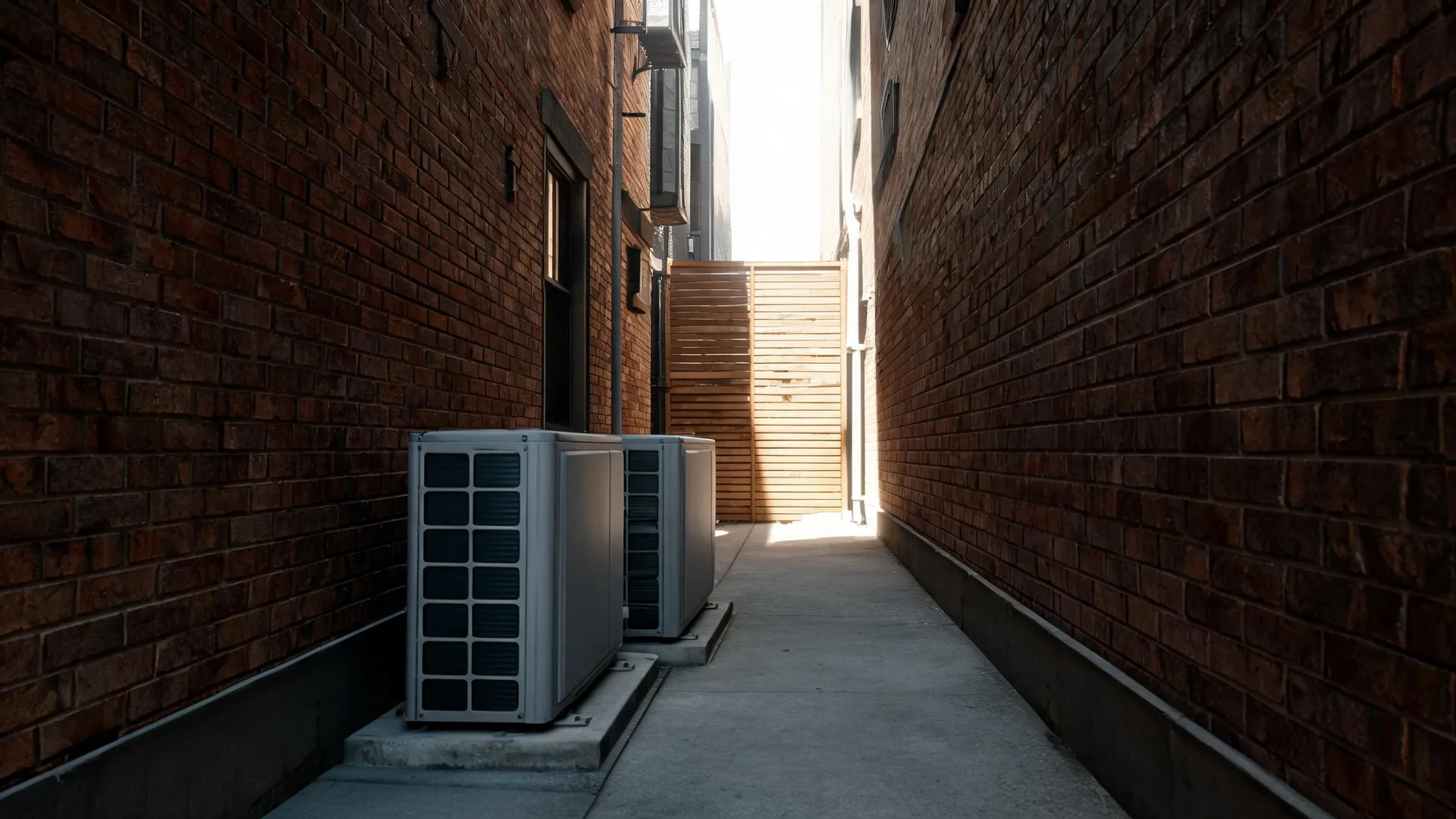
Electrical wear hides inside the parts that start the system

The capacitor that kicks the compressor and fan motor into motion weakens slowly, long before it fails outright. A weak one makes the motor struggle on every single start, which is its own kind of wear. Checking it with a meter catches this before the day it just doesn't start at all, usually on the hottest afternoon of the summer.

An outdoor air conditioning condenser unit installed beside the exterior wall of a blue vinyl-sided house at sunset.

Book your AC tune-up in May, before homes here start needing cooling in June.

  1. Jan
  2. Feb
  3. Mar
  4. Apr
  5. May
  6. Jun
  7. Jul
  8. Aug
  9. Sep
  10. Oct
  11. Nov
  12. Dec

A tune-up checks the refrigerant charge, cleans the coils, tests the capacitor and tightens the electrical connections.

A real tune-up starts outside, with the power off and the panel open. A contractor checks the capacitor's output against what's stamped on it, not just whether it's bulging. The contactor gets a look too, since its points pit and burn with every start the compressor makes. Refrigerant pressure gets checked at the service ports, because that's the only way to know the charge is right. Inside, the coil gets inspected for dirt and the drain line for algae, since a clogged drain backs up and can shut the whole system down on its own. The blower wheel and motor get checked for the kind of dust buildup that throws them out of balance over time. None of this takes long when nothing's wrong, and a system that gets this look every year rarely surprises anyone.