A low-angle view across a mown lawn and trimmed hedge toward a dark two-story house with a covered porch, framed by large leafy trees under an overcast sky.

AC Maintenance in Mequon, WI

Tell us about the job

Takes about a minute. No obligation.

Tune-up, service, or cleaningCentral ACOzaukee County, WI
Step 1 of 2

What ZIP code is the job in?

Keep the filter clean

A dirty filter chokes airflow across the coil, and the coil needs that airflow to do its job. Check it every month and change or wash it when it looks gray. A clean filter is the one thing a homeowner can do that actually protects the system between visits.


Clear the space around the outdoor unit

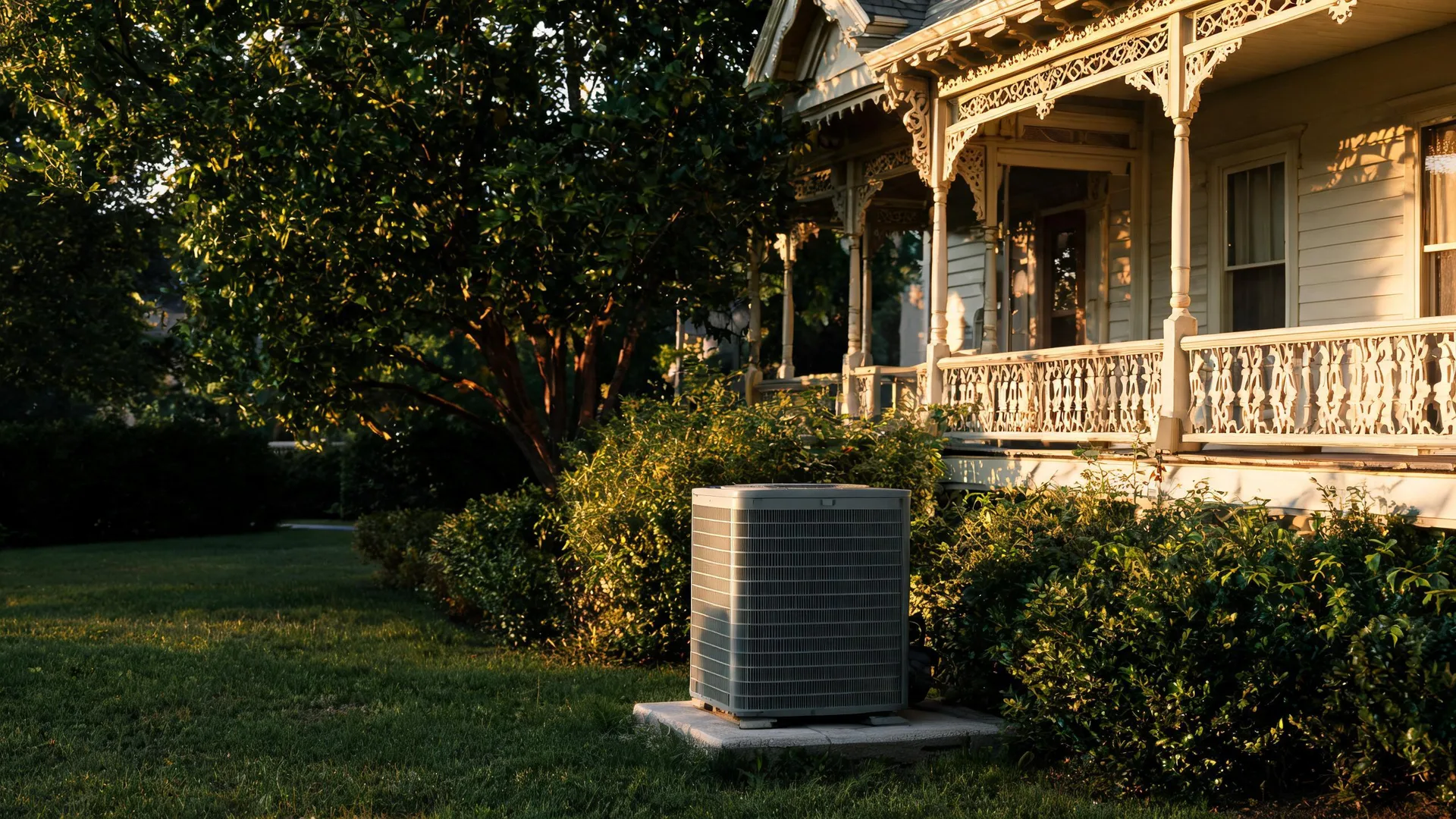
The outdoor unit needs open air on all sides to shed heat. Keep grass clippings, leaves and mulch away from it, and don't stack anything against the cabinet. If bushes or plants have grown in close, cut them back so air can move through the coil freely.

2 months
July through August, your air conditioner is on duty
78°F
the average summer afternoon it cools against
26 hail events
in ten years, and hail bends the fins on outdoor coils
30 wind events
in ten years, and wind drives debris into outdoor units
Isometric illustration of a cutaway single-story house showing attic ductwork, an indoor air handler, interior rooms with furniture, and an outdoor condenser unit connected by lines, on a white background.
Your air conditioner works hardest from July through August.

NOAA nClimDiv, 1991–2020 normals

Your air conditioner in Mequon only runs about two months a year, with afternoon highs averaging 78°F.

A system working that few days a year holds up well, so a yearly check is usually enough to keep it running for years.

One tune-up before the two months it works

Power costs 17.18 cents a kWh statewide
Cooling runs July through August
Summer afternoons average 78°F
One check a year covers itHalf the homes in Ozaukee County were built in 1978 or earlier, half later. Age aside, this system needs the same yearly check.

Book that check in spring, before the system starts its two months of real work. A technician can check the refrigerant charge, test the capacitor, and clear the condensate drain while the unit is still idle. Wisconsin's spring storms matter here too. Hail and high wind are not rare in Ozaukee County, and a bent fin or a knocked-loose panel on the outdoor unit is easier to catch before July than during it. Once the heat sets in, a weak part has no slack left to work with.

Keep up the yearly check

Easy duty still wears parts. A yearly check keeps it going a long time.

Find a contractor
A gray residential air conditioning condenser unit mounted on a concrete pad outdoors, surrounded by green grass under a partly cloudy blue sky.

What shows up only when it's running

A tune-up catches what shows up only under load. A contactor can look fine sitting still and still have pitted contacts that spark and burn with every cycle. A capacitor can hold enough charge to pass a glance and still be too weak to get the compressor through a hard start. Refrigerant charge is the same way. A system can blow cold air on a mild afternoon and still run low enough that it struggles once the temperature climbs. None of this shows up by looking. It shows up by testing the system while it runs and comparing what comes back against what the system is supposed to do.

What gets checked, not just cleaned

A thorough visit includes refrigerant charge checked against the system's target numbers, electrical connections tightened, the capacitor tested under load, and the condensate drain cleared so it can't back up. A quick visit is a rinsed coil and a filter swap. Both look the same on the invoice if you don't ask what was tested.

Ask what readings were taken

A technician doing real diagnostic work can tell you the refrigerant pressure, the temperature split across the coil, and the capacitor's reading against its rating. If the answer is that everything looks fine with no numbers behind it, nothing was actually measured. Those readings are what catch a weak part before it fails on a hot day.

Aerial view of a square outdoor air conditioning condenser unit on a concrete pad beside a house wall with a sliding glass door.

Book your AC tune-up in June, before homes here start needing cooling in July.

  1. Jan
  2. Feb
  3. Mar
  4. Apr
  5. May
  6. Jun
  7. Jul
  8. Aug
  9. Sep
  10. Oct
  11. Nov
  12. Dec

A tune-up checks the refrigerant charge, cleans the coils, tests the capacitor and tightens the electrical connections.

A tune-up is the one time all year the system gets looked at while it's running instead of after it's quit. The technician runs it long enough to pull real readings. Suction and head pressure, temperature split across the coil, amp draw on the compressor and fan motor. This type of system has no belts, but the motor bearings and the contactor that switches the compressor on still get checked for wear and pitting. The coil gets cleaned, not just rinsed, since dirt packed between the fins blocks heat transfer even when the coil looks clean from a few feet away. Wiring gets a look too, since a loose connection at the disconnect or the contactor runs hotter than it should and can fail before anything else does.