







A lit residential street at dusk featuring large two-story brick houses with glowing windows, mature trees, and a street lamp.

AC Maintenance in Madison, WI

Tell us about the job

Takes about a minute. No obligation.

Tune-up, service, or cleaningCentral ACDane County, WI
Step 1 of 2

What ZIP code is the job in?

Dane County had 140 hail events and 128 damaging wind events between 2015 and 2024. Eleven tornadoes touched down in that same stretch. Your outdoor unit sits outside through all of it, with nothing but a thin set of fins protecting the coil inside. Hail dents those fins, wind drives debris into the cabinet, and either one can cut how well the unit cools your house without you knowing it happened. On top of that, 18% of Wisconsin households lost power for a day or more in 2024, so when a storm does knock out power, it's worth knowing what shape your AC was in before it went out.

3 months
June through August, your air conditioner is on duty
81°F
the average summer afternoon it cools against
140 hail events
in ten years, and hail bends the fins on outdoor coils
128 wind events
in ten years, and wind drives debris into outdoor units
Isometric line illustration of a cutaway single-story house showing interior rooms, ductwork, an indoor air handler or furnace, and a refrigerant line running to an outdoor condenser unit on a pad.
Your air conditioner works hardest from June through August.

NOAA nClimDiv, 1991–2020 normals

A dirty filter starves airflow across the coil before you ever notice the house feels warm.

A tune-up catches that early, so the coil isn't working against a clogged filter when you need the system most.

Half the homes here were built in 1986 or later, so most of these systems still have years to protect

Half the homes here were built by 1986
Climate zone 5A
Power here costs 19.09 cents per kilowatt-hour
June Hits Hard. Have It Ready.Cooling here runs June through August, so May is when a tune-up still beats the heat.

If your AC is one of the newer ones, a yearly check is what keeps it that way. A technician cleans the coil, checks the refrigerant charge, and tightens electrical connections that work loose over time. Catching a weak capacitor or a coil losing efficiency at a tune-up means it never turns into a breakdown on the first hot day of summer. For a system built in 1986 or later with years left in it, that yearly visit is what gets you all of them.

Have the outdoor unit checked before the next storm rolls through

A tune-up is when a technician can check the fins and coil for damage from hail or wind and clear out anything driven into the cabinet. Get that done before storm season, and if the power does go out, you already know your AC came into it in good shape.

Find a contractor
A man in a dark T-shirt and tan work pants carries a canvas tool bag up wooden porch steps toward a green panelled front door, with a potted shrub beside the entry.
A gray cylindrical air conditioning condenser unit mounted on a concrete pad next to a light-colored vinyl-sided house exterior.

Every Hour It Runs Without a Look Adds Up

A system that never gets opened up still runs, right up until it doesn't. Dust and grime build up on the coil a little at a time, and as that layer thickens, it gets harder for the coil to pull heat out of the air. The system has to run longer to do the same job, and the parts that start and stop it, the capacitor, the contactor, take more cycles to get there. Electrical connections loosen on their own over months of vibration, and a loose connection runs hotter than a tight one. None of this announces itself. The house still cools. The air still comes out of the vents cold. What changes is how hard the system works to make that happen, and a system working harder wears out faster. By the time it actually fails, usually on the hottest day it's had to handle all year, the parts inside have been headed there for a long time.

The signs are easy to miss

A system that's starting to struggle rarely trips a breaker or makes a noise you'd notice. It cools a little slower, runs a little longer, cycles on and off a little more often. The air coming out still feels cold, so nothing seems wrong. Warm air from one vent, ice on the copper line, a hum when the outdoor unit should be running, a smell when it kicks on: those are the moments worth a second look, not a shrug.

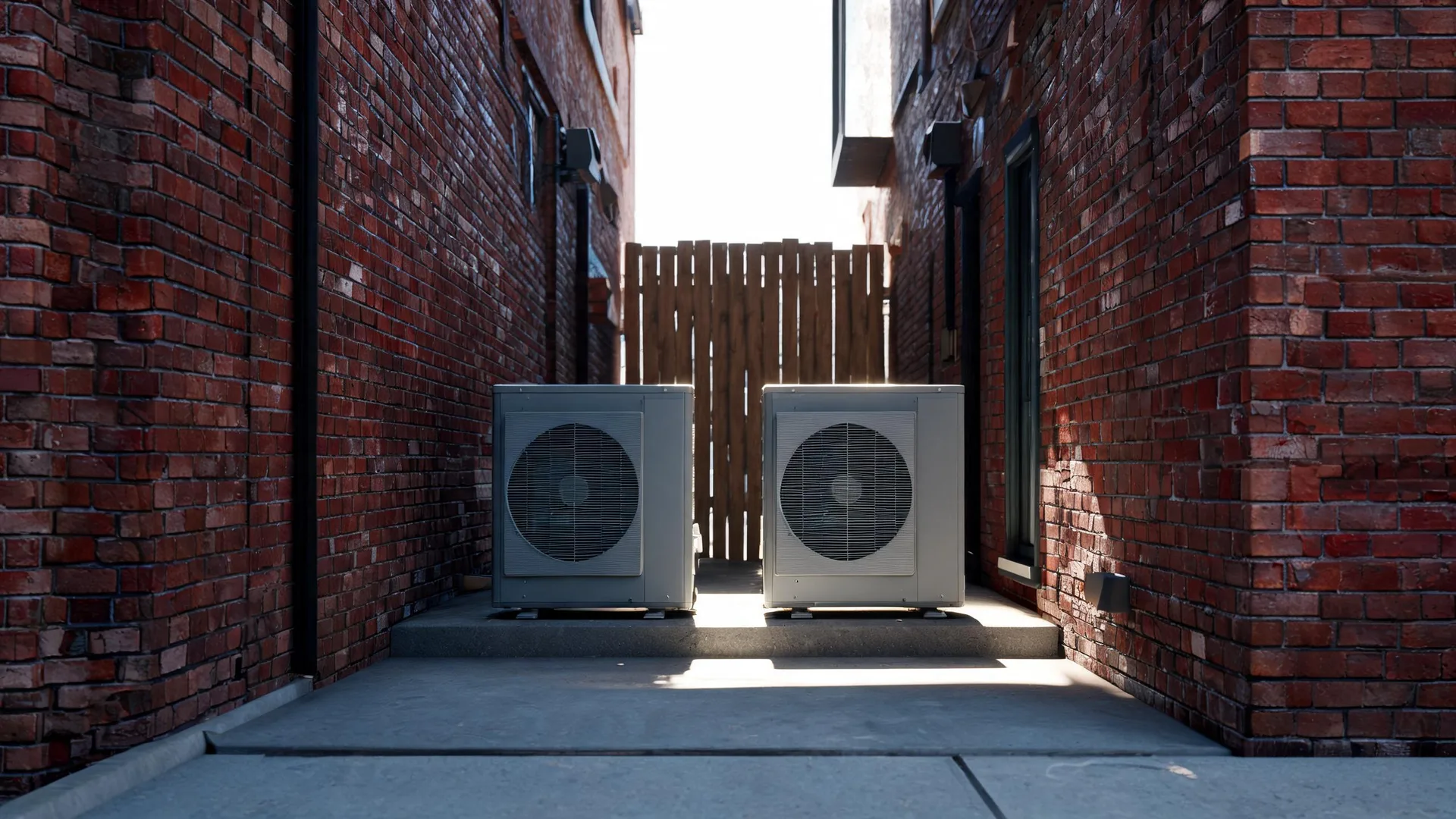
A check finds what you can't see from the thermostat

You can feel whether the house is cool. You can't feel the refrigerant charge, see the buildup on the coil, or know if a connection inside the cabinet has worked loose. A technician opening up the unit is checking the things that fail quietly, before they fail loudly.

Overhead view of a gray residential air conditioning condenser unit mounted on a concrete pad beside a house with asphalt shingle roofing.

Book your AC tune-up in May, before homes here start needing cooling in June.

  1. Jan
  2. Feb
  3. Mar
  4. Apr
  5. May
  6. Jun
  7. Jul
  8. Aug
  9. Sep
  10. Oct
  11. Nov
  12. Dec

A tune-up checks the refrigerant charge, cleans the coils, tests the capacitor and tightens the electrical connections.

A proper tune-up starts outside at the condenser, where a technician washes the coil clean so it can give up heat the way it's supposed to. The fan gets checked for a bent blade or a bearing going bad, either one can throw it off balance and wear down the motor early. Refrigerant charge gets checked against what the system calls for, since too little or too much both make it work harder for the same cooling. Inside, the technician checks the capacitor and contactor, the parts that get the system started and keep it cycling, and tightens any electrical connection that's worked loose. The evaporator coil and the drain line get checked too, since a clogged drain backs up and can shut the system down on its own. None of this is guesswork. Each part gets checked against what it should read or look like, and anything off gets caught while it's still a small fix.