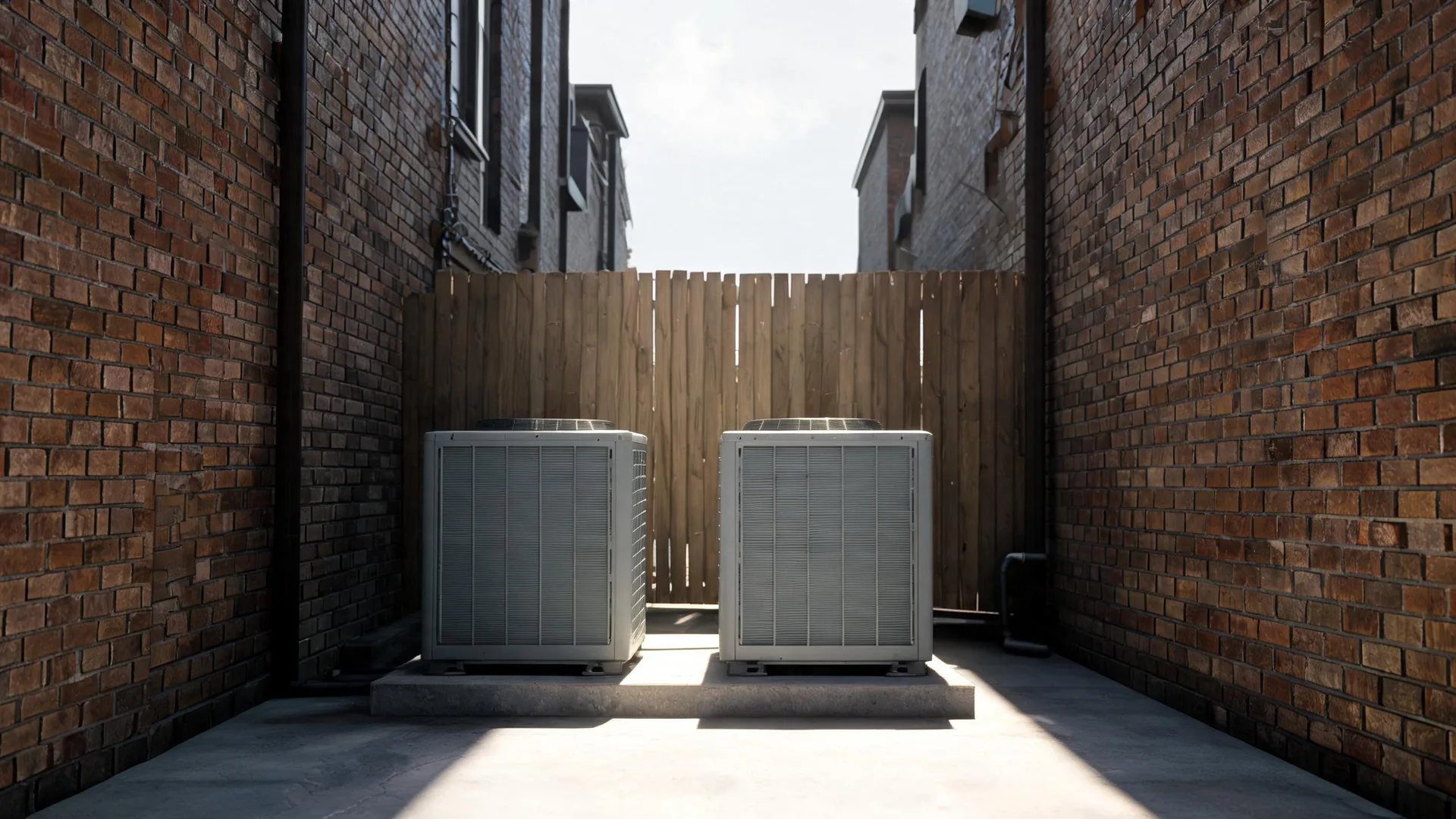
La Crosse County sees real storms
La Crosse County logged 195 severe weather events between 2015 and 2024. That included 100 damaging wind events, 66 hail events and 2 tornadoes. An outdoor AC unit sits outside through all of it.
Takes about a minute. No obligation.
La Crosse County logged 195 severe weather events between 2015 and 2024. That included 100 damaging wind events, 66 hail events and 2 tornadoes. An outdoor AC unit sits outside through all of it.
Hail dents fins and bends the cabinet. Wind throws branches and debris into the coil. A tune-up before summer catches damage sitting there from the last storm, before it turns into a bigger repair.
NOAA nClimDiv, 1991–2020 normals
A dirty coil or a low charge makes the compressor work harder to hit the same temperature.
A compressor that strains all summer is the most expensive part to replace in the whole system.



Between visits, the filter is the one thing worth checking yourself. Pull it out, hold it up to the light. If you can't see through it, swap it or clean it, depending on the kind you have. A clogged filter starves the coil of airflow, and a coil that can't breathe starts to ice over even when it's hot out. While you're at the unit outside, take a look at the area around it. Grass clippings, leaves, a bent stalk from the garden, anything pressed against the cabinet blocks the airflow it needs to dump heat. Keep a couple feet clear on all sides. Past that, leave the cabinet closed. The capacitor, the contactor and the refrigerant charge aren't things to check without gauges and training, and opening the panel yourself risks a shock for no real benefit.
A tune-up now gets eyes on the coil and cabinet before the next round of wind and hail comes through. It catches bent fins or debris sitting in the unit from last year, while it's still a simple fix.
Find a contractorA tune-up starts with gauges, not a glance. Refrigerant charge is checked by pressure and temperature, and a system can be low enough to lose capacity long before it stops cooling altogether. The technician checks the capacitor's output under load, not just whether the compressor starts, because a capacitor can be weak and still get the job done for a while before it quits in the middle of a hot stretch. They check amp draw on the compressor and fan motor against what each is rated for, which shows a motor bearing going bad before it seizes. They check the contactor for pitting, since a worn contactor can stick closed or fail to pull in at all. None of this shows up by looking at the unit running or feeling the air out of a vent. The system can seem fine and still be heading toward a breakdown that a meter would have caught months earlier.
Condensation has to drain off the indoor coil as the system runs. Algae and dirt build up in that line over time and narrow it until it stops draining at all. When that happens the pan overflows, and depending on where the unit sits, that water ends up on the floor or dripping through the ceiling below. There's usually no warning sound or smell before it happens.
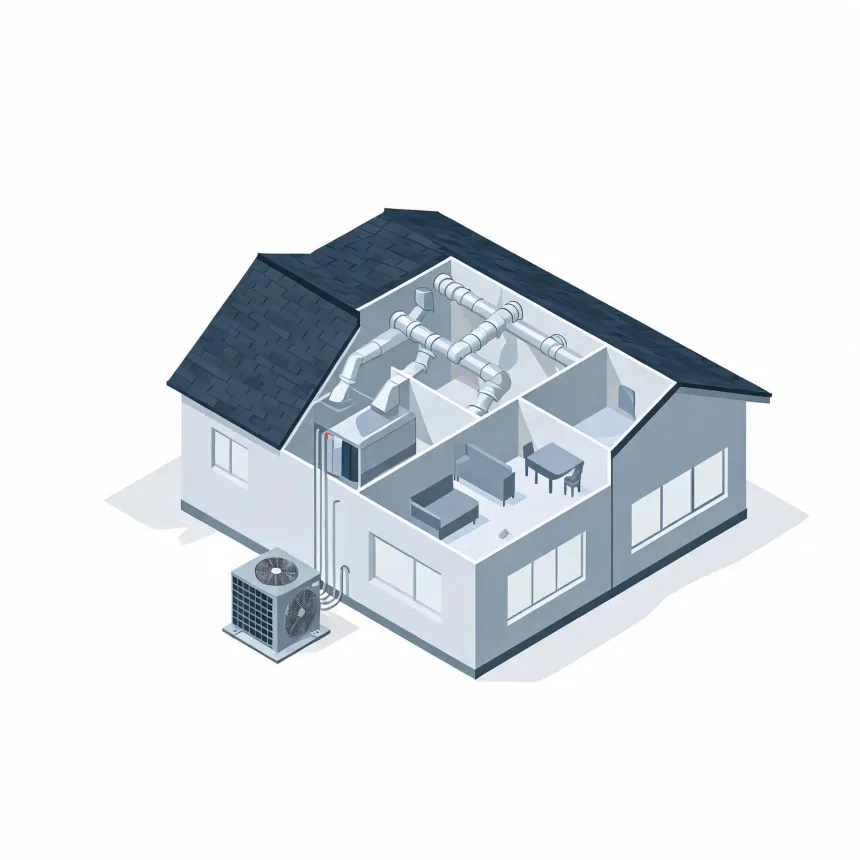
The outdoor coil's job is to dump the heat pulled from inside the house into the outside air. Dirt, pollen and grass film build up on those fins and block that exchange. Once the coil can't shed heat well, the system takes longer to cool the house and the compressor runs under more pressure than it was built for the whole time it's on.
A tune-up checks the refrigerant charge, cleans the coils, tests the capacitor and tightens the electrical connections.
A tune-up covers the parts a filter change never touches. The technician washes the outdoor coil clean rather than just looking at it, since surface dirt hides how much is packed into the fins underneath. They check refrigerant charge against the manufacturer's numbers, not by feel at the vent. They test the start and run capacitors, inspect the contactor points, and tighten electrical connections that work loose from vibration over time. Indoors, they check the blower wheel for dirt buildup, since a dirty wheel moves less air even at full speed, and they check static pressure through the ductwork to confirm the system can actually move the air it's designed to move. Each of these can be fine on its own and still add up to a system that runs longer than it should.