


Overhead view of an air conditioning condenser unit on a concrete pad next to a house with asphalt shingle roofing and vinyl siding.

AC Maintenance in Kenosha, WI

Tell us about the job

Takes about a minute. No obligation.

Tune-up, service, or cleaningCentral ACKenosha County, WI
Step 1 of 2

What ZIP code is the job in?

Your air conditioner only has to work three months a year here, June through August, with afternoon highs averaging around 80. That's a light load compared to what the furnace handles the rest of the year. Light duty doesn't mean the system owes you nothing, though. The capacitor weakens, the coil picks up dust, the refrigerant charge drifts a little, all on their own schedule regardless of how hard the unit runs. A yearly check catches those before they turn into a breakdown in July. Here, it's usually age or a part wearing out on its own, not the system being run into the ground.

3 months
June through August, your air conditioner is on duty
80°F
the average summer afternoon it cools against
17 hail events
in ten years, and hail bends the fins on outdoor coils
43 wind events
in ten years, and wind drives debris into outdoor units
Isometric cutaway illustration of a single-story house showing interior rooms, ductwork and an air handler in the attic space, and an outdoor condenser unit connected by lines at the exterior wall.
Your air conditioner works hardest from June through August.

NOAA nClimDiv, 1991–2020 normals

June is when cooling starts in Kenosha County.

Have the AC checked in May, before it has to work.

One visit a year covers it. Your AC doesn't run long enough here to need more than that, and the parts that wear, the capacitor, the coil, don't wear any faster from one summer to the next. Half the homes in Kenosha County were built in 1975 or earlier, half in 1975 or later, and it doesn't change the answer either way. An older system and a newer one both want a technician checking the same things each spring. The charge, the contacts, the coil. Skipping a year doesn't mean less work later. It just means the next visit has more to find.

Get it checked before June asks anything of it

A check before summer catches a weak capacitor or a drifting charge before the heat sets in. That's the whole job here, once a year, ahead of June.

Find a contractor
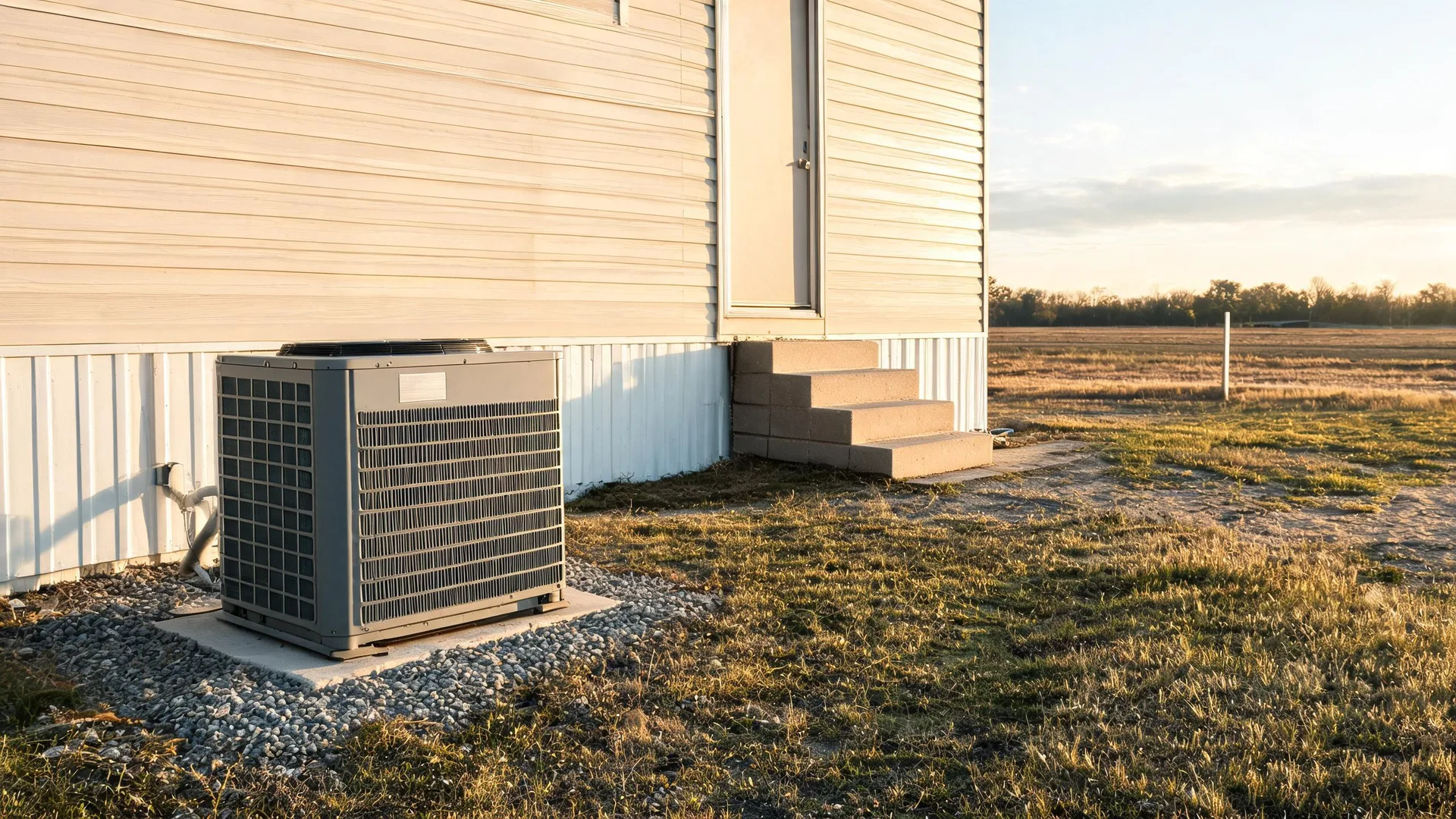
A gray cylindrical air conditioning condenser unit mounted on a concrete pad next to a light-colored vinyl-sided house exterior.

What to watch between visits

Keep the outdoor unit clear. Grass clippings, leaves and mulch pile up against the cabinet and block the airflow the coil needs to dump heat. A couple feet of open space around it is enough. Check the air filter during the summer and swap it when it looks gray or clogged. A dirty filter starves the system of airflow and makes the coil work harder than it should. Keep an ear out for anything new, a rattle, a hum that wasn't there, a hiss. Those are worth a call before the next scheduled visit, not after. The capacitor, the charge, the contacts inside the unit aren't something to open up yourself.

What the gauges show

Refrigerant charge is the one thing nobody can eyeball. A system can be low and still blow cold air at the register, just not as cold as it should, and the compressor has to work harder to make up for it. Gauges on the lines during a tune-up catch that drift before it turns into a house that won't cool down.

What a meter catches early

A capacitor doesn't fail all at once most of the time. It weakens, and a weak one makes the compressor work harder to start each cycle, which wears it down faster. A technician testing it with a meter sees that coming. A homeowner just sees the unit struggle to kick on, then one day it doesn't.

Aerial view of a square outdoor air conditioning condenser unit on a concrete pad beside a house wall with a sliding glass door.

Book your AC tune-up in May, before homes here start needing cooling in June.

  1. Jan
  2. Feb
  3. Mar
  4. Apr
  5. May
  6. Jun
  7. Jul
  8. Aug
  9. Sep
  10. Oct
  11. Nov
  12. Dec

A tune-up checks the refrigerant charge, cleans the coils, tests the capacitor and tightens the electrical connections.

A tune-up starts outside, with the unit shut down. The technician pulls the cabinet and cleans the condenser coil, since dust and grass clippings matted into the fins keep it from shedding heat the way it needs to. The capacitor gets tested under load, not just looked at, because a weak one can still start the compressor and still be on its way out. Electrical connections get checked for any that have loosened or started to corrode, since a loose connection builds resistance and resistance builds heat. The refrigerant charge gets checked with gauges on the lines, the only way to actually see it, and adjusted if it has drifted. Indoors, the blower and the coil in the air handler get looked at too, since a dirty coil on either end makes the whole system work harder to do the same job.