







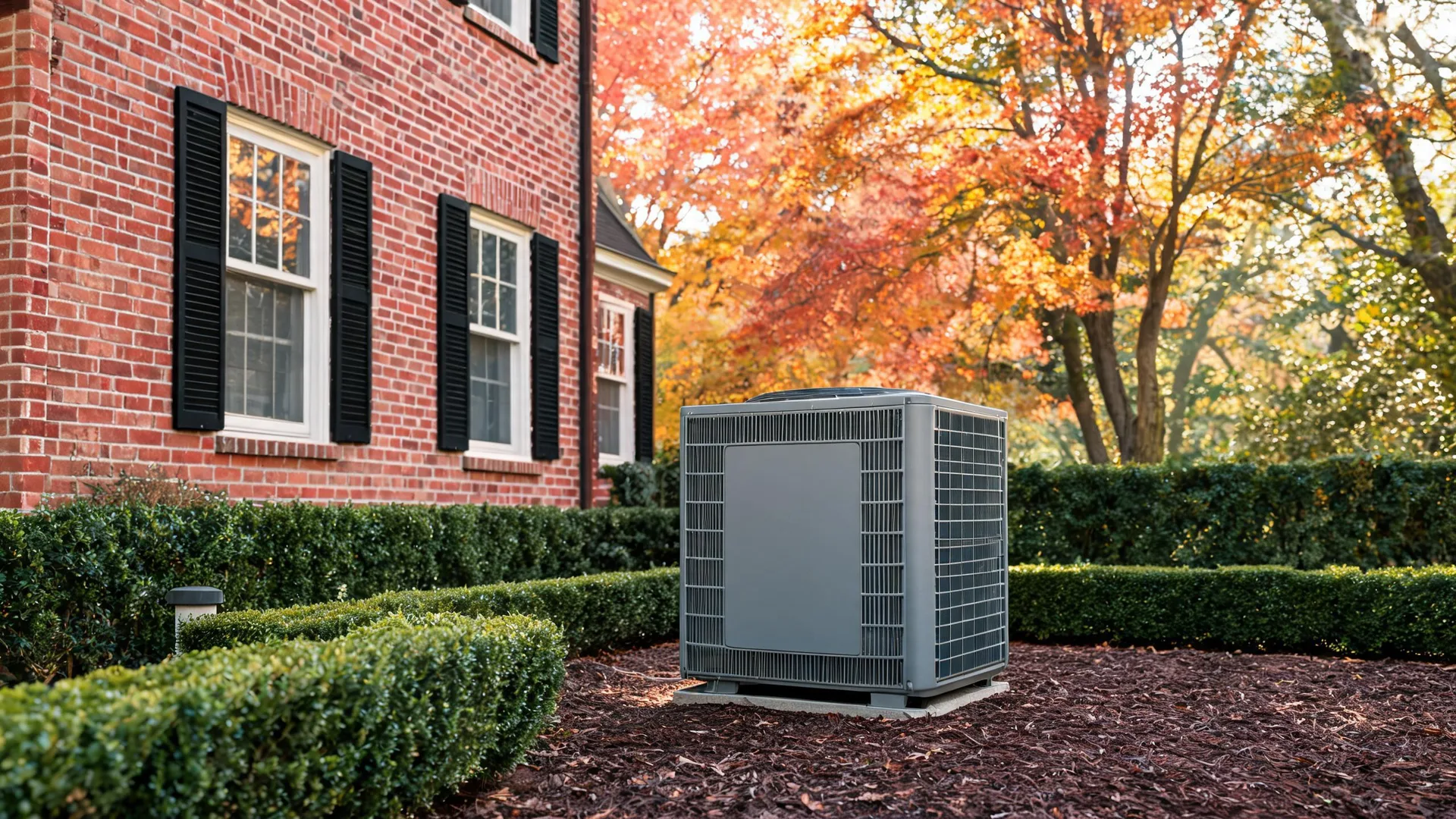
Aerial view of a gray outdoor air conditioning condenser unit mounted on a concrete pad next to a house with vinyl siding.

AC Maintenance in Hudson, WI

Tell us about the job

Takes about a minute. No obligation.

Tune-up, service, or cleaningCentral ACSt. Croix County, WI
Step 1 of 2

What ZIP code is the job in?

Half the homes in St. Croix County were built in 1993 or later, which puts a lot of local air conditioners well inside their working life. A system that age doesn't need much to keep running well, just someone checking the refrigerant charge, the coil, and the electrical connections once a year before summer gets going. Skip that long enough and small problems, a dirty coil, a weak connection, turn into a compressor that has to work harder than it should. Catching those things early is a lot less trouble than replacing a unit that still had years left in it.

3 months
June through August, your air conditioner is on duty
79°F
the average summer afternoon it cools against
60 hail events
in ten years, and hail bends the fins on outdoor coils
28 wind events
in ten years, and wind drives debris into outdoor units
Isometric line illustration of a cutaway single-story building showing interior rooms, ceiling ductwork and an air handler, connected by lines to an outdoor condenser unit beside the exterior wall.
Your air conditioner works hardest from June through August.

NOAA nClimDiv, 1991–2020 normals

A system that short-cycles or runs longer than it used to is already telling you something.

A yearly check catches that before the compressor pays for it.

Three months of work a year, not six

Cooling runs June through August
Summer afternoons average 79°F
60 hail events from 2015 to 2024
June starts the real workCooling here runs June through August, so May is when to get it checked.

A quick visit usually means someone checks the refrigerant pressure, looks at the air filter, and calls it done. A thorough one takes longer because there's more to check. The condenser coil gets cleaned, not just glanced at, since a coil caked with dirt and grass clippings makes the compressor work harder to move the same heat. The capacitor and contactor get tested under load, not just looked over, because those parts can look fine and still be weak enough to fail on the first hot stretch. The condensate drain gets flushed so it doesn't back up and shut the system down later. Someone also checks the refrigerant charge against what the system actually calls for, rather than assuming it's fine because the air coming out feels cold. None of that takes a lot of time, but it's the difference between a tune-up that catches a problem and one that just confirms the system turned on.

Three months of work still calls for a yearly check

Three months of work a year is easy on a system, but the parts still age whether they run or not. Getting the capacitor, the coil and the charge checked before June catches a problem while it's still small and cheap to fix, on a schedule built around how little this system has to do.

Find a contractor
A man in a cap, dark long-sleeve shirt and tan work pants walks up porch steps toward a green front door, carrying a worn canvas duffel bag, with a potted shrub and wall lantern beside the entry.
A gray metal air conditioning condenser unit mounted on a concrete pad in a flat grassy field under a partly cloudy sky.

A newer system still needs its yearly look

A system that came with a newer home still has its working life ahead of it, not behind it. What wears a compressor down is time spent running, not the number on the calendar. Checking the charge, the coil and the connections once a year keeps a young system young, instead of letting small problems sit until they're not small anymore.

Change the filter yourself

A dirty filter is the one thing worth checking without waiting for a visit. A filter clogged with dust forces the blower to work harder and can let the evaporator coil ice over. Hold it up to light. If light barely gets through, swap it. Between checks, keep an eye on it instead of guessing by the calendar, since dust builds up faster in some homes than others.

Leave the rest alone

The refrigerant charge, the capacitor, the contactor, none of that is something to open up between visits. Low refrigerant means a leak somewhere in a sealed system, and adding to it without finding the leak just delays the real problem. What a homeowner can do is keep the area around the outdoor unit clear of grass clippings and leaves, and listen for anything that sounds different, a new rattle, a hum that wasn't there before. That's worth mentioning at the next visit, not chasing down alone.

Overhead view of a gray outdoor AC condenser unit on a concrete pad beside a mulched garden bed and a house with vinyl siding.

Book your AC tune-up in May, before homes here start needing cooling in June.

  1. Jan
  2. Feb
  3. Mar
  4. Apr
  5. May
  6. Jun
  7. Jul
  8. Aug
  9. Sep
  10. Oct
  11. Nov
  12. Dec

A tune-up checks the refrigerant charge, cleans the coils, tests the capacitor and tightens the electrical connections.

A tune-up starts with the thermostat, making sure it's calling for cool and the system answers within a minute or so. From there it's the electrical side: contactor points checked for pitting, capacitor tested under load since a weak one still lets the unit start, just not reliably. The blower motor gets checked for wear and the wheel cleaned if it's caked with dust, because a dirty blower wheel moves less air even running at full speed. Refrigerant lines get checked for rubbing or chafing against the cabinet, and the outdoor fan motor gets tested the same way the compressor's electrical components are. None of this is guesswork. Each part gets measured against what it's supposed to read, not just looked at and assumed fine.