




An outdoor central air conditioning unit mounted on a concrete pad beside a blue-sided house at sunset.

AC Maintenance in Green Bay, WI

Tell us about the job

Takes about a minute. No obligation.

Tune-up, service, or cleaningCentral ACBrown County, WI
Step 1 of 2

What ZIP code is the job in?

Half the homes in Brown County were built in 1981 or later. If your AC is original to the house or close to it, there's a decent chance it still has real years ahead of it. A yearly check is what keeps it that way. A technician can catch a weak capacitor or a dirty coil before it strands you on a hot day, and on a newer system that kind of small fix is usually all it needs to keep running well.

2 months
July through August, your air conditioner is on duty
78°F
the average summer afternoon it cools against
29 hail events
in ten years, and hail bends the fins on outdoor coils
78 wind events
in ten years, and wind drives debris into outdoor units
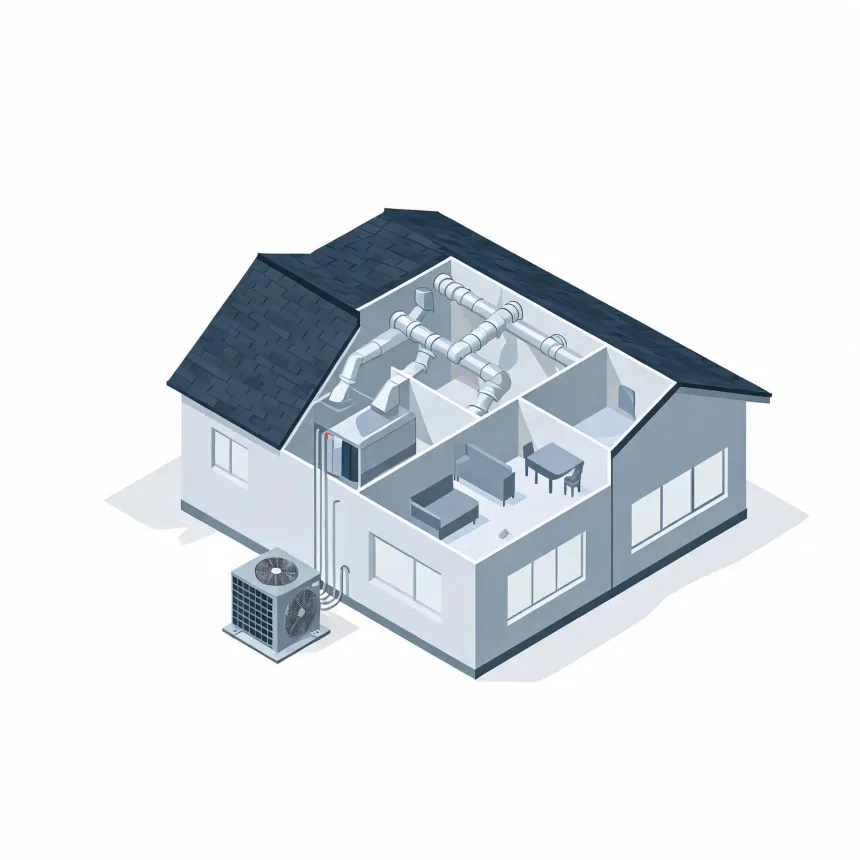
Isometric illustration of a cutaway single-story house showing attic ductwork, an indoor air handler, interior rooms with furniture, and an outdoor condenser unit connected by lines, on a white background.
Your air conditioner works hardest from July through August.

NOAA nClimDiv, 1991–2020 normals

Your AC only has to run about two months a year here, July and August.

A yearly check on a system with that light a workload is usually a tune-up, not a rescue.

Two months of cooling start in July. Get it checked in June.

Cooling runs July through August
Summer afternoons average 78°F
78 damaging wind events from 2015 to 2024

A yearly check before July covers the two things light duty doesn't prevent. A capacitor weakens with age whether the system ran hard or not. A coil collects dust sitting idle the rest of the year, and that dust is still there when you switch the system on in July. Catching those in June means the technician finds them on a slow afternoon, not during the first hot week when every crew in Green Bay is booked solid.

Keep it in good shape

If your system is fairly new, a yearly check keeps it in good shape for longer.

Find a contractor
An outdoor residential air conditioning condenser unit mounted on a concrete pad, surrounded by gravel with a blue sky in the background.

Start the habit early

Book the same yearly check before summer, every year, for as long as the system is new. It's a short appointment on a system that age, usually just a look at the capacitor and a coil cleaning. Keeping that up each year is what gets a newer system to its full working life instead of falling short of it.

A gauge set tells you more than a glance

A thorough check means the technician connects gauges and reads the refrigerant pressure, checks the temperature drop across the coil, and tightens electrical connections at the disconnect and the contactor. A quick visit might end at a glance inside the cabinet and a rinse of the coil. Both can look like a finished job on the invoice. Only one tells you how the system is actually running.

Ask what they checked, not just what they did

Washing a coil and calling it done is maintenance in name only. A capacitor can test weak long before it fails outright, and that only shows up if someone puts a meter on it. If the technician can tell you the capacitor's reading or the pressure they found, the check was thorough. If all you get is 'everything looks good,' it probably wasn't.

An outdoor air conditioning condenser unit installed beside the exterior wall of a blue vinyl-sided house at sunset.

Book your AC tune-up in June, before homes here start needing cooling in July.

  1. Jan
  2. Feb
  3. Mar
  4. Apr
  5. May
  6. Jun
  7. Jul
  8. Aug
  9. Sep
  10. Oct
  11. Nov
  12. Dec

A tune-up checks the refrigerant charge, cleans the coils, tests the capacitor and tightens the electrical connections.

A real tune-up starts outside at the condenser. The technician pulls the panel, checks the capacitor with a meter, and looks at the contactor contacts for pitting before anything gets cleaned. Then the coil, not just a rinse but a real look at how packed the fins are, since airflow across a dirty coil drops even when the fan sounds fine. Refrigerant gets checked by pressure and by the temperature split between the air going in and the air coming out, not by feel. The drain line gets cleared too, because a clogged one backs up and shuts the system down on its own. Tightening the electrical connections matters as much as any of it. A loose connection runs hot, and a hot connection is what burns out a contactor or a capacitor well before its time.