







Dark-sided single-story buildings with gray shingled roofs behind trimmed hedges, a mown lawn, and large leafy trees overhead.

AC Maintenance in Eau Claire, WI

Tell us about the job

Takes about a minute. No obligation.

Tune-up, service, or cleaningCentral ACEau Claire County, WI
Step 1 of 2

What ZIP code is the job in?

A tune-up starts before the panel ever comes off. The tech checks the refrigerant charge against what the system calls for, because a unit running low won't cool right even if the fan sounds fine. Inside the cabinet, the coil gets a look for dirt and mold that chokes airflow without any outward sign. The capacitor gets tested under load, not just eyeballed, since a capacitor can look fine and still be weak enough to strand the compressor on the next hot day. Electrical connections get checked for the kind of corrosion that builds slowly and causes a no-start months later. None of this shows up from the thermostat. It shows up when the system is finally asked to work hard and can't.

3 months
June through August, your air conditioner is on duty
79°F
the average summer afternoon it cools against
23 hail events
in ten years, and hail bends the fins on outdoor coils
35 wind events
in ten years, and wind drives debris into outdoor units
Isometric line illustration of a cutaway single-story house showing interior rooms, ducted air handler, ceiling ductwork, and an outdoor condenser unit connected by refrigerant lines.
Your air conditioner works hardest from June through August.

NOAA nClimDiv, 1991–2020 normals

Cooling in Eau Claire County runs June through August.

May is when to get the system checked, before it has to work.

One check before summer is what this system needs here

Half the homes here were built by 1978
Cooling runs June through August
Summer afternoons average 79°F
One visit a year is enoughEau Claire electricity ran 17.18 cents a kilowatt-hour in 2024, so a system losing efficiency costs more every month it runs that way.

Three months of cooling a year is a light load for this equipment. Summer afternoons here average 79°F, which doesn't push a properly working system very hard. That's good news for how long the compressor and other parts last, but it doesn't mean skip the yearly check. A capacitor weakens with age no matter how easy the duty has been. This county also sees its share of damaging wind and hail, and a check catches a coil that took a hit or a connection shaken loose, the kind of damage that won't show up until the system is already struggling in July.

Book it before the season

It starts running hard in the first month of the season here. Book the check the month before.

Find a contractor
A man seen from behind in a backward cap, dark jacket and tan work pants carries a waxed canvas tote bag up steps toward a green front door, with a potted shrub beside the entry.
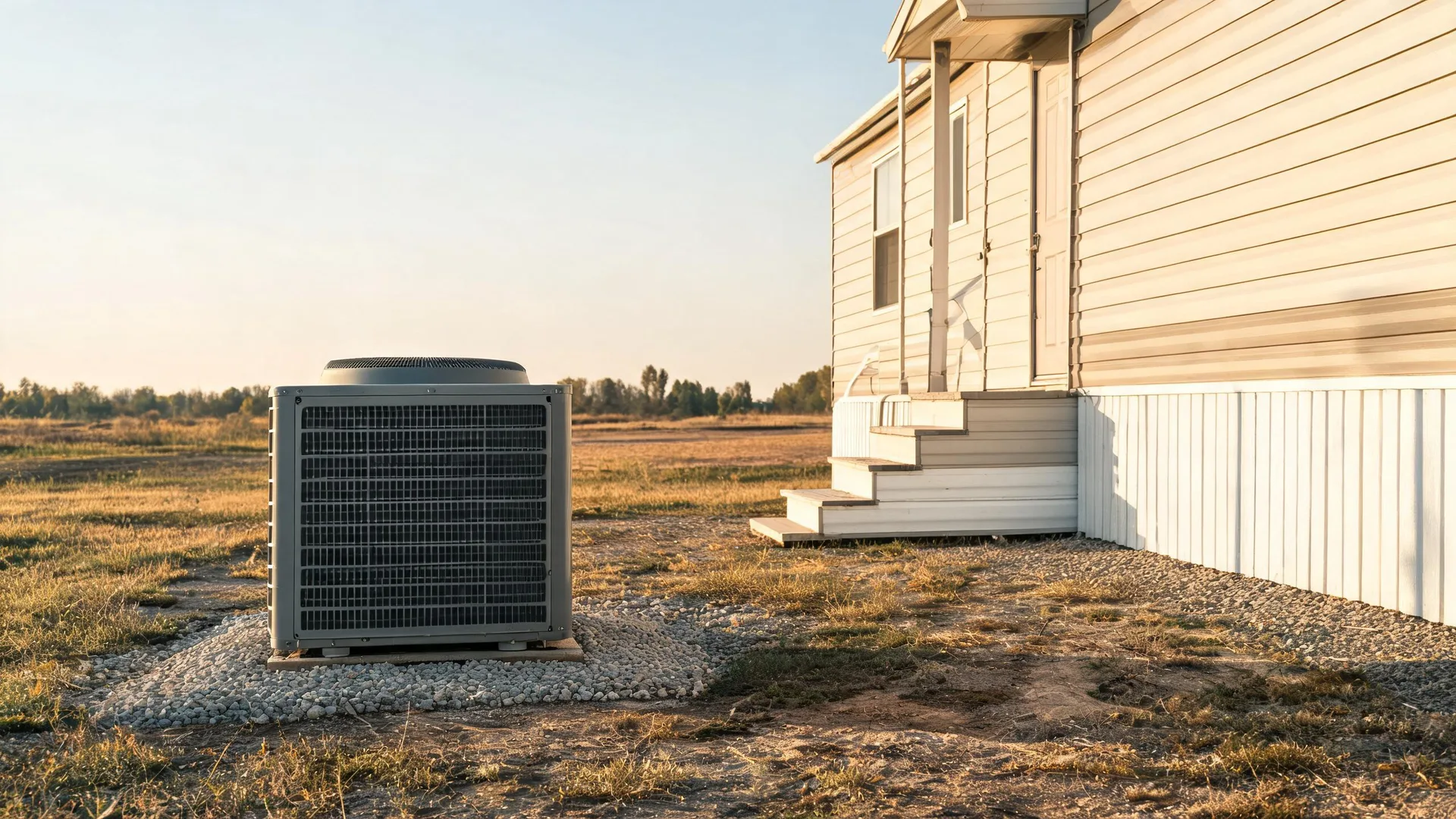
A gray residential air conditioner condenser unit mounted on a concrete pad in an open grass field.

The system tells you before it quits

Most AC problems don't start the day the system quits. They start months earlier, as something small that still let the unit limp along. A fan that rattles on startup, a hum that lasts a second too long before the compressor kicks in, a vent that blows warm for the first few minutes, these get written off because the system still ends up cooling the house. Left alone, that small sign is usually the thing that finally fails on the hottest day of the year, because that's when every part is working hardest and has the least room for error. A check in the off months catches the weak part while the system is idle and nothing is riding on it yet.

Keep the filter clean

A dirty filter is the one thing in this whole system a homeowner is actually supposed to touch. Check it monthly during cooling months and swap or rinse it when it looks gray instead of white. A clogged filter starves the coil of airflow, and a starved coil can freeze over even on a hot day. Once ice builds up, the system has to be shut off and thawed before it does any good at all.

Keep the outdoor unit clear

The condenser outside needs open air on all sides to shed heat. Grass clippings, leaves, and anything stacked against it block that airflow and make the compressor work harder than it should. Walk past it now and then and clear away anything growing or piled up within a couple feet. Don't cover the unit, even in the off season. A cover traps moisture underneath and invites the exact corrosion a tune-up checks for.

Aerial view of a residential air conditioning condenser unit mounted on a concrete pad next to a house with vinyl siding and a sliding glass door.

Book your AC tune-up in May, before homes here start needing cooling in June.

  1. Jan
  2. Feb
  3. Mar
  4. Apr
  5. May
  6. Jun
  7. Jul
  8. Aug
  9. Sep
  10. Oct
  11. Nov
  12. Dec

A tune-up checks the refrigerant charge, cleans the coils, tests the capacitor and tightens the electrical connections.

The filter and the coil work as a pair. Dirty filter, dirty coil, that's how it usually goes, since anything the filter doesn't catch ends up stuck to the coil instead. A coil caked with dust can't pull heat out of the air the way it's built to, so the system runs longer to reach the same temperature on the thermostat. The condensate drain is the part nobody thinks about until it backs up. It carries away the water the coil pulls out of the air, and algae grows in that wet, dark line whether anyone's watching or not. A clogged drain doesn't just drip, it can shut the whole system down, since most units have a safety switch that kills the AC rather than let a full drain pan overflow into the house.