






Dark-painted single-story houses with gray shingle roofs behind a trimmed green hedge and mown lawn, surrounded by leafy trees under an overcast sky.

AC Maintenance in Baraboo, WI

Tell us about the job

Takes about a minute. No obligation.

Tune-up, service, or cleaningCentral ACSauk County, WI
Step 1 of 2

What ZIP code is the job in?

Your air conditioner only earns its keep about three months a year here, June through August, with afternoon highs averaging around 80°F. That's a short, mild season compared to what these machines handle further south. The dew point averages 61°F across those months too, so the air isn't as heavy as it is in a lot of the country, which means less strain on the compressor. Easy duty doesn't mean no duty, though. A unit that sits idle most of the year still needs its coil cleaned and its refrigerant charge checked before it has to work again. A yearly look at it catches a weak capacitor or a dirty coil before it quits on the first hot week.

3 months
June through August, your air conditioner is on duty
80°F
the average summer afternoon it cools against
22 hail events
in ten years, and hail bends the fins on outdoor coils
61 wind events
in ten years, and wind drives debris into outdoor units
Isometric cutaway illustration of a house showing interior ductwork, an air handler, and an outdoor condenser unit connected by lines, with simple furniture in the rooms.
Your air conditioner works hardest from June through August.

NOAA nClimDiv, 1991–2020 normals

A tune-up checks the refrigerant charge, not just whether the air coming out feels cold.

A system can still blow cool air while running low, and that shortfall wears on the compressor all season.

Half the homes here were built in 1983 or later, young enough that upkeep still pays off

Half the homes here were built by 1983
Climate zone 5A
Power here costs 16.70 cents per kilowatt-hour
Get It Checked Before JuneCooling starts in June here, so May is when a tune-up does the most good.

A capacitor can be on its way out for months before it fails outright, and from the outside the system gives no sign of it. The fan spins up, the compressor kicks on, the air gets cold. Underneath that, the capacitor is losing its charge, and the motor is starting to strain every time it cycles on. A tech checks that charge against what the part is rated for, something no homeowner can see or test from the thermostat. The same goes for the contactor that switches the compressor on and off. Its contacts pit and burn a little with every cycle, and a pitted contactor can run fine for a while before it sticks or fails to close. Caught early, it's a part swapped on a service visit. Caught late, it's a compressor that won't start on the hottest day of the year.

Easy Duty Still Needs a Yearly Check

Short, mild summers mean this system isn't fighting the load it would further south. That's exactly why a yearly check is worth doing. It's cheap insurance on a machine that doesn't owe you much strain, catching the weak capacitor or pitted contactor while it's still a part on a service visit instead of a compressor that won't start in July.

Find a contractor
A gray cylindrical air conditioning condenser unit mounted on a concrete pad next to a light-colored vinyl-sided house exterior.

A Newer System Still Needs the Yearly Check

If your system went in sometime after the house was built in 1983 or later, it's probably not old enough to be on borrowed time. That's the system worth keeping on a yearly schedule rather than waiting for it to tell you something's wrong. A coil cleaned every year and a charge checked every year is what keeps a newer unit running the way it did on day one. Skip that for a few summers and small things drift, a little dirt here, a capacitor losing its charge there, and the system is working harder than it should without showing it until the day it doesn't start.

What a Dirty Coil Does Over Time

The outdoor coil gives up heat to the outside air, and it can only do that if air moves through it freely. Dust and grass clippings settle into the fins and block that airflow a little more with each pass. The system still runs, but the compressor has to work harder and longer to move the same heat, and it runs hotter doing it. A compressor that runs hot for seasons at a time is a compressor with a shorter life, even though nothing about the house felt different.

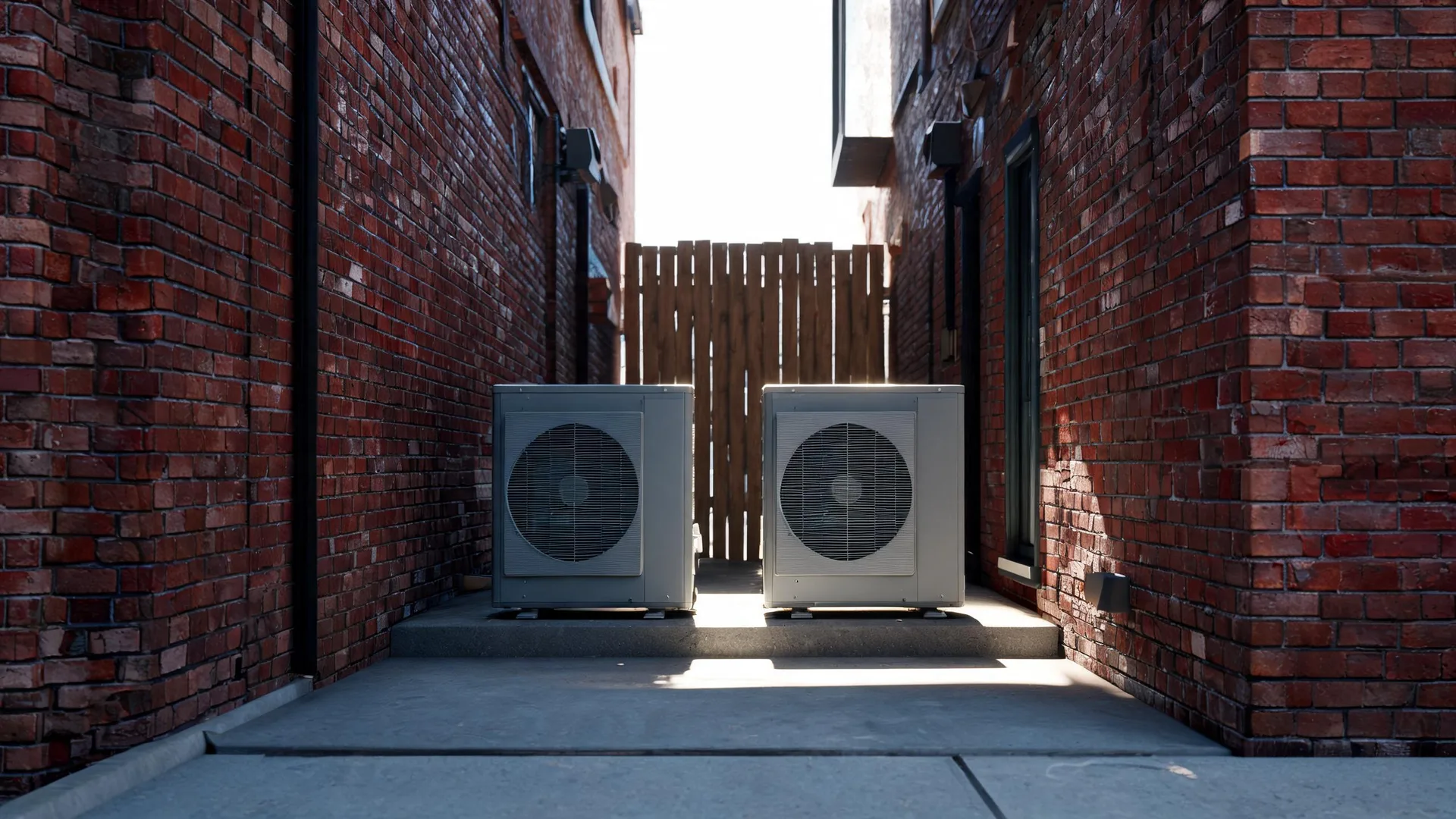
What Skipping It Costs Later

None of this fails all at once. A coil loses efficiency a little each season, a capacitor loses its charge a little each season, and the system keeps running through all of it without complaint. The trouble is that a compressor strained for years doesn't give a warning before it quits. Catching the early signs on a yearly visit means swapping a capacitor or rinsing a coil. Missing them means replacing the compressor, or the whole system, on the day it finally gives out.

Overhead view of a gray residential air conditioning condenser unit mounted on a concrete pad beside a house with asphalt shingle roofing.

Book your AC tune-up in May, before homes here start needing cooling in June.

  1. Jan
  2. Feb
  3. Mar
  4. Apr
  5. May
  6. Jun
  7. Jul
  8. Aug
  9. Sep
  10. Oct
  11. Nov
  12. Dec

A tune-up checks the refrigerant charge, cleans the coils, tests the capacitor and tightens the electrical connections.

A quick visit gets the gauges hooked up, a glance at the coil, and a reading of the refrigerant pressure before the tech moves on. A thorough one starts with the power off, the panel open, and every connection on the contactor and the terminals checked for heat damage. The coil gets washed, not just looked at, since matted fins don't show their blockage to the eye. The capacitor gets tested against its rated microfarads, not just checked for a pulse. The condensate drain gets cleared, because a clogged one backs up and does its own damage later with no connection to the compressor at all. The blower wheel gets pulled and checked for the dust that builds up on the blades and quietly cuts airflow. None of this takes much longer than the quick version. The difference is whether the tech is confirming the system runs, or confirming it's going to keep running.