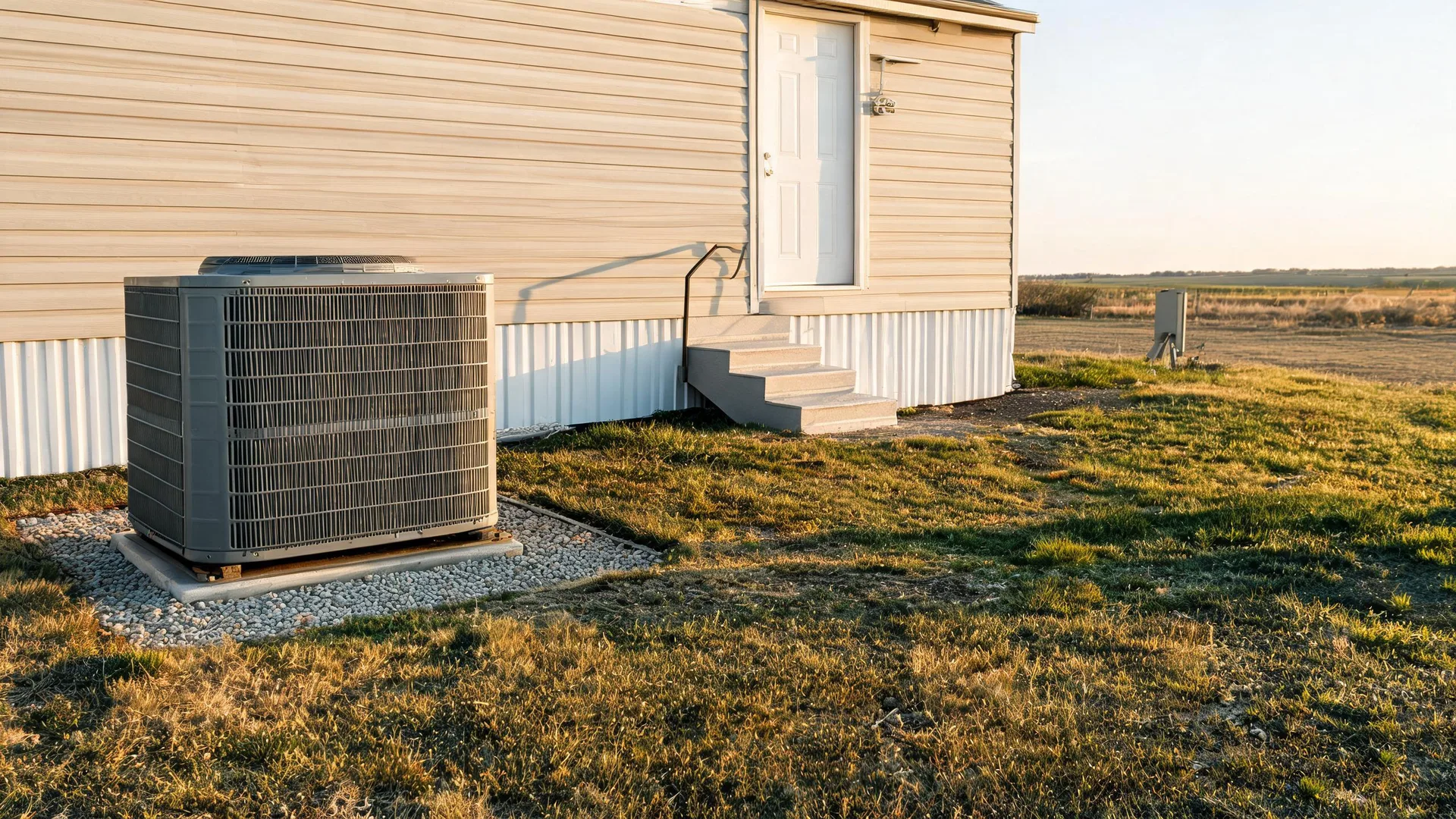
Half the homes here were built in 1980 or later
That makes Outagamie County younger than a lot of places. An air conditioner in one of these homes is more likely to still have years of working life ahead of it, not behind it.
Takes about a minute. No obligation.
That makes Outagamie County younger than a lot of places. An air conditioner in one of these homes is more likely to still have years of working life ahead of it, not behind it.
A tune-up catches a weak capacitor or a dirty coil before it leaves you without cooling. On a system with years ahead of it, that's time worth protecting.

NOAA nClimDiv, 1991–2020 normals
Three months of cooling and afternoon highs near 79°F don't ask much of your AC here.
Light duty still wears parts, so a yearly check is what keeps that easy life easy.
Your AC switches on in June and that's the first real test it gets all year. Any weak part, a capacitor that's been marginal or a contactor with some wear, tends to show itself right when the system has to work. May is when to get it looked at, before that first hot stretch. A tune-up then catches what's been sitting quiet all winter, so June doesn't turn into the month your cooling quits.
If your AC came with a newer home here, it likely has plenty of working life left. A yearly tune-up is what keeps it that way, catching the small stuff before it costs you a summer of cooling.
Find a contractor
Between visits, the filter is the one thing worth checking yourself. A dirty filter chokes airflow across the evaporator coil, and the system has to run longer to move the same heat. Look at it each month the system runs, and swap it when it's visibly gray or clogged rather than on a fixed schedule. Outside, keep the area around the condenser clear. Grass clippings, leaves and mulch piled against the cabinet block airflow across that coil the same way a dirty filter does. A few feet of open space on every side is enough. After a storm, check that nothing has blown into the fins and that the unit is sitting level, since a unit that's shifted can strain the refrigerant lines. If the condensate line has a visible outlet, glance at it now and then. Water should drip freely when the system runs; if it's not draining, algae or sludge has likely started blocking it. None of this replaces a tune-up. It just keeps dirt and debris from undoing the work one was meant to do.
A tech who only looks at the outside unit and listens for noise is doing half the job. A thorough visit means hooking up gauges to check the refrigerant charge against what the system is supposed to run, pulling the panel to look at the capacitor and contactor, and checking amp draw on the compressor and fan motor. Low charge or a weak capacitor won't always show up as a sound or a smell. They show up as numbers that are off.
The condenser coil outside and the evaporator coil inside both need to be actually cleaned, not just looked at through the fins. A coil caked with dust or grime makes the whole system work harder to move the same heat. The condensate drain line should get flushed too, since algae and sludge build up in there over time and a clogged drain backs up into the pan or the house. A quick visit checks that the fan spins and the air feels cold. A thorough one leaves the coils clean and the drain clear.
A tune-up checks the refrigerant charge, cleans the coils, tests the capacitor and tightens the electrical connections.
A tune-up starts outside at the condenser. The fan blade gets checked for wobble, and the coil fins get checked for bent spots that block airflow. Inside, the blower wheel comes off dirty more often than people expect, caked with dust that cuts how much air moves across the evaporator coil even when the filter looks fine. The refrigerant lines get checked for the oily residue that means a slow leak. Electrical connections get tightened, because a loose wire at the contactor or disconnect runs hotter than it should and that heat shortens its life. The thermostat gets checked against a separate thermometer, since a thermostat reading a few degrees off will short cycle the compressor without anyone noticing why the house feels wrong. None of this looks like much from outside the cabinet. It's the difference between a system that starts every time and one that strands you on the one day you need it most.