




A dark horizontal-sided building corner in the left foreground beside a mowed lawn, with a light-colored single-story house and large deciduous trees under a pale sky in the background.

AC Installation in Milwaukee, WI

Tell us about the job

Takes about a minute. No obligation.

New system or replacementCentral ACMilwaukee County, WI
Step 1 of 2

What ZIP code is the job in?

Most homes in Milwaukee County heat with gas, 77.2% of them. When a furnace runs on gas, central air almost always comes as a separate outdoor unit paired with the furnace's blower and ductwork, so adding or replacing AC usually means matching a new condenser to what's already moving air through the house. About one in five homes here heat with electricity instead, which can mean a heat pump or an air handler already in place, and that changes what an AC installation is actually solving for. If your home falls outside the gas majority, it's worth knowing which setup you have before comparing quotes.

3 months
June through August, your air conditioner is on duty
79°F
the average summer afternoon it cools against
70 hail events
in ten years, and hail bends the fins on outdoor coils
13.4 SEER2
the federal minimum any new unit must meet
Isometric line illustration of a cutaway house showing interior rooms with ductwork, an air handler and furnace, connected by lines to an outdoor condenser unit on the ground outside.
Your air conditioner works hardest from June through August.

NOAA nClimDiv, 1991–2020 normals

Cooling runs June through August here.

May is the month to get a new condenser installed, before the heat arrives and installers book up.

Weather here is hard on an outdoor unit, but it doesn't change what you install

167 severe weather events from 2015 to 2024
18% of homes statewide lost power a day or more in 2024
71 damaging wind events from 2015 to 2024
The outdoor unit takes a beating here, the cooling load doesn'tHail and wind hit this county often, but a standard size and efficiency still get the job done

A standard size and efficiency unit is the right call for a Milwaukee house. Nothing about the climate here pushes you toward a bigger condenser or a higher SEER2 rating than what's typical. Where sizing matters is the correct Manual J load calculation for your square footage and layout, not anything particular to this county. The one number worth knowing going in is your electric rate, 17.18 cents per kilowatthour as of 2024, since that's what a standard-efficiency unit will cost you to run compared to a higher-tier one. A contractor can run that comparison against the actual price difference between models, and for most homes here the standard size and efficiency pencils out fine.

A new AC here just needs to meet the standard, and that standard comes with a credit

Milwaukee falls in climate zone 5A, and any split-system AC under 45,000 Btu/h built after January 2023 has to meet 13.4 SEER2 at minimum. That's already the standard size and efficiency a Milwaukee home needs, so a compliant system and the right system are the same purchase here. A federal tax credit is available on top of that for qualifying equipment.

Find a contractor
A man seen from behind in a dark shirt and tan work pants carries a canvas tool bag up wooden steps toward a green front door of a shingled house.
A gray residential air conditioning condenser unit mounted on a concrete pad outdoors, surrounded by green grass under a partly cloudy blue sky.

Built before central air was the plan

Half the houses in Milwaukee County went up in 1957 or earlier. A house that age was built for a furnace and nothing else, so the ductwork, the returns, the electrical panel all took shape around that one job. Adding a condenser outside doesn't strain any of that, but the install has to work with what's there instead of what a newer house would have. That's a question for the contractor doing the Manual J, not the equipment you end up buying.

The old condenser doesn't just get unplugged

The refrigerant inside has to come out first, caught and removed by machine rather than released into the air. That's a legal requirement, not a courtesy, and it's part of why a tech needs time on site before the old unit comes off the pad.

The pad and the line set usually stay

If the concrete pad is still level and in good shape, a new condenser can sit right on it. The copper line set running to the indoor coil often gets reused too, as long as it's the right size for the new unit. What gets replaced is the equipment, not necessarily everything connected to it.

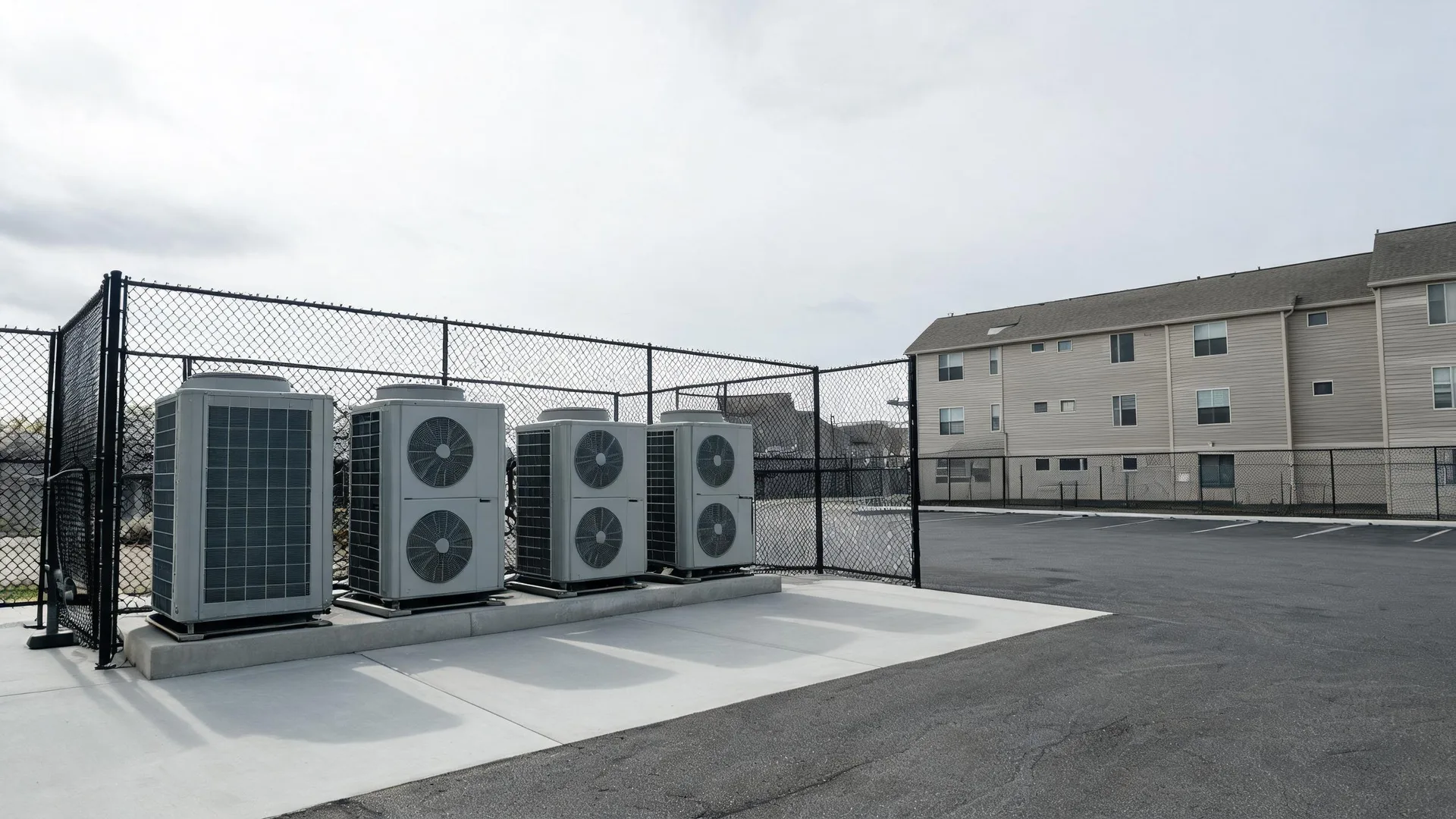
Overhead view of an outdoor AC condenser unit on a concrete pad next to a house with a dark shingle roof.

Going above the federal minimum saves little here, about $20 a year.

  • A higher-efficiency unit$150 a year
  • A new unit at the federal minimum, 13.4 SEER2$170 a year

Estimates for a typical Milwaukee County home, from EIA household energy data, Wisconsin fuel prices and NOAA climate normals. Your home will differ.

Install day starts with the old system coming out, and that takes longer than people expect because the refrigerant has to be recovered before anything gets disconnected. Once the condenser's off the pad, the real work is matching the new coil to the furnace's blower compartment, since a coil that doesn't fit right chokes airflow no matter how good the condenser is. The line set gets pressure tested for leaks before it's charged, and the system runs through a full cycle before the crew leaves, checking the temperature split between the air going in and the air coming out. A thermostat swap usually happens the same visit if the new system calls for one. The old unit and any materials that came off it leave with the crew. By the end of the day the system should be holding a steady charge and cycling on its own, not something you have to watch for the first week to see if it was done right.