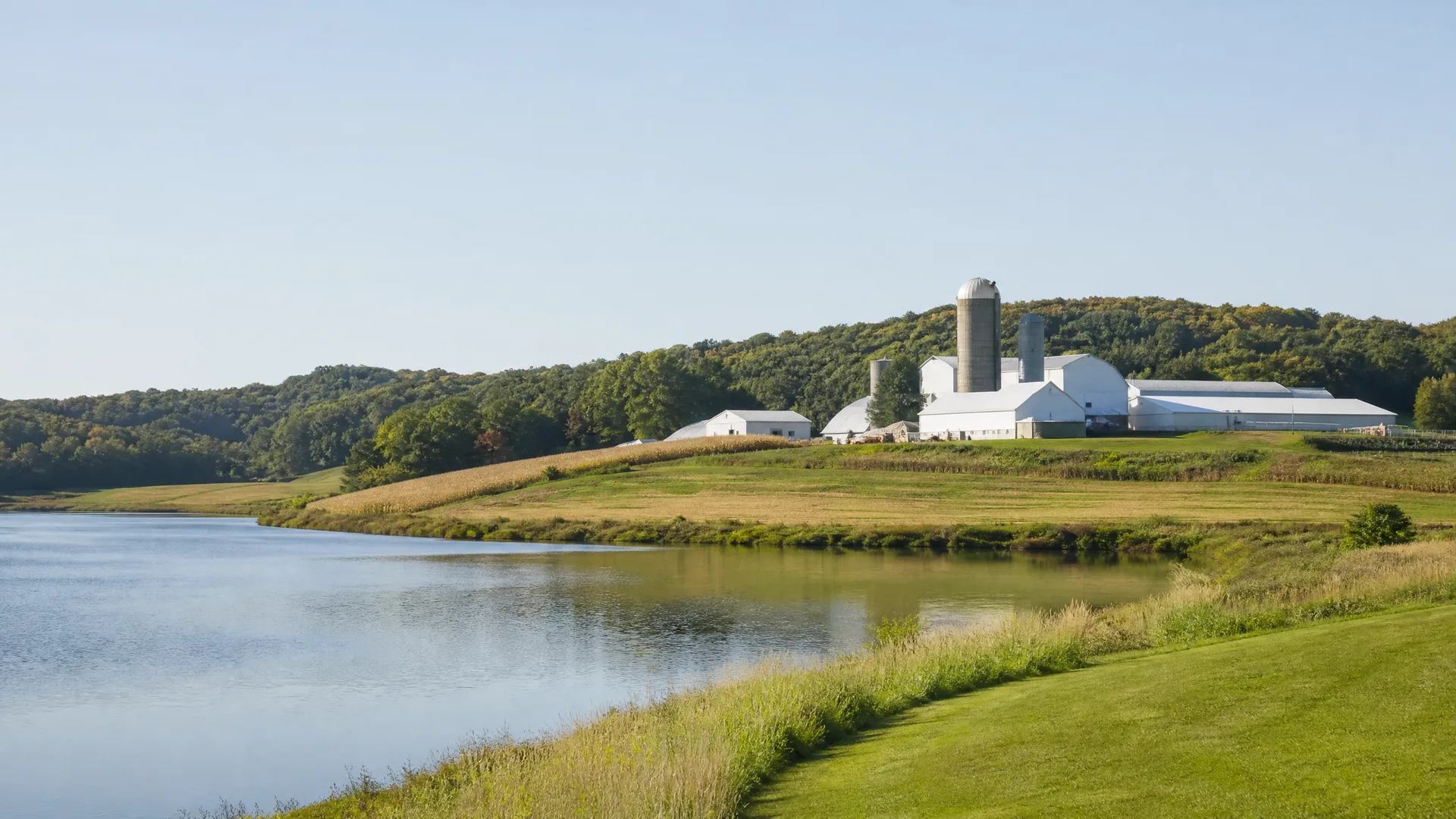

Running clear
No ice on the cabinet or the pad underneath. The lines running to the disconnect box are just cold, not wrapped in frost. It cycles on, runs a defrost when it needs to, and goes back to heating without you noticing.

A heat pump that won't start in a Wisconsin winter is usually stuck on a safety lockout, not actually broken. When outdoor coils ice over in sub-freezing weather, the system is supposed to pause, run a defrost cycle, and try again. If it can't clear the ice, or if a sensor reads the coil as too cold to run safely, it will shut down and stay off rather than force a cycle that could damage the compressor. A tripped breaker, a failed defrost control board, or a low refrigerant charge can all cause the same lockout, and so can a thermostat set below what the heat pump can deliver once temperatures drop hard. Since most homes here lean on gas furnace backup, you may not notice right away that the heat pump side has quit, until the gas bill climbs or a mild stretch leaves the house cooler than it should be. Either way, the unit needs a technician to find which of those it is before it runs again.




A heat pump is a two-way air conditioner, and that reversal is where a lot of winter calls start. The reversing valve shifts a coil's job from releasing heat to pulling it out of cold outdoor air, and it does that every time the system switches between heat and defrost. If that valve sticks partway, the outdoor unit can sit there drawing no power at all, and from the thermostat it looks like the system just died. Before any of that, though, the control board has to send 24 volts down to the contactor to call for the compressor. No signal, no start, and the fault could be a failed board, a blown low-voltage fuse, or a broken wire between them. Below a certain outdoor temperature, a low-ambient sensor holds the compressor off on purpose, since running it on a frozen coil does more harm than good. Pressure switches work the same way: a refrigerant system that spikes too high or drops too low trips a switch that cuts the compressor and stays open until a contractor resets it, not on its own. And if the thermostat is set to emergency heat, the heat pump is not failing at all. It has been told not to run, and the strip heat or furnace is carrying the house instead. Sorting out which of these is happening takes a gauge set and a look at the board, not guessing from inside the house.


Thermostat calls for heat and sends a 24-volt signal to the control board.
Control board checks defrost sensors and lockout codes before waking the compressor.
Contactor closes, sending power out to the compressor and outdoor fan.
Reversing valve shifts to pull heat from the outside air.
Walk outside and look at the unit. If it's coated in ice or frost from the ground up, that's often the cause. Inside, you might notice the air coming from the vents feels cool instead of warm, or the system is running constantly without the house actually warming up. Some homeowners hear the outdoor fan trying to start and failing, a clicking or humming that doesn't turn into a full run. If your home heats with gas and the heat pump is a secondary source, you may not notice right away beyond a cooler room or two. But if the heat pump is your main source of heat and it stays down, the backup heat strip or furnace will carry the load and your electric bill will show it.
No ice on the cabinet or the pad underneath. The lines running to the disconnect box are just cold, not wrapped in frost. It cycles on, runs a defrost when it needs to, and goes back to heating without you noticing.

Frost has built up around the base and up the sides of the cabinet. The unit may hum or click but the fan won't turn, and the air at your vents has gone cool. That's a defrost cycle that started and never finished.


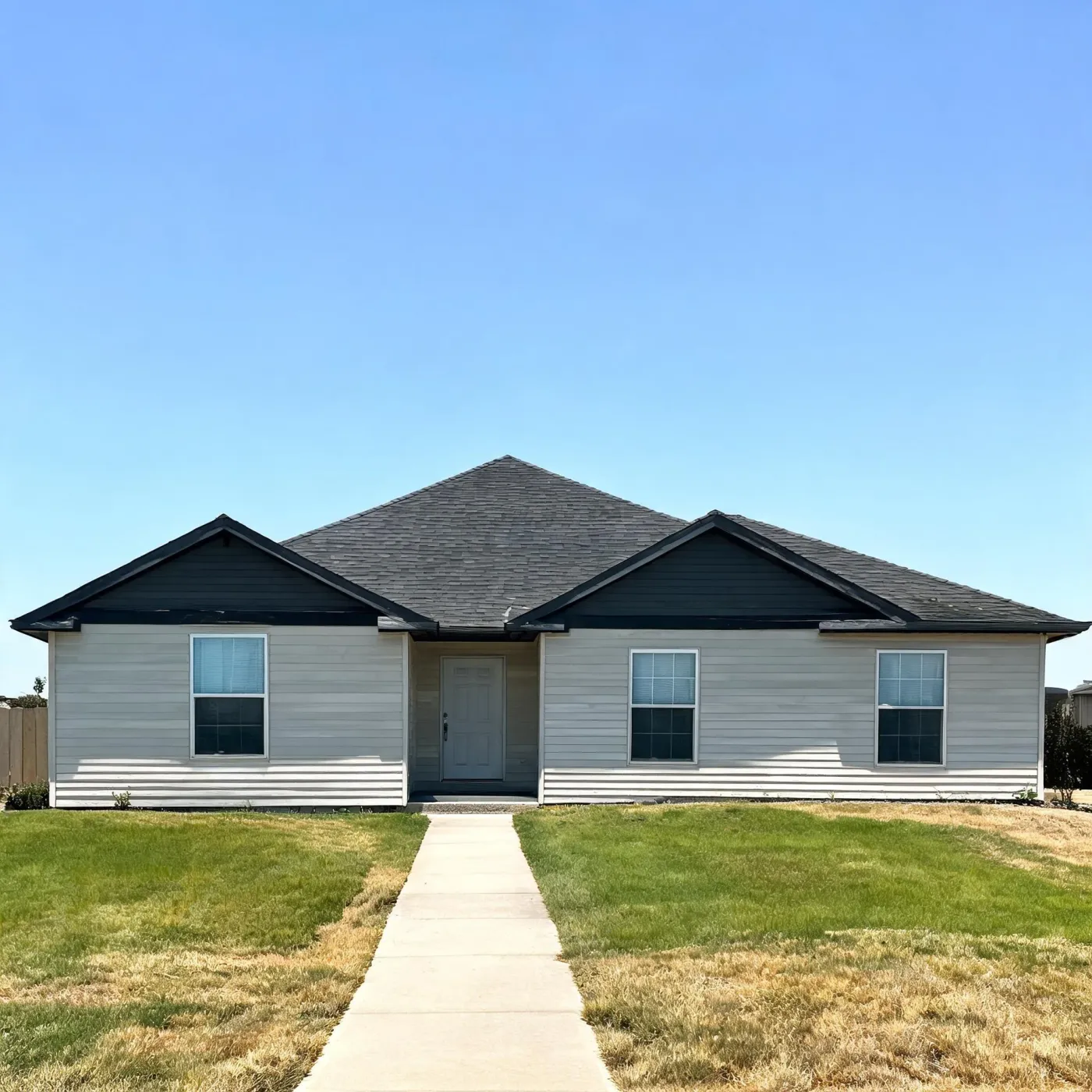
Summer here isn't just hot, the air holds onto moisture, with dew points averaging 60°F across June, July and August according to NOAA climate data. That's humid enough that your heat pump has to pull a lot of water out of the air before it can actually cool the house. In the winter, that same reversing valve and those same coils have to handle ice instead of moisture, and a system worked hard all summer doesn't get a break before it's asked to defrost itself all winter. When it won't start on a cold morning, you want someone who services these units through both ends of the Wisconsin year, not just one who shows up for August calls. A local contractor who works on heat pumps in every season knows which part usually gives out first after a summer like that, and you're only dealing with one company, not a handful of callbacks to sort through.
NASA POWER T2MDEW county cells weighted by homes
A heat pump that won't start on a cold morning is not something to leave for a few days and see about. Most houses around here lean on gas furnaces, and a heat pump that's down means whatever backup heat you have is carrying the whole load, and your electric bill is already higher than most places. Figuring out whether it's a frozen coil, a bad control board signal, or a stuck reversing valve takes someone who works on these units through a Wisconsin winter, not just a summer AC season, and knows which of those is most likely before they even open the panel. Finding that person yourself means calling around, describing the same problem over and over, and guessing which quote to trust. Submitting this request sends your situation once to a licensed contractor near you who works on heat pumps in this climate regularly, and you deal with one call, not five.

Outdoor air still holds moisture even at low temperatures, and that moisture lands on the coil as frost every time the system runs. A heat pump handles this by reversing itself for a few minutes every so often, pushing warm refrigerant through the outdoor coil to melt what's built up. You might feel cool air inside during that stretch, or see steam rising off the outdoor unit. That's normal. It only becomes a problem when the cycle starts and can't finish.

The defrost sensor reads coil temperature and tells the control board when ice has formed and when it's gone. If that sensor fails or reads wrong, the board either never starts a defrost cycle or never ends one, and the compressor stays locked out either way. From outside, the unit looks the same as one that's simply frozen over on its own. The difference is that clearing the ice by hand won't fix a bad sensor. The board needs to see the right reading before it lets the compressor run again.
When a heat pump stalls and the furnace or strip heat has to cover for it, you feel that on the meter fast at 18.08 cents per kilowatt-hour. A stuck lockout left unfixed for even a few days adds up in a way a quick repair won't.
EIA-861 2025 statewide residential average
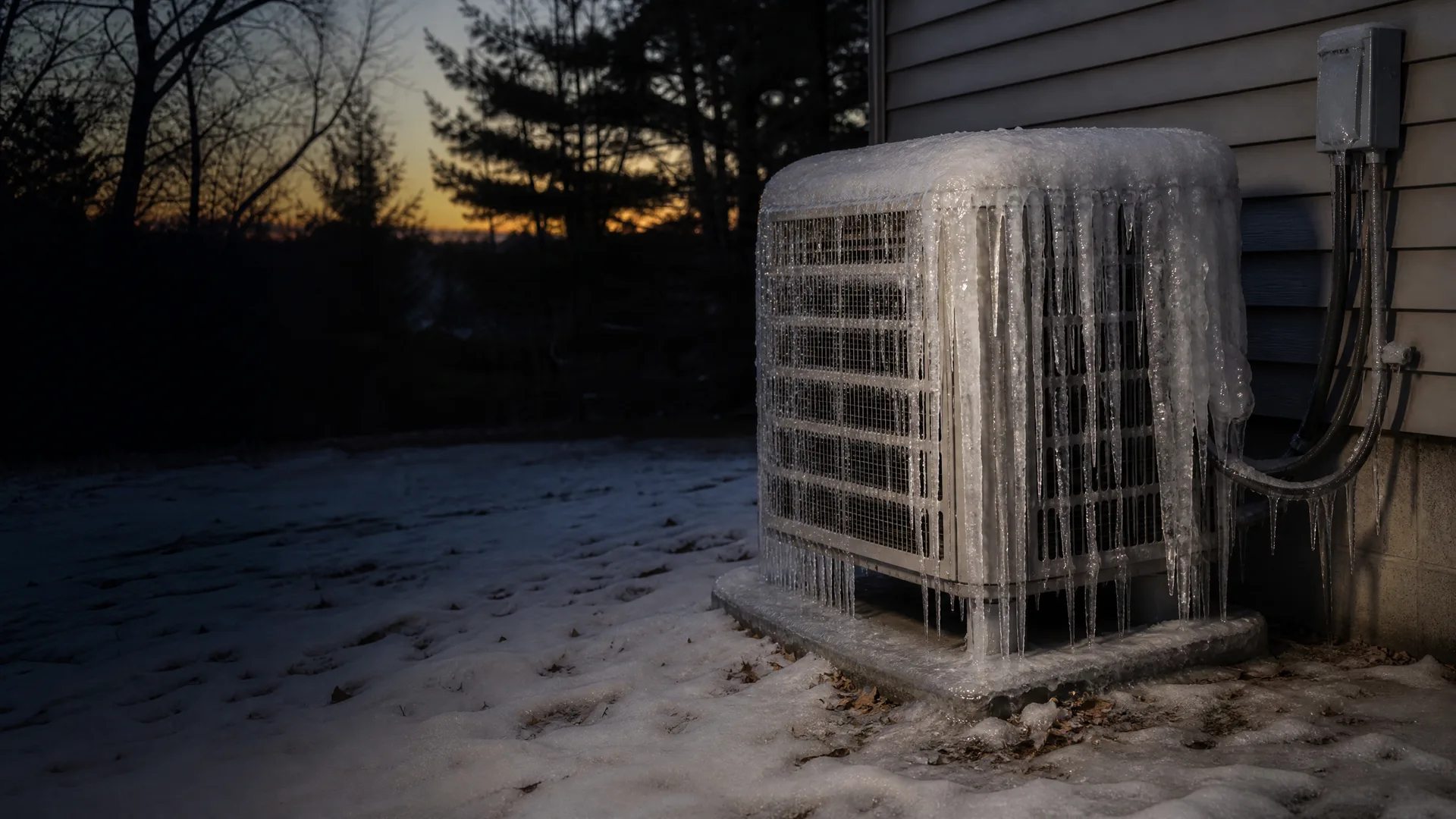
Six in the morning, still dark, and you're out in the side yard in your boots because the house never warmed up overnight. Your breath hangs in the air. The outdoor unit is a block of ice, frost built up thick around the base and climbing the cabinet, the fan blades buried under it. You can't even see the coil anymore. Somewhere behind you the furnace is running harder than it should, trying to make up what the heat pump isn't doing. You knock on the side of the unit and nothing changes. It's just sitting there, locked under the ice, waiting on a cycle that isn't coming.
It feels like the obvious first move. The breaker's right there in the panel, flipping it is free, and if the problem really is some kind of electrical hiccup, a reset might clear it. You've probably already thought about doing it before calling anyone, since it takes thirty seconds and costs nothing to try.
A breaker reset power-cycles the control board, and sometimes that's enough to clear a lockout code that tripped for no real reason. It's worth the thirty seconds. But if the outdoor unit is actually iced over, cutting power and bringing it back won't melt that ice, and the system will just lock out again once it tries to run. If the reset doesn't hold, or the unit trips the breaker again within a few minutes of starting up, that's the control board or the compressor telling you something is actually wrong, not a fluke worth repeating. A contractor who works on these year-round can tell the difference from the lockout code itself instead of guessing.

The coil on this unit is bare metal, no ice, no frost, just the fins doing their job. Lines running into the wall are cold to the touch but clear. Rock bed underneath is dry. Whatever is wrong with a stalled heat pump, it isn't this.

This coil is caked, fins clogged enough that air can't move through them the way it needs to. A coil in this shape can't pull heat from outdoor air no matter what the control board tells it to do, and a licensed contractor can tell you whether a cleaning fixes it or something underneath already failed.

Most heat pumps that won't start in a Wisconsin winter aren't broken. They're frozen over and stuck on a safety lockout that a reset alone won't fix. A contractor who works on these year-round can tell within a few minutes whether it's a defrost sensor, a reversing valve, or a control board not sending the 24 volts it should, and get the unit back to clearing ice on its own instead of leaning on strip heat or your furnace.
You don't have to figure out which of those it is before you call, and you don't have to call around to find out. One licensed contractor local to you takes the job, looks at the unit, and tells you straight what's wrong, instead of you explaining the same thing to three different companies and sorting through quotes while the house stays cold.


No charge to send it. You decide if you hire them.
One call gets a local contractor who works on heat pumps all winter, not a list of names to sort through yourself. You explain the ice and the lockout once, to someone who already knows what usually causes it, instead of repeating the story to every company you dial.