Heat pump stuck on emergency heat in Milwaukee, WI

RepairHeat PumpMilwaukee County, WI
Step 1 of 2

What ZIP code is the job in?

Why is my heat pump stuck on emergency heat?

You went to switch the thermostat and saw it set to emergency heat, or it just switched itself there and won't go back to normal. Meanwhile your outdoor unit might be sitting quiet, or running but not warming the house. In Milwaukee winters you need this working, so you want to know whether this is a quick fix on the thermostat or a sign something in the heat pump itself has failed.

The heat pump has stopped working and the backup heat strips have taken over

Emergency heat is meant for when the heat pump can't run at all. Your thermostat switches to it on its own when it stops getting a signal that the outdoor unit is working, usually because of a tripped breaker, a frozen coil that won't defrost, a bad compressor, or a sensor that's failed. Some thermostats also let you flip it on by hand, so check that a switch wasn't bumped before anything else. On a hard Milwaukee winter day this backup heat will keep the house warm, but it runs on electric resistance heat strips, not the heat pump's normal cycle, and with Wisconsin electric rates that adds up fast if it runs for days instead of hours.

A gray outdoor condenser unit on a concrete pad beside a white horizontal-siding house, with refrigerant lines and conduit running to a wall-mounted disconnect box, bare soil in front and a green shrub at left.

Running normally

The outdoor unit cycles on and off through the day, pulling heat from the air even when it's cold out. The thermostat reads normal heat or auto. You hear it hum along outside and warm air comes from the vents without the backup heat strip kicking in.

A weathered outdoor condenser unit on a concrete pad beside a house with light horizontal siding, surrounded by bare dirt and a shrub.

Stuck on emergency heat

The outdoor unit sits quiet, coils crusted with dirt and ice, while the thermostat is locked onto emergency heat. Your furnace or heat strips carry the whole load now, and the electric bill will show it before the month is out.

Why does my heat pump need backup heat so often here?

  • Winter nights average 18°F

    Overnight lows average 18°F here in December, January and February. That's cold enough that your heat pump leans on backup heat more than it would in a milder state.

  • Heat runs October through May

    Heat runs October through May in Milwaukee County. That's eight months for the system to develop a fault, and most of them fall in the cold stretch when you need it most.

  • Cooling runs June through August

    Cooling only runs June through August here. The heat pump spends most of its working life heating, not cooling, so a wiring or sensor problem tends to show up as a heating complaint first.

NOAA nClimDiv 1991-2020

Below about 25 to 30 degrees, a heat pump pulls less heat from the outside air, so the system calls on backup heat to make up the difference and keep the house at temperature.

That's normal and happens on its own. If the thermostat is stuck on emergency heat instead of switching back once it warms up, the outdoor unit isn't the one doing the work, and something is keeping it from running.

An outdoor air conditioner condenser unit on a gray composite pad beside a house with horizontal lap siding, with refrigerant lines and a conduit running to a wall-mounted disconnect box, and a shrub at left.
Before you get your heat pump repair
A gray outdoor condenser unit on a concrete pad beside a beige vinyl-sided house, with a wall-mounted disconnect box, flexible conduit, mulch bed, shrubs and a concrete walkway in front.
After you get your heat pump repair

Your thermostat has two systems wired into it, the heat pump outside and a backup heat source, electric strips or a furnace, inside. Normally it picks the heat pump first and only calls on backup when it's needed. The E or EM HEAT setting skips that decision and sends power straight to the backup, which is why the outdoor unit can sit there doing nothing while the house still gets warm air. What usually causes this is the reversing valve, the part that tells the system whether to move heat in or out. If it sticks, the system can't shift back on its own. A low refrigerant charge can trigger the same lockout even with the outdoor fan still turning. So can a defrost control board that never tells the system the frost cycle ended. And if the outdoor fan motor or compressor contactor has stuck open, some thermostats read that as a fault and force emergency heat as the fallback. None of these clear themselves. Each one needs a contractor to find which part failed and replace it.

What's Actually Happening Inside the System

  • A reversing valve controls whether the heat pump moves heat into the house or out of it, and it's what fails when the system runs backward or won't switch modes.
  • The thermostat has an E or EM HEAT setting that bypasses the outdoor unit entirely and sends power straight to the electric heat strips or furnace.
  • A stuck or frozen reversing valve often leaves the outdoor unit silent, since the system has shifted all the heating work to backup.
  • Low refrigerant charge can trip the same safety logic that locks the system into emergency heat, even though the outdoor unit still spins.
  • A failed defrost control board can't tell the system when to switch back, so it leaves emergency heat engaged after a frost cycle ends.
  • The outdoor fan motor or compressor contactor sticking open keeps the unit from running at all, which some thermostats read as a fault and answer by forcing emergency heat.
A man with gray-brown hair and stubble in a dark sweater sits on a light-colored sofa in a living room, looking off to the side, with a houseplant, framed picture, shelving and a sunlit window behind him.
A gray-haired bearded man in a dark blue shirt over a white t-shirt sits on a leather sofa in a living room with built-in shelves, a floor lamp, an armchair and large windows, looking off to the side.
A gray-haired man in a dark green sweater sits smiling on a sofa in a sunlit living room, with a houseplant, shelving unit, and dining table visible behind him.
A gray-haired man in a dark green knit sweater sits on a beige sofa with a dark cushion, looking to the side, with a potted plant, shelves and sunlit windows behind him.

Stuck on emergency heat

The outdoor unit sits idle while electric strips carry the whole load. Milwaukee winters push that for weeks at a time, and the bill shows it fast.

Find a licensed pro

Back to normal heat

The outdoor unit takes over again and the strips only kick in when it's truly needed. Your thermostat reads normal or auto, the way it's meant to run.

Find a licensed pro

Power here costs 20.53 cents per kilowatt-hour

Emergency heat runs on electric strips alone, and at 20.53 cents per kilowatt-hour that's the most expensive way to heat your house. Stuck there through a Milwaukee winter, it shows up as a much higher bill than your heat pump running the way it's supposed to.

EIA-861 2025

A dimly lit bedroom with an unmade bed and pillows beside a window with sheer curtains, showing trees and a hill under a dusky sky outside.

It's past midnight in January and the bedroom is cold enough that you can see your breath near the window. You've piled a second blanket on, but your feet stay cold under the covers. Downstairs the thermostat glows with the emergency heat symbol lit, the one you noticed two days ago and haven't been able to shut off. The vents are still blowing warm air, so nothing seems wrong at first. But the house never quite gets to temperature, and somewhere under the floor the electric strips are running nonstop to make up for it. You lie there doing the math on what this night is costing, and decide the call can't wait until morning.

Find a heat pump repair pro in Milwaukee County

A licensed pro who works in Milwaukee County gets your request.

No charge to send it. You decide if you hire them.

What Actually Flips It to Emergency Heat

  • A thermostat set to emergency heat sends a separate signal that locks out the outdoor unit's compressor entirely.
  • A low voltage fault between the outdoor unit and the thermostat can trip the control board into emergency heat on its own.
  • A frozen outdoor coil will often force the system into emergency heat until the coil thaws and a sensor clears the fault.
  • A failed defrost control board can get stuck mid cycle and leave the thermostat reading emergency heat even after the ice is gone.
  • A reversing valve that won't shift back to heating mode can trigger the same emergency heat lockout as a safety response.
  • A tripped high pressure or low pressure switch inside the outdoor unit shuts the compressor down and defaults the system to backup heat.

Emergency heat isn't a mode your system drifts into for no reason. Something tells it to go there, and the thermostat setting is only one of several ways that happens. Flip the thermostat to E or EM HEAT yourself and it cuts a signal wire to the outdoor unit, telling the compressor to stay off no matter what. The house gets heated by electric strips alone until you switch it back.

The system can also put itself there. The control board inside the outdoor unit watches for problems, and when it sees one, locking out the compressor and leaning on backup heat is the safe response. A short or a broken wire between the thermostat and the outdoor unit can trip that response on its own, with nobody touching the thermostat at all. So can a coil that's iced over, since the unit can't pull heat from frozen metal and shuts the compressor down until the ice clears. If the defrost board itself fails partway through a cycle, it can leave things stuck that way even after the coil's clean. A reversing valve that won't shift modes forces the same lockout, and so does a pressure switch tripping inside the unit. In every one of these, the thermostat display is just reporting what the equipment decided, not what you asked for.

A woman with shoulder-length brown hair in a gray knit cardigan sits in an upholstered armchair indoors, looking toward a window with sunlit trees outside, with a bookshelf behind her.
A woman with her hair in a bun holds a sleeping child, both wrapped in a cream knitted blanket on a gray sofa, with a lit lamp, framed photos, and a window behind them.
  1. A contractor checks the thermostat signal reaching the outdoor unit.

  2. A contractor tests the low voltage wiring between thermostat and compressor.

  3. A contractor inspects the outdoor coil for frost or ice buildup.

  4. A contractor tests the reversing valve and its solenoid.

Wait it out or call someone

Leave it alone

  • If you just flipped it to emergency heat during a repair or a frozen coil, leaving it there keeps the house warm while that gets sorted out.
  • Electric strips heat the house no matter what the outdoor unit is doing, so you won't be cold while you wait for a contractor.
  • It buys time if you suspect the reversing valve or outdoor unit has a real fault, since the strips don't depend on either one.
  • You avoid running a compressor that might be icing up or short cycling until someone looks at it.

Get it fixed

  • The outdoor unit goes back to pulling heat from the air instead of leaving the full load on electric strips.
  • At 20.53 cents per kilowatt-hour, every week on emergency heat through a Milwaukee winter adds up on the bill.
  • A stuck setting usually points to a specific fault, a bad low voltage signal, a frozen coil, or a reversing valve that won't switch, and none of those clear up on their own.
  • A local contractor who works on heat pumps all winter can trace the fault and get the thermostat back to normal heat instead of running strips indefinitely.
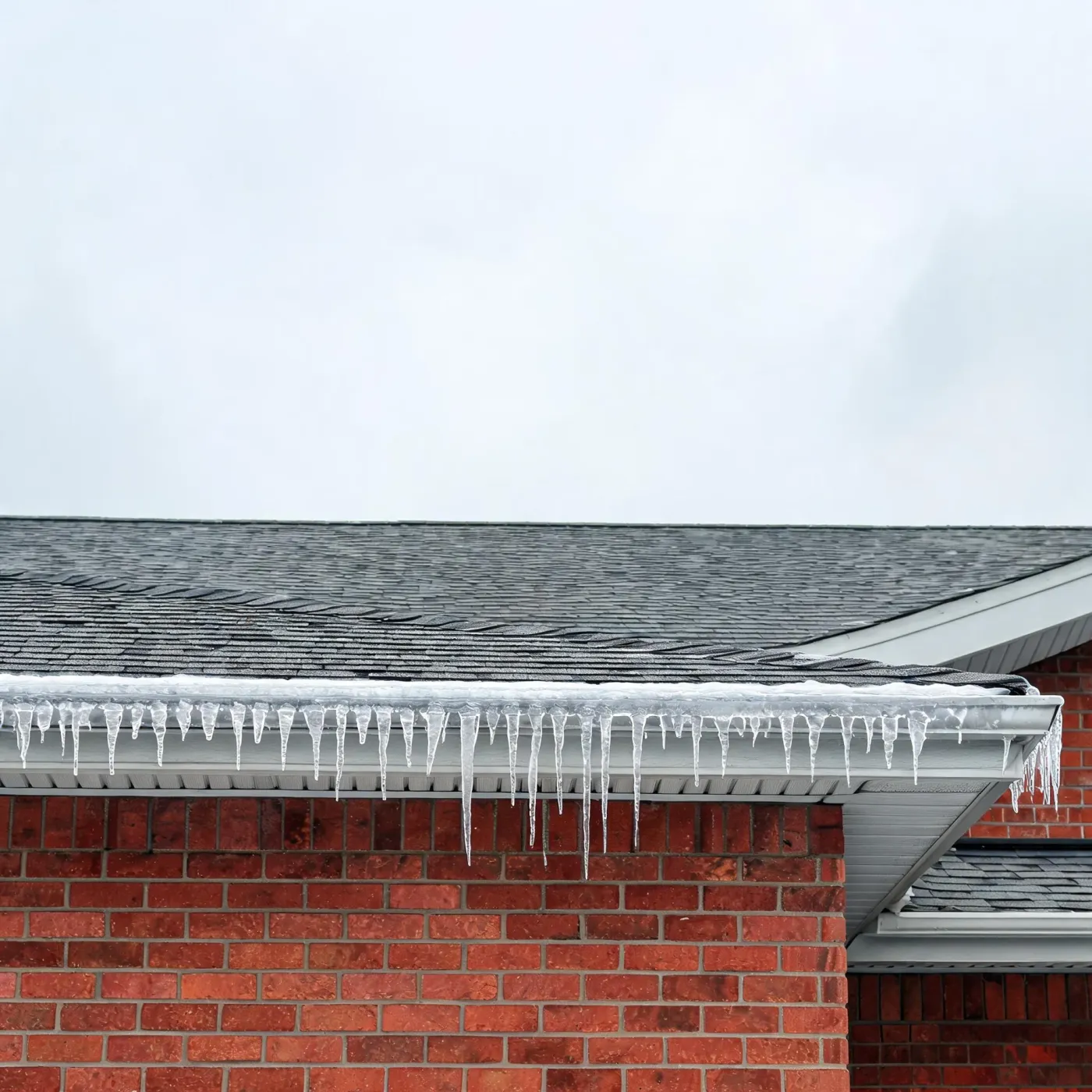
Icicles hanging from a white gutter along the edge of a gray shingled roof on a red brick house, under an overcast sky.

Overnight lows here average 18°F across December, January and February, according to NOAA climate data for Milwaukee County. At that temperature a heat pump is already leaning hard on backup heat just to keep up, so if yours is stuck on emergency heat, the outdoor unit isn't helping at all and the electric strips are carrying the entire house through nights that cold. You'd notice it in how long the system runs and how warm the air feels from the vents, and you'd notice it on the bill before the month is out.

NOAA nClimDiv 1991-2020

A heat pump stuck on emergency heat is running on electric strips alone, and in a Milwaukee winter that's the most expensive way to keep the house warm. The fix is usually one of a handful of things: a stuck thermostat signal, faulty low voltage wiring, a frozen coil, or a reversing valve that's failed. None of those sort themselves out, and the bill keeps climbing every day the outdoor unit sits idle. A contractor who works on heat pumps through Milwaukee winters has seen all four and knows which one to check first when yours is behaving this way. You'll be matched with one licensed contractor local to the area, not a handful of companies competing for the call, so the person who reaches out is the one who's actually going to look at your system. They'll walk in already knowing what a Wisconsin winter does to a reversing valve or a coil, and they'll check the thermostat signal and the wiring before anything else. Get the outdoor unit running again and the strips go back to backup, the way the system was built to work.

Elevated view over a shingled roof peak and treetops toward a wide river winding through flat farmland and woods under a clear sky.

Matched to your heat pump job

Get a licensed local pro

There's no charge for the request.

A local contractor who works on heat pumps all winter can usually spot a stuck reversing valve or a frozen coil within minutes. One visit, one company, and someone who already knows what breaks in a Wisconsin winter looking at your system instead of you guessing at the thermostat.