Running nonstop, house still cold
The system is on all day and the rooms still fall short of the thermostat. A contractor who knows these units can tell you if that's normal strain or a real fault.
 Match me with a pro
Tell a local repair pro what your heat pump is doing.
A heat pump in Wisconsin earns its keep most of the year, then January comes and it seems like it never shuts off. That's not always a sign something's wrong. Below a certain outdoor temperature, a heat pump has to run long stretches just to keep up, because it's pulling heat out of air that's gotten thin on it. But there's a line between that and a system that's actually struggling, and most homeowners can't tell which side of that line they're on just by listening to it run.
What tells the difference is what else is happening alongside the long runtimes. Ice building up on the outdoor unit that doesn't clear on its own. Supply air that feels cool instead of warm. A system that runs constantly but still can't hold the temperature you set. Any of those point to something that needs a contractor's eyes on it, not just the weather doing what Wisconsin weather does.
With power costs what they are here, a heat pump running nonstop is a bill you notice. Most homes around you lean on gas for heat, which makes the electric side of a heat pump's winter performance something worth getting checked rather than guessed at, especially if the runtimes feel like more than just a cold snap.
Getting it looked at means getting matched with a contractor who works on heat pumps in this climate specifically, someone who's seen what a Wisconsin winter does to this equipment season after season and knows what tends to give out first when the temperature drops and stays down. You'd hear from one contractor, not a handful, so you're not stuck sorting through calls to figure out who actually knows your system. That's who reaches out, and that's where the answer to what's happening with your system actually starts.
You've noticed your heat pump running almost constantly since the cold set in, and you're not sure if that means it's struggling or just doing its job. With Wisconsin winters getting well below freezing, it's worth knowing what's normal operation and what's a sign the system needs a look from someone who works on them.
A heat pump moves heat from the outside air into your house, and the colder that air gets, the less heat there is to move. Once temperatures drop into the teens and below, which happens for stretches most Wisconsin winters, the unit has to run long cycles, sometimes close to constant, just to hold the thermostat setting. That's the unit working as designed, not failing. What's worth checking is whether your house is actually staying warm while it runs. If the temperature keeps dropping, or the air coming out feels cool rather than warm, something else is going on, like low refrigerant or a failing component, and that calls for someone who services heat pumps regularly in this climate.
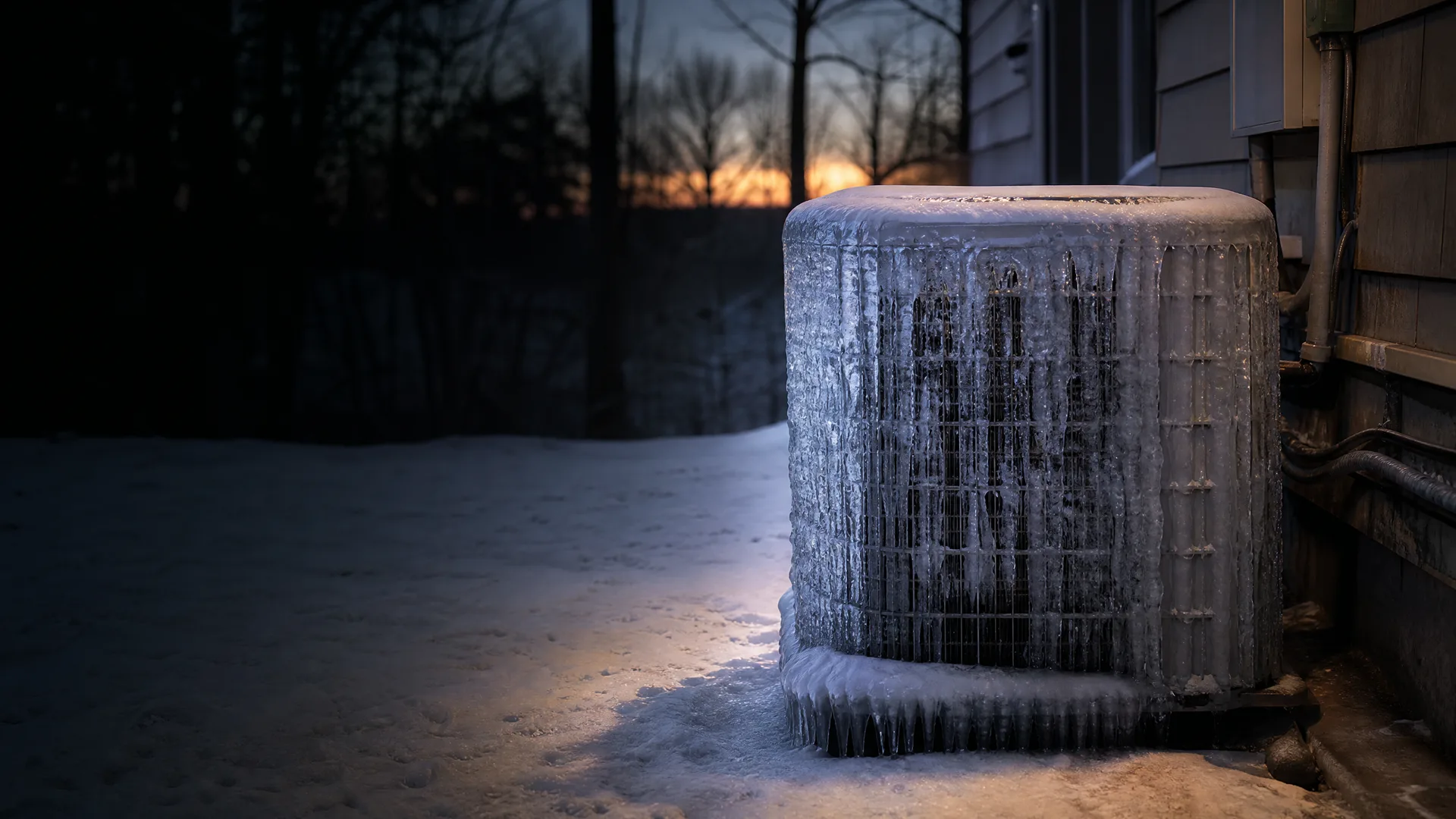
You're out before work, coffee still in hand, and you stop at the side yard. It's not even light yet. The outdoor unit is wearing a thick shell of ice, over the coils, over the fan grille, down into the base. No steam, no hum of defrost cycling. Just ice and the quiet. You crouch down and tap it with a knuckle and it doesn't give. Inside, the house still feels cool, like the system's been working against something it can't win. You think about the gas furnace next door, how it never looks like this, and you head back in to check the thermostat before you leave.
Walk past the indoor vents and feel the air. If it's running most of the day but the air coming out feels barely warm, or the house still sits a few degrees under what the thermostat says, the system is losing ground. Listen for the outdoor unit too. A hard clicking, a grinding sound, or a fan that isn't spinning while the unit still runs are signs of a problem, not just cold weather. Check the breaker panel if it's been shutting off and restarting on its own. Left alone through a Wisconsin winter, a heat pump that's struggling can freeze up solid or burn out a part that's already under strain, and you're left without heat on the coldest nights of the year.




Your request stays with one local pro.
There's no charge for the request.
A heat pump moves heat from outside air into your house. At 30 degrees there's still plenty of heat in that air to pull in. Once it drops into the teens or lower, there's a lot less to work with, so the system has to move more air across the coil and run longer to deliver the same warmth. That's normal physics, not a failing unit. Most heat pumps also carry a backup heat strip or rely on a furnace for the coldest stretches, and if that backup isn't kicking in when it should, the heat pump ends up trying to cover the whole load by itself, which is a different problem than just long runtimes.
Running most of the day isn't itself a problem. What matters is whether the house is holding temperature while it runs. A heat pump working correctly in single digit cold will cycle for long stretches but the air at the vents stays warm and the thermostat setpoint gets met, even if it takes longer than it did in October. If the system runs constantly and the house still falls short, that points to something off, low refrigerant, a struggling compressor, or a defrost cycle that isn't clearing ice. A local contractor who works on heat pumps through a Wisconsin winter sees this pattern every season and can tell you which one it is.


The system is on all day and the rooms still fall short of the thermostat. A contractor who knows these units can tell you if that's normal strain or a real fault.
Long runtimes in a Wisconsin January are normal if the house stays warm. Worth a check anyway so a small problem doesn't turn into a failed unit.


Thermostat calls for heat and the compressor starts running
Refrigerant pulls what little heat is in the cold outdoor air
Compressed refrigerant carries that heat inside to the indoor coil
Below about 35 degrees, the auxiliary heat strip kicks in to help


At 18.08 cents a kilowatt-hour, every hour your heat pump runs long adds up faster than it would somewhere with cheaper power. That's the cost of those extended runtimes in January, not just the strain on the unit. A system that's losing the fight against the cold is also running up a bill that would be lower if it were working the way it should.
EIA-861 2025 statewide residential average
A heat pump that runs long in a Wisconsin January isn't necessarily failing. The question is whether the house is holding its temperature while it does. If the rooms stay warm and steady, the system is working the way it's built to work in the cold. If the air feels barely warm and the house keeps losing ground, something in that system needs attention, not patience. A contractor local to you who works on heat pumps all winter has seen what the cold does to these units here, and knows what tends to give out first when a system is actually struggling, not just working hard. Getting matched means one contractor reaching out, someone who takes the call and looks at your equipment directly, not a handful of companies competing for your number. That's worth something when you're trying to figure out, in the middle of a cold snap, whether to wait it out or get someone out to look at it.

The pro who reaches out is licensed in Wisconsin.