





Why your heat pump isn't cooling in Wisconsin summers

RepairHeat PumpWisconsin
Step 1 of 2

What ZIP code is the job in?

Why isn't my heat pump cooling my house in the summer?

You keep the house comfortable, and right now it isn't happening. Wisconsin summers get sticky, and when the heat pump runs all day without the house actually cooling down, that's not normal and it isn't something to wait out. Something specific is keeping it from moving heat out of the house, and most of the time it's one of a short list of things.

Low refrigerant or a dirty outdoor coil are the usual reasons

A heat pump cools a house by moving heat from inside to outside, and that only works if the refrigerant charge is correct and the outdoor coil can shed heat into the air around it. A leak that's let refrigerant run low means the system can't carry enough heat out, even while it runs nonstop. A coil packed with cottonwood fluff, grass clippings or dust does the same thing by blocking airflow across it. Either problem shows up the same way from inside the house: the air coming out of the vents is barely cool, or the system runs and runs without the house catching up. A failing reversing valve can also leave the unit stuck heating instead of cooling, though that's less common.

A woman with long gray wavy hair in a knit sweater sits on a light sofa with a striped pillow, looking toward a window in a room with wooden shelving and a potted plant.
A woman in a gray cowl-neck sweater stands in a living room with built-in shelves, a lamp, a sofa with cushions, and a bright window behind her, looking to her right.
A woman with long wavy brown hair in a dark blue sweater sits on a sofa with cushions, looking off to the side, with a wooden shelving unit, houseplant and bright window behind her.
A woman with long dark hair in a gray knit sweater sits indoors smiling and looking off to the side, with a window, houseplant, framed picture, and shelving blurred behind her.

How a Heat Pump Cools

  • A heat pump cools by pulling heat out of the house and releasing it outside through the outdoor unit's coil.
  • A reversing valve switches the refrigerant flow between summer cooling and winter heating, and a stuck valve leaves it heating when it should cool.
  • Low refrigerant charge means the indoor coil can't absorb enough heat, so the system runs long cycles without dropping the temperature.
  • A dirty outdoor coil blocks the heat from escaping outside, so the refrigerant can't release what it picked up inside.
  • A failing compressor can still run the fans while doing none of the actual work of moving heat.
  • In humid weather, a heat pump that's low on charge or losing airflow will often run constantly and still leave the air feeling damp.

A heat pump doesn't make cold air. It moves heat out of the house and dumps it outside, using refrigerant that cycles between the indoor coil and the outdoor unit. In summer, a part called the reversing valve directs that refrigerant so the indoor coil absorbs heat and the outdoor coil releases it. That valve is what makes a heat pump different from a plain air conditioner, and it's also a common point of failure. If it sticks in the wrong position, the system can keep running like it's heating even though it's July.

The refrigerant itself has to be at the right charge to carry heat the way it's supposed to. Too little, and the indoor coil can't pull enough heat out of the air, no matter how long the system runs. Outside, the coil needs to be clean to let that heat escape. Dirt, grass clippings, or anything else coating the fins traps the heat the system just worked to collect, so it has nowhere to go.

The compressor is what actually moves the refrigerant through this whole cycle. It can fail in a way that still lets the fans spin, both indoors and out, which fools a lot of people into thinking the system is working. With Wisconsin's humidity, any of these problems tend to show up the same way: the system runs and runs, the air coming out doesn't feel cold, and the house stays sticky no matter how long you leave it on.

A dirty outdoor air conditioner condenser unit with debris on its coil grille, sitting on a concrete pad beside a light-colored horizontal siding wall, with bare dirt ground in front and a shrub at right.
Before you get your heat pump repair
A gray outdoor condenser unit on a concrete pad beside a house with horizontal lap siding, with a metal disconnect box and refrigerant lines on the wall, river rock and mulch to the sides, and a green shrub at right.
After you get your heat pump repair

Why low refrigerant hits hard in summer

A heat pump needs a full charge of refrigerant to move heat out of the house. When the charge is low, from a slow leak at a fitting or a worn coil, the system keeps running but moves less heat with every cycle. In Wisconsin's humid stretches the unit ends up running longer and longer just to lose ground, and the house stays warm and clammy even as the thermostat says it should be cooling. A low charge doesn't fix itself. It has to be found, the leak sealed, and the system recharged to the amount it was built to carry.


Why the outdoor coil has to stay clean

The outdoor unit releases the heat pulled from inside your house through its coil. If that coil is caked with grass clippings, cottonwood fluff, or dust built up over the summer, the heat has nowhere to go. The refrigerant stays hot, the system works harder, and the air coming out of the vents loses its chill. Outdoor coils sit low to the ground and collect debris fast once the grass starts growing. A blocked coil can mimic a bigger problem, so it's worth ruling out before anything gets replaced.

A woman and a child wrapped together in a thick knitted beige blanket on a sofa, both with eyes closed, beside a lit table lamp in a dim room.
An older woman with grey-blonde hair in an updo and a beige turtleneck sweater smiles while looking to the side in a warmly lit kitchen, with a round loaf of bread on the counter in front of her and a dark window showing snow outside.
A gray outdoor condenser unit of an air conditioner or heat pump sits on a concrete pad beside a house with horizontal lap siding, with a wall-mounted disconnect box and conduit above it, mulched beds, shrubs and grass nearby.

No phone calls to make

The pro who reaches out is licensed in Wisconsin.

Skip searching for a heat pump pro and answer a few questions instead.

Get one local pro

Asking costs nothing, and the choice to hire stays yours.

A closed laptop and a ceramic mug of coffee on a wooden table, with a blurred kitchen counter, cutting board, utensil jar and plant in the background.

What this does to your house

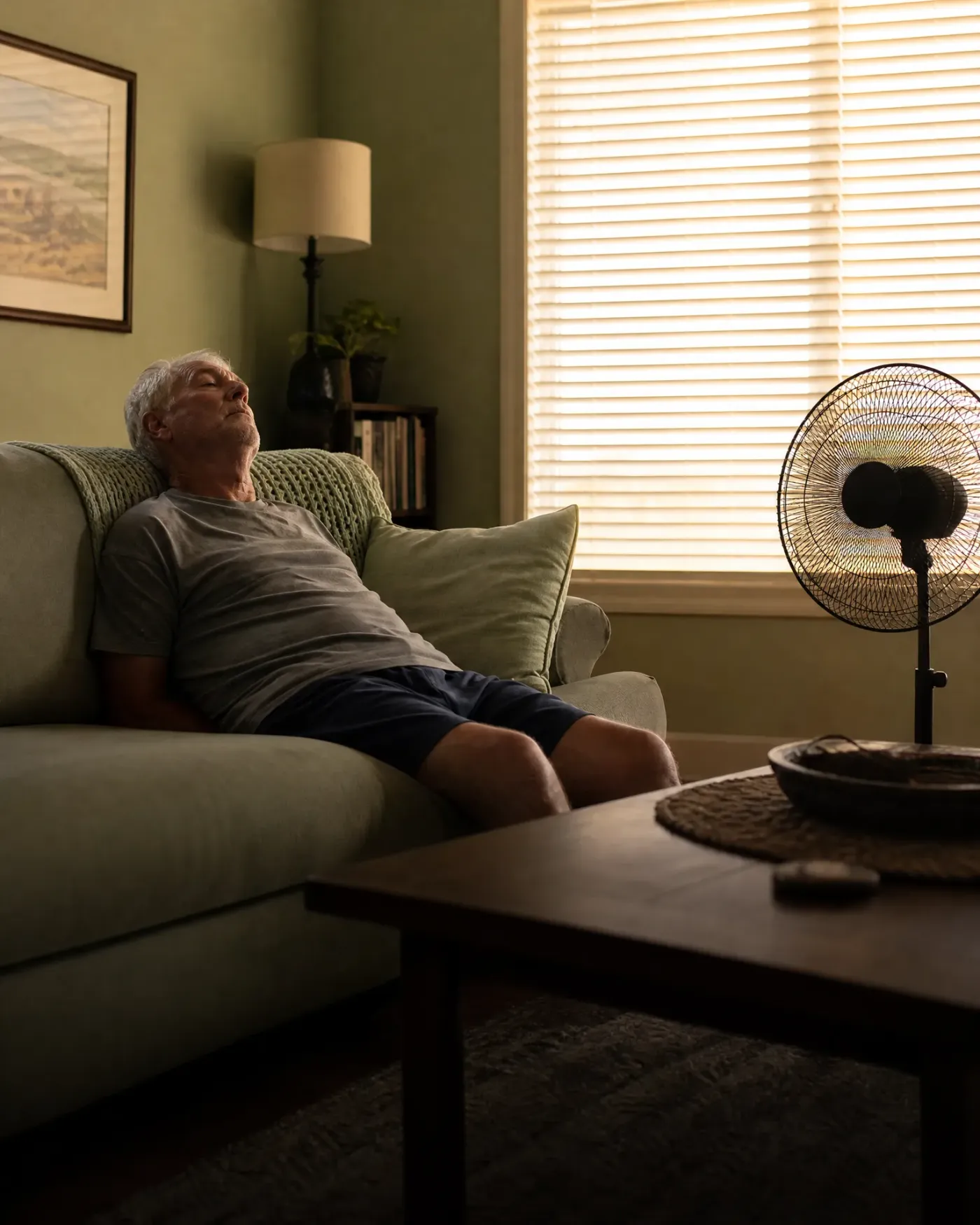
When the heat pump can't keep up, you feel it room by room. The upstairs bedrooms get warm first. The air coming out of the vents feels cool but not cold, so the thermostat never gets satisfied and the system just keeps running. Humidity climbs too, so the house feels worse than the temperature on the thermostat suggests. Meanwhile the outdoor unit runs for hours trying to move heat it can't move, and that shows up on your power bill since electricity here isn't cheap.

Finding someone who actually works on heat pumps in Wisconsin isn't always simple. Plenty of contractors around here mostly service gas furnaces, since that's what most homes run in winter, and heat pump cooling trouble can mean a callback or a referral instead of a fix. You'd normally spend time calling around, explaining the symptoms more than once, and comparing quotes from people you don't know. This connects you with one local contractor who works on heat pumps every summer and already knows what tends to go wrong in them.

A shallow dark wooden bowl and a stack of books rest on a wooden table in front of a beige sofa with linen and green cushions, with a tall ceramic vase of thin branches beside a window in the background.
A gray outdoor condenser unit on a concrete pad beside a house with gray lap siding, connected by conduit and refrigerant lines to a wall-mounted disconnect box, with a green shrub and mulch bed at left.

Running the way it should

The outdoor unit cycles on, runs for a while, and shuts off once the house reaches the set temperature. The coil stays clean enough to shed heat, the disconnect box and conduit are intact, and the unit sits level on its pad. You set the thermostat and the house actually gets there.

An outdoor air conditioning or heat pump condenser unit on a concrete pad beside a house with horizontal vinyl siding, a gray electrical disconnect box and conduit on the wall, and a concrete walkway in the foreground.

Struggling to keep up

The unit runs long stretches without the house cooling down, and dirt has built up on the cabinet and coil over time. Airflow through a dirty coil drops, so heat has nowhere to go. If the unit looks like this and the house stays warm, something inside needs a technician's attention.

Power costs 18.08 cents per kilowatt-hour statewide

At 18.08 cents a kilowatt-hour, a heat pump running flat out all day in the heat isn't just failing to cool the house, it's doing it at a rate that shows up on the next bill. A unit that's low on charge or stuck heating still draws power the whole time it runs.

EIA-861 2025 statewide residential average

A gray outdoor air conditioner or heat pump unit on a concrete pad beside a house with horizontal lap siding, with conduit and refrigerant lines running up the wall and green shrubs and mulch at left.
The coil is clean and the airflow through it is unrestricted, so the unit sheds heat outside the way it's supposed to.
An outdoor air conditioning condenser unit on a concrete pad beside a house with horizontal siding and a concrete foundation, with refrigerant lines running to a wall-mounted disconnect box and shrubs at left.
A grille this dirty blocks airflow across the coil, and the unit can't dump heat outside no matter how long it runs.
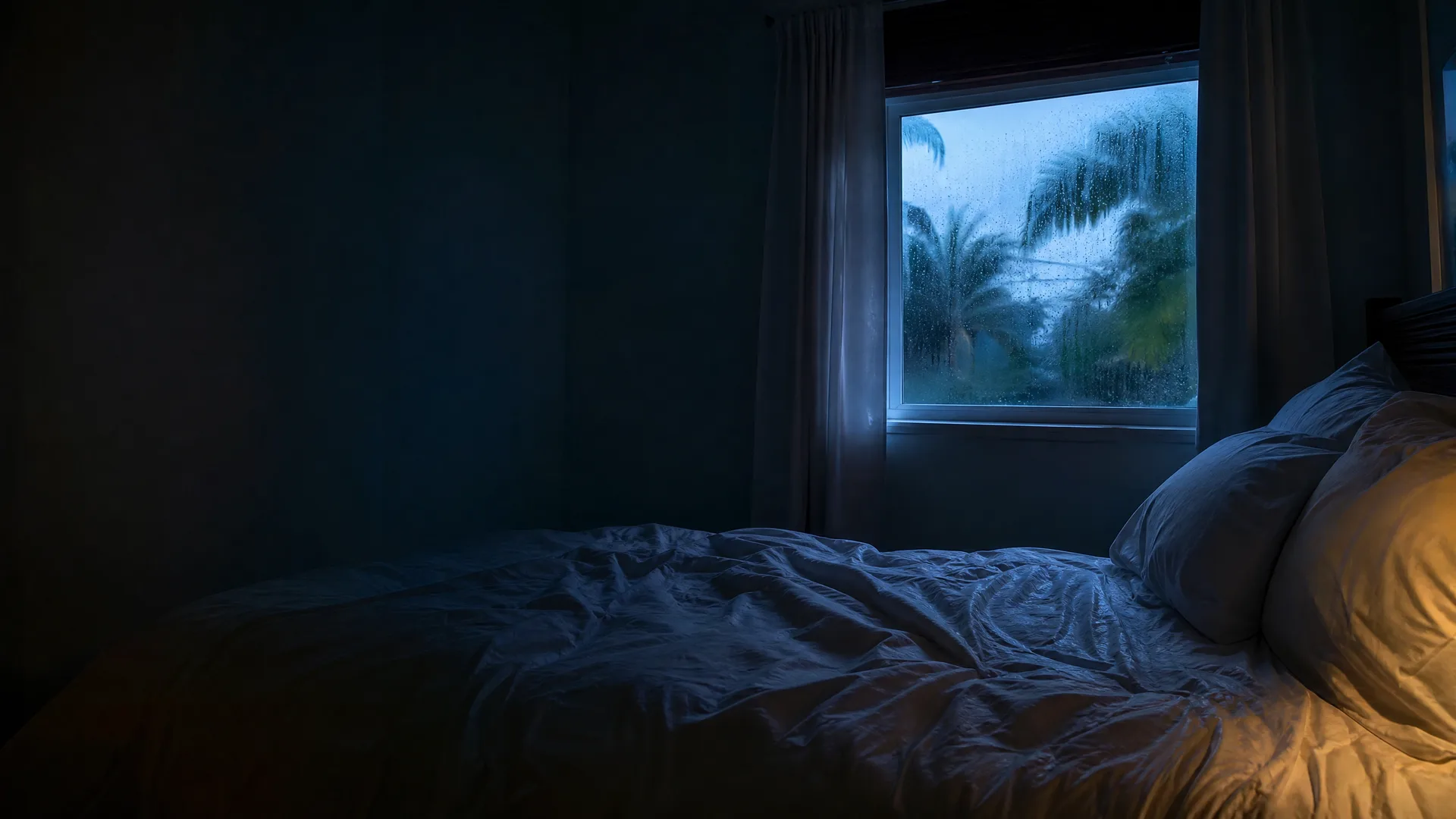
A dark bedroom with an unmade bed and pillows beside a curtained window showing rain-streaked glass and palm foliage outside.

It's past eleven and the bedroom is still thick with it. The window's fogged at the corners where the humidity meets the glass, and the sheets are damp enough that you've kicked half of them to the floor. You can hear the outdoor unit running outside, steady, like it's been doing since dinner. You get up and stand under the vent for a second. The air's moving, you can feel it on your arm, but it isn't cold. It's just air. Down the hall your kid's door is cracked open, fan going on top of the dresser. Tomorrow's a work day. You lie back down on the dry side of the mattress and stare at the ceiling fan doing nothing.

Finding Help vs. Getting Matched

Call around yourself

  • You search for heat pump repair, read through listings, and still don't know which company actually works on heat pumps instead of just furnaces.
  • Each company you call asks you to explain the symptoms again from scratch, how long it's run, what the air feels like at the vents.
  • You end up juggling two or three quotes with no way to tell if they're even diagnosing the same problem.
  • If the first contractor can't make it out for a few days, you're back to searching while the house stays sticky.
  • Every company that calls you back is another number to track and another voicemail to return.

Get matched here

  • You answer once, and the details go to a contractor already set up to take the job, not a list of companies deciding whether to bid on it.
  • The contractor is local and licensed, and works on heat pumps through Wisconsin summers, so a stuck reversing valve or a low charge isn't a guessing game for them.
  • Only one contractor gets your information, so you're not fielding calls from three different companies the same afternoon.
  • Someone who services these units every summer here has likely already seen what's failing in yours before they arrive.
  • You skip the back and forth of comparing quotes from companies you had to find and vet on your own.
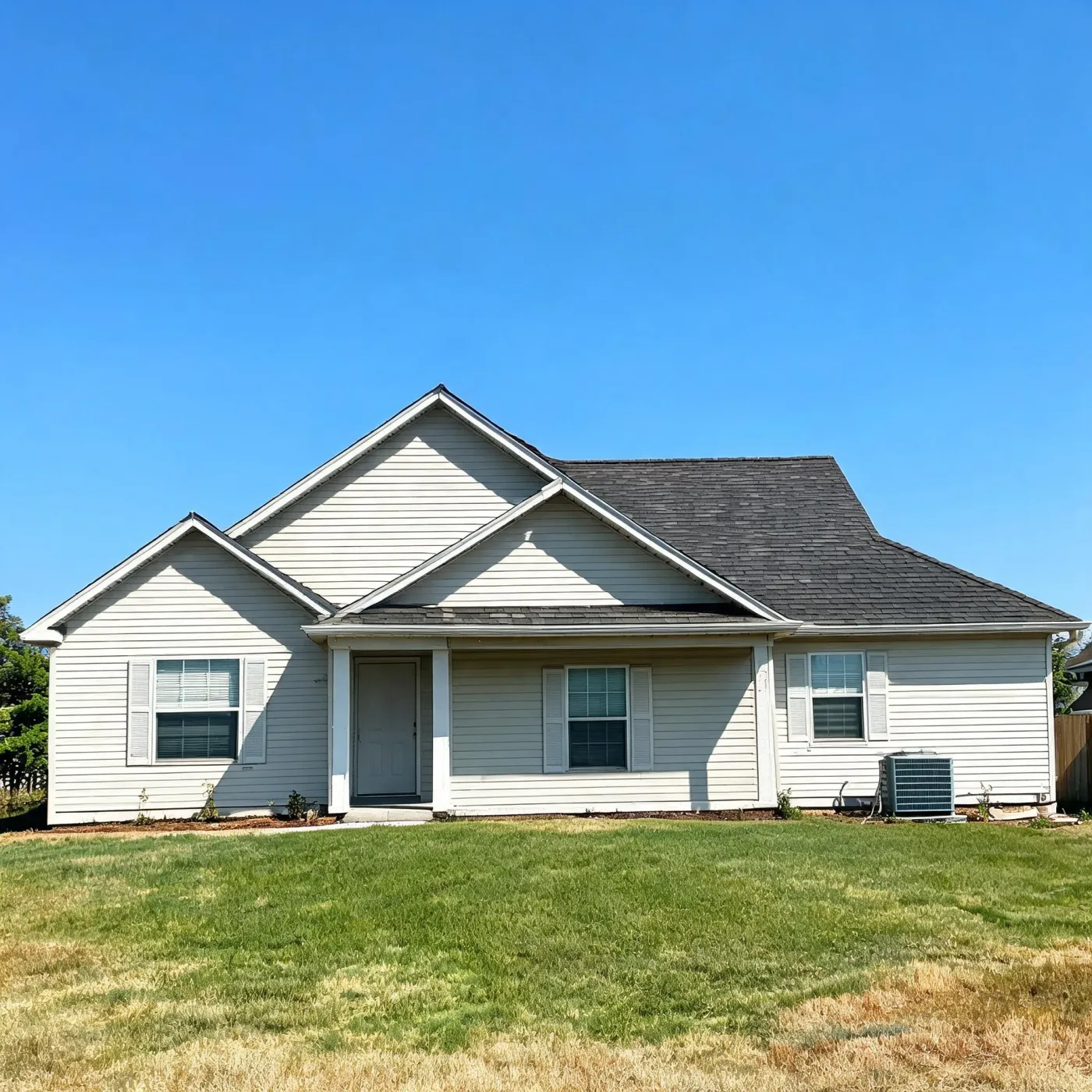
Single-story house with cream vinyl siding, gray shingled gable roof, small front porch with gray door, shuttered windows, and an outdoor AC unit, fronted by a partly dry lawn under a clear blue sky.

Average dew point across a Wisconsin summer runs 60°F, per NOAA climate data, and that's the number that decides how the air actually feels, not just the temperature on the thermostat. A heat pump cools by pulling both heat and moisture out of the house, and at a dew point like that it has real work to do on the humidity side, not just the degrees. When the system is low on charge or the coil can't shed heat outside, the moisture part is the first thing to slip. You'll notice it as air that feels cool coming out of the vents but the house still feels damp, like it never quite dries out.

NASA POWER T2MDEW county cells weighted by homes

A heat pump that runs all day without cooling the house is telling you something specific is wrong, whether that's a stuck reversing valve, a low charge, or a coil that can't shed heat anymore. None of those fix themselves, and none of them get better with the system running longer trying to catch up. The contractor who takes this job is someone local who works on heat pumps all summer, in houses heated by gas furnaces same as this one, who's seen what a Wisconsin summer does to a coil or a valve and knows which one to check first. You explain it once, to one contractor, and that's the end of calling around and repeating yourself to company after company just to find out who actually works on this equipment. What you're left with is someone who can look at your system and tell you what's actually keeping your house warm when it should be cool, and get it running the way it's supposed to before the next stretch of hot, sticky days sets in.

Elevated view over a slate roof with a brick chimney and dormer window, surrounded by dense green trees, looking out across flat farmland fields and a winding river under a hazy sky.

One form, no calling around

Skip the calls

No fee to send it, and nothing to sign.

A heat pump that won't cool is still running up your bill every hour it's stuck. One call gets a local contractor who works on heat pumps all summer out to look at the reversing valve, the charge, and the coil, instead of you guessing which part it is.