



Heat pump not cooling in West Bend, WI

One request and the search for a pro is handled.

Let a pro reach out

Why is my heat pump running but not cooling the house?

You go outside and the unit is running. Fan's turning, you can hear it working, but the air coming out of your vents is warm, or barely cool. In West Bend summers aren't brutal the way they are further south, but a stretch of warm, humid days with a heat pump that isn't actually cooling the house makes the whole place feel sticky and stale fast, especially upstairs.

Low refrigerant charge is the most common reason

A heat pump that runs but doesn't cool usually has a refrigerant leak somewhere in the lines or the coil. The system still turns on and moves air, but without enough refrigerant it can't pull heat out of the house the way it should. A dirty outdoor coil does the same thing, because it can't release heat outside fast enough. A failing reversing valve is another cause, since that's the part that switches the unit between heating and cooling, and if it's stuck, the system runs in the wrong mode without you knowing it. Any of these needs a contractor to check, since low refrigerant means there's a leak that has to be found and sealed, not just topped off.

A smiling man in a navy long-sleeve shirt sits at a wooden table in a kitchen and dining area, with a ceramic mug, a potted plant, and a sliding glass door behind him.
A smiling bearded man in a green henley shirt stands at a kitchen island with a gray mug, looking off to the side, with a dining area and shelves blurred behind him.
A smiling bearded man in a navy sweater sits at a white kitchen island with a ceramic mug, with open shelves, potted plants and a range hood behind him.
A smiling man in a dark olive long-sleeve shirt sits in a kitchen beside a counter with a dark mug, with a dining table, sideboard and hallway visible in the blurred background.

Why does a heat pump have to work both summer and winter here?

  • Winter nights average 14°F

    Nights averaging 14°F mean your heat pump leans hard on backup heat to keep up, and that same unit has to switch over and cool all summer.

  • Heat runs October through May

    Eight months of heat means the system that's not cooling your house right now is the same one that carried your house through last winter.

  • Cooling runs June through August

    Three months of cooling isn't long, but when a July afternoon hits and the unit won't cool, you feel it fast and you want it fixed fast.

NOAA nClimDiv 1991-2020

The unit is low on refrigerant

A heat pump that's lost some of its charge will still run, the compressor still turns on, the fan still blows, but there isn't enough refrigerant moving through the coil to pull heat out of the air. You might notice the line running to the outdoor unit feels warmer than it should, or ice building up on the coil even on a hot day. This isn't something that burns off or tops itself up. Refrigerant doesn't get used up in normal operation, so if the level is low, it's low because it's leaking out somewhere, and a contractor has to find that leak before adding more does any good.


The reversing valve is stuck

Your heat pump uses the same unit to heat your house in January and cool it in July, and the reversing valve is what switches it between the two. When that valve sticks, the system can end up stuck in heating mode in the middle of July, or stuck somewhere between the two. You'll hear the unit running like normal, because the compressor and fan don't know anything is wrong. The air just won't be cold. This tends to show up more in units that get worked hard both ways, switching over every spring and every fall, which is exactly what happens to a heat pump in Washington County.

An outdoor air conditioning condenser unit with a top fan grille sits on a concrete pad beside a house with horizontal siding and a concrete step.
Before you get your heat pump repair
A gray outdoor condenser unit on a concrete pad beside a light-green sided house, surrounded by mulch, ornamental grasses and a shrub, with mowed lawn in the foreground.
After you get your heat pump repair
A gray outdoor heat pump unit on a concrete pad beside a house with horizontal lap siding, connected by conduit and a flexible line to a wall-mounted disconnect box, with low shrubs and mulch nearby.

Running the way it should

Air comes out of the vents noticeably cooler than the room, and it stays that way as the unit cycles off and on through the afternoon. The outdoor fan turns steady, and the lines running to the disconnect box stay free of any frost or sweating.

An outdoor air conditioner condenser unit on a concrete pad beside a house with horizontal lap siding, with a shrub to the left, bare dirt in front, and conduit and a metal disconnect box on the wall.

Running but not keeping up

The fan outside is turning and the unit sounds normal, but the air at the vents is warm or only a little cool. Ice can build along the lines near the disconnect box even while the compressor keeps running. Left alone, it tends to get worse, not better.

A bearded man in a blue T-shirt sits on a gray couch smiling while looking down at a laptop screen, with a houseplant and window in the blurred background.
A man with graying hair and a beard in a plaid flannel shirt looks out a frosted window, with a steaming ceramic mug on the wooden sill and shelves behind him.
A gray outdoor condenser unit on a concrete pad beside a house with horizontal lap siding, a stone-veneer column, dark-framed windows, shrubs and mulch, and a lawn in the foreground.

Hand off the search today

A licensed pro who repairs heat pumps in Washington County gets your request.

Send it once and finding someone is no longer on you.

Find a licensed pro

You're not committing to anything by asking.

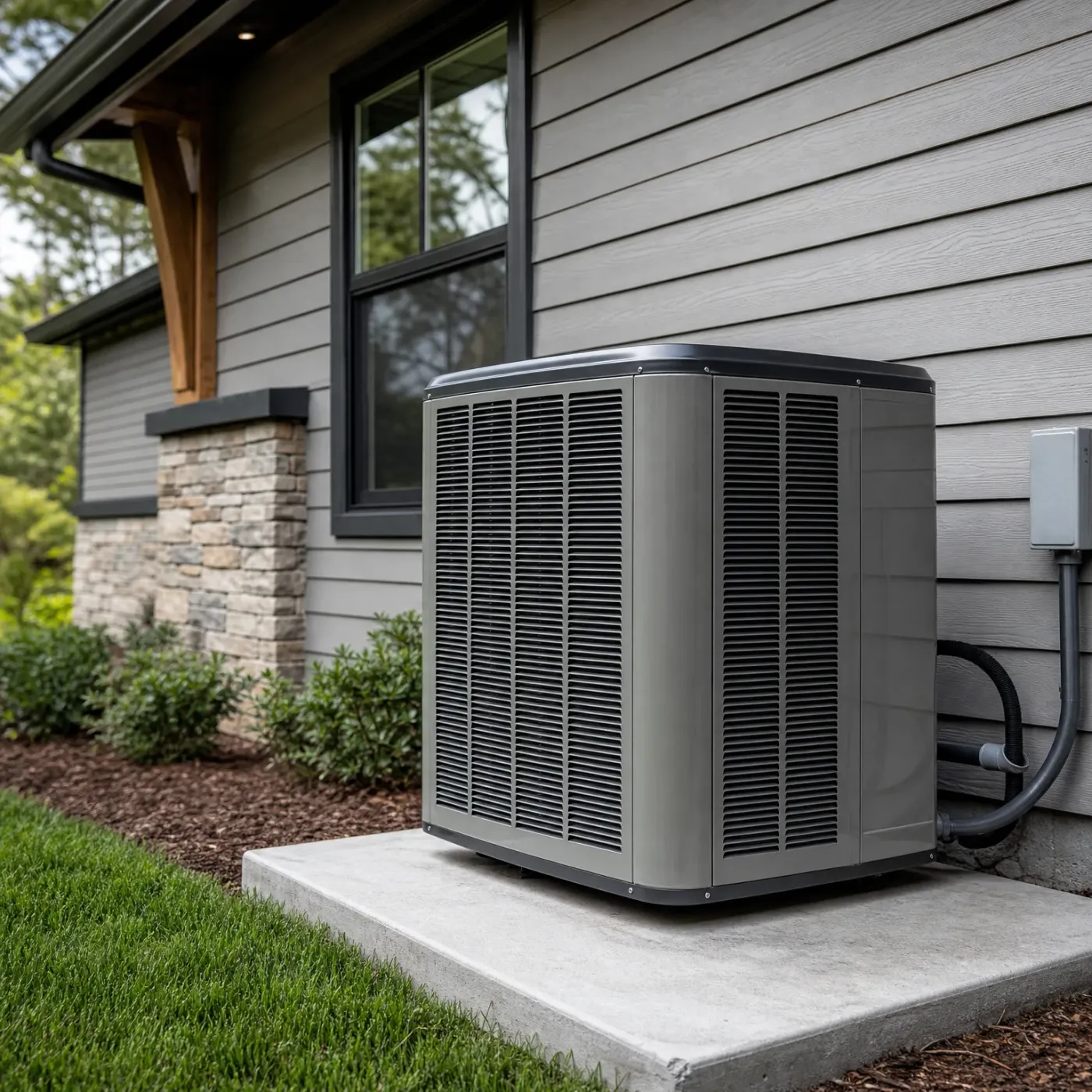
A gray outdoor heat pump unit on a concrete pad beside a house with horizontal lap siding, with a conduit running to a wall-mounted disconnect box and a green shrub to the left.
A clean outdoor unit like this one is still moving refrigerant and air the way it's supposed to.
An outdoor air conditioning condenser unit on a concrete pad beside a house with horizontal siding above a brick foundation, with a flexible conduit running to a wall-mounted disconnect box.
Dust packed into the coil and a unit left to weather like this one is a sign cooling has been slipping for a while.
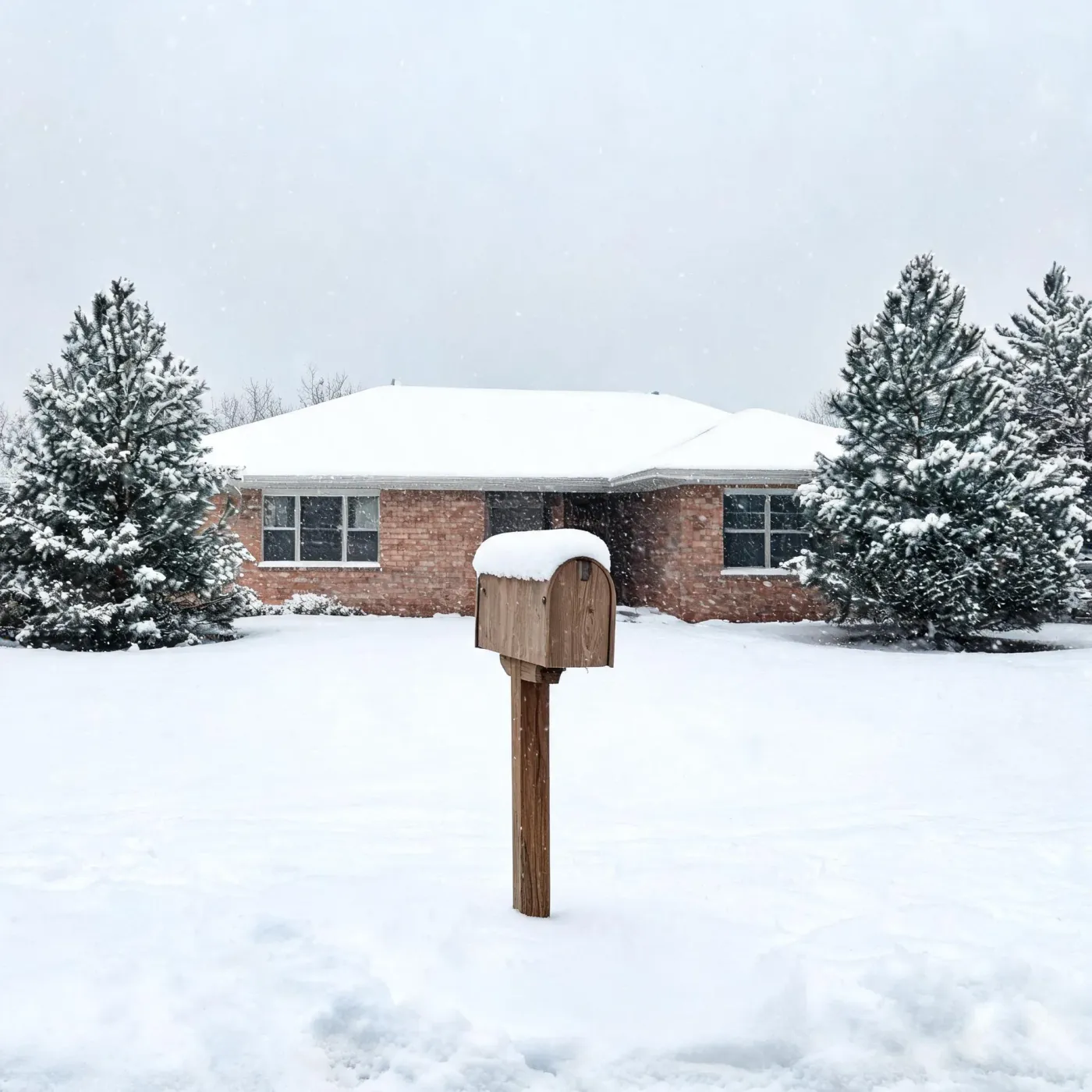
A snow-covered wooden mailbox on a post stands in a snowy yard in front of a single-story brick house flanked by snow-laden evergreen trees during falling snow.

Overnight lows averaging 14°F across December, January and February put a heat pump through a hard freeze and thaw cycle for months at a stretch. Every time the outdoor coil frosts over, the unit has to switch into defrost and melt that ice off before it can get back to work. A system that's been doing this all winter, with a weak capacitor or a refrigerant leak it was already managing, often comes into summer with less reserve than it looks like it has. That's why a unit that ran fine in April can struggle to cool the house by July.

NOAA nClimDiv 1991-2020

Fix It Now or Let It Ride

Fix it now

  • A tech who already knows what usually fails on these units can often get cool air back the same visit.
  • Catching a low refrigerant charge or a failed capacitor early keeps the compressor from taking the damage.
  • You pay for the one part or repair that's actually broken, not for a new system you don't need yet.
  • A unit that's still under warranty may have the part covered, so the repair costs less than it would later.
  • If the outdoor coil just needs cleaning or a sensor needs replacing, the unit goes back to cooling like it did when it was new.
  • Waiting even a week in a West Bend summer means more days with warm air coming out of the vents.

Let it ride

  • A compressor already struggling against a refrigerant leak can seize up completely if it keeps running low.
  • What starts as a small repair, a bad capacitor or a dirty coil, tends to turn into a bigger one the longer it's ignored.
  • The unit still has to switch over and heat your house come winter, and a problem left alone in summer doesn't fix itself by October.
  • Running a low-charge system hard all summer puts more hours of strain on a compressor that was already working against the leak.
  • Power here isn't cheap, and a heat pump struggling to cool runs longer to do less, so the bill climbs while the house stays warm.
  • A frosted coil or a frozen line set left unaddressed can mean a bigger repair bill than if it's caught now.
A dimly lit bedroom at night with an unmade bed and pillows, a lit table lamp on a nightstand, and a condensation-covered window showing a streetlight and foliage outside.

It's past eleven and you're still on top of the sheets. The window's open a crack and the screen has fogged a little at the edges, the way it does on the humid nights. The vent by the closet is pushing out air, you can feel it move against your arm, but it isn't cold. Somewhere outside the unit is still running, you heard it kick on an hour ago and it hasn't stopped. You get up and flip the pillow to the dry side, lie back down, and listen to the compressor working for nothing. Washington County nights like this are rare enough that you notice them, and tonight is one of them.

A heat pump that runs but doesn't cool almost always comes down to one of a short list of things: a low refrigerant charge, a failed capacitor, a frozen coil, or a reversing valve stuck in the wrong position. None of those get better by waiting, and running the unit while the charge is low or the capacitor is failing just adds strain to the compressor. Washington County doesn't have a lot of contractors who see these units through both a Wisconsin winter and a summer cooling call, so finding someone who knows what usually fails on them locally narrows things down fast. You'll be matched with one licensed contractor working in West Bend, not a handful of companies competing for the job, so there's one call to expect and one tech who already has a sense of what to check first. Send the request and you're done with the part that's hardest to do yourself, which is finding someone who knows this equipment and has the time to look at it.

A white clapboard house at dusk with a lit pedimented portico, wooden front door, potted ferns, stone walkway, lawn, and illuminated hydrangea shrubs.

Heat Pump Repair

Hand off the heat pump problem

RepairHeat PumpWashington County, WI
Step 1 of 2

What ZIP code is the job in?

  • A pale ceramic vase holding leafy green branches sits on a wooden side table beside a linen-covered chair with a throw blanket, below a wood-framed window.
    • Get matched with someone who does this kind of work in Washington County.
    • Get matched with a pro who fixes heat pumps in Washington County.
  • A large woven basket with rope handles holding a draped cream fringed blanket stands in a room corner on a wood floor, with sunlight from a nearby curtained window and a dark wood cabinet at right.
    • Get the heat pump repair search off your mind today.
    • Once you send the form, finding a pro is off your list.
  • A leafy green plant in a woven basket sits in a sunlit corner beside a beige sofa with a knit throw, sheer curtains, a window, and a wooden coffee table.
    • Explain the heat pump problem once instead of to every shop in Washington County.
    • Skip calling shops to ask who repairs heat pumps in Washington County.
  • A ceramic vase holding olive branches and a wooden bowl sit on a wooden windowsill beside a white-framed window, with a framed picture leaning against the grey wall.
    • A licensed pro who works in Washington County gets your request.
    • Only one pro gets your request, so you hear from one company.