Why your AC is making a loud noise in Wisconsin

RepairCentral ACWisconsin
Step 1 of 2

What ZIP code is the job in?

Why is my AC making a loud noise?

A loud noise from your AC usually means something has changed inside the unit, and with Wisconsin summers getting sticky and sticking around through August, a unit that's struggling to keep the house comfortable is not something you want to wait out. Some noises mean the system is still running but wearing down. Others mean it's about to stop cooling altogether.

The noise tells you what's wrong before a tech ever shows up

A grinding or screeching sound usually points to the fan motor bearings wearing out. Rattling often means a loose panel or something caught in the outdoor unit. A loud bang when the system starts is frequently a compressor issue, and it tends to get worse, not better. Clicking that continues after startup can mean a failing relay. Since power costs more here than in a lot of states, a system working harder than it should because of a bad part shows up on the bill fast, on top of the noise itself. None of these fix themselves, and a noise that shows up suddenly is usually a part that has failed, not one that's about to.

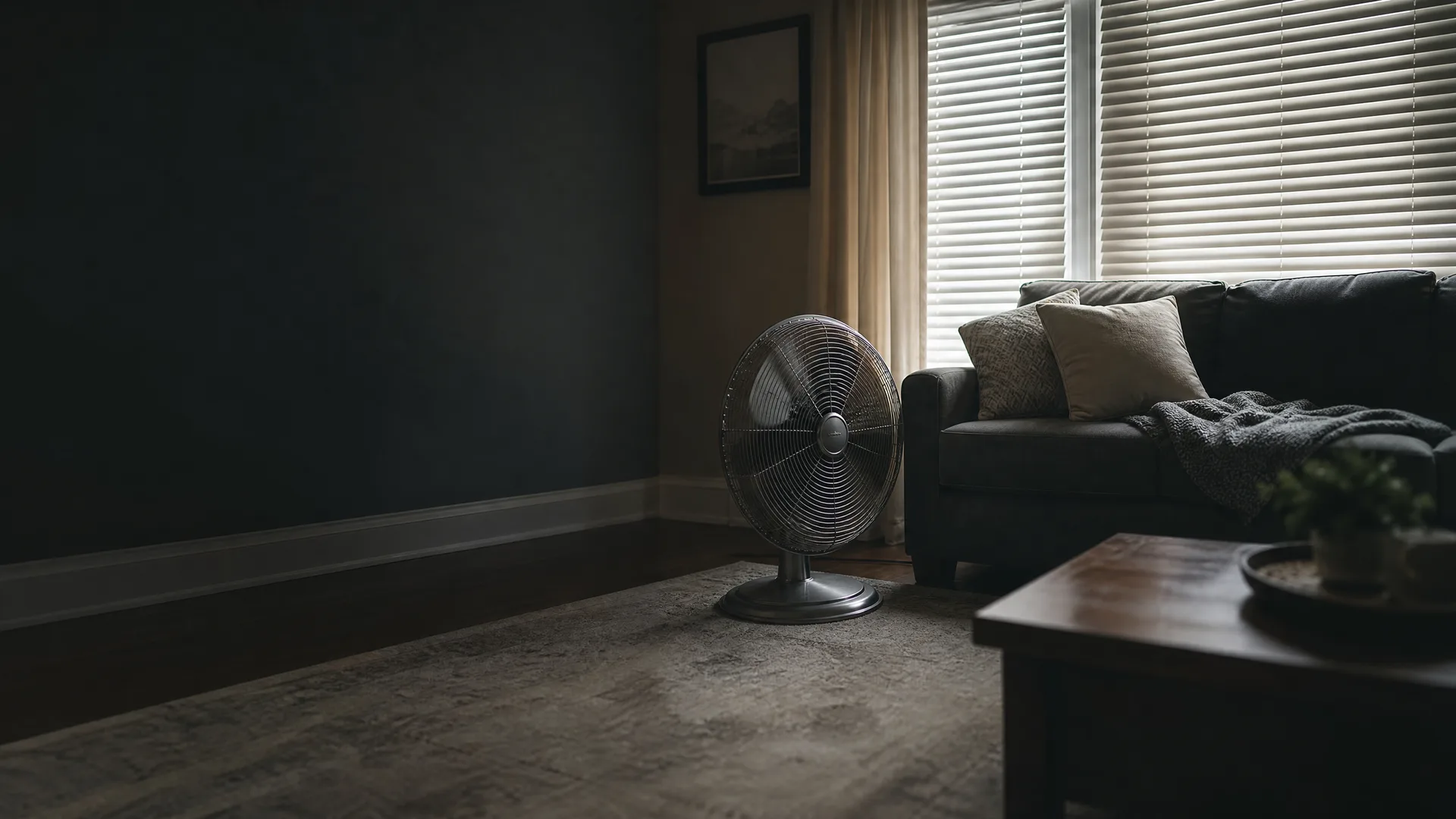
A dimly lit living room with a table fan on a patterned rug, a dark sofa with cushions and a blanket beside blinded windows, a framed picture on the wall, and a wooden coffee table with a potted plant in the foreground.

It's the middle of July, mid-afternoon, and the blinds are pulled against the sun. The floor fan next to the couch is running on high, pushing air around more than cooling it. You notice the AC cycling louder than it should, a rattle or a grind under the hum, and you turn the fan up a little more like that'll cover it. The house is holding at a temperature that isn't quite enough, and the kids are sprawled on the floor where the fan hits them. You've turned the noise over in your head twice now, telling yourself you'll deal with it once it's unbearable. It isn't unbearable yet. But the fan is working harder than it used to, and so is whatever's making that sound.
Is this noise something you should worry about?

A rattle might just be a loose panel, something a contractor tightens in minutes. A grinding or screeching sound is different. That's usually metal on metal, a motor bearing or a blower wheel wearing out, and it tends to get worse, not better, if you keep running the unit. A loud bang when the AC kicks on can mean a part has broken loose inside. Keep running a unit that's grinding or banging and you risk turning a repair into a full system failure, and in a Wisconsin July, that leaves the house hot and humid with no quick way to cool it back down while you wait on a fix.

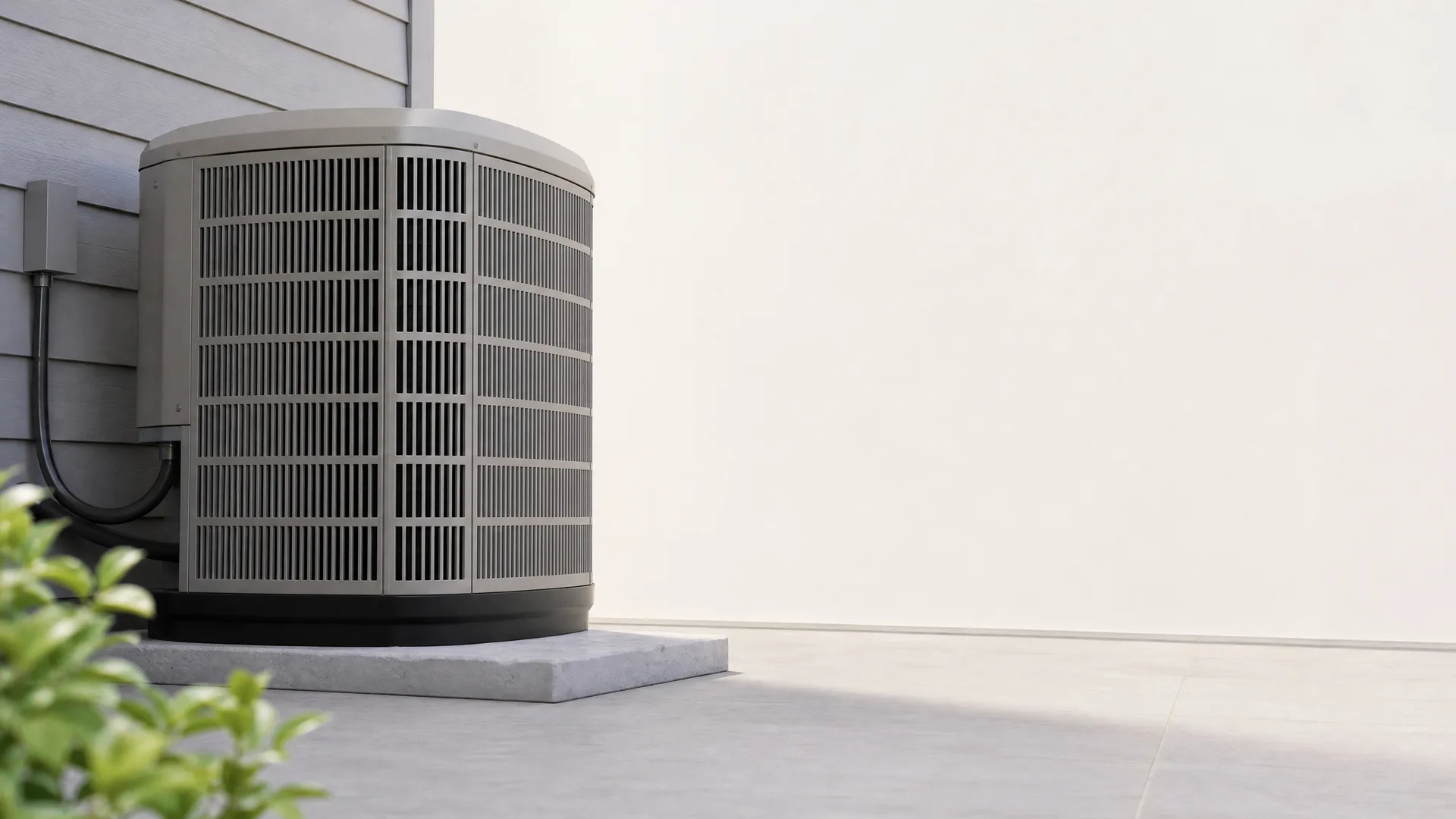
An outdoor air conditioning condenser unit on a concrete pad beside a house with horizontal lap siding, with an electrical disconnect box and conduit on the wall and a green shrub in the lower left foreground.

What a bang or click means

A loud bang when the AC starts or stops is usually the ductwork flexing as air pressure changes, and on its own it is not serious. A sharp click that repeats is often a relay or a capacitor losing its charge. Neither tells you to shut the system off, but both are worth having a contractor look at before the hot stretch in August asks more of the unit.

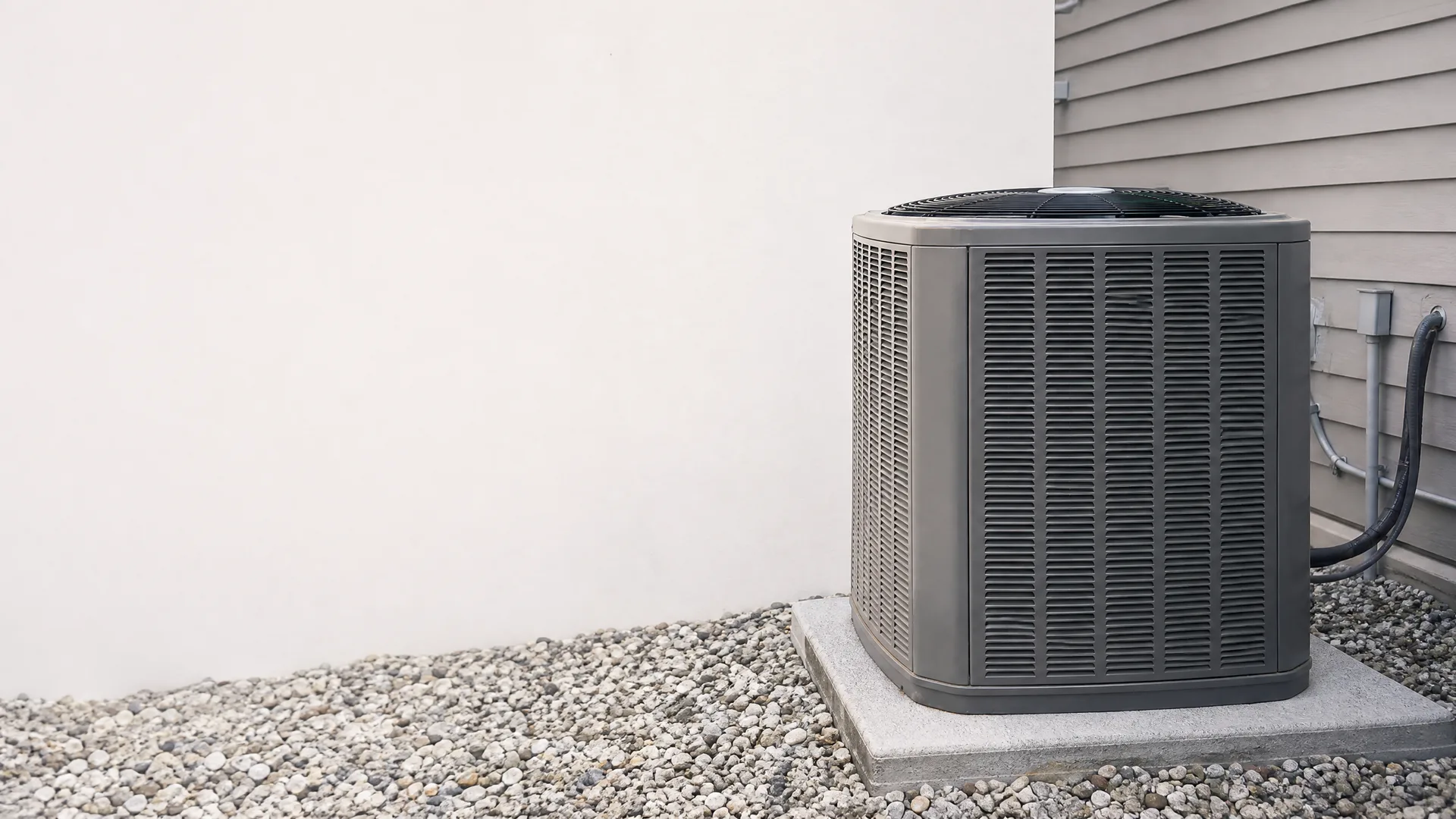
An outdoor air conditioner condenser unit on a concrete pad beside a light stucco wall and vinyl-sided wall, surrounded by gravel.

Why the sound changes with age

Most central air conditioners run on a direct drive, no belts, so a new squeal usually points to a motor bearing rather than anything slipping. As a compressor ages, the sound it makes on startup can deepen or get louder even if it still cools the house fine. That shift in sound, more than the loudness itself, is what a contractor listens for to tell a minor fix from a motor or compressor replacement.

A man in a blue sweatshirt and cap carries a red and black tool bag up a paved walkway toward a house entrance where another man in a tan sweater stands in the open doorway, with stone-clad columns, wall lights, and potted mums nearby.

What's actually making that sound

Most of the loud noises people hear are coming from one of two places: the outdoor unit or the blower inside. The outdoor unit has a fan and a compressor, both spinning parts, and when a fan blade gets bent or debris gets pulled in, you get a steady knock timed to how fast the fan turns. The compressor is sealed, so a deep humming or screeching from inside it usually means something is wearing out where you can't see it and can't reach it.

Inside, the blower pulls air across the evaporator coil and pushes it through your ducts. If the blower wheel is cracked or has come loose on its shaft, it slaps or scrapes with every rotation, and that sound travels through the ductwork into the rooms where you're sitting. None of this is something to diagnose by ear alone. A contractor who's been inside a few hundred of these units in Wisconsin can tell the difference between a part that needs tightening and one that needs replacing, and get you matched with the right one for the job instead of guessing.

A living room corner with a beige sofa and cushion, a round wooden coffee table holding a pale ceramic vase of eucalyptus stems and a wooden bowl, and a curtained window with a potted plant above a latticed radiator cover in the background.
A gray outdoor air conditioning condenser unit on a composite pad beside a house with horizontal lap siding, with a wall-mounted disconnect box, refrigerant lines, and a wooden fence and shrubs to the left.

Running the way it should

A healthy condenser hums at a steady pitch while it's cycling and goes quiet between cycles. Stand near it and you should hear air moving and a low motor sound, nothing sharp, nothing uneven. The fan blade spins true and the unit sits flat on its pad.

An outdoor air conditioning condenser unit on a concrete pad beside a house with light vinyl siding, with electrical conduit running to a wall-mounted disconnect box and a shrub in mulch to the right.

Something's changed

Grinding, screeching, or a rattle that wasn't there before means a part inside the unit has shifted or started to wear. The sound coming from the pad against the siding is worth paying attention to before the heat of a Wisconsin summer pushes it harder.

A smiling older woman with short light hair in a beige knit sweater sits in a dimly lit kitchen beside a window at night, with a round loaf of bread on a wooden board in the foreground.
A woman and a child with closed eyes rest together on a gray couch, wrapped in a cream knit blanket, with a lit lamp and houseplant blurred in the background.

Matched to your air conditioner job

A noisy AC rarely goes back to quiet on its own, and in a Wisconsin summer that runs hot and sticky into August, that's not a sound you want to sit with. Figuring out whether it's a loose panel or a bearing going bad means someone has to actually look at the unit, and getting there usually means searching around for a contractor, calling a few, explaining the same rattle or grind more than once, then waiting on quotes to sort through. With power costing what it does here, a motor or compressor working harder than it should is also a motor running up your bill while you wait. Handing this off now gets a contractor who covers your part of Wisconsin looking at your specific unit, instead of you guessing what the noise means while it keeps cycling in the next room.

Call now or wait and see

If the noise is a steady rattle and the AC is still cooling the house the way it should, you can watch it for a day or two. Check if it gets louder, or if it only happens when the unit starts up or shuts off. A noise that stays the same and doesn't affect the cooling can usually wait for a scheduled visit instead of an emergency one. Write down when you hear it and what it sounds like, since that helps whoever looks at it get to the cause faster.

When it can't wait

A grinding, screeching or banging noise that's new, or any noise paired with the house not cooling down, is different. Wisconsin summers don't let up through August, and a compressor or motor that's failing can go from noisy to dead within days. If you smell anything burning, or the unit trips a breaker, turn it off and don't run it again until someone's looked at it. Waiting on that kind of noise risks turning a repair into a full replacement, and leaves the house without cooling while it's still hot out.

A woman in a mustard knit sweater sits on a light-colored sofa indoors, looking toward a bright window, with a potted fiddle-leaf fig plant behind her.
A woman with long brown hair in a cream knit turtleneck sweater sits on a light sofa indoors, looking off to the side, with a shelf of plants and pottery blurred behind her.
A woman with long brown hair in a dark red knit sweater sits on a gray couch with cushions, smiling and looking off to the side, with a window and indoor plant behind her.
A woman with long dark hair in a cream knit sweater sits on a sofa indoors, smiling and looking off to the side, with a blurred room, hanging light bulb and window behind her.

Handling it yourself

You can listen for when the noise happens, check if the outdoor unit has leaves or a stick caught in the fan, and see if tightening a visible panel screw quiets a rattle. That's about as far as it goes without pulling the unit apart. You still won't know if a bearing is worn or a capacitor is failing, and if you guess wrong, you've spent an afternoon on a ladder in July heat with the house still warm. You're also on your own for finding someone if it turns out to be more than a loose panel, which means calling around and explaining the noise over and over to whoever picks up.

Getting matched with someone

Instead of searching through contractors and repeating the same description of the noise to each one, you answer a few questions once and a contractor who handles AC repair in your area reaches out to you. They can tell a loose panel from a worn bearing by listening to the unit running, something that's hard to judge from the couch. You skip the back and forth of comparing quotes from companies you don't know yet, and you're not stuck guessing whether the noise is minor or the start of something that leaves you without cooling when Wisconsin's heat is at its worst.

Power costs 18.08 cents per kilowatt-hour statewide

At just over 18 cents a kilowatt-hour, a struggling AC costs you more to run here than in most states. A compressor straining against a bad bearing or a bent fan blade pulls more power to do the same job, so that noise is already showing up on your bill before it ever gets fixed.

EIA-861 2025 statewide residential average

An outdoor air conditioning condenser unit sits on a concrete pad beside a house with horizontal vinyl siding, with a gray electrical disconnect box and insulated refrigerant line on the wall above, surrounded by bare mulched ground.
Before you get your air conditioner repair
A gray outdoor air conditioning condenser unit sits on a concrete pad beside a house with horizontal siding, connected by insulated lines to a wall-mounted disconnect box, with a shrub and gravel bed to the right.
After you get your air conditioner repair
A two-story house with light horizontal siding, a gabled roof and a white front door, set on a grassy lawn between two leafy trees, with a wet street and sidewalk in the foreground under low sunlight.

Wisconsin summers run humid, and the dew point averages 60°F across June, July and August, per NOAA. That's heavy air for your AC to pull moisture out of, on top of cooling it. A unit already straining with a bad bearing or a loose part has to work through that thick air too, and the extra load shows up as more noise, not less. If your AC was quiet into June and started grinding or rattling once the air turned sticky, the humidity didn't cause the problem, but it's making whatever's already wrong easier to hear and harder on the unit.

NASA POWER T2MDEW county cells weighted by homes

A loud noise from your AC is information, not something to live with until August. A rattle you can watch for a day. A grind, a screech, or a noise paired with warm air means a contractor needs to look at it soon. You already know your house, your unit, and what the noise sounds like today compared to last week. What you don't have is the time to search out a contractor, call a few, explain the rattle or the grind to each one, and sit with quotes trying to compare them while the house gets sticky. That part isn't yours to do. Answer a few questions about what you're hearing and where you live, and a contractor who works on systems like yours in Wisconsin will reach out to you directly. No more calling around explaining the same noise three different times. You get to spend that time keeping the house comfortable instead of tracking down who can fix it.

A gabled shingled roof with a sided chimney in the foreground, overlooking wooded land, a winding river, green fields with distant silos, and a hazy sky at low sun.

An air conditioner pro near you

Find a pro near me

You're not committing to anything by asking.

You've already listened to the noise, checked the easy things, maybe watched it a day. Sending the request means a contractor calls you instead of you calling around, repeating what you heard to one shop after another, and sorting through quotes on your own.