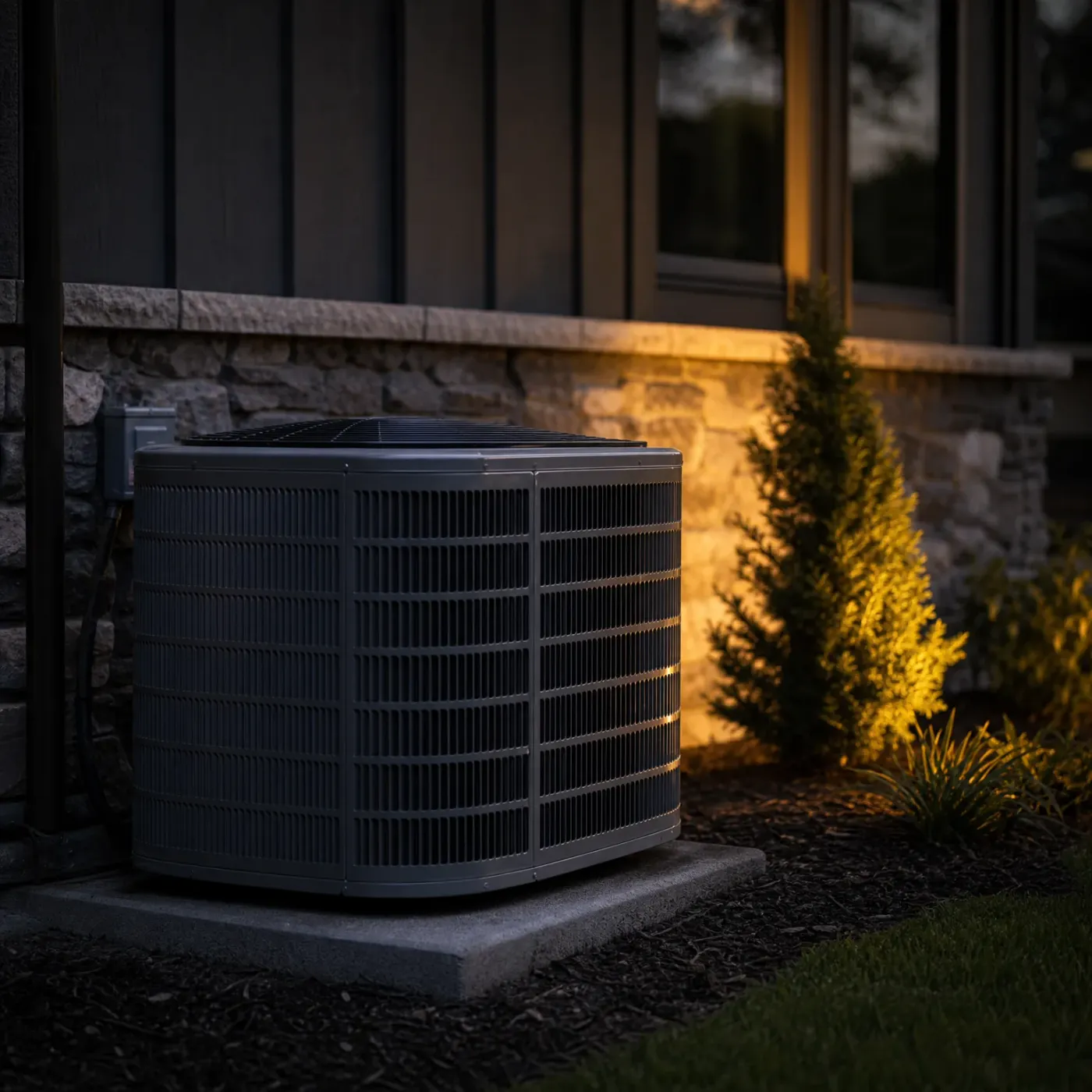








An outdoor air conditioning condenser unit on a concrete pad beside a house with stone veneer and vertical board siding, with a small shrub and mulch bed lit by a ground light at dusk.

Get matched with an air conditioner pro in Marathon County

AC making a loud noise in Wausau, WI

A loud noise from your AC usually points to one of a few things: a loose part rattling against the cabinet, a failing motor, or a compressor under strain. What it means depends on where the sound is coming from and when it happens. Below, find out what to check, and get matched with a licensed contractor near Wausau who can track it down.

Find an air conditioner pro

A loud noise usually means something inside the unit is loose, worn, or working harder than it should. A rattle or buzz often comes from a screw or panel vibrating loose against the cabinet, which is simple to fix once someone opens it up. A squeal or grinding points to a motor bearing wearing out. A deep banging from the outdoor unit can mean a part inside the compressor has broken loose, and that one usually means the compressor is failing. If the noise just started after a stretch of hot, humid days, the system may have been running close to nonstop and something that was already marginal finally gave out. A hissing sound is different from the rest. That can mean refrigerant escaping, which affects how well the system cools your home and is worth having looked at soon rather than waiting to see if it gets worse.

An outdoor air conditioner condenser unit on a concrete pad beside a house with beige horizontal siding and a stone-veneer base, with refrigerant lines running to a gray wall-mounted electrical box, surrounded by dark mulch, a flowering shrub and an evergreen on the left.
A quiet, steady hum while it runs means the fan, motor, and compressor are seated and turning the way they should.
An outdoor air conditioning condenser unit on a concrete pad beside a house with light vinyl siding, an electrical disconnect box and conduit on the wall, bare shrubs and mulch to the right, and a concrete walkway in the foreground.
A harsh grinding or metal-on-metal noise here usually means a motor bearing or compressor part is wearing out.

What Each Noise Is Telling You

  • A rattle that comes and goes with the fan speed usually traces back to a loose panel screw or a bent fan blade clipping the housing.
  • A high-pitched squeal right when the unit starts up often means the blower motor bearing is drying out or wearing down.
  • A deep buzzing from the outdoor unit can mean the compressor is trying to start against too much pressure in the lines.
  • Banging or clanking that lines up with the compressor cycle can mean a piston pin or connecting rod inside it has come loose.
  • A hissing or whistling sound points to refrigerant escaping from a line rather than anything mechanical moving.
  • A clicking that repeats every few seconds without the unit starting points to a failing relay or capacitor, not the compressor itself.

Where the sound comes from and when it happens tells you most of what you need to know before anyone opens the unit. A rattle that changes with fan speed is usually mechanical and minor, a screw working loose or a fan blade close enough to the housing to clip it on every rotation. That kind of noise is annoying more than urgent. A squeal at startup is different. It points to the blower motor bearing drying out, and bearings don't heal themselves, so the squeal tends to get worse over weeks rather than go away on its own. A buzz from the outdoor unit is worth paying attention to, since it can mean the compressor is straining to start against pressure that's built up in the lines, and a compressor that keeps starting under strain is one that wears out early. Banging that lines up with the compressor's cycle, coming on and stopping when it does, suggests something has come loose inside the compressor itself, like a piston pin or connecting rod, which is a bigger repair than anything on the outside of the cabinet. Hissing or whistling isn't mechanical at all. That's the sound of refrigerant leaving a line it shouldn't be leaving, and it will keep losing charge until the leak is found and sealed. Clicking that repeats on a cycle without the unit actually starting usually means a relay or capacitor is failing to do its job, not that the compressor itself is damaged.

Cooling runs July through August

Your AC only earns its keep in July and August here. That's a short window for a loose part or a worn motor to get worse, and a noise that shows up early in the summer will likely still be going when the heat peaks in August.

NOAA nClimDiv 1991-2020

Why the noise gets worse over time

A loose screw or a worn bearing does not fix itself. Every hour the compressor runs, a rattling panel keeps vibrating against the same spot, and a motor bearing running dry keeps wearing against the same metal. The noise you hear in June is the quietest it will ever be. Run the unit through a hot stretch in July and that same rattle can shake a panel loose entirely, and a dry bearing can seize the motor outright. What starts as something a contractor tightens in a few minutes can turn into a motor or compressor that has to be replaced.

What the sound tells a technician

Where the noise happens and when it happens both matter. A sound only at startup points to a part engaging, like a contactor or a capacitor. A sound that runs the whole time the unit is on points to something turning, like a fan blade or a bearing. A sound outside at the condenser is a different problem than one coming from the indoor unit near the furnace. A technician who works on these systems every summer can often narrow it down before opening the cabinet, just from knowing where the sound is and what it sounds like.

A woman in a gray turtleneck sweater sits on a beige sofa in a living room, looking toward a curtained window with blurred greenery outside.
A woman in a brown knit sweater leans back on a sofa with her eyes closed and arms spread along the cushions, in a blurred indoor room with a window, potted plant and kitchen counter behind her.
A woman in a cream sweater sits on a gray sofa with textured cushions, smiling and looking off to the side, with a blurred living room, plants and a pendant lamp behind her.
A woman in a dark green sweater sits on a gray sofa in a living room with a large houseplant, a framed picture, a fireplace, and windows in the background.

Find an air conditioner repair pro in Marathon County

A licensed pro who works in Marathon County gets your request.

Asking costs nothing, and the choice to hire stays yours.

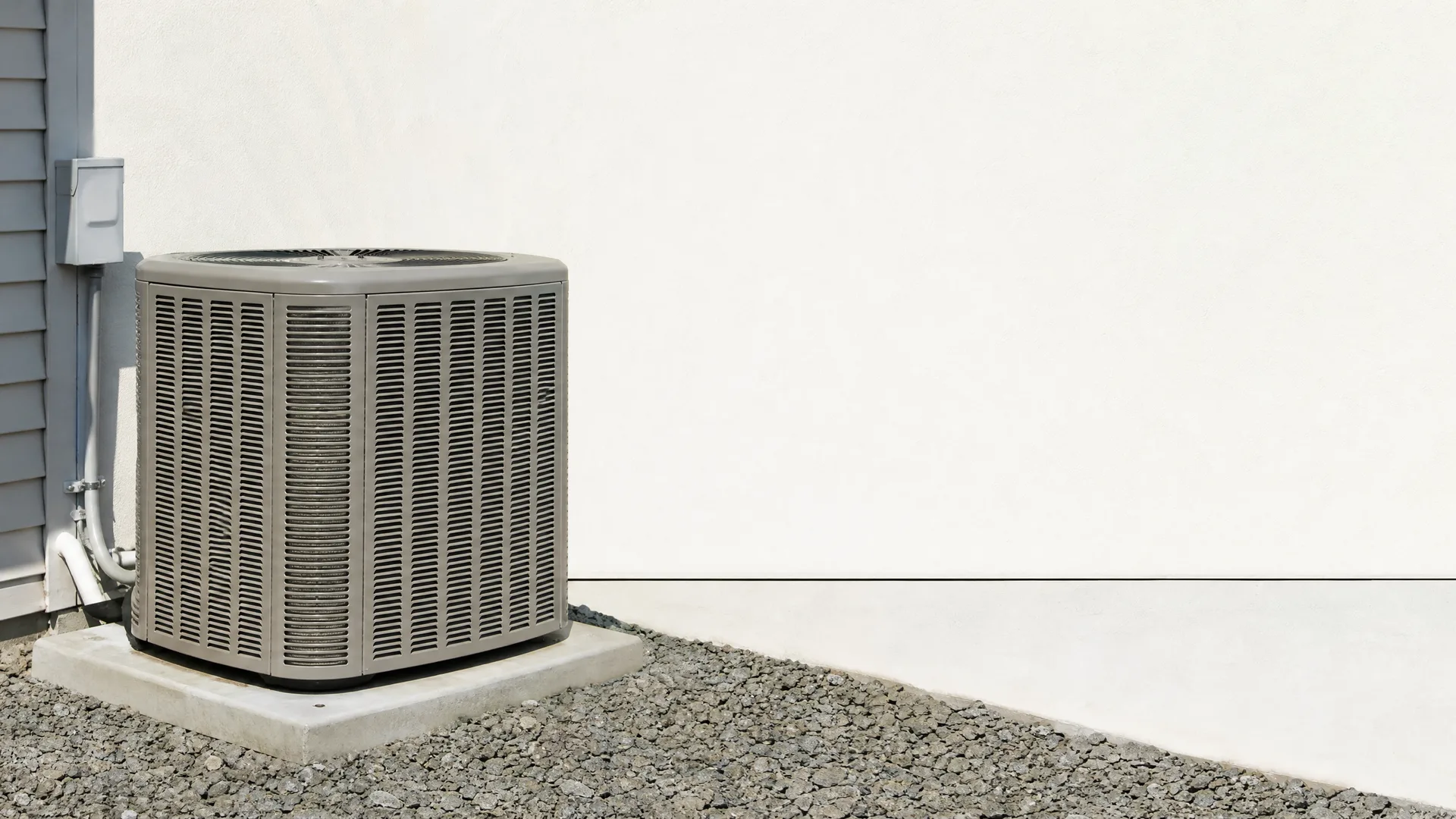
An outdoor air conditioning condenser unit sits on a concrete pad beside a plain light-colored wall, surrounded by gravel, with vinyl siding and an electrical box at the left edge.

What the noise does to your house

A rattle or squeal carries through ductwork and walls, so a noise from the outdoor unit can show up as a hum you hear in the bedroom at night. If the sound is loud enough to notice over a window AC or a fan, it's loud enough that the people trying to sleep near a vent will hear it too. A grinding compressor tends to get louder before it quits, not after.

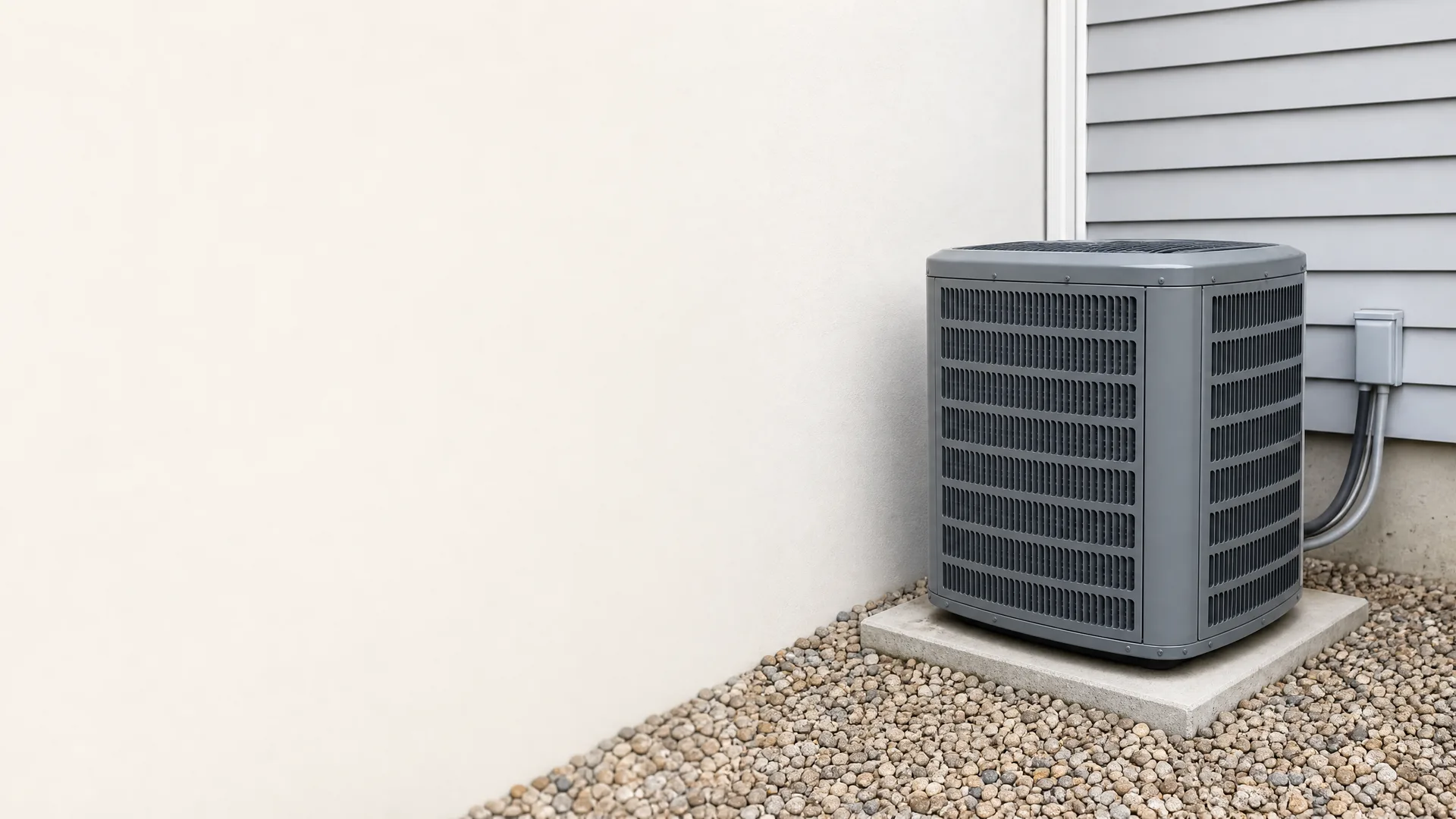
A gray outdoor air conditioning condenser unit sits on a concrete pad surrounded by gravel, beside a stucco wall and vinyl siding with an electrical disconnect box and conduit.

What waiting puts at risk

A loose panel is a cheap fix left alone, but the vibration it causes can work a refrigerant line loose or crack a weld over time. A motor running on a worn bearing will keep drawing power to fight the friction until it seizes, and a seized motor takes the compressor down with it. Once July and August arrive, a system that quits leaves your house without cooling on the two months it actually has to work.

Why does my AC only make the noise when it first kicks on?

You notice it every time. The AC kicks on, there's a bang or a loud hum for a second or two, then it settles into normal running sound. It's not there the rest of the cycle, just that first moment, and that makes it feel like something that could wait. You want to know if a noise that only shows up at startup still means something is wrong.

It means something is struggling to get moving, not something that's already broken

The compressor and the fan motor both have to overcome standstill the moment power hits them, and that's when a weak part shows itself first. A capacitor that's lost some of its charge can still start the compressor most of the time, but it takes a harder push to do it, and that push is the bang or hum you hear. A fan blade that's slightly bent clears the housing fine once it's spinning, but the first turn can clip it. None of this fixes itself. Each hot day this summer asks the same weak part to do that same hard start again, and a capacitor that's struggling now is closer to failing outright than one that starts quiet.

A two-story light-colored house with horizontal siding, a covered front porch with white railings and columns, flanked by green trees and shrubs, with a concrete walkway leading to a wet sidewalk and street.

Marathon County summers aren't heavy. The dew point averages 58°F across June, July and August, according to NOAA climate records, which is on the dry side as these things go. That matters for a noisy AC because the compressor here isn't straining against thick, wet air the way units do further south. So if yours is grinding or squealing, the air isn't the reason. Something inside the cabinet is loose or wearing out, and it'll keep making that sound, and likely get louder, until someone opens the unit up and finds it.

NASA POWER T2MDEW

Call Now or Keep An Eye On It

Call Now

  • A grinding or metal-on-metal sound means a part is already wearing against another part, and running it longer wears both down faster.
  • If the noise started suddenly and got louder within a day or two, the compressor or motor is likely under strain right now, not just loose.
  • A noise paired with warm air coming from the vents often means the compressor is struggling, and that's not something to wait out through a hot stretch.
  • Shutting the unit off and waiting for a weekday appointment protects the motor or compressor from running the same wear pattern longer.
  • If you smell anything burning along with the noise, that's an electrical issue, and it's worth getting someone out the same day.

Keep An Eye On It

  • A rattle that only shows up at the start of each cycle and settles into quiet running usually points to a startup part, not a motor failing mid-run.
  • A loose panel screw causes a rattle that changes with fan speed but doesn't get sharper or louder hour to hour.
  • If the sound hasn't changed in a week and the house is still cooling evenly, the unit is likely still doing its job while something minor works loose.
  • A faint buzz from a cabinet panel is worth noting down, including when it happens and how loud, so a technician has something to go on.
  • Noises that only happen in the hottest part of the afternoon, when the compressor works hardest, can wait for a scheduled visit if nothing else has changed.
An outdoor air conditioning condenser unit on a concrete pad beside a house with white horizontal lap siding, with an electrical disconnect box and insulated refrigerant line on the wall and a shrub over mulch to the right.

Running the way it should

This is a unit that isn't giving anyone trouble. The panels sit flush against the cabinet, the refrigerant lines run clean along the wall to the disconnect box, and nothing is loose enough to buzz or rattle when the compressor kicks on. Quiet, steady, doing its job.


An outdoor air conditioner condenser unit on a concrete pad beside a house with light horizontal lap siding, with an electrical disconnect box and conduit on the wall behind it.

Worn and working harder

Years outside leave a mark. The cabinet shows the weathering, the panel seams loosen over time, and a unit in this shape is more likely to be the one rattling, squealing, or grinding by August. The disconnect box and lines are the same as any other unit, but the wear inside isn't.

A woman stands smiling in the open front doorway of a single-story brick house while a man in a dark cap and long-sleeved shirt, seen from behind out of focus, faces her from the walkway.

What to do about the noise

A noise your AC didn't make before is a part that's loose, worn, or working harder than it should. It won't quiet down on its own, and with summer here running through July and August, there's no slow season for it to wait out. Whether it's a screw to tighten or a motor bearing to replace, someone has to open the cabinet and look.

That's the kind of job a local contractor handles every summer, often more than once a week once the heat sets in. Share a few details about your AC and what you're hearing, and you'll be matched with one licensed contractor who covers Wausau and the rest of Marathon County, not a handful of companies competing for your call. They'll reach out to you directly to get the noise looked at before it turns into a bigger repair.

Interior corner with sheer white curtains at a window, a brown upholstered sofa in the foreground, and a wooden multi-drawer cabinet holding a round ceramic vase with leafy branches.
An older woman with short gray hair in a cream knit sweater stands smiling and looking to the side behind a wooden counter holding a round loaf of bread, in a warmly lit kitchen with shelves and a window showing snowy trees at dusk.
A woman with her hair in a bun holds a sleeping child against her chest while both are wrapped in a grey knit blanket on a couch, with a lit lamp and potted plant blurred in the background.

Air Conditioner Repair

The right pro for this job

A licensed pro who repairs air conditioners in Marathon County gets your request.

A black-framed smartphone standing upright against a plain white background, its screen filled with solid green.
RepairCentral ACMarathon County, WI
Step 1 of 2

What ZIP code is the job in?