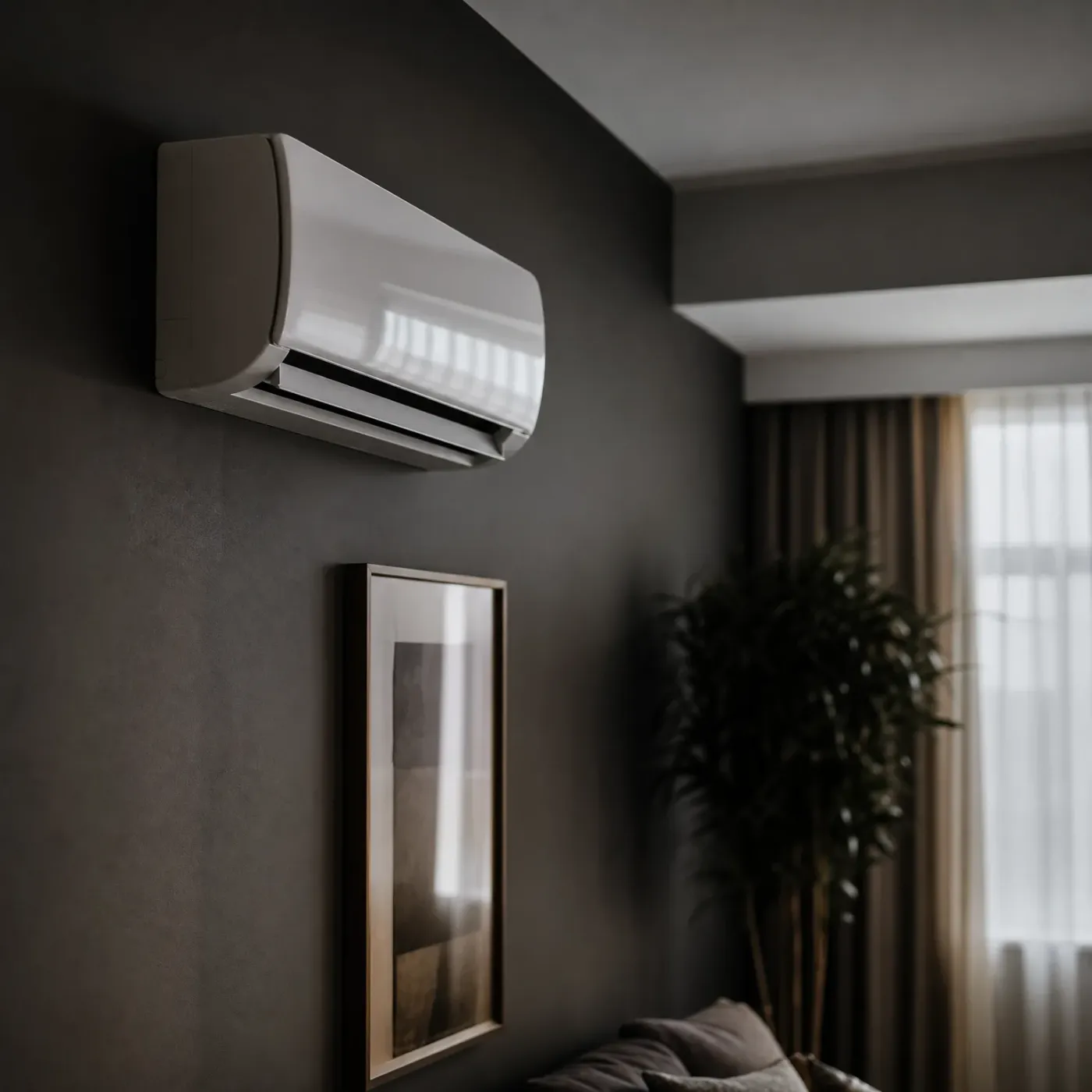










A white wall-mounted mini-split air conditioner on a dark gray interior wall above a framed picture, with a potted plant and curtained window to the right.

One request and it's handed off

Where to put a mini split in a Wisconsin home

Where a mini split goes matters more in a Wisconsin home than most places. Put it wrong and you're paying for muggy rooms in July and cold spots in January, on top of power rates that already sting. This page walks through what the room, the wall, and the outdoor unit's placement should do for you. Send the form and let a contractor sort out the specifics instead of you guessing at it alone.

Hand off my installation

The indoor unit should go on an interior wall, high up, with a clear path for air to reach every corner of the room, not tucked over a doorway or behind furniture where it will short-cycle on the nearest chair. The outdoor unit needs to sit up off the ground, on a bracket or a stand, because Wisconsin snow piles up and buries a compressor set at grade, and ice falling off the roofline can crush one parked right underneath. Face it away from the prevailing wind if you can, since a heat pump works harder to defrost when wind drives cold air straight into the coil. Placement also decides how evenly the unit handles a sticky July afternoon and a January cold snap in the same system. A unit blowing across a kitchen or stuck in a corner leaves other rooms fighting for air, and in a house that leans on this one system for both, that gap shows up on both ends of the year.

A white wall-mounted mini-split indoor unit on a light gray interior wall, with a white curtain on a black rod at left and a leafy plant in the lower left corner.
Mounted high on a clear interior wall, the unit can read the whole room and cycle the way it was sized to.
A wall-mounted white mini-split air conditioner indoor unit with visible dust and grime around its outlet vent, installed near the ceiling on a plain light-colored wall.
Blocked by a chair or boxed over a doorway, it reads only the air right in front of it and runs longer for less comfort.

How Placement Affects Performance

  • The indoor unit reads room temperature from a sensor in its own casing, so it needs open air in front of it, not a pocket behind a curtain or a tall dresser.
  • Mount height matters because warm air rises and the unit pulls air in low across its coil, so a spot near the ceiling line gives it a truer read on the room.
  • The line set runs from indoor unit to outdoor unit through a single hole in the wall, and every extra foot or bend costs the system some capacity.
  • The outdoor unit needs ground clearance so snow doesn't bury the coil, since a buried unit can't pull outside air across it to move heat in January.
  • A south or west wall for the outdoor unit means more direct sun on the coil, which makes the compressor work harder on the hottest days in July.
  • Placing the indoor unit across from a window puts it in the path of direct sun and drafts, both of which throw off the sensor and cause short cycling.

The indoor unit works off a temperature sensor built into its own casing, not a separate thermostat somewhere else in the room. Wherever it sits, that's the air it's reading. Set it near the ceiling on an interior wall and it reads the room the way it was designed to, because warm air rises and the unit draws air in low across its coil as it runs. Put it across from a window and direct sun will warm the sensor on a day when the room itself isn't that hot, so the unit backs off when it shouldn't, or short-cycles when a draft hits it. The line set connecting indoor and outdoor units matters too. It passes through one hole in the wall, and the system is rated assuming a certain length and a certain number of bends. Run it longer or route it around tight corners and the system has less capacity to work with before it even starts cooling or heating. Outside, the unit needs clearance off the ground. Wisconsin winters bury things in snow, and a coil packed in snow can't pull outside air across it, which matters in January when the system is pulling heat from outside air to bring indoors. Sun exposure counts too. A south or west wall puts more direct sun on that outdoor coil, and on the hottest days in July, that's added heat the compressor has to work against before it does anything for the house.

A man in a blue sweatshirt reclines with his eyes closed in an armchair in a living room, with a folded newspaper and ceramic mug on a side table and bookshelves and a couch behind him.
A bearded man in a navy sweater leans back in a brown leather armchair with his eyes closed and a slight smile, beside a window and a side table holding newspapers and a lamp.
A man in a dark gray sweater reclines with closed eyes and a slight smile in a brown leather armchair in a living room with bookshelves, a sofa, a lamp, large windows, and a folded newspaper on a round wooden table.
A man in a gray fleece pullover sits in a leather armchair with his eyes closed and a slight smile, beside a table with newspapers and a lamp, with a window, potted plant and bookshelves behind him.

Done looking for a mini split pro

Skip the round of in-home estimates for a new mini split.

It costs nothing to send, and you don't have to hire anyone.

Why the outdoor unit sits up high

Wisconsin winters pile up snow, and a mini split's outdoor unit has to sit above the snow line on a bracket or stand, not on a pad at ground level. If snow banks up against it or drifts cover the coil, the unit can't pull air through to run the defrost cycle, and ice builds up on the coil instead of melting off. A contractor sets the height based on the average snowfall for your area, with enough clearance that a normal winter doesn't bury it. Clearing a path to a buried unit every time it snows isn't something you want to add to your list from November to March.

What the line set run costs you

The line set connecting the indoor and outdoor units carries refrigerant, and every extra foot it runs, plus every bend in it, makes the system work harder to move heat in January and move it back out in July. A short, direct run between the two units keeps the compressor from working overtime on the coldest and hottest days of the year, which matters more here than somewhere with a mild winter, since Wisconsin power rates already run high. Where the indoor unit goes on the wall should account for this, not just the room's layout, so the outdoor unit can sit close by without snaking the line set around the house.

A wall-mounted mini-split air conditioner indoor unit with visible dust and staining, installed on a beige interior wall below white crown molding.
Before you get your mini split installation
A white wall-mounted mini-split indoor unit high on a beige interior wall, with a potted olive-like tree at right and an armchair and window visible through a doorway at left.
After you get your mini split installation
A white wall-mounted mini-split air conditioner unit installed high on a beige interior wall below white crown molding, with a window and woven shade at the left edge showing green foliage outside.

Clean unit, clear airflow

A mini split mounted high on an open wall, nothing in front of it but room air, can pull in air across the coil and read the room the way it's supposed to. It cycles on, does its job, and shuts off. That's what keeps a July afternoon livable without running the power bill up all day.


A dusty, stained white wall-mounted mini-split air conditioner indoor unit installed high on a plain off-white interior wall near the ceiling.

Dust and buildup

A mini split that's gone a long time without a cleaning gets dusty across the housing and discolored around the vents. A dirty coil can't move air the way it should, so the unit runs longer to get the same room to the same temperature. Where it's mounted and how clean it stays both show up in the bill.

A gray-haired man in a blue sweater over a checked collared shirt sits in an armchair with his eyes closed and head tilted back near a bright window, with a houseplant and lamp nearby.
A woman in a cream knit sweater sits in a light upholstered armchair with her eyes closed and a slight smile, beside a window showing orange autumn foliage, with a bookshelf, lamp, and a mug on a side table nearby.
  1. The indoor unit draws room air in low across its coil.

  2. The coil cools or heats that air as it passes through.

  3. A fan pushes the conditioned air out across the room.

  4. Refrigerant carries the heat through the line set outside.

Power costs 18.08 cents per kilowatt-hour statewide

At that rate, every degree your mini split has to fight for matters on the bill. A unit placed where it can actually read the room cycles off instead of running long, which is what keeps the power it draws from adding up.

EIA-861 2025 statewide residential average

A closed laptop and a speckled ceramic mug sit on a wooden table beside a stoneware vase with a leafy branch, with a wooden chair, kitchen counter with cutting board and bowl, and dark upper cabinets in the dim background.

Placement decides how the mini split performs

A mini split belongs high on an interior wall, clear of furniture and curtains, with the outdoor unit set up on a bracket or stand above where snow piles up. Get that right and the unit reads the room the way it was designed to, cycles on, does its job, and shuts off. Get it wrong and you're paying for it twice, once in July when a room stays muggy, and again in January when the same unit can't keep up.

If you've been putting off the install while you sort through who does this kind of work, that's the part that doesn't need to take up your season. Skip calling around to find someone licensed for this, explaining your walls and your wiring twice over, and weighing quotes against each other with no way to tell who's right. Send the form once and that search is off your list.

Living room interior with a light sofa holding a dark green cushion and a brown knit throw, a tall leafy plant by a black-framed window, a wooden coffee table with a round tray, and wooden shelves holding vases and books.
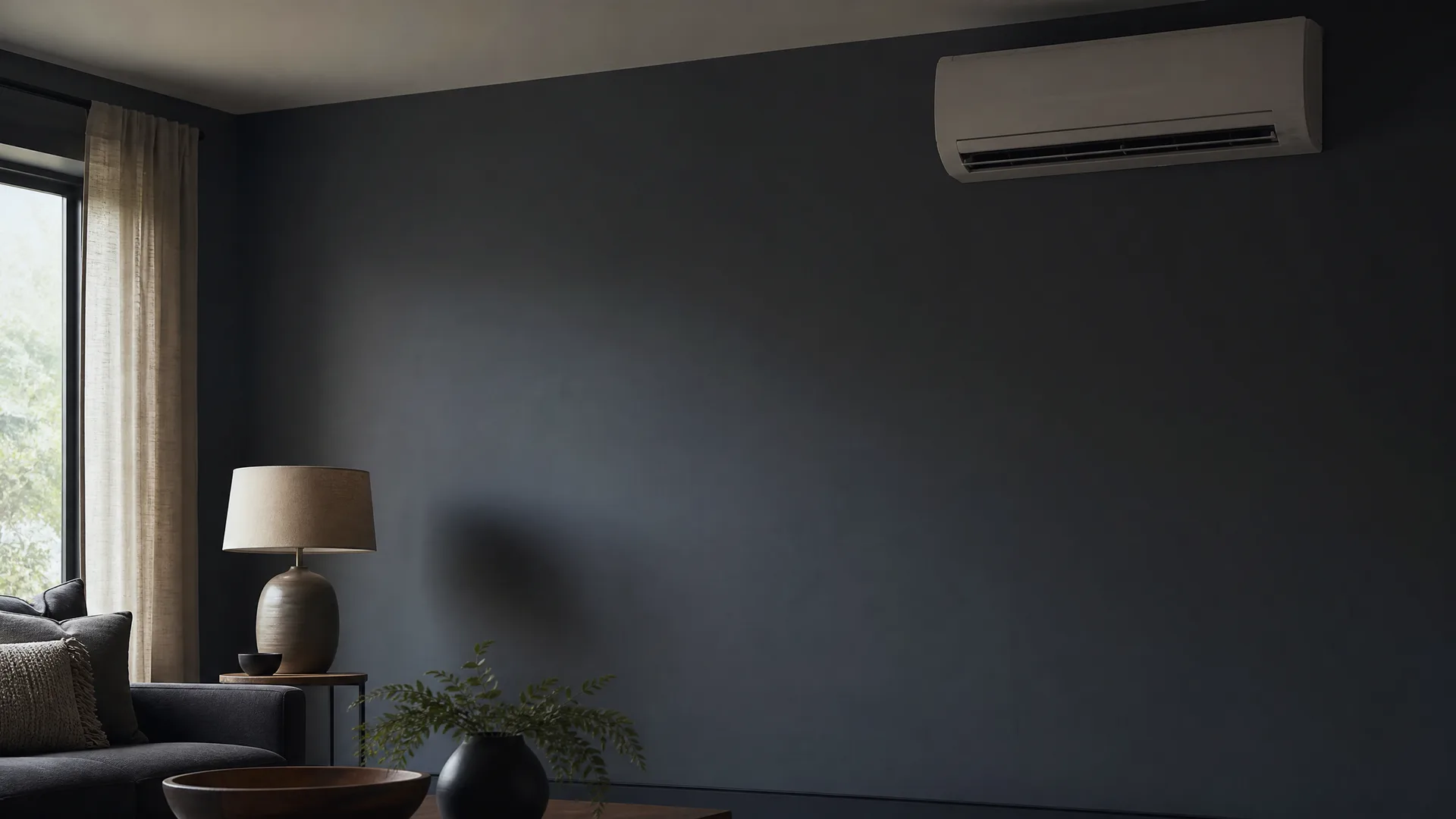
A dimly lit room with a dark gray wall holding a white wall-mounted mini-split air conditioner near the ceiling, with a sofa, table lamp, potted plant, and curtained window at left.

It's off your list after this

Describe the project once instead of to every installer.

New system or replacementMini-splitWisconsin
Step 1 of 2

What ZIP code is the job in?