What size heat pump a Wisconsin home needs

New system or replacementHeat PumpWisconsin
Step 1 of 2

What ZIP code is the job in?

What size heat pump do I need for my house in Wisconsin?

You want a straight number, something like two tons or three tons, before a contractor even comes out. But a heat pump sized right for a mild October afternoon can fall short when it's five degrees outside, and Wisconsin gets plenty of those days. Square footage alone won't tell you what you need.

It depends on your home's heat loss, not its square footage

A contractor sizes a heat pump by figuring out how fast your house loses heat on the coldest days, using a room by room load calculation. That number comes from your insulation, your windows, your ceiling height, and how much wall and roof you have exposed to the cold. Two houses the same size can need different size units because one holds heat better than the other. In Wisconsin, this matters more than in milder states, because a heat pump also has to keep up as temperatures drop toward zero, and an undersized unit will lean hard on backup heat, which usually means electric resistance strips running on expensive power. An oversized unit cycles on and off too much and wears out faster. The right size is the one matched to your house, not a guess based on its floor plan.

A gray-haired, bearded man in a dark coat dusted with snow stands smiling in a dimly lit room with a lamp, mirror, framed art, and a sofa in the background.
An older man with white hair and a beard, wearing a dark snow-dusted coat and scarf, stands in a warmly lit interior hallway with a framed landscape picture, a table lamp and a potted plant behind him, and a snowy view through a window at left.
An older man in a dark snow-flecked overcoat and scarf stands smiling in a warmly lit home entryway, with a glass-paned door showing darkness outside and a lamp-lit room visible through a doorway behind him.
An older man with gray hair and a beard, wearing a dark snow-dusted jacket and scarf, stands smiling in a warmly lit interior hallway with a lit table lamp, a vase of dried branches, and a framed picture in the background.

Is your heat pump actually keeping up this winter?

If it's undersized, you'll notice it most on the coldest days. The air coming out of the vents feels cool instead of warm, the house never quite reaches the thermostat setting, and the backup heat kicks on more than it should, which runs up your bill since power in Wisconsin isn't cheap. An oversized unit causes its own problems: it short cycles, turning on and off instead of running steady, so rooms end up uneven and the system wears out faster than it should. Either way, if you're layering on sweaters indoors or hearing the system struggle when it's cold out, the unit installed likely wasn't matched to your house.

A gray outdoor condenser unit on a concrete pad beside a house with horizontal lap siding, with a wall-mounted disconnect box, conduit and insulated refrigerant lines, a shrub at left and gravel at right.

Sized right for your house

This is what a properly sized heat pump looks like: a condenser on its pad, lines and conduit running clean up the wall to the disconnect. It cycles on, moves heat in or out, and shuts off. Nothing about it should ever call attention to itself.

An outdoor air conditioning condenser unit on a concrete pad beside a house with horizontal lap siding, with a green shrub to the left and a wide concrete slab in the foreground.

Sized wrong for your house

From outside, a mismatched unit looks the same as this one. The trouble shows up on the gas bill when backup heat carries more of January than it should, or in a bedroom that never quite hits the thermostat setting. Getting the size checked against your house, not just the old unit's rating, is how you find out which one you have.

A woman stands in the open doorway of a white stucco house holding the dark door, facing a man in a black cap and shirt seen from behind in the blurred foreground, with a potted flowering plant beside the entry.

How a contractor actually sizes it

A load calculation looks at your square footage, your windows, your insulation, and your ceiling height, then works out how much heat your house loses on the coldest night and how much it gains on the stickiest afternoon. That number, not the size of the unit you're replacing, is what the new heat pump gets matched to. A contractor doing this right will also check the ductwork, since a heat pump that's sized correctly but pushing air through ducts that are too small will still leave rooms uneven.

Because Wisconsin winters push heat pumps hard, the calculation also has to account for how the unit performs at low outdoor temperatures, not just at 47 degrees where the ratings are measured. That's where backup heat comes in, sized to cover the gap on the days the heat pump alone can't keep up. Getting this right takes someone who'll come look at your specific house rather than go by a rule of thumb, and that's the kind of contractor worth being matched with.

A dark ceramic mug on a round wooden table beside a light grey sofa with a woven cushion and knit throw, with a window, potted plant, floor lamp and wooden cabinet blurred in the background.
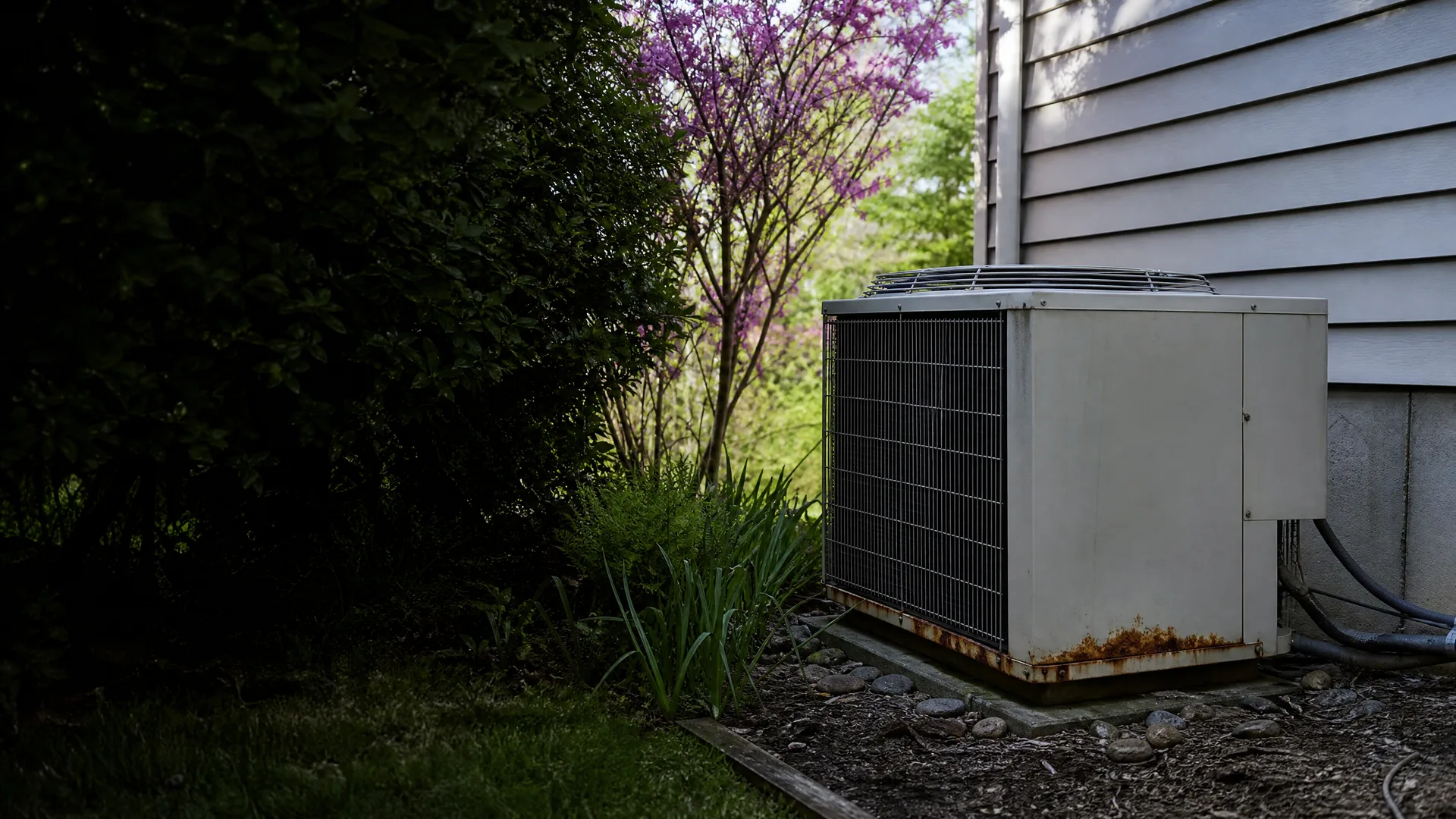
An outdoor air conditioning condenser unit with rust streaks sits on a concrete pad beside a light-colored lap-sided house, surrounded by shrubs, gravel and a flowering tree.

You're out checking the yard in April, and the outdoor unit catches your eye. Rust is working up along the base, past the bottom seam where the casing meets the pad. It made it through another Wisconsin winter, but looking at it now, you start doing the math on how many more it has left. This is the same unit that struggled to keep the house warm in January, the one that ran and ran on the coldest nights while the backup heat kept kicking on behind it. Replacing it isn't just about the rust. It's about getting the size right this time, so next winter doesn't feel like last winter.
A gray outdoor condenser unit sits on a concrete pad against a house wall with horizontal siding above a stone veneer base, with an electrical disconnect box and conduit on the wall and a leafy shrub in mulch to the left.
A unit that's sized right just runs. It cycles on, handles the load, cycles off, with no struggle on either end.
An outdoor air conditioner condenser unit on a concrete pad beside a house with beige vinyl siding, with a gray electrical disconnect box and insulated refrigerant lines on the wall and river rock to the right.
Coils packed with dirt and debris make a unit work harder no matter what size it is, so sizing alone won't save it.
  1. The contractor measures every room, window, and door in the house.

  2. That load calculation sets how much heat the house loses in January.

  3. The same calculation sets how much heat it gains in July.

  4. The heat pump is matched to whichever load is larger.

An outdoor air conditioner condenser unit on a concrete pad beside a light gray vinyl-sided house, with an electrical disconnect box and conduit on the wall and bare soil in the foreground.
Before you get your heat pump installation
A gray outdoor condenser unit sits on a concrete pad beside a house with horizontal lap siding, with a wall-mounted disconnect box and refrigerant lines, mulched beds and a shrub nearby, and a concrete walkway in the foreground.
After you get your heat pump installation

Matched to your heat pump job

Fill out one short form instead of calling around.

Asking costs nothing, and the choice to hire stays yours.

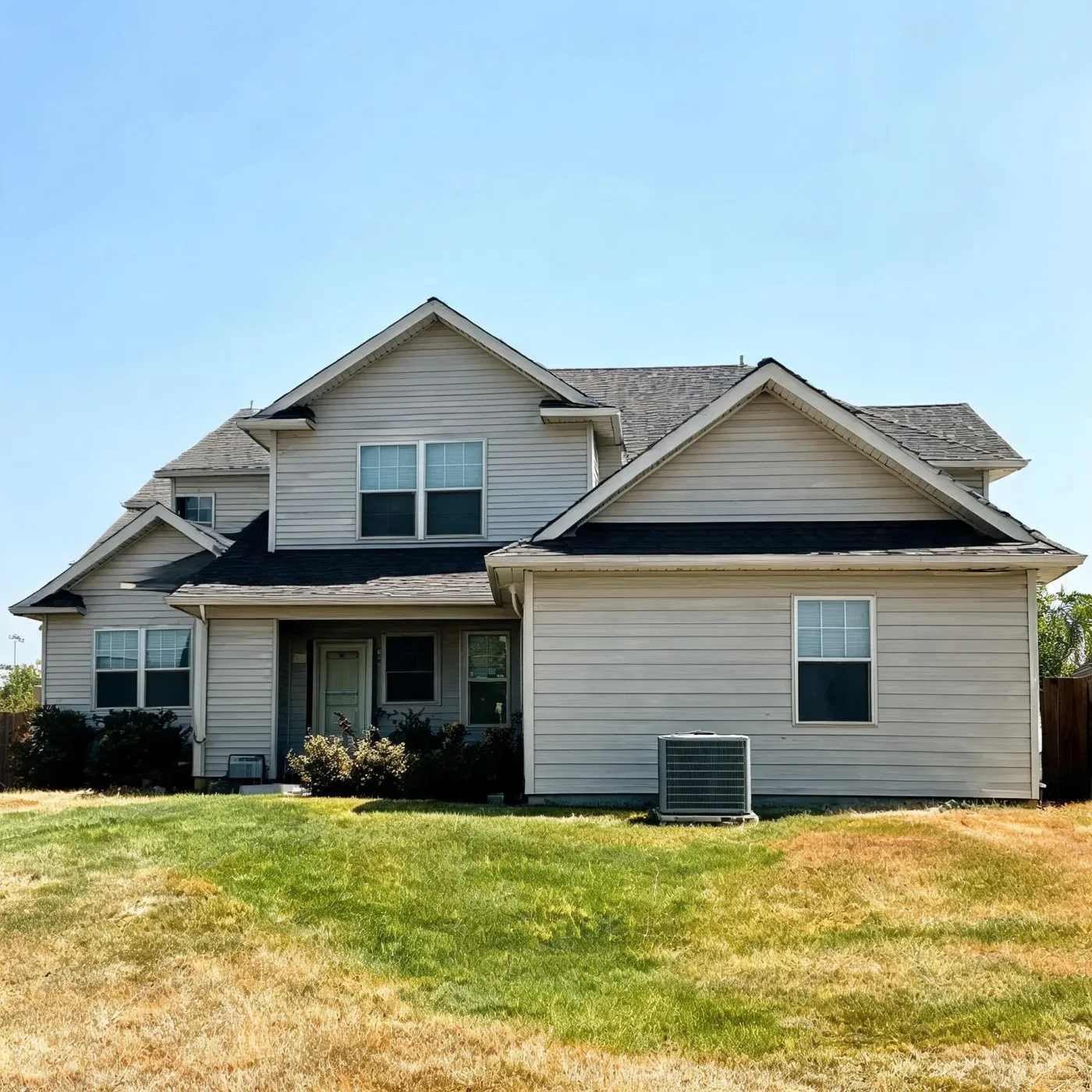
Two-story house with beige horizontal siding, gray shingled gable roofs and a covered front entry, with an outdoor air conditioning unit beside it and a partly dry grass lawn in front under a clear blue sky.

That same load calculation has to account for how heavy the air gets, not just the temperature. Summer dew points here average 60°F across June, July and August, according to NOAA climate data. That's sticky air, and a heat pump sized only for temperature can cool your house to the number on the thermostat while the air still feels damp. You'll notice it on the muggy afternoons: the house reads 72 but still feels clammy, and the unit keeps running longer than it should trying to catch up. A heat pump matched to your home's actual load pulls that moisture out as it cools, so the house feels dry at 72, not just cold.

NASA POWER T2MDEW county cells weighted by homes

Oversized vs. Undersized

Oversized

  • It satisfies the thermostat fast, so it shuts off before it finishes pulling moisture out of the air.
  • You end up with a house that reads 70 degrees on the wall but still feels damp given how sticky summers get here.
  • It cycles on and off more often than it should, and every start draws a jolt of power, which matters with what electricity costs in Wisconsin.
  • The compressor wears from the extra cycling, not from running too long.
  • A bigger unit costs more to install than the one your house actually needs.

Undersized

  • It runs close to nonstop once temperatures drop toward zero, and still loses ground in the coldest stretch of January.
  • Your gas furnace has to pick up more of the heating than it should, since most homes here lean on gas for backup already.
  • Rooms farthest from the air handler fall behind the thermostat setting, especially on the coldest nights.
  • It keeps up fine in October and April, which is exactly why undersizing is easy to miss until the first hard freeze.
  • Running flat out for hours at a time shortens the life of parts that were never built to run that way.
A woman wrapped in a cream textured blanket sits in an armchair beside a lit lamp and a dark window, with an open book in the foreground.
A woman in a cream knit sweater sits in an armchair with her eyes closed near a window showing yellow autumn foliage, with a mug on a round wooden side table beside her.

47°F

Wisconsin's heating design temperature in most areas. A contractor's load calculation uses this number, not the coldest night you remember, to size the heat pump for January.

Find a heat pump pro

Manual J, not a guess

This is the calculation method contractors use nationwide to size heat pumps. It accounts for your square footage and construction, not a rule of thumb per room.

Find a heat pump pro

Power costs 18.08 cents per kilowatt-hour statewide

At 18.08 cents per kilowatt-hour, every degree a wrong-sized heat pump has to make up costs you more here than in most states. A unit that's too big or too small runs longer to get the house comfortable, and that extra runtime shows up on your bill all winter.

EIA-861 2025 statewide residential average

The right size, found the right way

  • Right-sizing a heat pump means running a Manual J load calculation against 47°F, not guessing from square footage alone.
  • A unit sized for January's cold has to also handle July's dew points, since both loads shape the right tonnage.
  • Oversized or undersized, the result shows up the same way: a house that never feels quite right and a bill that reflects it.
  • Finding a contractor who runs the calculation instead of eyeballing the job usually means several calls and a stack of quotes to compare.
  • Matching with a contractor who already does load calculations right skips the research and the back and forth explaining your house twice.

The number you came here for depends on your house, not a chart. Square footage alone won't get you there. A contractor has to run the load calculation against 47°F for winter and against the sticky dew points of a Wisconsin summer, then size the heat pump to whichever load asks more of it. Skip that step and you end up with a unit that struggles in January, or one that cycles off too fast in July and leaves the house feeling damp even at 70 degrees on the thermostat. Either way, the mismatch shows up in how the house feels and in what you pay to run it, since power here isn't cheap and a wrong-sized unit runs longer than it should to make up the difference.

Getting to a contractor who actually does this calculation, rather than guessing from the size of the old unit, usually means calling around, asking each one how they size equipment, and explaining your house's layout and windows and insulation more than once before you find someone who takes it seriously. Matching with a contractor who already runs a proper load calculation means you explain your house once, to someone who's going to measure it instead of estimate it. The sizing question has one real answer, and it's specific to your house. The way to get it is to skip the guesswork, yours and theirs.

A wooden front door with six small glass panes and a narrow sidelight, set in a shingled house entry with white trim, reached by stone steps flanked by a planted urn with purple flowers and leafy branches in the foreground.
Exterior corner of a house with beige horizontal lap siding and a black-framed window, with white hydrangeas, ornamental grasses and low plantings along a flagstone patio.
Corner of a house with tan lap siding and a window, a brick step edge, flowering white hydrangeas and green shrubs beside a flagstone walkway leading to a white picket fence and a tree in backlit sunlight.
House exterior with cream horizontal lap siding, a dark-framed window, a black wall lantern beside a wood door, potted shrubs on stone steps, and white and pink hydrangeas in the foreground garden.
Corner of a cream lap-sided house with a white-framed window and dark shingled roof, beside a white-flowering hydrangea shrub, a clipped hedge, mulched bed and lawn.

A local pro for your heat pump installation

Skip searching for a heat pump pro and answer a few questions instead.

Get a local pro

Sending the form costs nothing.