Mini split not heating in Wausau, WI

Get matched

A mini split that won't heat in a Wausau winter isn't something to leave for later. Marathon County gets cold enough that a dead heat pump turns into a real problem fast, especially if it's the only heat in that room or that part of the house. Maybe it's running but blowing cool air. Maybe it's short cycling, or the outdoor unit is iced over and not shutting off to defrost like it should. Whatever it's doing, it needs someone who works on these systems specifically, not a general furnace repair call. Answer a few questions about your unit and your situation, and you'll be matched with a contractor local to this area who handles mini splits and takes on what you're dealing with. Once that's sent in, you're done hunting for someone. The contractor takes it from there and reaches out to you directly. No need to keep searching or calling around while the house sits cold.

Why is my mini split not heating in Wausau?

Your mini split is running but the air coming out isn't warm, or it's blowing cold, and outside it's exactly the kind of cold where you need it working. Marathon County winters push these units hard, and a mini split that heated fine last year can start struggling once temperatures drop low enough, or it can point to something that needs a technician's attention regardless of the weather.

It's likely frozen up, low on refrigerant, or struggling in the cold

Most often the outdoor unit has iced over and its defrost cycle isn't keeping up, which happens more in Wausau than in milder places because the air it's pulling heat from is already so cold. A mini split works by moving heat from outside air into your home, and below a certain temperature it has to work much harder to pull any heat out at all. If the ice isn't clearing on its own, or if the unit runs constantly without warming the room, the problem is usually refrigerant charge, a failing defrost sensor, or a compressor that can't keep up anymore. None of those get better on their own once it's this cold out.

A white wall-mounted mini-split air conditioner unit installed high on a beige interior wall below white crown molding, with a window and woven shade at the left edge showing green foliage outside.

Running the way it should

Warm air comes out steady, no clicking or hesitation, and the room holds its temperature through the night. The outdoor unit cycles normally even when it's well below freezing outside. This is what tells you the system is keeping up with a Marathon County winter.

A dusty, stained white wall-mounted mini-split air conditioner indoor unit installed high on a plain off-white interior wall near the ceiling.

Struggling to keep up

Dust and grime built up on the indoor coil like this block airflow, so the unit runs without putting out real heat. A mini split in this shape often means the filter hasn't been cleaned in a while, and the outdoor unit may be icing over too. Left alone, it keeps losing ground as it gets colder.

What does a Marathon County winter actually ask of your mini split?

  • Cooling runs July through August

    Heat runs here from September through May, call it nine months. That's nine months where a mini split that won't heat isn't a minor annoyance.

  • Heat runs September through May

    Cooling only runs about two months, July and August. The rest of the year, this same unit is your heat, so a breakdown hits a lot harder than it would somewhere cooling-heavy.

  • Power here costs 16.66 cents per kilowatt-hour

    At 16.66 cents per kilowatt-hour, a mini split struggling to keep up and running constantly costs more here than in places with cheaper power.

NOAA nClimDiv 1991-2020 · EIA-861 2025

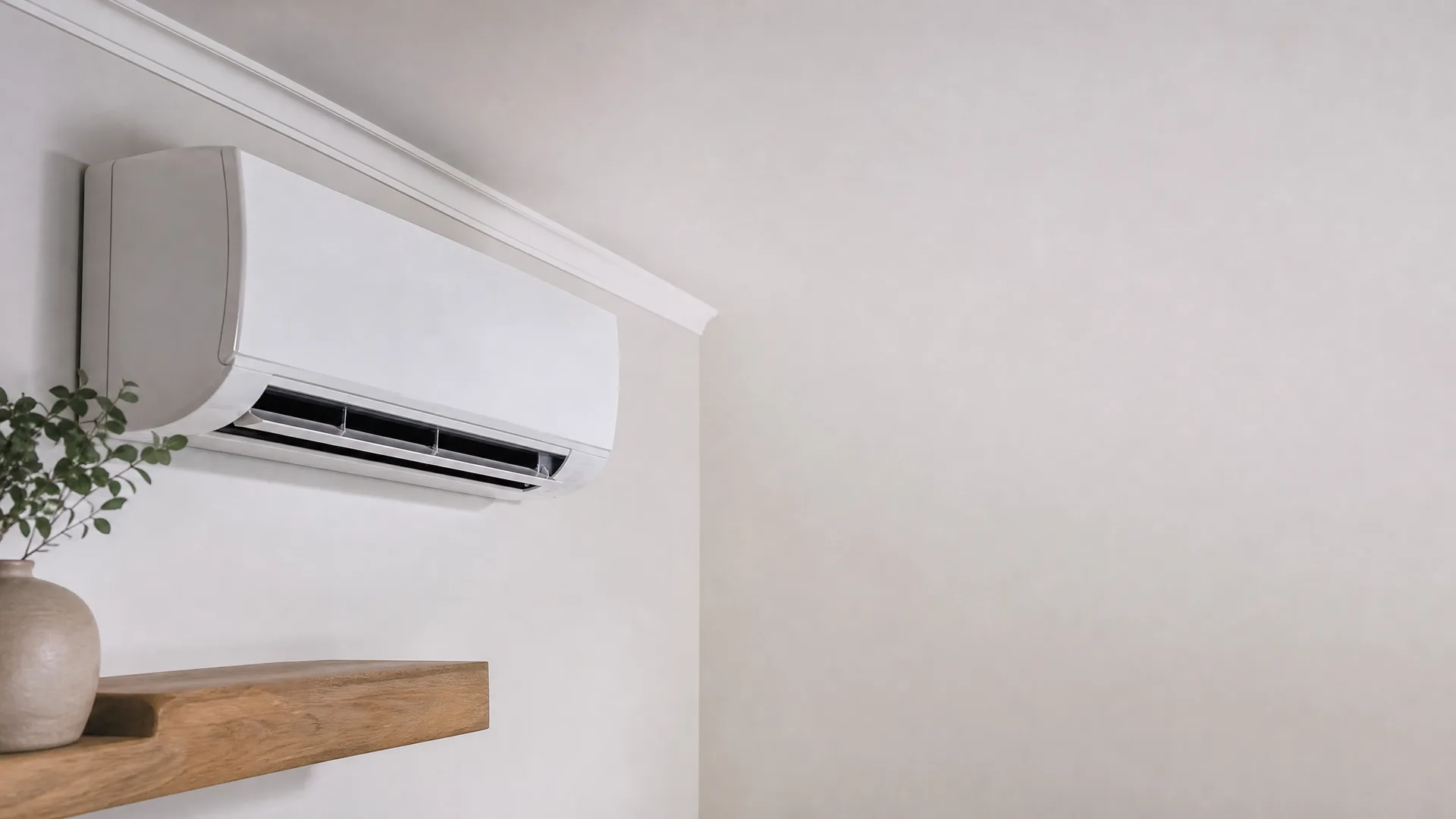
A white wall-mounted mini-split air conditioner installed high on a light beige interior wall below a white crown molding, with a wooden floating shelf holding a ceramic vase of green foliage at the lower left.

Why cold air turns to frost

A mini split moves heat from outside air into the house, even when that air is well below freezing. To do that, the outdoor unit runs a defrost cycle, clearing ice off the coil so it can keep pulling in heat. If that cycle isn't working right, frost builds up on the coil and the system loses its ability to heat at all, no matter how hard it runs.

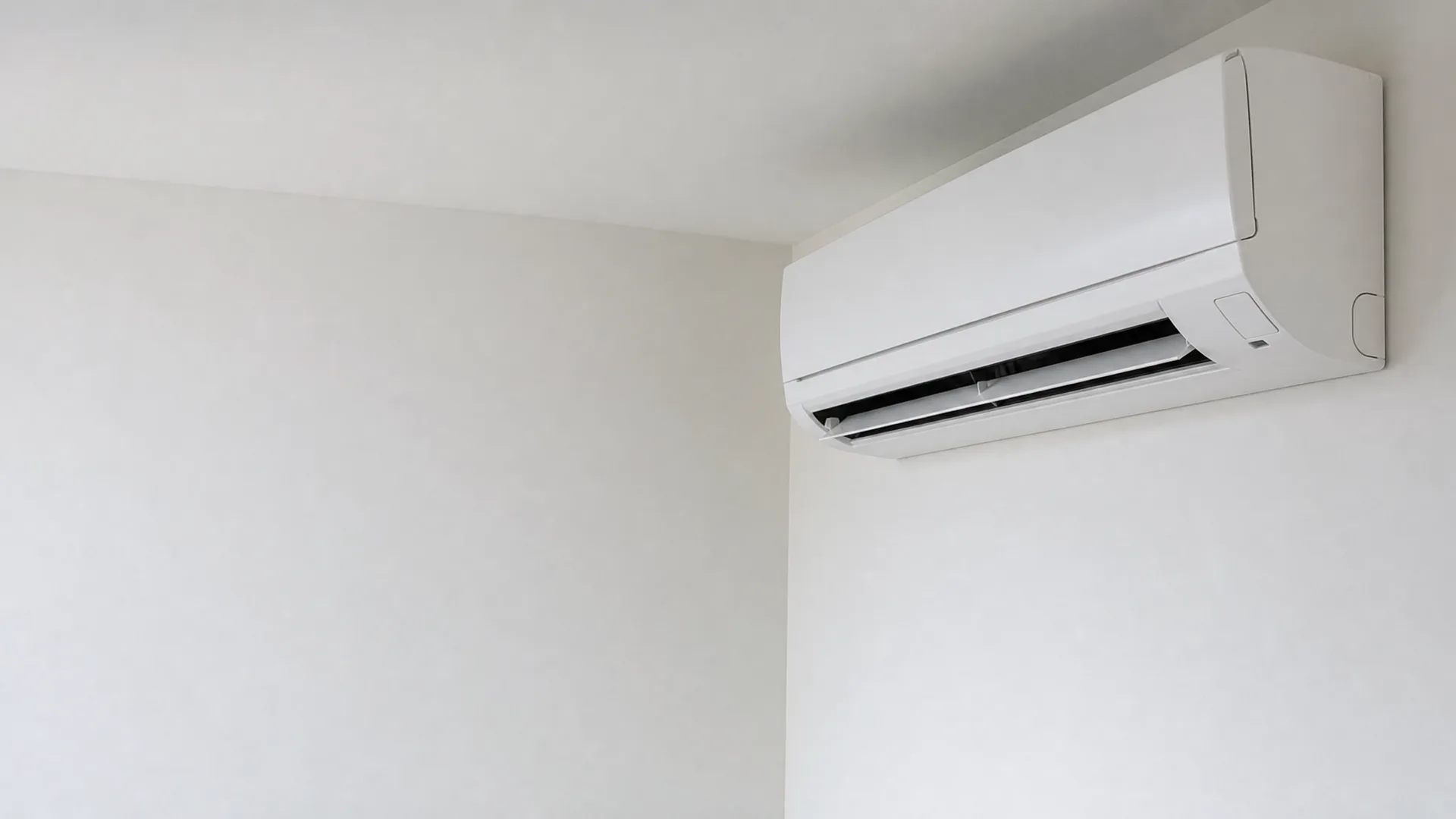
A white wall-mounted mini-split air conditioner installed near the ceiling in the corner of a plain white room.

The thermostat may be lying

Most mini splits read room temperature at the indoor head, not where you're sitting. If that head is mounted near a door, a cold wall, or a drafty window, it can report a temperature lower than the room actually is, or it can satisfy itself too early and shut down heating before the room feels warm. A reading five or six degrees off is enough to leave a room cold while the system thinks its job is done.

What's actually happening in the room right now

You're probably sitting near the indoor unit, maybe with a hand up to the vent, feeling air that's room temperature or cooler instead of warm. The fan might be running loud with nothing to show for it. Some units click on and off more than usual, or the outdoor unit sits quiet when it should be working. You might notice the room never quite reaches the temperature you set, or it loses heat fast once the sun goes down. If this is the only heat source for that room, a mattress of frost on the outdoor coil or a system stuck in a cycle it can't finish means that space keeps losing ground against a Marathon County night, and pipes near exterior walls in an unheated room are worth checking if the cold holds.

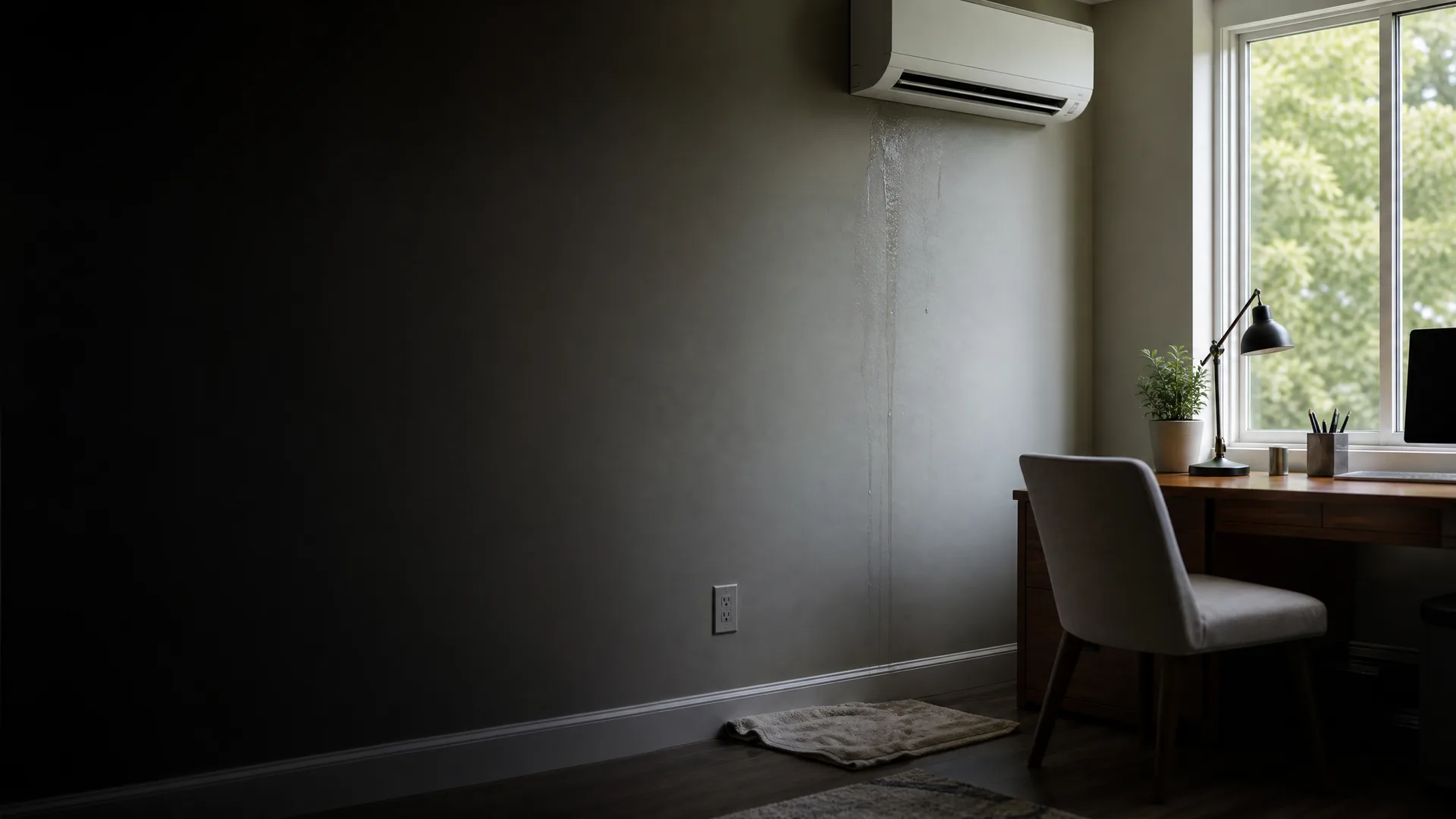
A dim room with a wall-mounted mini-split air conditioner above a vertical water stain running down the wall to a towel on the floor, with a desk, chair, lamp and potted plant beside a window.

It's July, mid-afternoon, and you're at the desk in the office running numbers with the mini split blowing cool air behind you. You notice the wall under the indoor unit first, a dark streak working its way down toward the baseboard. By the time you get up, there's enough water that you grab a towel and press it against the drywall, then lay the rest flat on the floor where it's started to pool. The unit is still running, still cooling the room fine. You stand there a second, towel under your foot, wondering if it's been doing this for days without you noticing, back here where you don't look at that wall much.


Get matched with a mini split pro in Marathon County

A mini split that's run fine for winters before and suddenly isn't heating usually means something specific failed, a defrost sensor, a reversing valve stuck in the wrong position, a refrigerant leak that's been slow for a while. None of that sorts itself out by waiting, and in a Marathon County January, waiting costs you the room. If this unit is the only heat for a bedroom, a converted porch, an addition, that's not a spot to let go cold while you watch it and hope. A contractor who works on mini splits in this area has seen what the cold does to these units and can tell you fast whether it's the board, the valve, or something in the line set. Send the request and let that call happen instead of carrying the problem yourself through another cold night, checking the vent with your hand, listening for the outdoor unit to kick on. You've got enough going on without diagnosing a heat pump in the dark.

Wait it out and see

You keep running the unit, hoping whatever's wrong corrects itself once the weather lets up. Some mornings the room feels close to right, so you tell yourself it's fine. Meanwhile the outdoor unit keeps trying to defrost and pull heat from air that's below freezing, and whatever's actually wrong, a stuck valve, a bad sensor, a slow leak, doesn't get better by running. Marathon County doesn't give you a break in the cold to test this out. If the room you're heating depends on this unit, every week you wait is a week of cold mornings, and whatever's failing has more time to turn into something bigger.

Get a contractor out now

You get matched with a contractor who can look at the unit and tell you what actually failed, rather than guessing from the couch. That's a defrost sensor, a reversing valve, a refrigerant charge, something specific with a specific fix. Once it's found, you know what you're dealing with instead of living with a system that might or might not warm the room tonight. You're not fixing it yourself and you're not spending the evening on hold trying to find someone. The form goes in, and from there, finding the right person for the job is off your plate.

A smiling man in a dark green henley shirt sits on a gray sofa in a living room with a lit table lamp, wooden shelving unit, and a bowl of popcorn in the foreground.
A smiling man with graying dark hair and a beard, wearing an olive sweater, sits on a sofa in a living room beside a bowl of popcorn on a wooden table.
A smiling man in a dark sweatshirt reclines on a gray sofa in a living room, with a wooden bowl of popcorn on a table in the foreground and a dining area, shelving, and pendant lamp behind him.
A smiling bearded man in a dark green henley shirt sits on a blue-gray couch in a living room, with a bowl of popcorn in the foreground and a houseplant and window behind him.

Call someone now

A contractor looks at the reversing valve, the sensors, the refrigerant charge, and tells you what actually failed. You know what you're dealing with by the end of the visit.

Get a local pro

Keep running it as is

The room stays cold and the outdoor unit keeps cycling without fixing anything. Whatever failed stays failed, and nine months of Marathon County heat still need to come from somewhere.

Get a local pro

Space Heater or Fix the Mini Split

Space heater or electric backup

  • Covers one room if you position it right, but it won't do anything for the rest of the house the mini split used to carry.
  • Runs on your existing outlets in most cases, so there's no wiring work before it's useful tonight.
  • Costs more to run per hour than the mini split did when it was working, since resistance heat pulls more power for the same warmth.
  • Needs someone in the house to watch it, since it's not safe to leave running unattended overnight the way the mini split was.
  • Does nothing about whatever failed in the outdoor unit, so the mini split is still broken when the space heater goes back in the closet.

Get the mini split fixed

  • Restores heat to however much of the house that unit was covering, not just the one room you can reach with a cord.
  • Addresses whatever actually failed, whether that's the reversing valve, a defrost sensor, or a slow refrigerant leak, instead of working around it.
  • Gets the outdoor unit back to normal defrost cycles, so it stops fighting ice through the rest of the season.
  • Stops the ongoing strain on the system, since a unit trying to heat through a fault often runs harder than one working correctly.
  • Means you're not managing the problem night after night once a contractor has been out to look at it.
A two-story gray horizontal-siding house with dark shingled gable roofs, a brown front door, and a concrete walkway crossing a patchy green and dry lawn under a clear blue sky.

Summer here isn't the problem this page is about, but it tells you something about the air your mini split handles the rest of the year. Marathon County's summer dew point averages 58°F, which is on the dry side, nothing like the thick air you'd get further south. That matters because a mini split working here isn't fighting heavy, moisture-loaded air most of the year. So when the same unit won't put out heat in January, the cause isn't a system worn down by a brutal, humid summer. It points somewhere else, toward a part that failed on its own. Source: regional climate averages for Marathon County, WI.

NASA POWER T2MDEW

A mini split that won't heat in a Marathon County winter has a cause, not a mystery: a stuck reversing valve, a bad defrost sensor, a refrigerant leak, something a contractor can find and name. You don't have to figure out which one it is before you get help, and you don't have to keep testing the unit night after night to see if it corrects itself. Once you send the form, the job of tracking down who can look at it isn't yours anymore. Someone who works on these systems will reach out, look at what's actually failing, and tell you straight what it takes to get warm air back. Until then, the room is only going to get colder, and nothing about waiting makes the fix any simpler. The unit that kept this house warm last winter can do it again once the right part gets found and replaced.

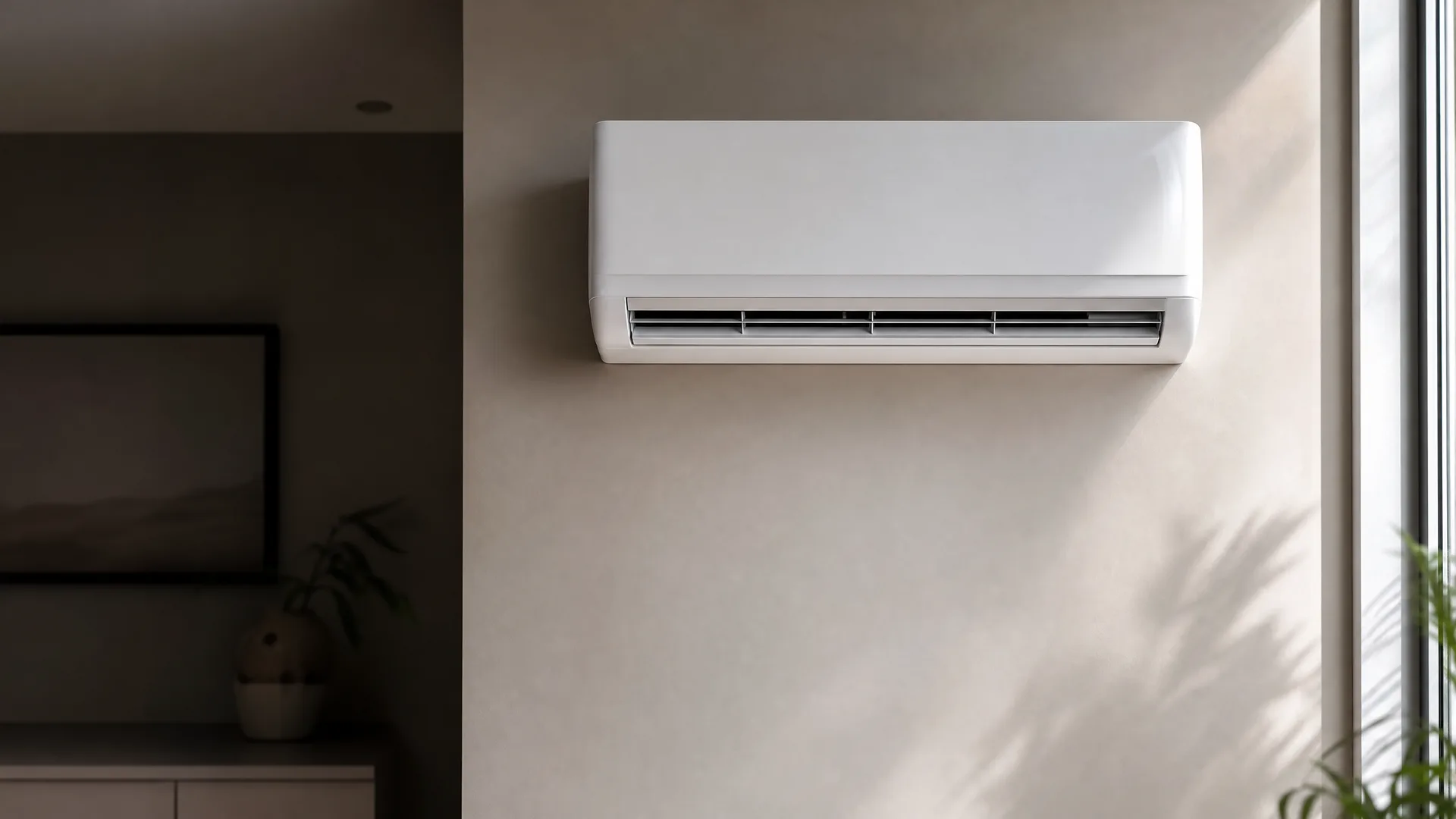
A white wall-mounted mini-split air conditioner on a plain beige interior wall, with a framed picture and potted plant in the dim left background and sunlit window with foliage at right.

Get the right pro for your mini split

RepairMini-splitMarathon County, WI
Step 1 of 2

What ZIP code is the job in?