
Mini split leaking water in West Bend, WI
A Washington County pro who repairs mini splits gets your request.
Match me with a proWater dripping from your mini split usually means the condensate line is clogged or the drain pan has cracked, and the water that's supposed to run outside is backing up and spilling into the room instead. It can also mean the filter is so dirty that air can't move across the indoor coil properly, so the coil frosts over, then melts and overflows the pan when the unit shuts off. In winter here, condensation can also freeze inside the line itself if the unit is still running cooling cycles on a mild day, then thaw and leak once things warm back up. None of this is something to live with. Left alone, that water finds drywall, flooring, or the wall behind the unit, and the damage costs more to fix than the leak ever would. A contractor can find out which of these it is and clear it before it spreads.
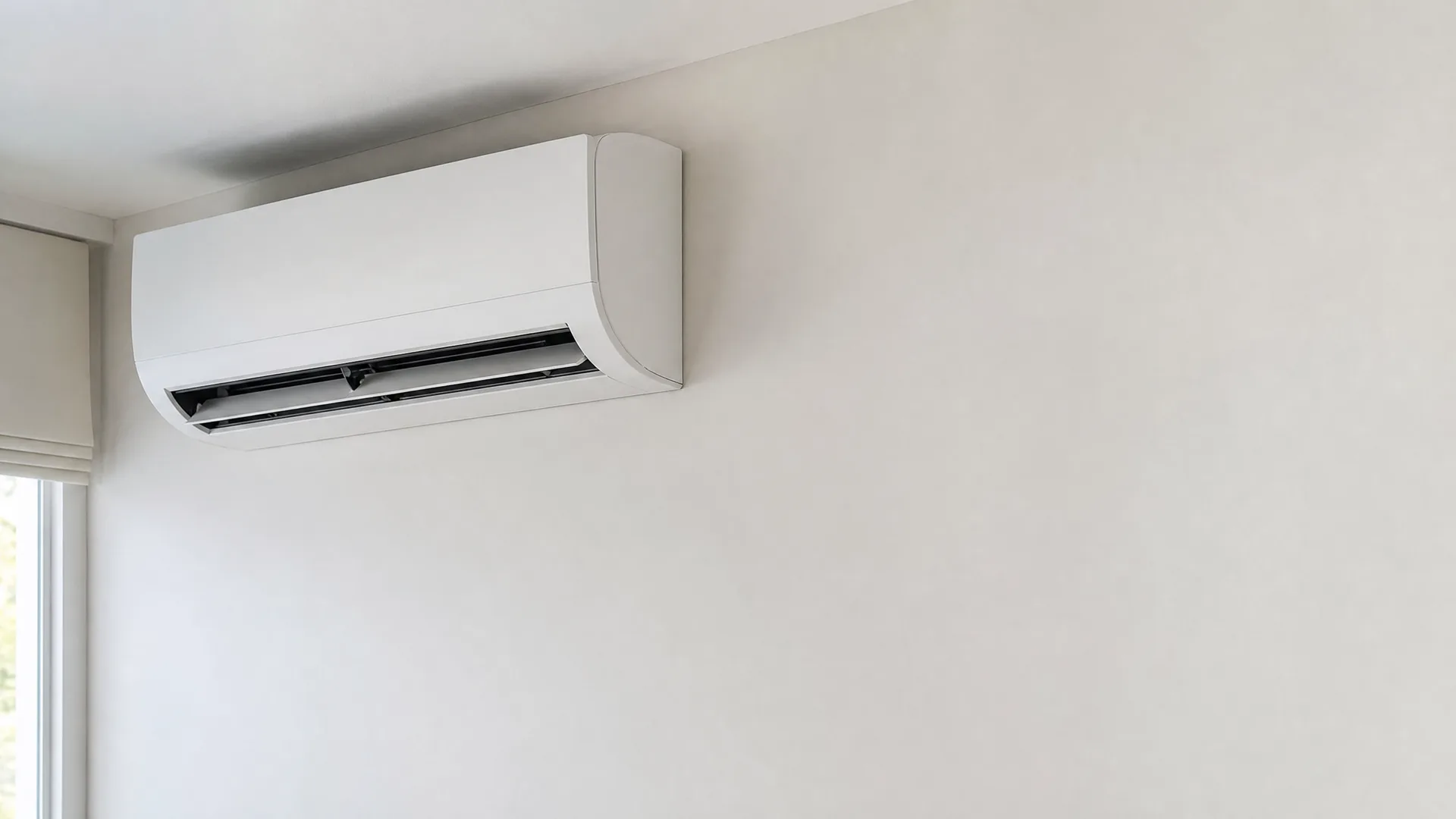
Why the drain line clogs
The condensate line carries water downhill and out of the house, usually through a small hole in the wall behind the indoor unit. Algae and dust build up inside that line over time and narrow it until water backs up instead of draining. A line that was fine last summer can clog partway through this one. Humidity adds to the load on that line, and even on a mild day here, a mini split pulls moisture out of the air as long as it runs.
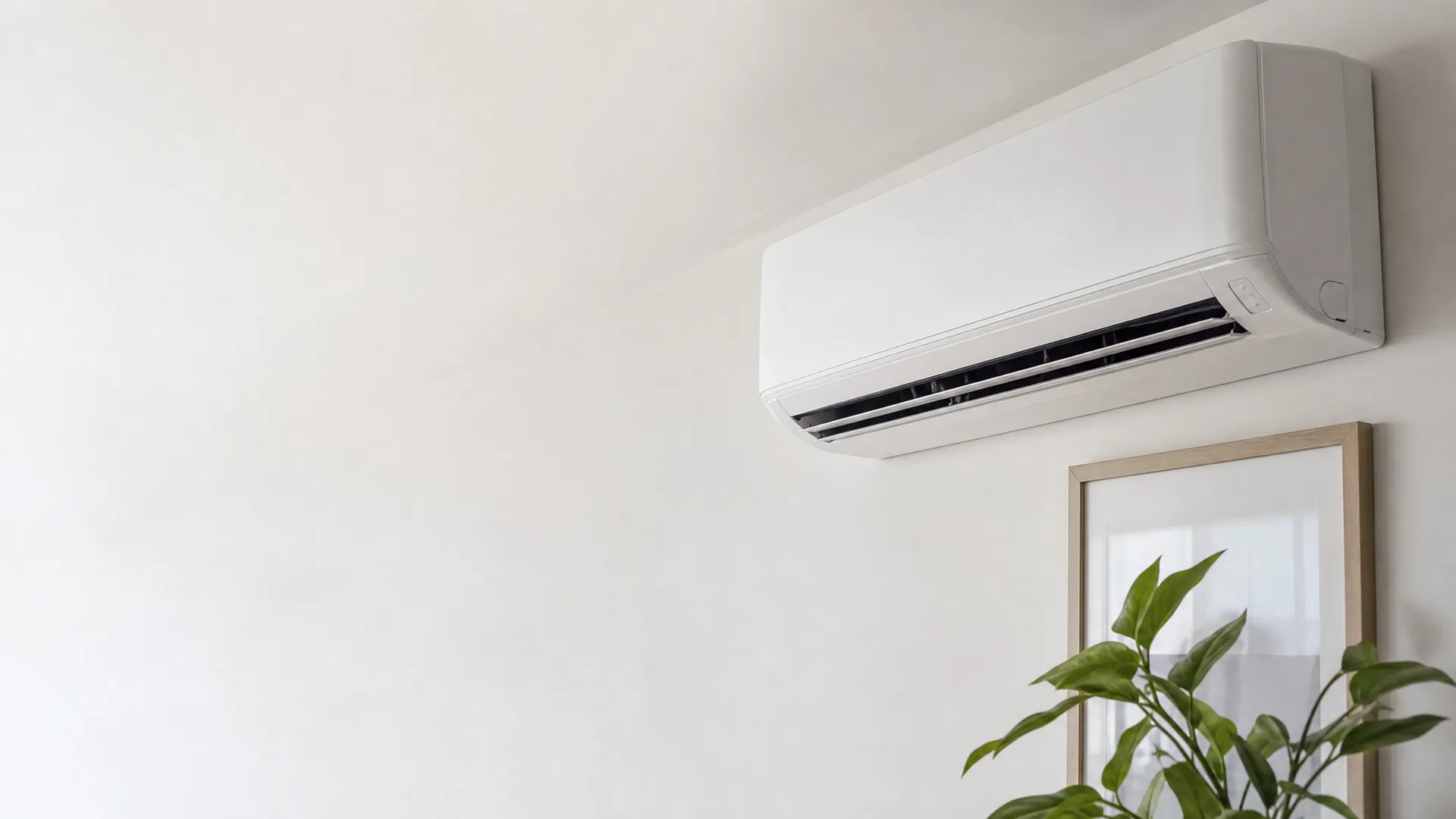
What a dirty filter does
The filter sits in front of the coil and keeps dust out of it. When it's packed with dust, air can't move across the coil the way it should, and the coil gets cold enough to freeze. Once it thaws, that water can be more than the drain pan and line were built to carry at once, so it spills over the edge instead of draining out. A filter check takes a minute and tells you if that's the cause.
Why does a mini split run so much in West Bend?
Cooling runs June through August
Cooling runs June through August, three months a year, so the condensate line only gets tested hard in summer. That's when a clog shows up as water on the floor.
Heat runs October through May
Heat runs October through May here, eight months out of twelve. The indoor unit sits idle most of that stretch, which gives algae and dust time to settle in the line.
Power here costs 19.27 cents per kilowatt-hour
Power here runs 19.27 cents per kilowatt-hour. A mini split working against a clogged line or low refrigerant draws more to do the same job, and that shows up on the bill.
NOAA nClimDiv 1991-2020 · EIA-861 2025
A clogged line versus a cracked pan
A clogged line still lets some water through, so you might see dripping that comes and goes, worse on humid days when the unit is pulling more moisture out of the air. The pan underneath is doing its job, holding water until the line clears enough to drain it. A cracked pan is different. Water comes out even when the unit has barely run, because the pan itself can't hold what it collects. It spreads along the wall or pools directly under the indoor unit instead of following the line outside. A contractor can clear a clogged line in a visit. A cracked pan has to be replaced, since there's no sealing it that holds up under constant condensation.
Dripping outside versus dripping inside
Water coming from the line outside, where it exits through the wall, is the system working the way it should. That's condensate leaving the house, and it's normal for it to show up as a small puddle or a damp patch under the outdoor line, especially in July and August when the unit is pulling the most moisture out of the air. Water showing up inside, near the indoor unit or running down the wall it's mounted on, means that water isn't making it outside at all. Something in the path is blocking it or the pan is no longer holding it. One is the system doing what it's built to do. The other means something needs a look before it damages the wall or floor underneath.


Get matched with a mini split pro in Washington County
A mini split that's dripping now will keep dripping, and in a Washington County winter that water sitting near the unit or running down an interior wall is a bigger problem than it looks. Summer humidity set the clog, but once the line is backed up it stays backed up until someone clears it or replaces the pan, heat running or not. Letting it go means more water finds its way into the drywall or the flooring under the unit, and that's a repair on top of the one you already need. A contractor who works on these systems can tell from the pattern you're seeing, steady drip or occasional, whether it's the line or the pan, and get the right fix going instead of you guessing at it. You've got a specific unit, in a specific wall, doing this on its own schedule. Handing that over to someone who knows mini splits means you're not the one tracking down the cause anymore.
What the water is telling you
- Water on the floor under the indoor unit almost always traces back to a clogged condensate line or a cracked drain pan.
- A dirty filter can also cause this by icing the coil, which then melts and overflows the pan.
- Summer humidity is what usually exposes a clog, since that's when the line carries the most water.
- Dripping that comes and goes points to a clog, while a steady puddle in the same spot points to a cracked pan.
- Left alone, the water backs up further and can reach the wall or floor behind the unit.
- A contractor can clear the line, check the pan, and confirm the filter isn't part of the problem.
A mini split dripping water is almost always one of two things. Either the condensate line is clogged with algae and dust, or the drain pan underneath has cracked. Both send water somewhere it shouldn't go, and both tend to show up in summer, when the unit is pulling the most moisture out of the air and the line is carrying the most water. A dirty filter can cause the same mess a different way. It ices the coil, and when that ice melts faster than the pan can handle, the overflow looks just like a clogged line. The pattern of the drip tells you which one you're dealing with. A clog tends to come and go, worse on humid days, better when the air dries out for a stretch. A cracked pan puts water in the same spot every time, because it's not holding what it's supposed to hold. Neither gets better left alone. The water backs up further into the line, or the pan keeps leaking, and eventually it reaches the wall or floor behind the unit instead of staying contained near the vent. By the time you're in the middle of a Washington County winter, a problem that started as a summer clog can mean water sitting somewhere it has no business being. A contractor can clear the line, check the pan for cracks, and rule the filter in or out, so you know which of the three it actually is.




Mini Split Repair
Find a mini split repair pro in Washington County
Send the request today and stop worrying about who to call.
