One coil, one drain line
The musty smell almost always traces back to the same two spots. A technician who knows mini splits checks the coil and the drain line first, not last.
Done looking for a mini split pro
That musty smell is coming from somewhere inside the mini split, usually the coil or the drain pan, and sticky Wisconsin summers make it worse because the unit never really gets a dry stretch. This page walks through what's growing in there and why. Once you send the request, finding a local contractor to deal with it stops being on you.
Hand off the searchThat smell is mold or mildew growing on the evaporator coil or sitting in the drain pan and the line that drains it. A mini split pulls moisture out of the air all summer, and that water is supposed to run off the coil and out through the condensate drain. When the coil stays wet between cycles, or the drain line grows a layer of slime, or the filter is coated enough to slow airflow across the coil, that moisture just sits there instead of leaving. Wisconsin summers are sticky enough that the unit is almost always pulling water out of the air, so there's rarely a stretch dry enough for the coil to fully dry out on its own. Left alone, that growth doesn't rinse away with time. It builds on the coil fins and in the drain pan, and every time the unit kicks on, it blows that smell through the room. A clean, clear drain line and a coil that gets looked at and rinsed on schedule are what keep that smell from coming back.


A mini split makes water by design. Warm room air passes over a cold coil, moisture drops out, and that water is supposed to run down the coil into the pan and out the condensate line. In a sticky Wisconsin summer, the unit is doing this for hours at a stretch. The trouble starts when something slows that water down. The line itself has no pump pushing it along, just gravity, so a low spot or a clog lets water sit in the pan instead of draining. Dust does something similar from the other direction. The filter behind the cover is just a rinsable mesh screen, not a real furnace filter, so finer dust gets past it and builds up on the blower wheel and coil fins. That buildup slows the air moving across the coil, which means the coil stays wet longer after the unit shuts off. Standing water and a damp coil with still air around it is exactly what mold needs. Clearing the line and cleaning the wheel is what gets rid of both.


The musty smell almost always traces back to the same two spots. A technician who knows mini splits checks the coil and the drain line first, not last.
Muggy stretches keep the coil wet longer between cycles. Regular maintenance clears what's growing there before it works its way into the air you breathe.
You probably notice it first when the mini split kicks on, a damp, closed-up smell that fades after a few minutes and comes back the next day. Maybe there's a faint ring of water on the wall or floor below the indoor unit, or the air just feels heavier than it should in a room that's supposed to be cool. Run your hand under the unit and it might feel slightly damp even when it's not actively dripping. Left alone, that moisture doesn't stay contained to the coil. Mold spores move through the air the unit is supposed to be cooling, and a drain pan that keeps overflowing can start marking up the wall or ceiling beneath it.




Your request stays with one local pro.
There's no charge for the request.

This is a mini split that drains the way it should. Air moves over the coil, the water runs off into the pan and out the line, and nothing sits long enough to grow. No smell when it kicks on.

Dust has built up on the casing and over the vents. That same dust is collecting on the coil behind it, holding water against the metal instead of letting it drain. That's what you're smelling.
At 18.08 cents per kilowatt-hour, running a mini split hard to fight that musty smell adds up fast. Most people respond to the odor by cranking the fan or lowering the temperature, which only pushes the bill up without drying out the coil. Clearing out what's actually growing in there fixes the smell without costing you more to run it.
EIA-861 2025 statewide residential average

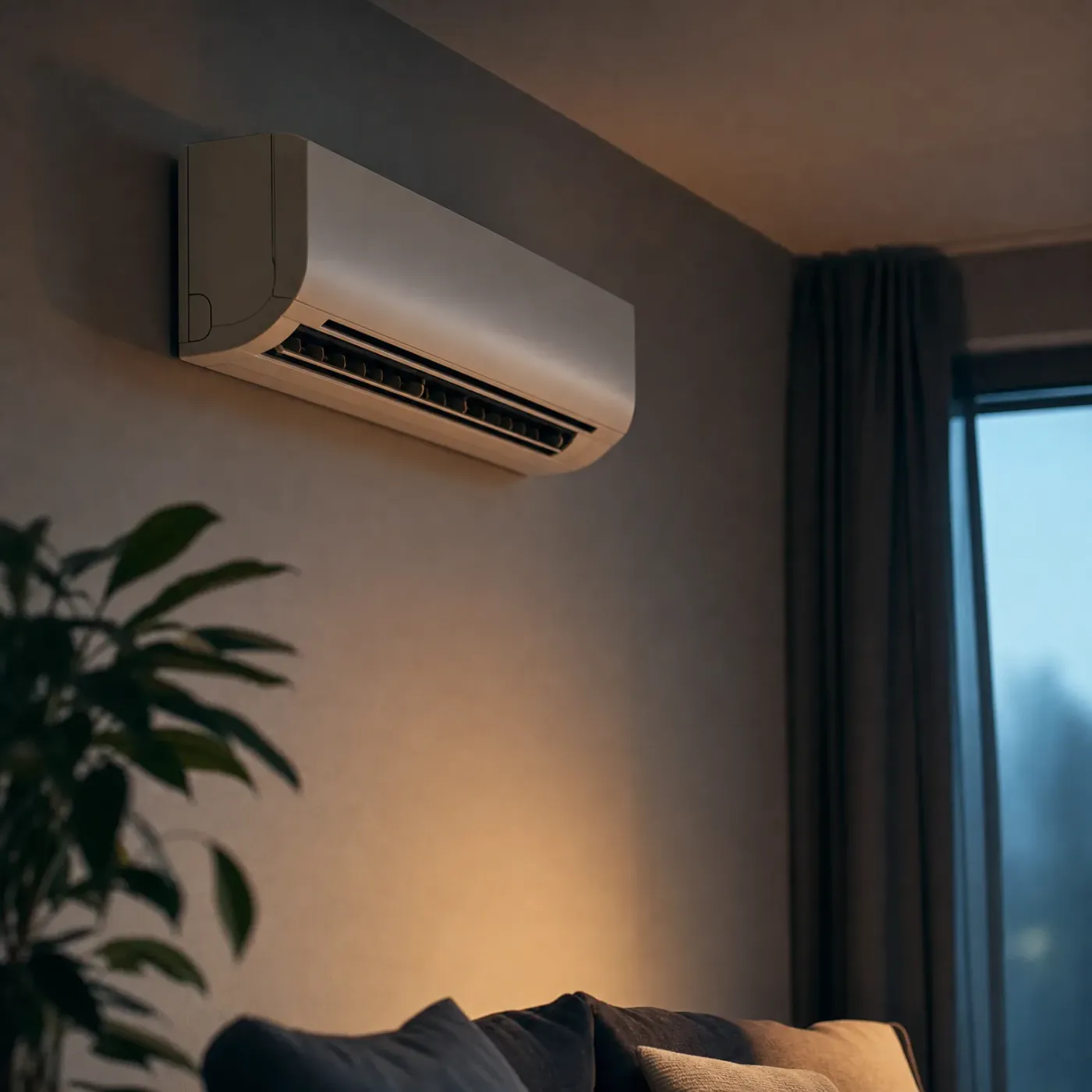
This is what a mini split looks like when nothing's growing in it. Air moves through an open coil, the casing stays clear, and light from the window keeps the room from ever feeling closed up or damp near the unit.

Dust like this sits on the coil and the vents and soaks up the water the unit is supposed to drain away. That buildup is what keeps the coil wet long after the mini split shuts off, and it's where the smell starts.

NOAA's summer averages put the dew point across Wisconsin at 60°F for June, July and August. That's the sticky range, where sweat doesn't dry and the air feels heavy even indoors. Your mini split is pulling moisture out of air that stays loaded like that for three straight months, so the coil rarely gets a real dry stretch between cycles. It's working to wring water out of the air almost nonstop from June through August, and whatever film of dust is sitting on that coil stays wet right along with it. That's the stretch of summer when the musty smell is least likely to let up on its own.
NASA POWER T2MDEW county cells weighted by homes
Why does my mini split only smell musty when it first turns on?
While the mini split sits off, the fan stops moving air and whatever is growing on the coil or in the pan just sits there in still, damp air. That's when the smell builds up inside the unit. The moment the fan kicks back on, that trapped air gets pushed out into the room, so you get a few minutes of musty smell that fades as fresh air cycles through. If it never fully goes away, or comes back stronger each time, that points to more than a little moisture sitting on the coil. It usually means dust has built up enough to hold water there even after the fan's been running a while.


The smell has one real cause: a coil and drain line that stay wet longer than they should, usually because dust and buildup are holding the moisture there instead of letting it run off. Wisconsin's muggy summers keep the unit pulling water out of the air for weeks at a stretch, so there's no dry spell where the coil gets a break. That's not something that fixes itself, and it's not something a thermostat setting changes either. Once the coil and drain line are actually cleaned, the unit goes back to draining the way it was designed to, and the smell that came with every startup stops coming back.
A technician who works on mini splits through a Wisconsin summer has likely already seen this exact complaint this week. They know to check the coil and the drain line before anything else, because that's where this almost always starts. You'll be matched with one contractor, licensed and local, not a batch of companies competing for the same job. That means one visit to schedule, one person who already knows what they're looking for before they get there.
You came in with a specific question and now you have the answer: clean the coil, clear the line, and keep up with it so the smell doesn't have a reason to come back next July.

Your request goes to one pro, not a list of companies.