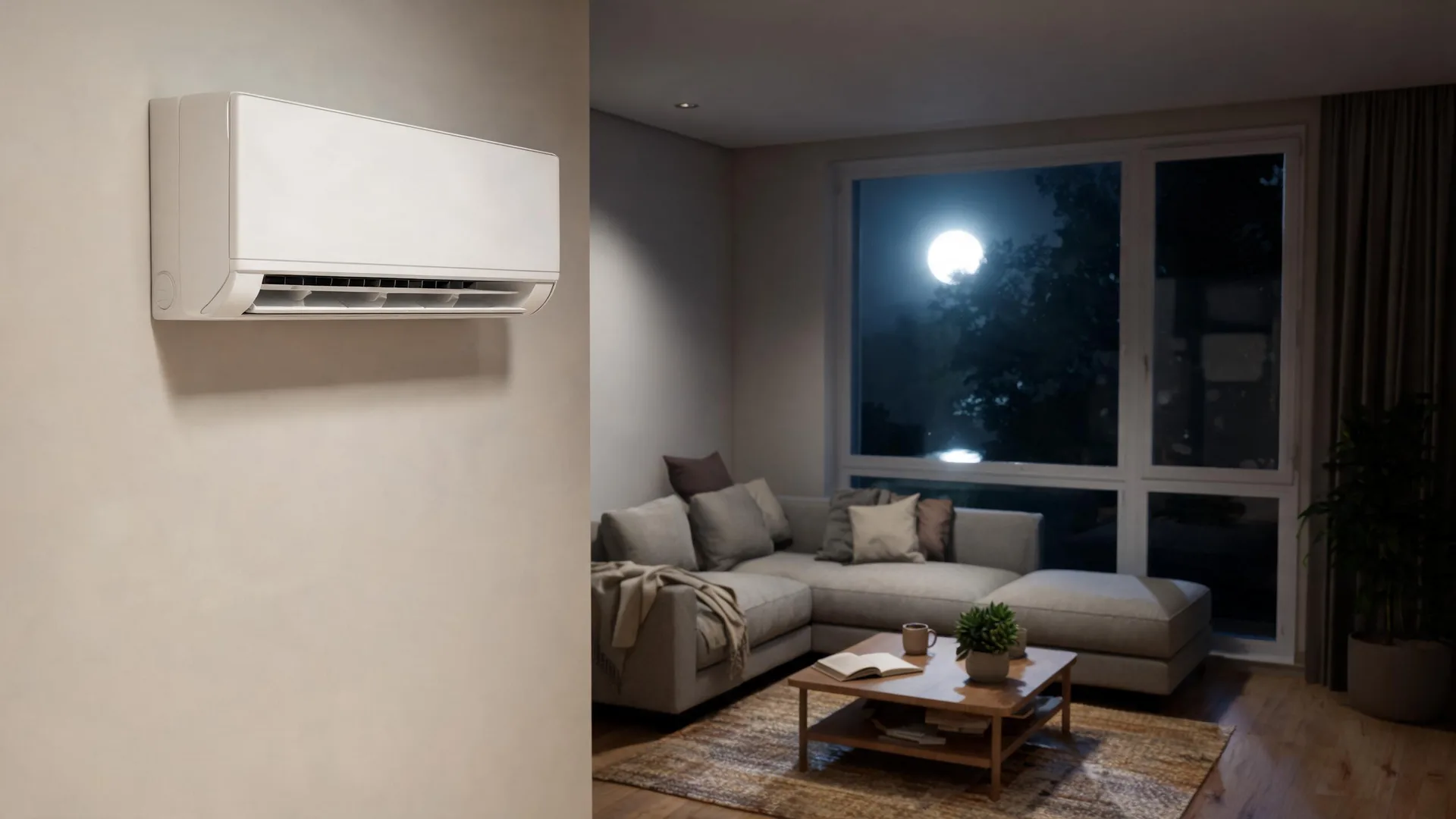
Gas and propane heat most homes here
Utility gas heats 48.1% of occupied homes in Waupaca County, and another 28.8% run on bottled or LP gas. Add those together and most houses here already have a furnace handling the coldest months.
Takes about a minute. No obligation.
Utility gas heats 48.1% of occupied homes in Waupaca County, and another 28.8% run on bottled or LP gas. Add those together and most houses here already have a furnace handling the coldest months.
A mini split installed here is not replacing that furnace. It is handling cooling, or taking the load off the furnace during the shoulder months when a full heating cycle is more than the house needs.
NOAA nClimDiv, 1991–2020 normals
Half the homes in Waupaca County were built in 1975 or earlier, half in 1975 or later.
A mini split is sized to the room it's heating or cooling, not the age of the house around it.




A mini split's rated output doesn't change with the electric rate. What changes is the bill. Wisconsin homes paid 17.18 cents per kilowatthour in 2024, and that rate applies to any size unit, oversized or not. A unit sized to the room it serves runs at the load it was built for, nothing more. There's no reason to size up here. A standard size does this job as well as it does anywhere else in the state.
Waupaca County recorded 115 severe weather events between 2015 and 2024, counting wind, hail, winter storms and tornadoes. Close to a fifth of Wisconsin households lost power for a full day or more in 2024. None of that changes what size mini split a room needs. It does mean the system is worth having running before the next storm, not after.
Find a contractor
Three months of cooling and a handful of shoulder weeks is a light workload for a mini split. That's not a reason to pick a bigger one. A system sized to the room still only has three months of real heat to answer to, so put the money into a reliable standard unit and a correct install instead of extra capacity it won't use.
The rating on the label is cooling output divided by the electricity it takes to produce that cooling, measured across a full season of cycling on and off. A higher number means less electricity per unit of cooling. It says nothing about how quiet the unit runs, how evenly it holds a room at temperature, or how it handles a room with tall ceilings or a lot of window. Units with the same rating can still feel different in the same room.
The SEER2 number comes from lab testing, with the refrigerant charge and airflow set exactly where the manufacturer specs them. A line set that runs too long, a charge that's off, or a condenser crowded against a wall will pull the real efficiency below what's on the label. The rating is the ceiling the unit can reach. The install decides how close the running system gets to it.
Comparing mini splits means comparing more than the unit on the spec sheet. Ask how many zones the system supports and whether the indoor heads can run independently, since some systems force every head to the same setting while others let each room hold its own. Ask what happens if one indoor head needs service years from now, whether it can be replaced on its own or if the whole system has to be matched again. Ask about the line set length the quote assumes, because a longer run between the outdoor unit and the indoor head changes what the system can deliver. Ask what warranty covers the compressor versus the labor to access it, since those are often different lengths. The brand name on the unit matters less than the answers to these questions.
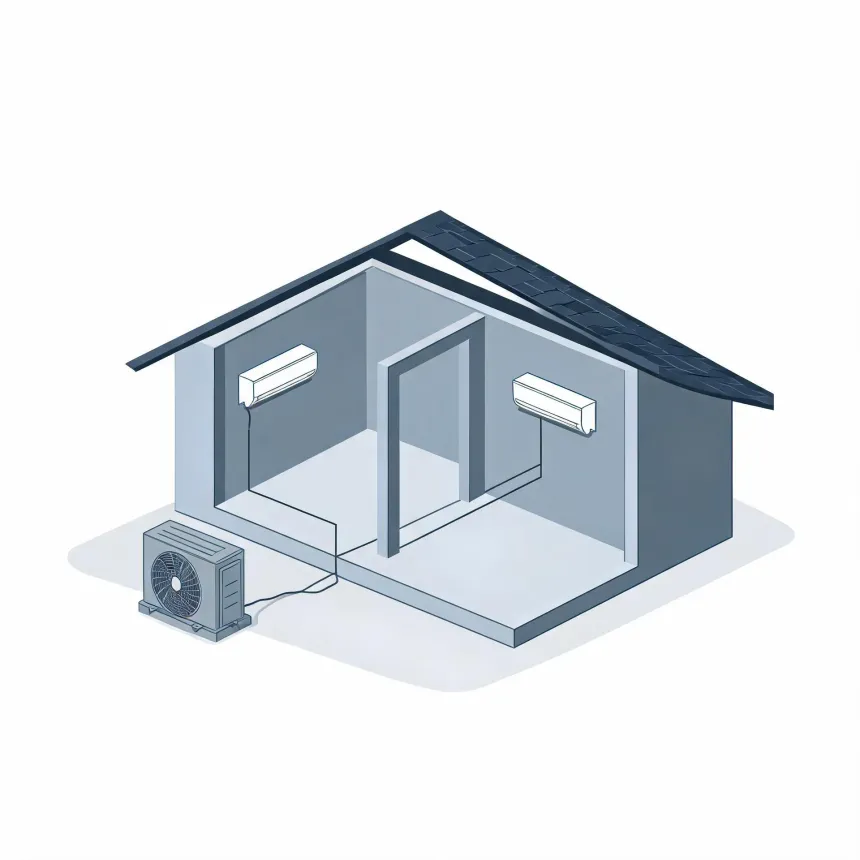
Install day starts outside, not in. The outdoor condenser needs a spot with clear airflow on all sides and a hard, level pad to sit on, away from where snow slides off a roof or piles up against a wall. Inside, the indoor head goes high on a wall or ceiling, over a spot where the line set can run through to the outside with as short and straight a path as the layout allows. That line set carries refrigerant lines, a drain for condensation, and the electrical whip, all bundled through a hole drilled through the wall and sealed against weather. Once the lines are run, the system gets evacuated with a vacuum pump to pull out moisture and air before the refrigerant charge goes in, because any moisture left in the lines will corrode the system from the inside. The last step is powering it on and checking the charge and airflow against what the manufacturer specs, since that's what the unit needs to hit its rated output.