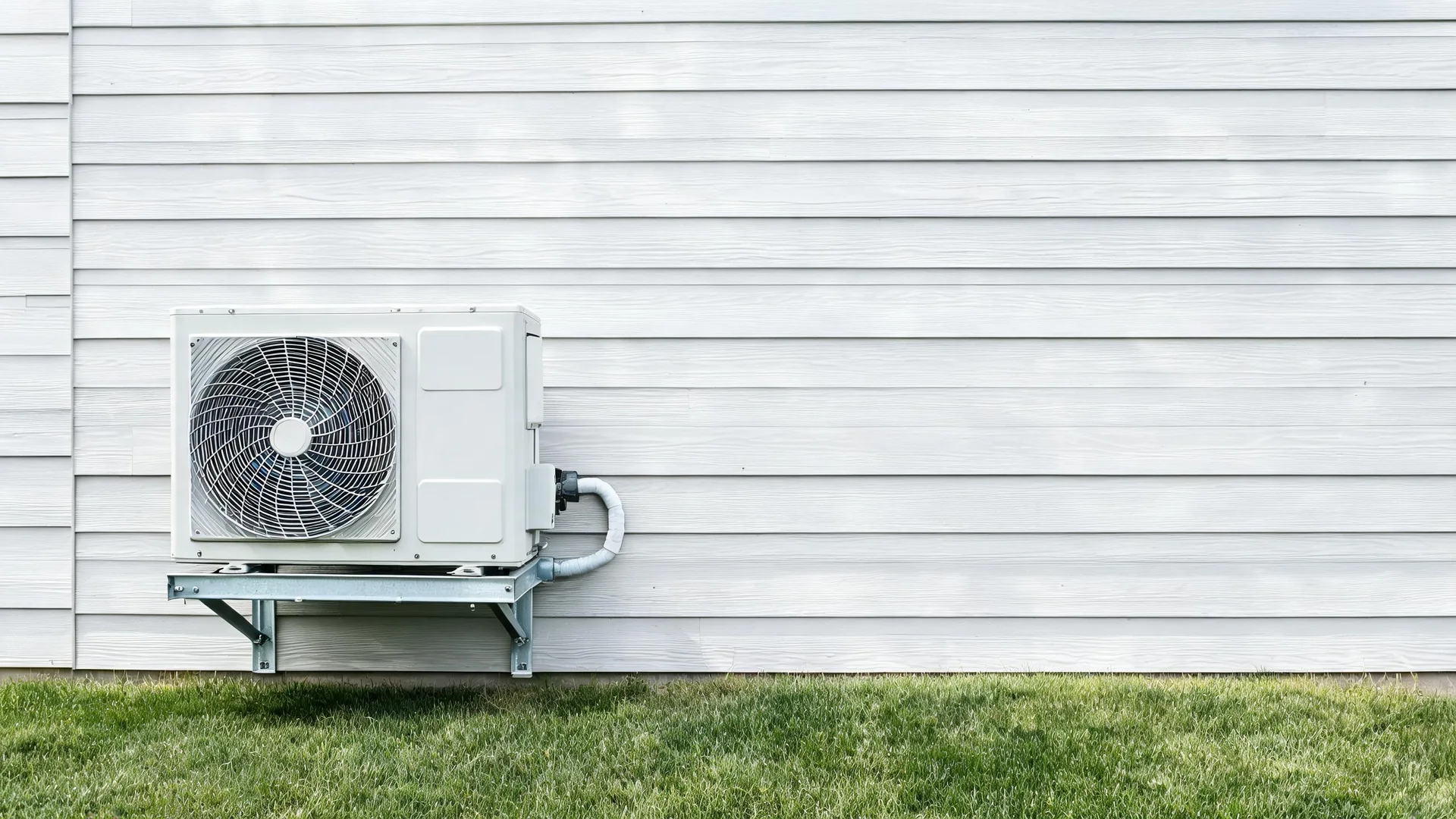
Weather here tests outdoor equipment
Waukesha County recorded 212 severe weather events between 2015 and 2024, including 103 damaging wind events, 77 hail events, and 10 tornadoes. An outdoor condenser sits exposed to all of it.
Takes about a minute. No obligation.
Waukesha County recorded 212 severe weather events between 2015 and 2024, including 103 damaging wind events, 77 hail events, and 10 tornadoes. An outdoor condenser sits exposed to all of it.
18% of Wisconsin households went at least 24 hours without power in 2024. A mini-split won't heat or cool a room without power, and neither will the rest of the house.
NOAA nClimDiv, 1991–2020 normals
The number of zones changes the installation, not just the price.
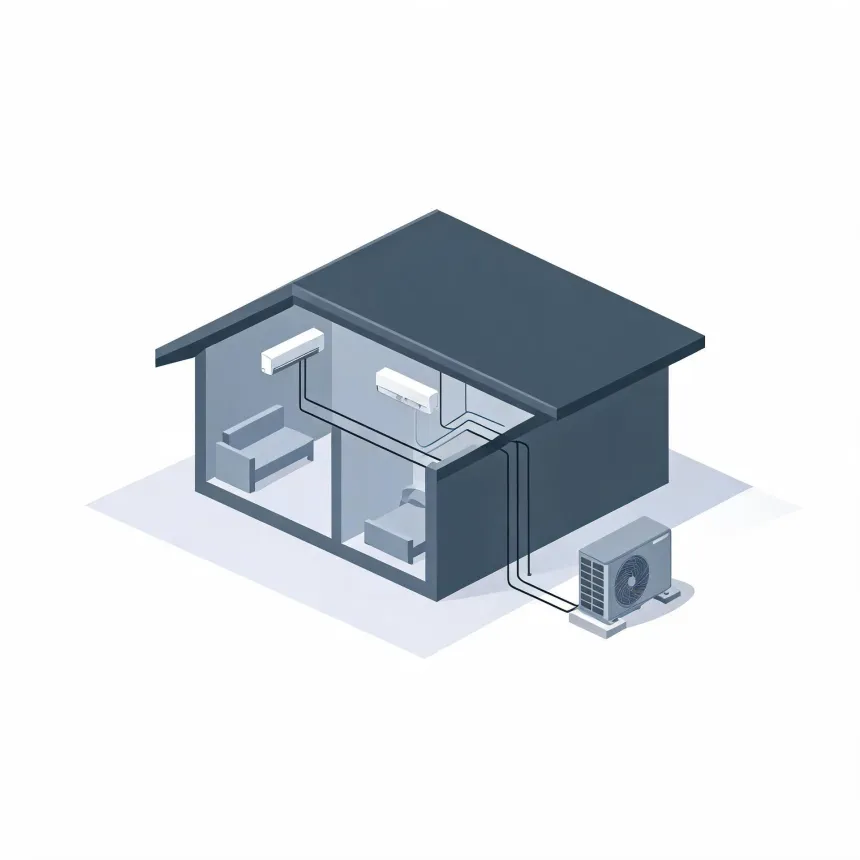
Each indoor head needs its own line set run and its own spot on the outdoor unit, so a two zone job is real work beyond a single head.




Waukesha County falls under zone 5A, a cool, humid climate where the heating load matters more than the cooling load. That shapes what a mini-split has to do here. Any split-system heat pump sold new has to meet a federal floor either way: at least 14.3 Btu of cooling for every watt-hour it draws over the summer, and at least 7.5 Btu of heating for every watt-hour over the winter. That's the minimum, not a target to aim for. A contractor sizing a system for this county has to weigh it against a winter that asks more of the heating side than the cooling side ever will. There's also a federal tax credit available for qualifying heat pump installations, worth checking against the specific equipment before you sign anything.
Decide now where the outdoor unit will sit, with some cover from wind and falling ice, and ask the contractor what the indoor heads will do if the power drops. Some mini-splits need a battery backup or a transfer switch wired in to run on a generator. That's a decision made at install, not after the first outage.
Find a contractorThe rating on the label is measured at one outdoor temperature and one indoor temperature, both mild. It tells you how the unit performs on a calm fall day, not a stretch where the compressor runs for hours without shutting off. As the temperature drops outside, a heat pump has to work harder to pull the same warmth into the house, and the rating doesn't capture that part of the curve. This matters more for the heating side than the cooling side, since a compressor straining against cold for hours wears differently than one cycling on a mild afternoon. The number is worth comparing between units, but it describes a lab condition, not a guarantee of what the system does on the coldest night it sees or the hottest one.
Room size is a start, but a contractor sizing a mini-split needs to know what's letting heat in or out: window area and orientation, insulation, ceiling height, what's directly above and below the room. Skip that and you get a number that looks right and runs wrong.
A unit too big for the room blasts cold air, hits the setpoint, and shuts off before it's pulled the moisture out. The room feels cool and damp at once. Undersized runs flat out and still can't keep up on the hardest days. Either way, the fix was supposed to happen before installation, not after.
Comparing systems comes down to a handful of straight questions, and a contractor should have real answers to all of them. Ask what the unit's low-temperature performance looks like, not just its rated efficiency, since that's what tells you how it behaves when it's working hardest. Ask whether the line set run between the outdoor unit and each indoor head falls inside the manufacturer's allowed length and height difference. Stretch it too far and the system loses capacity no matter what the label says. Ask what refrigerant it uses, since that affects how a future repair gets handled and whether parts stay easy to find. Ask who services the brand locally. A system from a manufacturer with no local support becomes a hard sell the first time something fails.
Installation starts with the line set path, not the equipment. A technician runs refrigerant lines, a drain line, and a power cable from the outdoor unit to each indoor head, usually through a single hole drilled where the wall backs up to the unit's planned spot. The lines get connected at both ends, then the system gets evacuated with a vacuum pump to pull out air and moisture before any refrigerant moves. Skip that step and moisture sits in the lines, and it causes problems months later that look like a refrigerant leak but aren't. Once the vacuum holds, the refrigerant valves open, the indoor heads get mounted and leveled, and the whole system runs through a test cycle in both heating and cooling before anyone calls it done. The outdoor unit needs a flat, stable pad and clearance on all sides so air can move through the coil.