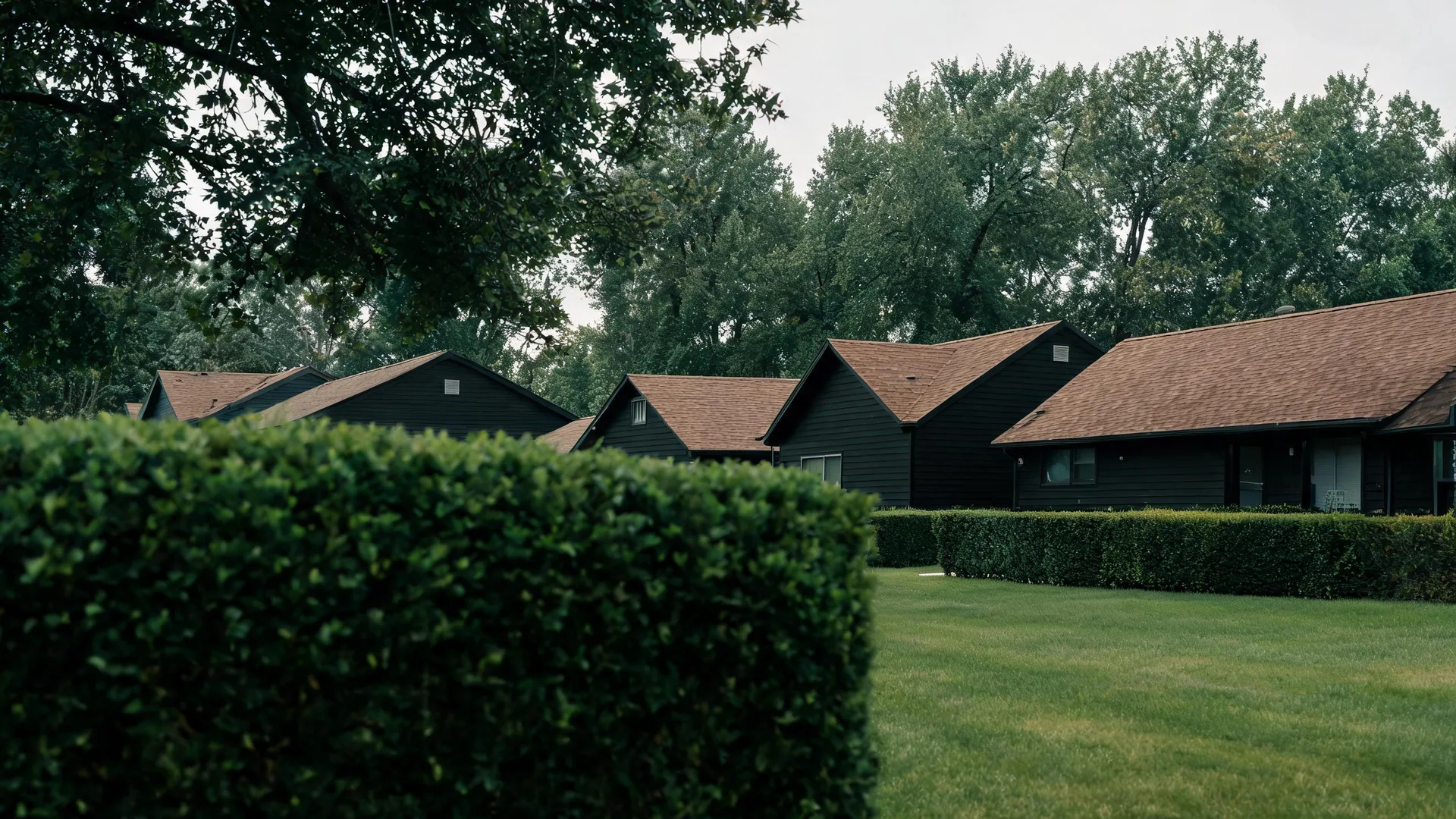




A row of dark-sided buildings with brown shingled gable roofs behind trimmed hedges, with a mown lawn in the foreground and leafy trees under an overcast sky.

Mini Split Installation in Rice Lake, WI

Tell us about the job

Takes about a minute. No obligation.

New system or replacementMini-splitBarron County, WI
Step 1 of 2

What ZIP code is the job in?

Just under a third of homes in Barron County run on bottled or LP gas, and another 43.8% use utility gas. That's what a mini split is up against, not electric baseboard. The pitch here isn't replacing a furnace. It's zoning a room, a garage, or an addition that the ductwork never reached, or adding cooling where a gas furnace never gave you any. A mini split works alongside the gas system you already have instead of competing with it.

9 months
September through May, your system heats
2 months
July through August, it cools
7°F
the average winter night it heats against
78°F
the average summer afternoon it cools against
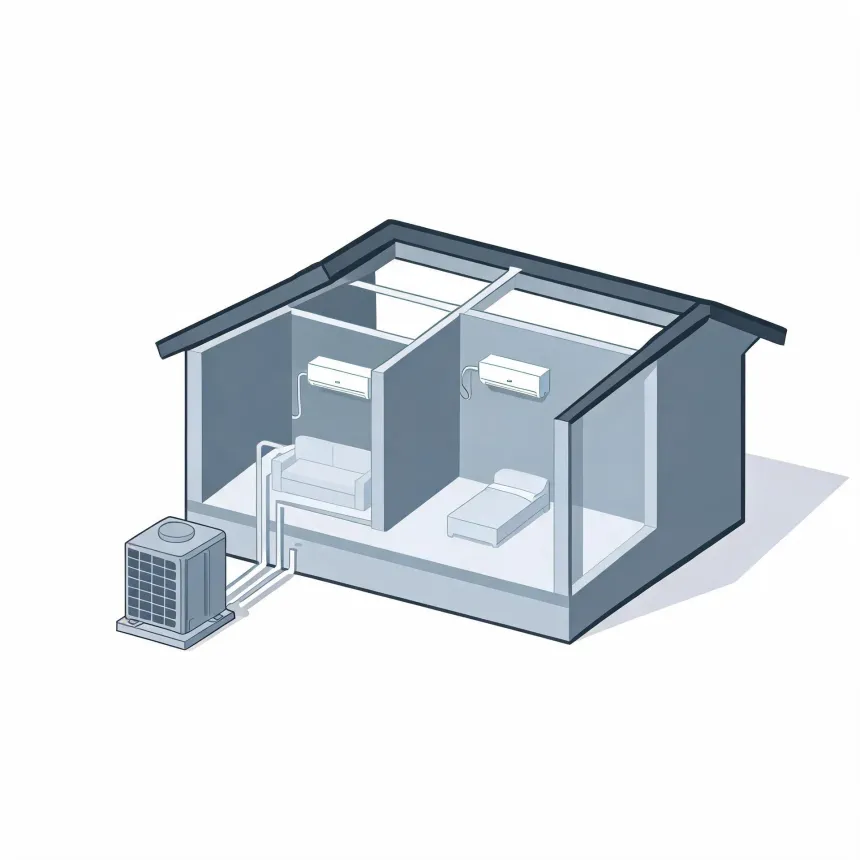
Illustrated cutaway of a two-room house showing two wall-mounted indoor air conditioning units connected by pipes to an outdoor condenser unit on the ground outside.
Your system heats September through May and cools July through August.

NOAA nClimDiv, 1991–2020 normals

A mini split sized for one room doesn't need to be oversized to make a dent in a Rice Lake winter.

The right size for that room is what keeps it cheap to run at 17.18 cents a kilowatt-hour.

Two months of real cooling load a year, that's not much to ask of a mini split

Cooling runs July through August
Summer afternoons average 78°F
35 damaging wind events from 2015 to 2024

Cooling here only runs July and August, so there's no rush once summer actually hits. Get the mini split installed before June and it's ready the day it gets hot instead of the day after. Installers book up fast once the first warm week shows up, because everyone calls at once. Lining it up in spring means you pick the day instead of taking whatever's left.

Any mini split installed here has to clear zone 6A's efficiency minimum

Barron County falls under zone 6A. Any mini split sold here has to meet the federal minimum for that zone, 14.3 SEER2 for cooling and 7.5 HSPF2 for heating. That rule applies whether the system is ducted or not, so the unit going into your addition or garage meets the same floor as a central system would. A federal tax credit is also available for qualifying heat pump installations, worth checking against what gets installed.

Find a contractor
A white mini-split air conditioner outdoor condenser unit mounted on metal brackets against a beige stucco exterior wall, with a blue sky and scattered clouds in the background.

The year the house was built doesn't change what size unit it needs

Half the houses in Barron County went up in 1977 or before. That alone doesn't tell a contractor much, because a mini split isn't sized off the age of the house. It's sized off the room it's heating and cooling, the one the ductwork doesn't reach or never had any. An older addition and a new one get measured the same way. Nothing about this county pushes that number up or down, so the unit that fits is whatever fits the room, not a size bumped up for the climate or the age of the place.

How many zones it actually controls

A mini split system can run one indoor head or several, each with its own thermostat. Ask how many zones the quote covers and whether the outdoor unit has room to add another head later if a second room needs one. Some outdoor condensers only support a fixed number of indoor heads, so adding on down the road might mean a second outdoor unit, not just another head.
Where the line set and condensate drain run

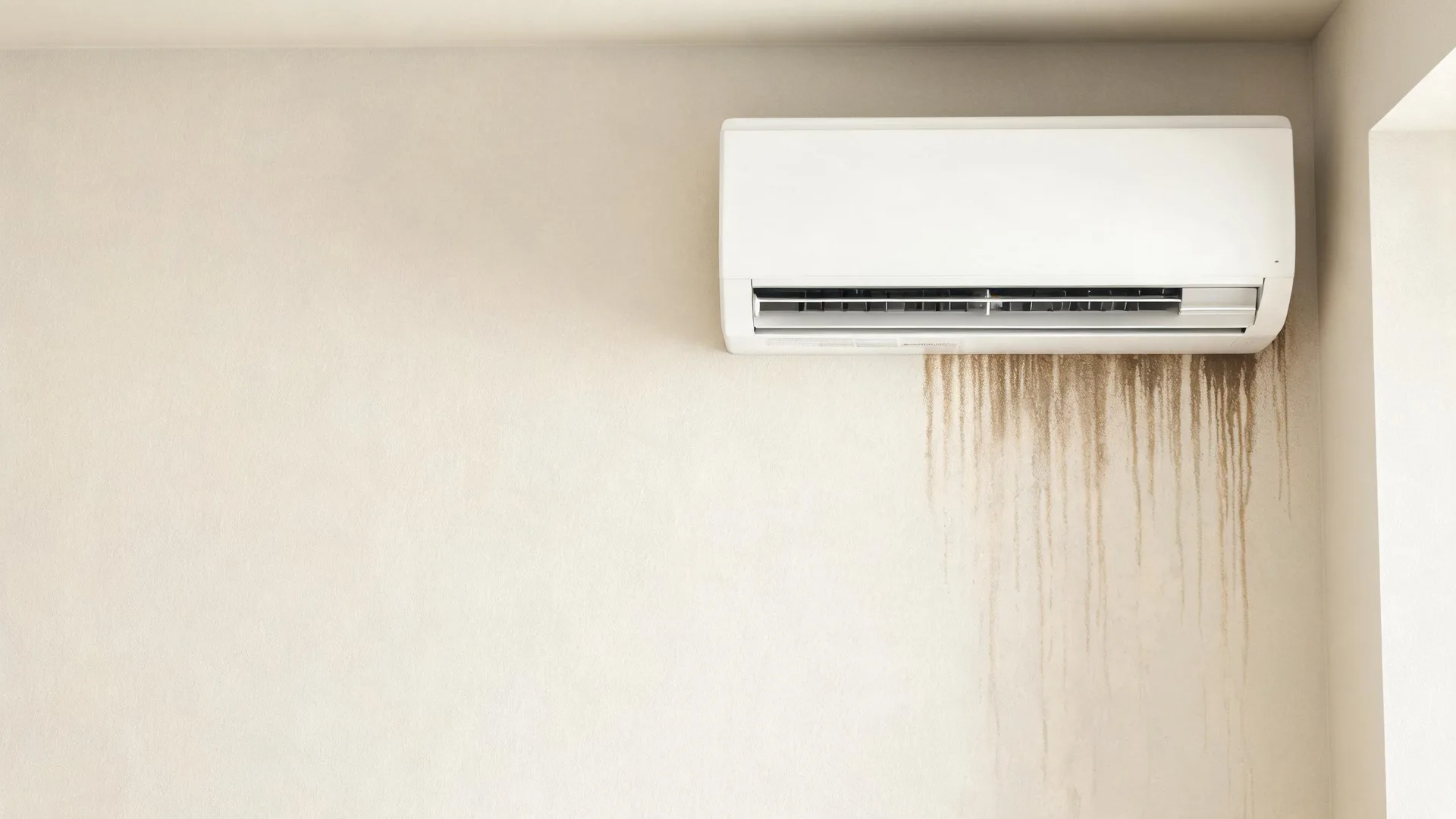
The refrigerant lines and the drain for condensate have to get from the indoor head to the outdoor unit, through a wall, and down to somewhere the water can go. Ask where that path runs and how it's covered or hidden on the outside of the house. A longer line set can change how the system performs, so the installer should be measuring that distance before quoting a price, not after.

A few things move the price on a mini split job more than others. How many zones you're installing matters most, since each indoor head needs its own line set, its own drain, and its own spot on the wall. The length of the line run between the indoor head and the outdoor unit matters too. A short, straight run costs less to connect than one that has to snake around the house. Where the outdoor unit sits counts for something as well. A spot with easy access costs less to wire and run lines to than one that needs a lift or a long trench. The electrical work behind the wall matters, because some panels have room for a new circuit and others need an upgrade first to carry the load.

Installation starts with the outdoor unit and the indoor head going up, but most of the day goes to what connects them. The installer mounts a bracket on the wall, sets the indoor head on it, then drills a hole through the wall for the line set, the condensate drain, and the electrical whip to pass through together. The line set gets cut to length, connected at both ends with flare fittings, then pressure tested before any refrigerant moves through it. That test matters more than it sounds like it should, because a bad flare joint leaking slowly is harder to catch later than one that fails outright. Once the lines hold pressure, the system gets evacuated with a vacuum pump to pull out moisture and air, since either one left in the lines will cut into how well the refrigerant can absorb and release heat. Only after that does the refrigerant get released from the outdoor unit into the system. The last part is the electrical hookup and a test run in both heating and cooling, checking the temperature split at the indoor head before anyone calls the job done.