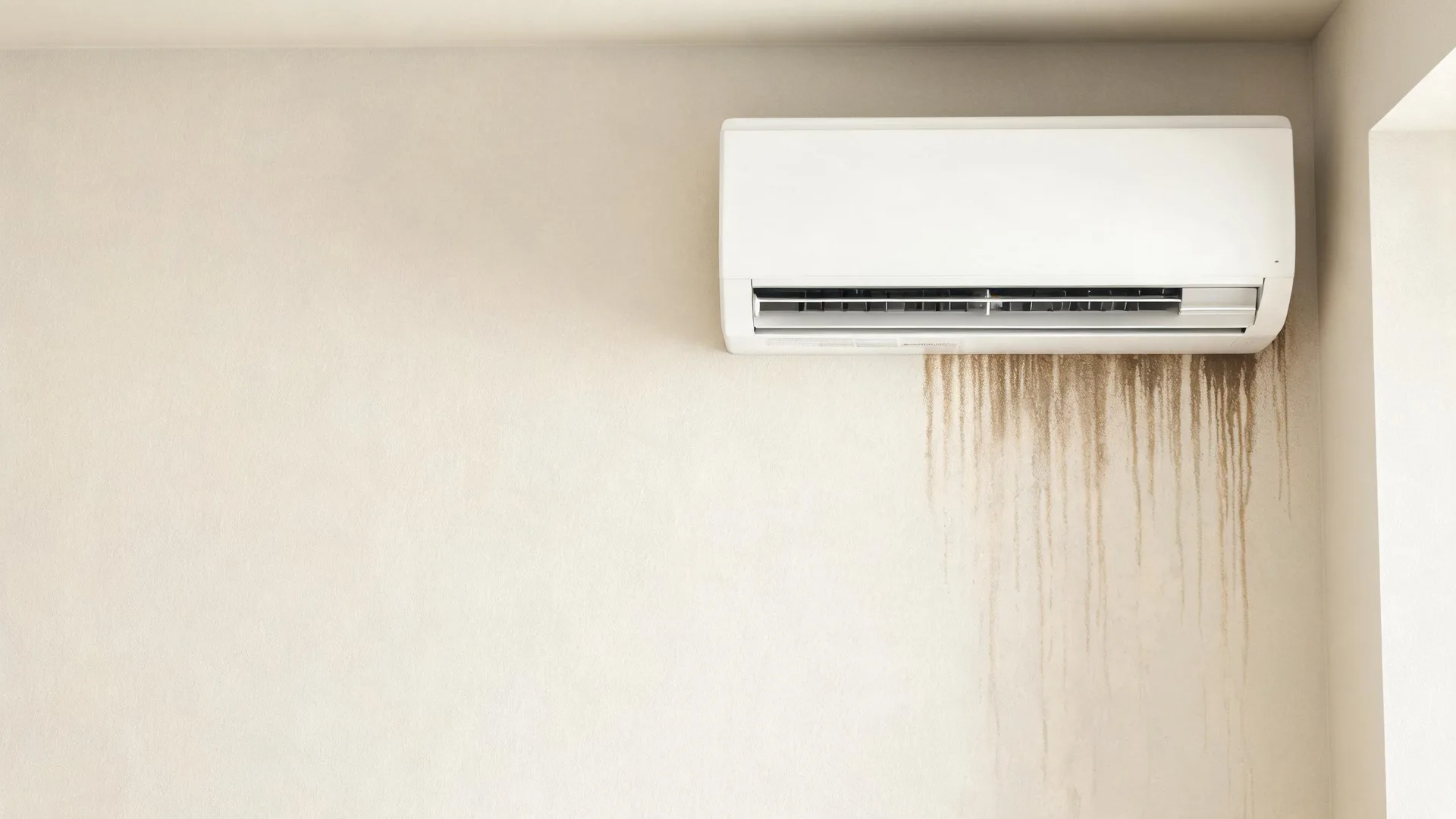
A row of dark-sided buildings with brown shingled gable roofs behind trimmed hedges, with a mown lawn in the foreground and leafy trees under an overcast sky.

Mini Split Installation in Portage, WI

Tell us about the job

Takes about a minute. No obligation.

New system or replacementMini-splitColumbia County, WI
Step 1 of 2

What ZIP code is the job in?

Most homes here run on gas

Gas heats 57% of homes in Columbia County, more than electricity and LP combined. A mini split would work alongside that system rather than replace it, handling cooling and shoulder season heating while the furnace covers the coldest stretch.

What that means for sizing

If gas already carries the deep winter load, a mini split for this house can be sized for cooling and mild weather instead of the coldest night of the year. That changes which unit fits the job and where it gets installed.

8 months
October through May, your system heats
3 months
June through August, it cools
13°F
the average winter night it heats against
80°F
the average summer afternoon it cools against
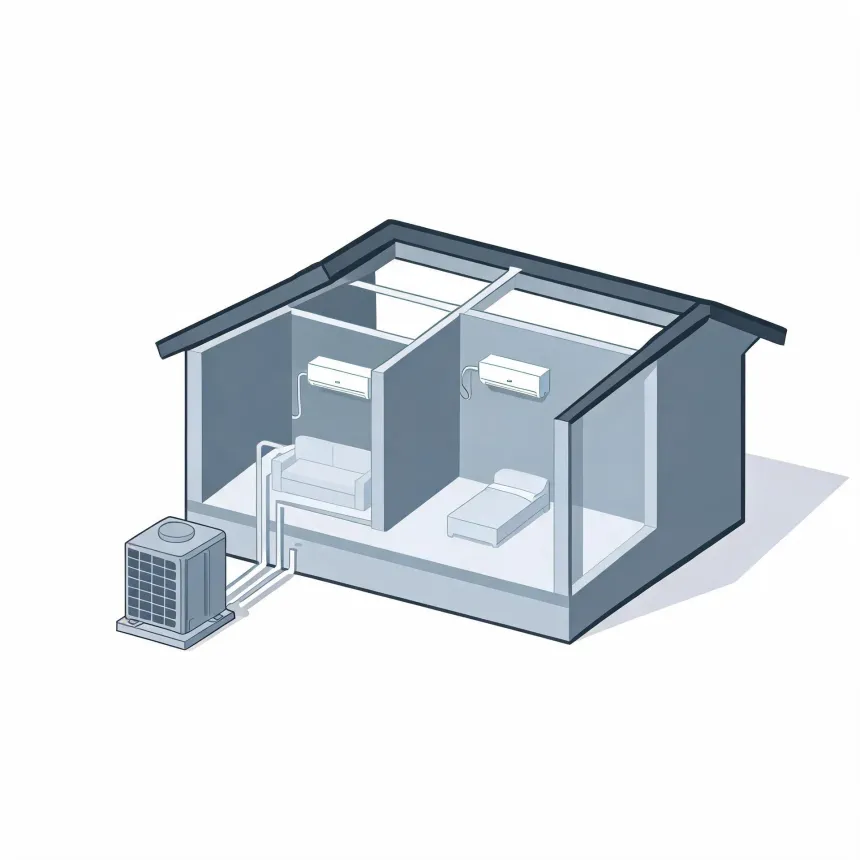
Illustrated cutaway of a two-room house showing two wall-mounted indoor air conditioning units connected by pipes to an outdoor condenser unit on the ground outside.
Your system heats October through May and cools June through August.

NOAA nClimDiv, 1991–2020 normals

Summer here only runs three months, June through August, with afternoon highs around 80°F.

A mini split in this house isn't working hard most of the year, so a mid-range unit holds up fine.

Weather here knocks out power, not the case for a bigger system

122 severe weather events from 2015 to 2024
18% of homes statewide lost power a day or more in 2024
71 damaging wind events from 2015 to 2024
No reason to size up hereAt 17.18 cents per kilowatt-hour, a standard mini split costs what it costs to run. Nothing local changes that.

Half the homes in Columbia County were built in 1976 or earlier, half in 1976 or later. That split doesn't call for a bigger or smaller mini split either way. What decides the size is the room it's heating and cooling, not the decade the house went up. A standard single-zone or multi-zone system sized to the square footage handles an older home the same as a newer one. If your place still has its original windows or insulation, that's worth mentioning to whoever sizes the unit, but it's not a reason to size up before you start.

Get it installed before June

Cooling here runs June through August, so May is the month before it starts. That's the window to get a mini split installed on your schedule, before the heat shows up and turns it into a same-day call.

Find a contractor
A man in a cap, gray shirt and jeans, seen from behind, carries a canvas tool bag up porch steps toward a green front door flanked by potted shrubs.
A white mini-split air conditioner outdoor condenser unit mounted on metal brackets against a beige stucco exterior wall, with a blue sky and scattered clouds in the background.

Light duty adds up differently than hard duty

A mini split spends most of its life at part load, cycling the compressor up and down to match the room rather than running flat out. That's easier on the system than constant full-speed operation, but the compressor and fan motor still log hours every time the unit cycles on, and those hours are what eventually wear a system out, not the number of years it's been bolted to the wall. A unit that cycles gently for its whole life can outlast one that gets worked hard, even if the calendar age is the same. Keeping the outdoor coil clear of leaves and debris and the indoor filter clean matters more over time than anything about the climate it's running in.

The furnace or boiler stays put

A mini split runs its own refrigerant line through a small hole in the wall and connects to its own outdoor condenser. It doesn't tie into ductwork or share a thermostat with anything else, so adding one doesn't mean touching the system already heating the house.

A window unit or baseboard heater is a different story

A window unit being replaced gets pulled and the opening closed up once the mini split is running. Electric baseboard gets disconnected from its circuit, and that line either gets capped or reused for the new system, depending on how the install is set up.

Ask how many zones the system actually supports and whether the outdoor unit has room left for more indoor heads later, since adding a zone after the fact isn't as simple as just buying another indoor unit. Ask what happens if one indoor head fails on a multi-zone setup, whether the rest keep running or the whole system goes down. Ask about the line set length the quote assumes, since running refrigerant lines farther than the unit is rated for cuts into efficiency and sometimes voids the warranty. Ask where the condensate drains and whether that path needs a pump, because gravity doesn't always cooperate depending on where the indoor head goes. And ask what the warranty actually covers, parts alone or parts and labor, since a compressor swap years out costs a lot more in labor than in the part itself.

Installation starts with the outdoor condenser. The crew picks a spot with clearance on all sides for airflow and a solid, level pad to set it on, usually against an exterior wall close to where the indoor head will go. From there a small hole gets drilled through the wall for the line set, the refrigerant lines, the power cable, and the condensate drain, all bundled together and run from the indoor head out to the condenser. The indoor unit mounts high on the wall on a bracket, and once it's hung, the lines get connected on both ends. The system is then vacuumed down to pull moisture and air out of the lines before the refrigerant gets released into them, which matters more than people expect since trapped air or moisture in the line set is a common reason a new system underperforms. Once it's charged, the crew checks for leaks at every joint, confirms the condensate drains properly, and powers it on to check that it's cooling and heating as it should before calling the job done.