A low-angle view across a mown lawn toward a two-story dark-sided house with a covered front porch, flanked by large green trees under an overcast sky.

Mini Split Installation in Oconto, WI

Tell us about the job

Takes about a minute. No obligation.

New system or replacementMini-splitOconto County, WI
Step 1 of 2

What ZIP code is the job in?

Gas heats most homes here

Utility gas heats 46% of occupied homes in Oconto County, with LP or bottled gas heating another 32.3%. A furnace is the default in most houses here, and a mini split in that setup usually works alongside it rather than replacing it.

What that means for installation

If your home runs on a furnace, a mini split is likely going in as a way to cool rooms the ductwork doesn't reach well, or to heat and cool one space without running the whole system. That changes where the indoor unit goes and how many zones the job needs.

9 months
September through May, your system heats
2 months
July through August, it cools
11°F
the average winter night it heats against
78°F
the average summer afternoon it cools against
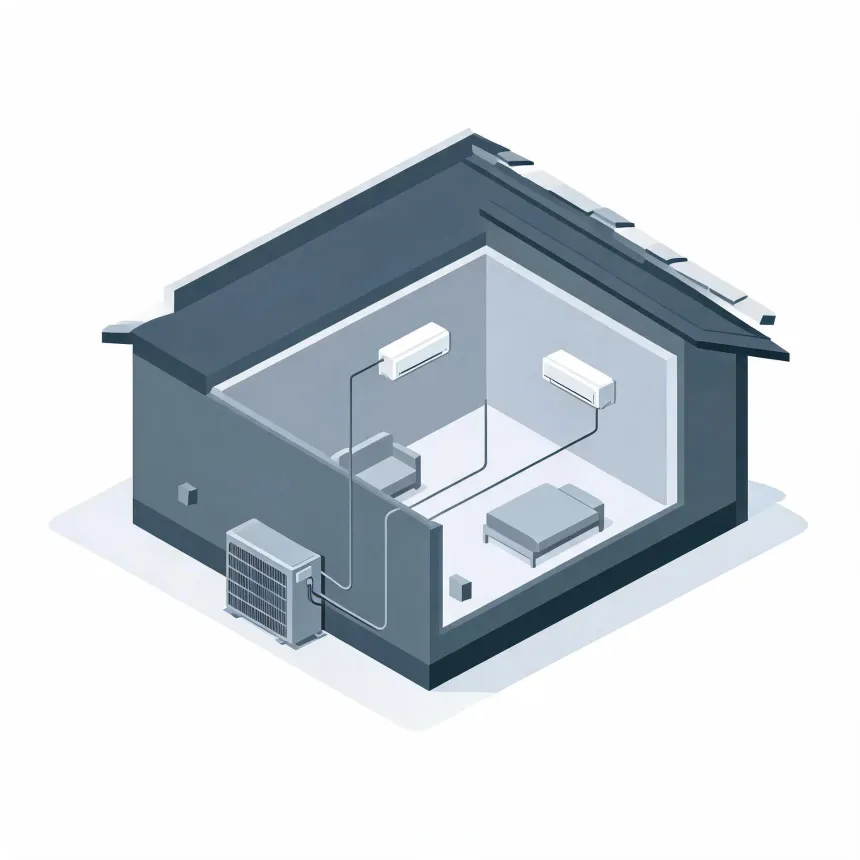
Isometric illustration of a cutaway house interior showing two wall-mounted indoor air conditioning units connected by line sets to an outdoor condenser unit beside the exterior wall.
Your system heats September through May and cools July through August.

NOAA nClimDiv, 1991–2020 normals

Summer only runs about two months here, with afternoon highs near 78.

A mini split in Oconto spends most of its life idle, so a dependable mid-range unit covers the job as well as a high-end one.

Cooling starts in July. Get the mini split in before it does.

Cooling runs July through August
Summer afternoons average 78°F
37 damaging wind events from 2015 to 2024
Weather here knocks out the power48 winter storms hit Oconto County between 2015 and 2024.

Electricity in Wisconsin ran 17.18 cents per kilowatt-hour in 2024, and that's what a mini split runs on. A standard efficiency rating is enough to keep that cost reasonable, since the unit in a home like this isn't running constantly. There's nothing about power rates here that pushes you toward a pricier high-efficiency model to make the math work. Size the unit to the room or rooms it's covering, not bigger. A contractor can size it against the square footage and the layout once they're in the home.

A mini split here has to meet zone 6A's efficiency minimum

Oconto County is zone 6A, and any mini split installed here has to meet the federal minimum of 14.3 SEER2 and 7.5 HSPF2. That standard applies to ductless heat pumps the same as any other split system. A unit meeting those numbers also qualifies for the federal energy efficiency tax credit. Get a system picked that clears the standard and get it in place.

Find a contractor
A man in a dark cap, dark T-shirt and brown work pants, seen from behind, carries a canvas tool bag up concrete steps toward a green front door.
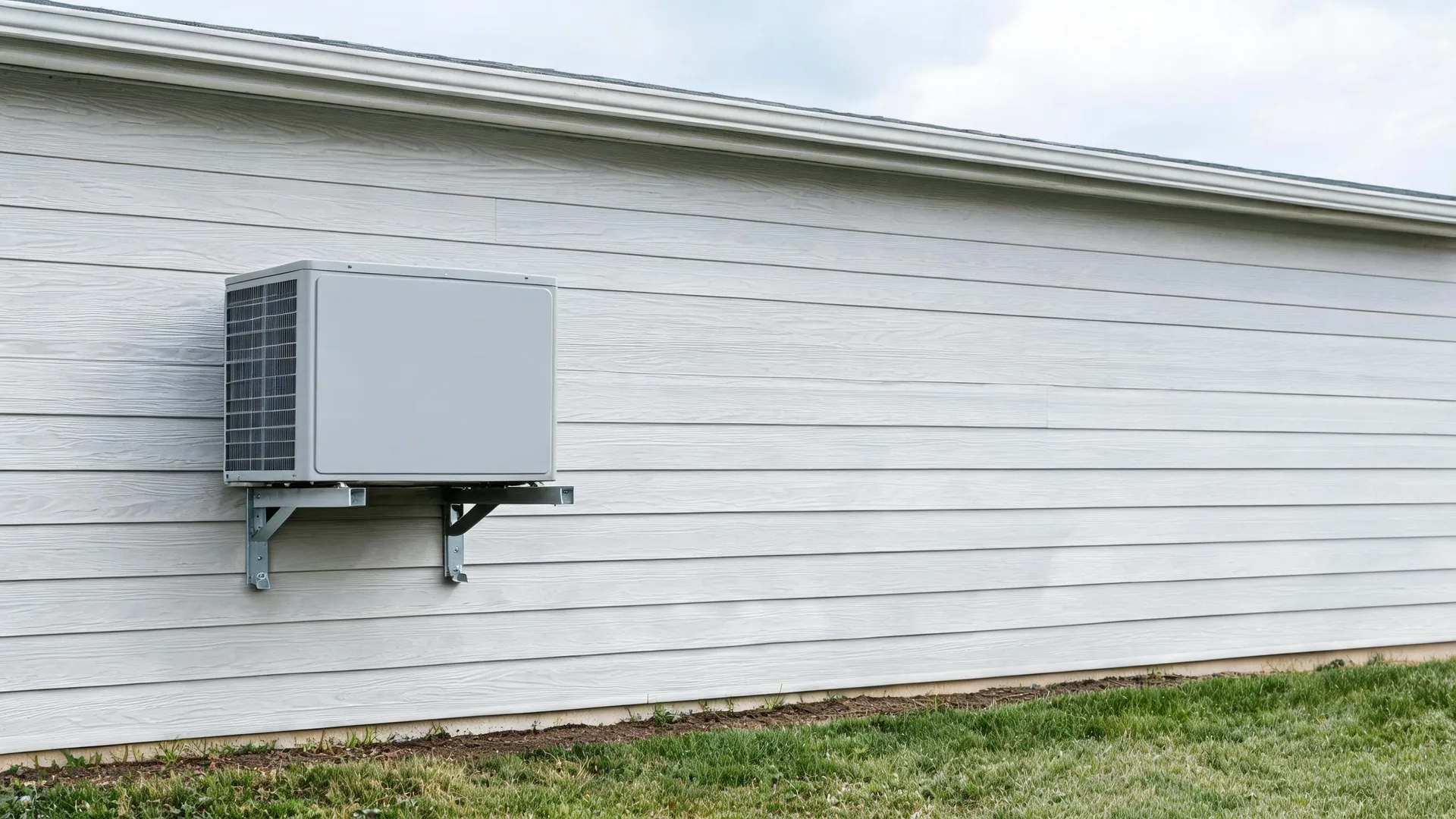
A beige split-system air conditioner outdoor condenser unit mounted on metal wall brackets atop a stucco wall.

Light duty, most of the year

The compressor sees real work for about two months, July and August, when it's pulling those afternoon highs near 78 down to something comfortable. Outside that stretch, if the mini split is there to cover a room the furnace doesn't reach well, it's cycling on and off as needed rather than running steadily. That's a light duty cycle either way. A unit built to a solid mid-range standard holds up fine under that kind of use for years. Put the money into correct sizing and a clean install rather than a higher efficiency tier the job doesn't need.

The old equipment usually stays put

Since a mini split is going in alongside a furnace rather than replacing it, there's nothing to haul out. The furnace keeps heating the house the way it always has. The mini split is new equipment added to the system, not a swap, so the job is about running new line sets and wiring, not disconnecting anything that's already there.

If a window unit or old ductless system is coming out

A window AC just gets pulled and the opening gets sealed back up. An old ductless system takes more care. The indoor head, the outdoor unit, and the line set between them all have to come out together. The refrigerant sitting in that line set has to be recovered properly, not vented into the air. That recovery step is part of the install, not an extra call.

When you're comparing systems, ask what each one is rated for in both directions, not just cooling. A heat pump mini split and a straight cooling-only unit can look similar on paper, but only one of them pulls its weight in the shoulder seasons. Ask how many zones the system supports and whether the outdoor unit can run multiple indoor heads if you add rooms later, since adding a zone to a single-zone outdoor unit isn't usually possible. Ask about the line set length the install needs and whether that distance affects performance, because longer runs between indoor and outdoor units can change how the system is charged. Ask what the warranty covers on the compressor versus the parts, since those terms are often different. Get the SEER2 and HSPF2 numbers for each system you're considering and compare them side by side rather than taking a sales sheet's word for which one runs better.

Installation day starts outside, not in. The outdoor unit needs a spot with clearance on all sides so air can move through the coil, and it has to sit level on a pad or bracket before anything gets charged. Indoors, the installer finds a wall with clear access to that outdoor spot, since the line set runs through the wall in as close to a straight shot as the layout allows. That line set carries refrigerant lines, a condensate drain and the electrical whip together, usually wrapped as one bundle. Once the lines are run and connected at both ends, the system gets evacuated to pull moisture and air out of the lines before refrigerant is released into them. After that it's a vacuum test, a check of the charge, and powering it on to confirm the indoor head is actually calling for heat or cooling the way it should.