






A row of illuminated two-story brick houses with front porches and mature trees photographed at twilight.

Mini Split Installation in Mequon, WI

Tell us about the job

Takes about a minute. No obligation.

New system or replacementMini-splitOzaukee County, WI
Step 1 of 2

What ZIP code is the job in?

Utility gas heats 75% of homes in Ozaukee County, more than any other fuel. That means most of Mequon has a furnace handling winter, paired with central air or sometimes no cooling at all for summer. A mini split works differently. It heats and cools from the same unit, which fits homes that have gas heat but no ductwork for air conditioning, or rooms the main system never reached well. Adding one doesn't mean touching the furnace. It just gives those rooms a second way to stay comfortable, separate from whatever is already running the rest of the house.

8 months
October through May, your system heats
2 months
July through August, it cools
16°F
the average winter night it heats against
78°F
the average summer afternoon it cools against
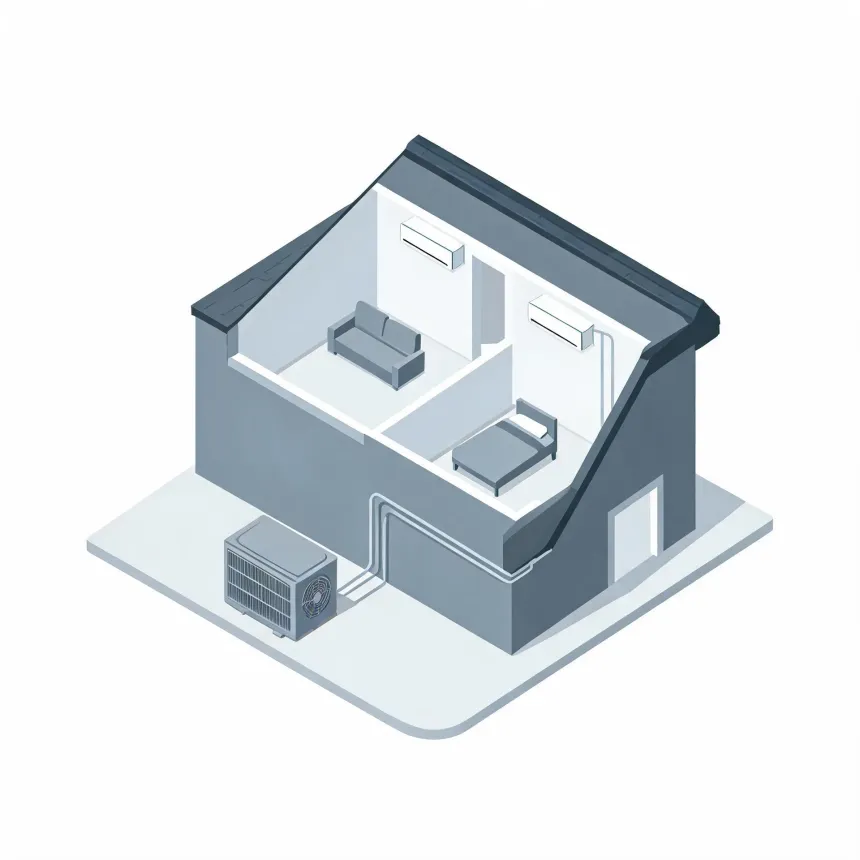
Isometric cutaway illustration of a two-room house showing two wall-mounted indoor air conditioning units connected by line sets to an outdoor condenser unit on the ground outside.
Your system heats October through May and cools July through August.

NOAA nClimDiv, 1991–2020 normals

Cooling runs about two months a year in Ozaukee County, July and August.

A mini split sitting idle most of the year doesn't need to be the top efficiency model to earn its keep.

Cooling starts in July, so June is when a mini split install should happen

Cooling runs July through August
Summer afternoons average 78°F
30 damaging wind events from 2015 to 2024
Sized for the job, nothing extraElectricity runs 17.18 cents per kilowatt-hour here, so a unit sized right is what keeps the bill reasonable.

Ozaukee County falls under zone 5A, a cool, fairly humid climate where heating carries more of the year than cooling. Any mini split installed here, ductless or not, counts as a split-system heat pump under the federal standard, and units built from 2023 onward have to hit at least 14.3 SEER2 for cooling and 7.5 HSPF2 for heating. There's no separate, lower bar for ductless systems. That heating number matters more here than the cooling one, since the unit will spend more months keeping a room warm than cooling it. A system that clears these minimums may also qualify for the federal energy efficiency tax credit, worth checking into before the install is scheduled.

No reason to size up or pay more than the job calls for

Half the homes in Ozaukee County were built in 1978 or earlier, half in 1978 or later. A mini split doesn't care which side of that line your house falls on. The room just needs a spot for the indoor unit and a path to the outside for the line set. A standard size at the standard efficiency rating meets the job here same as anywhere else in the zone.

Find a contractor
A man in a dark T-shirt and tan work pants carries a canvas tool bag up wooden porch steps toward a green panelled front door, with a potted shrub beside the entry.
A white mini-split air conditioner outdoor condenser unit mounted on metal brackets against a beige stucco exterior wall, with a blue sky and scattered clouds in the background.

Idle most of the year, so build quality matters more than the rating

Two months of real work a year is not much to ask of a compressor, and the rest of the time it sits off or barely runs. That light duty is what makes a standard unit a reasonable choice here. Strain comes from load, not from the calendar, and this county doesn't put much load on a compressor. Put the money into correct sizing and a clean install instead of chasing a higher efficiency tier the unit will rarely get the chance to use.

Nothing has to change with the old system

A mini split doesn't ask the existing furnace or central air to give anything up. Whatever heats and cools the rest of the house keeps running the same as before. The new unit just takes over the room it's installed in, on its own thermostat, on its own schedule.
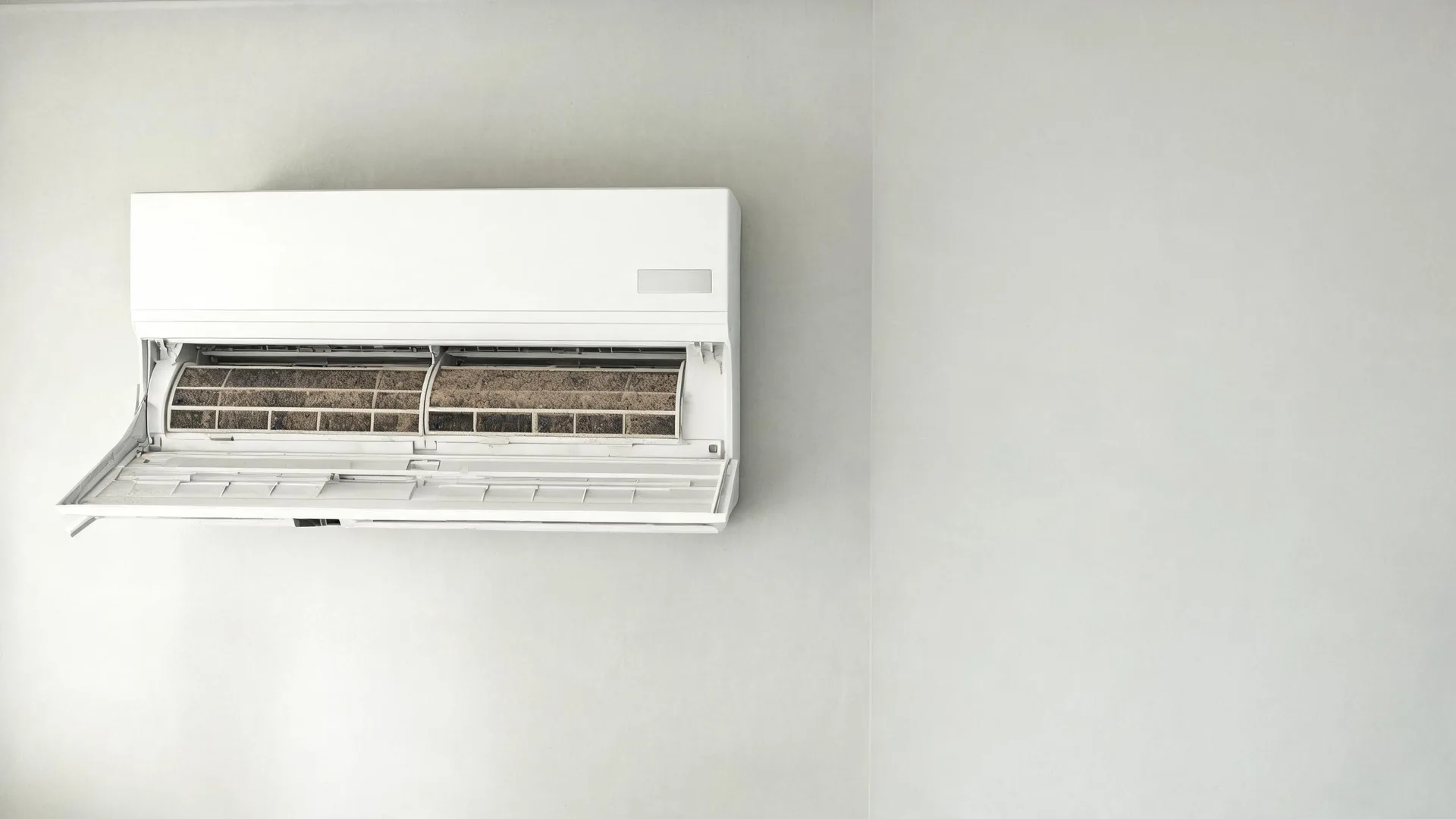
The old system still has to cover for it

On the coldest nights a mini split's output drops off, so the furnace already serving that room is what carries the load when the heat pump can't keep up alone. Nobody's ripping out ductwork or disconnecting a zone to make room for the new unit. It just adds a second option to a room that only had one before.

A quote should tell you what size the indoor and outdoor unit are, not just a price. Ask how that size was chosen. A contractor who measures the room and asks about windows and ceiling height is sizing it. One who guesses based on square footage alone might be guessing high, and an oversized unit cools the room fast then shuts off, leaving it clammy even though the temperature reads fine. Ask where the line set will run and how many wall or ceiling penetrations the job needs, since that affects how clean the install looks when it's done. Ask who services it after the install, and whether that includes the refrigerant lines, not just the indoor head. A system is only as good as the charge in those lines, and that's set on site, not at the factory.

Install day starts outside, not in. The outdoor unit needs a spot with clear airflow on at least a couple sides and a way to drain condensate, so the crew will walk the exterior before they touch a wall. Inside, the indoor head gets mounted high, and the line set runs through a single hole drilled at a slight downward slope to the outside, so refrigerant oil drains out instead of pooling. That line set carries refrigerant lines, a power cable, and a condensate drain together, wrapped and sealed where it passes through the wall. Once the indoor and outdoor units are connected, the lines get pulled into a vacuum to clear out moisture and air before any refrigerant moves, because trapped moisture in the lines is what causes problems months later, not on install day. Only after that vacuum holds does the system get charged and tested, running it in both heating and cooling before anyone calls the job done.