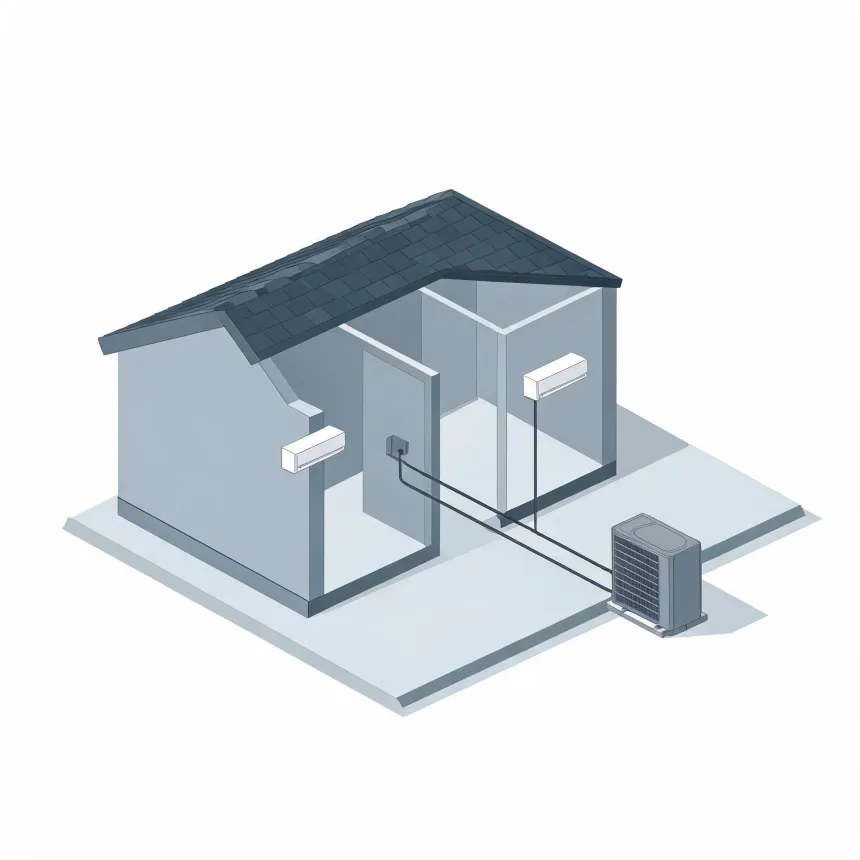






A gray cat sleeps curled up on a dark-made bed in a moody, minimalist bedroom with a wall-mounted air conditioning unit and warm accent lighting.

Mini Split Installation in Marinette, WI

Tell us about the job

Takes about a minute. No obligation.

New system or replacementMini-splitMarinette County, WI
Step 1 of 2

What ZIP code is the job in?

Just under half the homes in Marinette County heat with utility gas, and most of the rest run on bottled or LP gas or electricity. A mini split doesn't compete with that furnace, it works alongside it. A lot of homeowners here add one to a room the furnace doesn't reach well, or a finished space that was never ducted at all, like a converted garage or a porch closed in for year round use. It also covers cooling, which matters if the house has no central air to begin with. Where it goes and how many heads it needs comes down to the rooms you're trying to fix, not the fuel already running the rest of the house.

9 months
September through May, your system heats
2 months
July through August, it cools
10°F
the average winter night it heats against
78°F
the average summer afternoon it cools against
Isometric illustration of a cutaway gray house with a dark shingled roof, showing two wall-mounted indoor air handlers connected by line sets to an outdoor condenser unit on a pad outside.
Your system heats September through May and cools July through August.

NOAA nClimDiv, 1991–2020 normals

Half the homes in Marinette County were built in 1975 or earlier, half later.

A mini split sized for the room still works the same either way.

Two months of cooling is still worth planning for before July

Cooling runs July through August
Summer afternoons average 78°F
30 damaging wind events from 2015 to 2024
A mini split in Marinette won't work hardCooling runs about two months a year here, with afternoon highs averaging 78°F through June, July and August.

Marinette County falls under zone 6A, so any mini split installed here has to run efficiently enough for a long, cold winter, not just a couple months of summer heat. Since January 2023, the federal minimum for a split-system heat pump is 14.3 SEER2 for cooling and 7.5 HSPF2 for heating, and that includes ductless systems since the standard doesn't treat them as a separate class. A unit that clears those numbers also tends to qualify for the federal energy efficiency tax credit, which covers a share of both the equipment and the installation cost. Worth checking that whatever gets quoted actually meets the 2023 minimums rather than an older rating.

A right-sized mini split is all this county asks for

A standard mini split that clears the federal efficiency minimums will run fine on a Marinette winter and barely notice the summers here. There's no reason to size up or pay for more than that, whichever way the rest of the house is heated. Electricity in Wisconsin ran 17.18 cents per kilowatt-hour in 2024, which is one more reason the efficiency rating on the unit you pick is worth checking before it's installed, not after.

Find a contractor
A man in a cap, dark jacket and tan work pants carries a canvas tool bag up porch steps toward a green front door, with a potted shrub beside the entrance.
A beige split-system air conditioner outdoor condenser unit mounted on metal wall brackets atop a stucco wall.

A light load most of the year

Two months of real cooling work a year is not much to ask of a compressor. The rest of the year it sits idle or barely running. A unit sized right for the rooms it serves will coast through a Marinette summer without ever being pushed hard. That's the case for picking a reliable system over the highest rated one on the shelf. Once it clears the federal minimum, extra capacity does not buy much here. It just means the unit cycles on and off more on those afternoons instead of running steady.

The old equipment usually stays put

If a mini split is going into a room the furnace never reached, there's nothing to remove. The furnace keeps running the rest of the house the same way it always has. The mini split just covers the space that was always a problem.
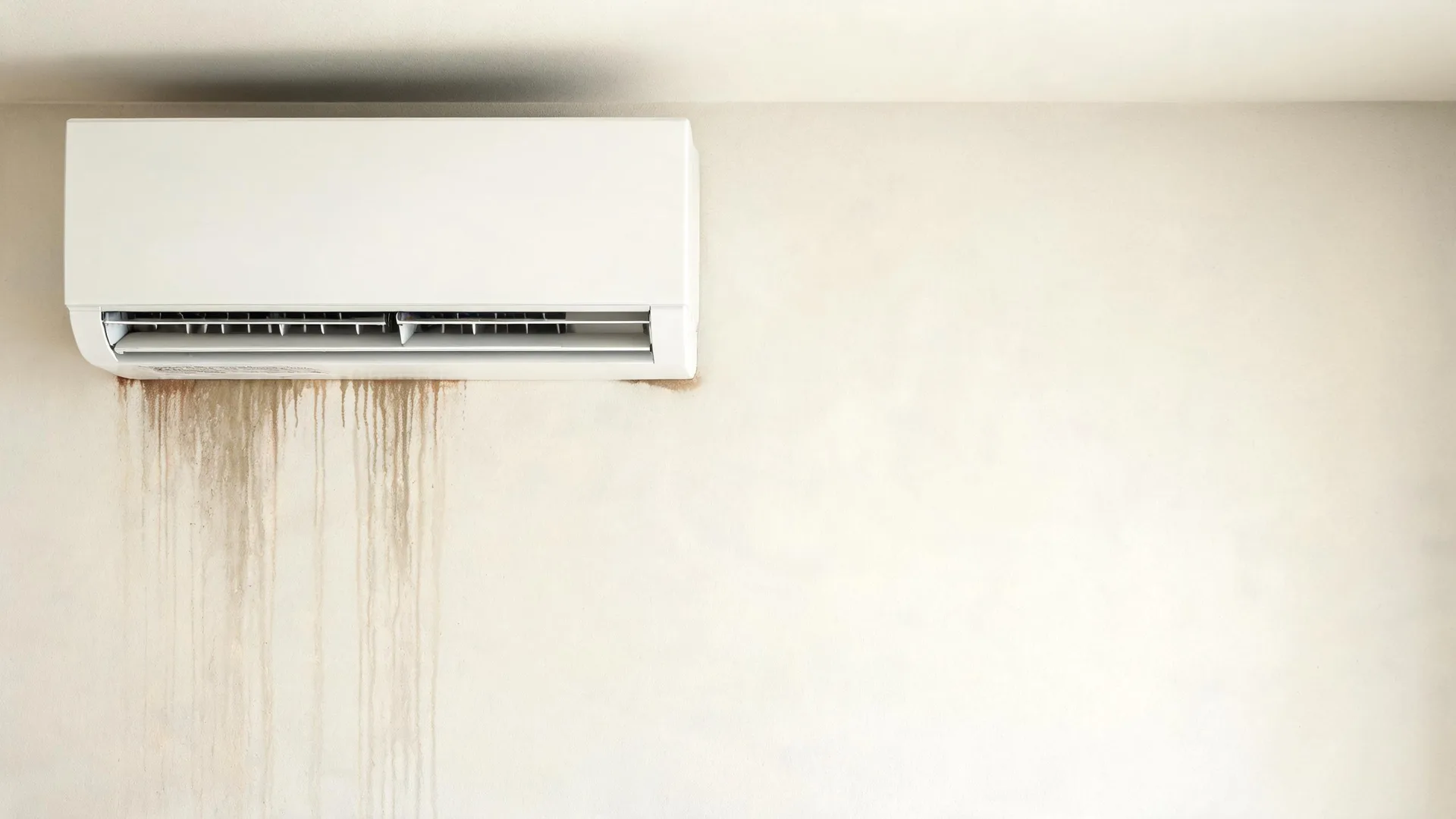
A swap is a different job

Replacing an old window unit or an existing ductless system means that equipment comes out first. The old line set, mounting plate and any wiring specific to that unit get pulled before the new one goes up, since reusing old refrigerant lines on new equipment isn't something most installers will do.

What drives the cost on a mini split job is mostly the stuff you can't see in the brochure. The line set run between the outdoor compressor and the indoor head matters more than people expect, since a longer run through walls or up a floor takes more refrigerant line, more mounting hardware, and more time to insulate and seal properly. Electrical work is another piece. A dedicated circuit back to the panel is standard for this kind of system, and if the panel is already full or the run is long, that adds labor before the unit itself ever gets mounted. The number of indoor heads matters too, since each one needs its own line set and its own spot on the wall or ceiling that actually makes sense for airflow. Where the outdoor unit can sit also plays in. Easy ground-level access costs less to work with than a tight side yard or a wall that needs a lift to reach.

Install day starts outside. The compressor needs a spot on a pad or bracket with clear airflow on all sides, so the crew settles that placement before anything else gets mounted. Inside, the indoor head goes up on the wall or ceiling, then a small hole gets drilled through to the outside for the line set, the power wire and the condensate drain to pass through together. The refrigerant lines get connected, checked for leaks, then the system gets vacuumed to pull out any air and moisture before refrigerant ever moves through it. Skipping that step is what causes a brand new unit to fail early, so it's not something a good installer rushes. Once the lines are sealed and tested, the electrical connection gets finished, the system gets powered on, and the crew checks that it's heating and cooling the way it should before calling the job done.