






Three illuminated two-story brick houses on a tree-lined residential street photographed at twilight, with warm window light and landscape uplighting visible against a deep blue evening sky.

Mini Split Installation in Manitowoc, WI

Tell us about the job

Takes about a minute. No obligation.

New system or replacementMini-splitManitowoc County, WI
Step 1 of 2

What ZIP code is the job in?

Gas heats 73.8% of homes in Manitowoc County, more than any other fuel. A mini split works differently. It runs on electricity, and it covers both heating and cooling from the same unit, so it's often going into a home that already has a gas furnace for the coldest months. That makes it an add on more often than a full replacement here, used to handle a room the furnace doesn't reach well, or to add cooling where there isn't any. Worth asking a contractor whether you're covering one room or sizing a system to lean on alongside what you already have.

9 months
September through May, your system heats
2 months
July through August, it cools
15°F
the average winter night it heats against
77°F
the average summer afternoon it cools against
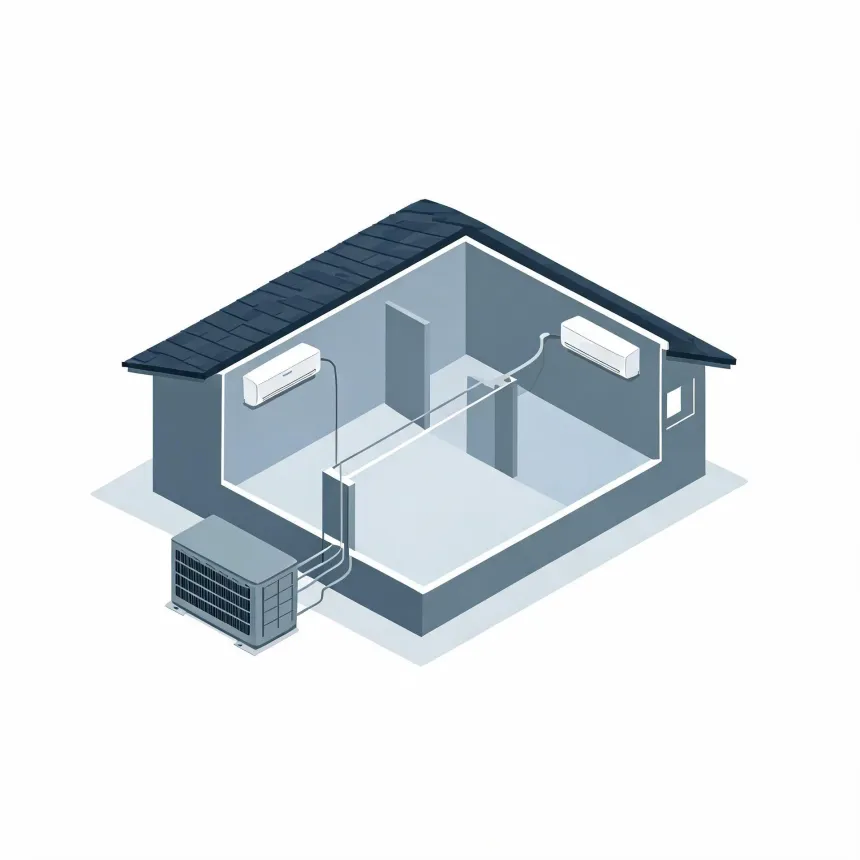
Isometric illustration of a cutaway house showing two wall-mounted mini-split indoor units connected by line sets to a single outdoor condenser beside the exterior wall.
Your system heats September through May and cools July through August.

NOAA nClimDiv, 1991–2020 normals

A mini split sized by the square footage on a listing sheet is a guess, not a measurement.

The right size comes from a load calculation that weighs the room's windows, walls, and layout, not just its floor space.

Two months of cooling means June is when to install, not July

Cooling runs July through August
Climate zone 6A
Power costs 17.18 cents a kWh statewide
Built before the load calculation existedHalf the homes here were built in 1964 or earlier.

Manitowoc County is in climate zone 6A, a cold, humid zone with winter running long here. Any mini split installed still has to meet the federal minimum for a split-system heat pump, 14.3 SEER2 for cooling and 7.5 HSPF2 for heating, since the standard doesn't treat ductless units as their own category. That's a floor, not a target, and it applies whether the unit covers one room or works alongside a furnace. A system that meets it may also qualify for the federal tax credit available on qualifying heat pump installations. Worth asking a contractor which models on their truck clear that bar and which exceed it.

A standard mini split fits this job

Nothing about Manitowoc calls for an oversized or high-end system. A unit sized to the room by a proper load calculation, built to the federal minimum or close to it, covers what's needed here. At 17.18 cents per kilowatthour, there's no local reason to pay more for capacity or efficiency this house won't use.

Find a contractor
A man in a cap, dark work shirt and tan pants carries a worn canvas tool bag up gray steps toward a green paneled front door of a shingled house, with a potted shrub beside the entry.
A beige split-system air conditioner outdoor condenser unit mounted on metal wall brackets atop a stucco wall.

Half these homes were built in 1964 or earlier

Half the homes in Manitowoc County were built in 1964 or earlier. A mini split going into a house that old is meeting walls, windows, and room layouts a newer build code never touched. That's what the load calculation is for. It weighs what the room actually loses heat through, not what the floor plan says on paper. An old window or an uninsulated wall won't show up in square footage, but it shows up in the calculation, and the unit gets sized against that instead.

How many rooms, not how many units

A single zone system covers one room or open area from one indoor head. A multi zone system runs several indoor heads off one outdoor unit, with a line set and a wall mount or cassette for each room. More zones means more refrigerant lines, more wall penetrations, and more labor, since each indoor head needs its own run back to the outdoor unit.
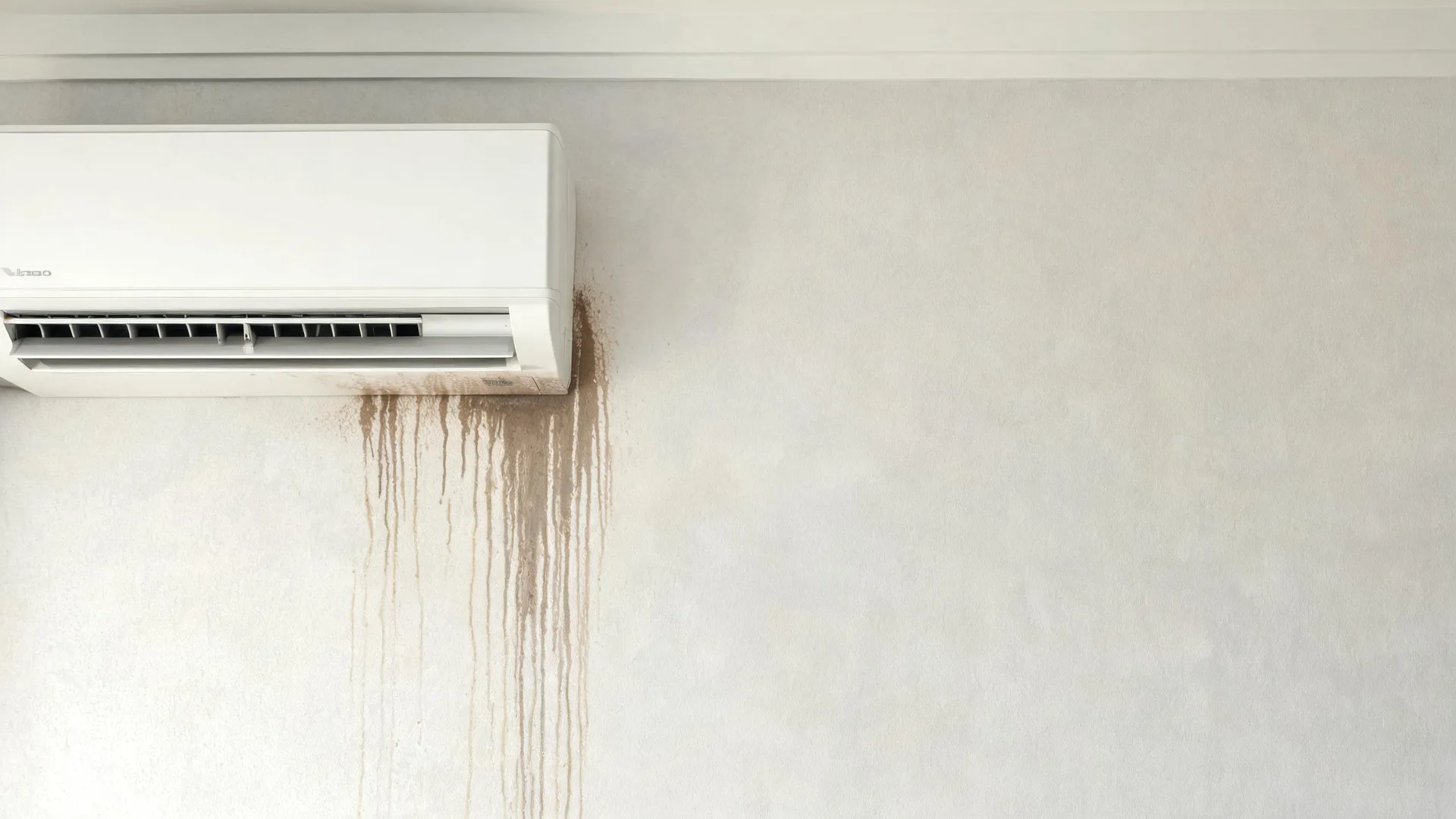
Where the outdoor unit can sit changes the job

The outdoor unit needs clearance on all sides for airflow, a spot that won't trap snow or ice, and a line set run to each indoor head that stays within the manufacturer's allowed length and height difference. A straightforward run through an exterior wall near the outdoor unit is simple work. A longer run, a run through framing or finished space, or a big height difference between indoor and outdoor units all add time and material.

If this mini split is going in alongside a furnace that's staying put, the old equipment doesn't need to go anywhere. It keeps doing what it's always done for the coldest months, and the mini split takes over the room or season it was sized for. If it's a true replacement, taking out a furnace means capping the gas line properly and dealing with the old ductwork, which either gets sealed off or left in place depending on what else in the house still uses it. An old window unit or electric baseboard being replaced is simpler. It unplugs or gets disconnected, and there's no venting or gas line to worry about. Whoever does the installation should be able to tell you before the work starts what happens to what's already there, not after.

Manitowoc County sees its share of rough weather, 52 damaging wind events and 25 winter storms over the past decade. None of that calls for a bigger or pricier mini split. What it calls for is a mount and wiring job that matches the manufacturer's spec, so the outdoor unit holds up through wind and ice the way it's built to. Power loss is the more likely outcome of a bad storm than any damage to the unit itself, and a mini split starts back up on its own once power is restored. A standard system, properly installed, is built to take what the weather here does.