





A dark modern bedroom with grey bedding, a wall-mounted air conditioning unit, and a cat resting on the bed.

Mini Split Installation in Madison, WI

Tell us about the job

Takes about a minute. No obligation.

New system or replacementMini-splitDane County, WI
Step 1 of 2

What ZIP code is the job in?

Dane County saw 307 severe weather events between 2015 and 2024. That includes 140 hail events, 128 instances of damaging wind, and 11 tornadoes. An outdoor condenser sits outside through all of it, exposed to hail and wind-blown debris in a way a furnace or water heater tucked inside never is. Power loss is the other half of it. Close to a fifth of Wisconsin households went at least a full day without power in 2024. A mini-split won't run without electricity, and neither will the gas furnace most homes here rely on, since the blower and controls still need power to light and push air.

8 months
October through May, your system heats
3 months
June through August, it cools
14°F
the average winter night it heats against
81°F
the average summer afternoon it cools against
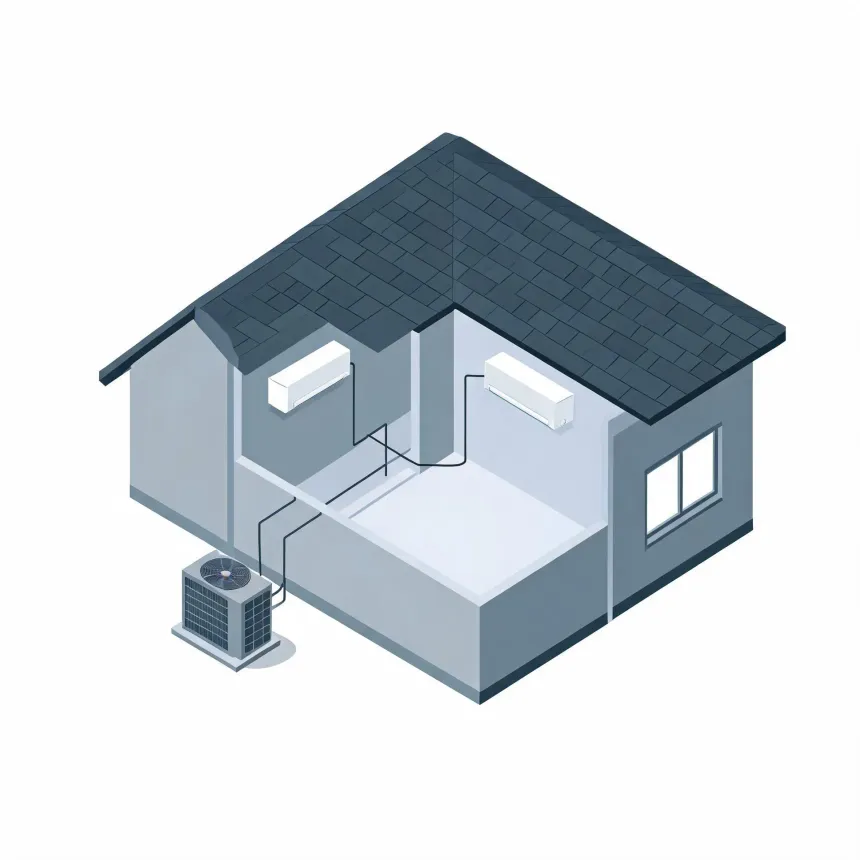
Isometric illustration of a cutaway gray house with a dark shingled roof, showing two wall-mounted indoor air conditioning units connected by lines to an outdoor condenser unit on the ground outside.
Your system heats October through May and cools June through August.

NOAA nClimDiv, 1991–2020 normals

A mini-split has an outdoor unit that stays outside year round, so the cabinet, coil, and base pad have to hold up on their own.

Ask what guards the coil and how the unit drains and defrosts, since that's what decides whether it keeps running through weather that pushes it hard.

Gas heats most homes here, so a mini-split usually joins the furnace instead of replacing it

68.4% of homes heat with gas
Climate zone 5A
Power here costs 19.09 cents per kilowatt-hour
Get it in before JuneCooling runs June through August here, and May is the month to have it done.

Dane County falls in climate zone 5A, a cool zone where heating carries more of the load than cooling. Any mini-split installed here, like any other split-system heat pump, has to meet the federal minimum once it's installed new: at least 14.3 Btu of cooling for every watt-hour it draws over the summer, and at least 7.5 Btu of heating for every watt-hour over the winter. That heating number matters more here than the cooling one, since the zone is built around winter load. The standard applies to the system as a whole, not to some separate ductless category, so a unit sold as a mini-split still has to clear the same bar as any other split-system heat pump. A system that meets it new may also qualify for the federal energy efficiency tax credit, worth looking into before the purchase is final.

Plan the install around the weather it has to survive

Where the outdoor unit goes and how it's mounted decides how it comes through the next hailstorm or windstorm. That's worth settling before install, not after. And since the unit needs power to run, worth asking too what keeps heat or hot water going in your home when the power drops for a day.

Find a contractor
A man in a cap, brown shirt and tan work pants, seen from behind, carries a canvas tool bag up steps toward a green front door of a gray clapboard house with a potted shrub beside it.
A white outdoor air conditioner condenser unit mounted on metal wall brackets against gray horizontal siding, with a blue sky and white clouds behind it.

What Changes the Price of Putting One In

What a mini-split costs to put in comes down to how much work the installer has to do beyond hanging the two boxes. Running the line set between the indoor and outdoor units is a big piece of that. A short, straight run through one wall costs less labor than a run that has to snake up through a chase, around framing, or across a long distance to reach where the outdoor unit sits. Every extra foot of refrigerant line and every bend adds time and material. The electrical work matters too. A mini-split needs its own dedicated circuit, and whether the panel has room for it changes the job. A panel with an open slot is a quick add. A panel that's full means a subpanel or a service upgrade before the install can even start. Where the outdoor unit lands affects price as well. It needs a pad or mounting brackets, clearance on all sides, and a path for its condensate drain, and a spot that needs a custom bracket or extra drainage work costs more than flat ground near the wall. Multi-zone systems cost more than single-zone for a plain reason: each indoor head needs its own line set and its own run back to the outdoor unit, so adding zones multiplies the labor, not just the equipment. And any work the walls or ceiling need once the lines are run, patching drywall, painting over it, closing up a chase, is separate from the mechanical install itself.

The rating assumes a working system

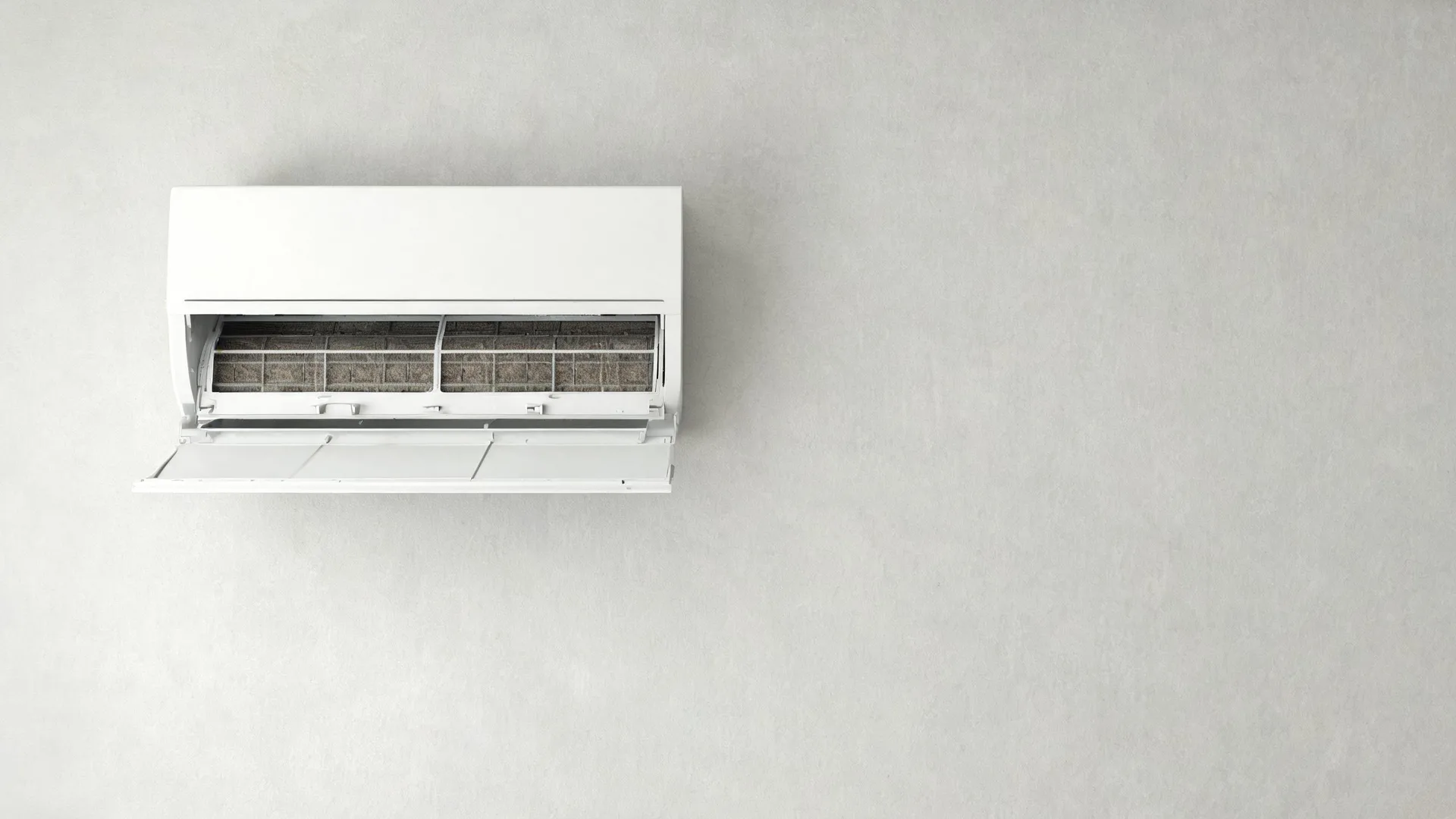
That efficiency number on the label is measured on a unit with clean coils, correct refrigerant charge, and proper airflow across the indoor head. A dirty filter or a coil caked with dust pulls real performance well below what the label promised. The rating is a ceiling, not a guarantee, and only upkeep keeps the system anywhere near it.
Two numbers, not one

A heat pump carries separate ratings for cooling and heating, since it's doing opposite jobs in different seasons. Look at both before buying, not just whichever one the salesperson leads with. A unit with a strong cooling number can still be a weak heater, and the reverse is true too.

Sizing a mini-split isn't about matching the biggest unit to the room. Too big and it cools the air fast, shuts off, and never runs long enough to pull moisture out, so the room feels cold and damp at once. Too small and it runs constantly, straining to keep up on the hottest or coldest days without ever reaching the set temperature. The right size comes from a room by room load calculation, not a rule of thumb based on square footage. That calculation looks at the walls and windows, how much sun the room gets, the ceiling height, and what's on the other side of each wall. Insulation and air leaks matter as much as floor space, since a small well sealed room can need less capacity than a larger drafty one. Getting this right once, before install, is what decides whether the system runs the way it's supposed to for years.

Installation starts with where the lines run and ends with testing the system under load. The installer mounts the indoor head first, usually high on a wall, then drills a single hole through to the outside for the line set, the conduit that carries refrigerant line, drain line, and power wire together in one bundle. That hole gets sealed against weather once the lines are through it. Outside, the condenser goes on a pad or wall brackets, and the line set connects to it before the whole system gets evacuated with a vacuum pump to pull out moisture and air. Only after that vacuum holds does the refrigerant get released from the condenser to charge the system. The installer then runs it in both cooling and heating, checks the line set connections for leaks, and confirms the indoor head is reading temperature correctly before calling the job done.