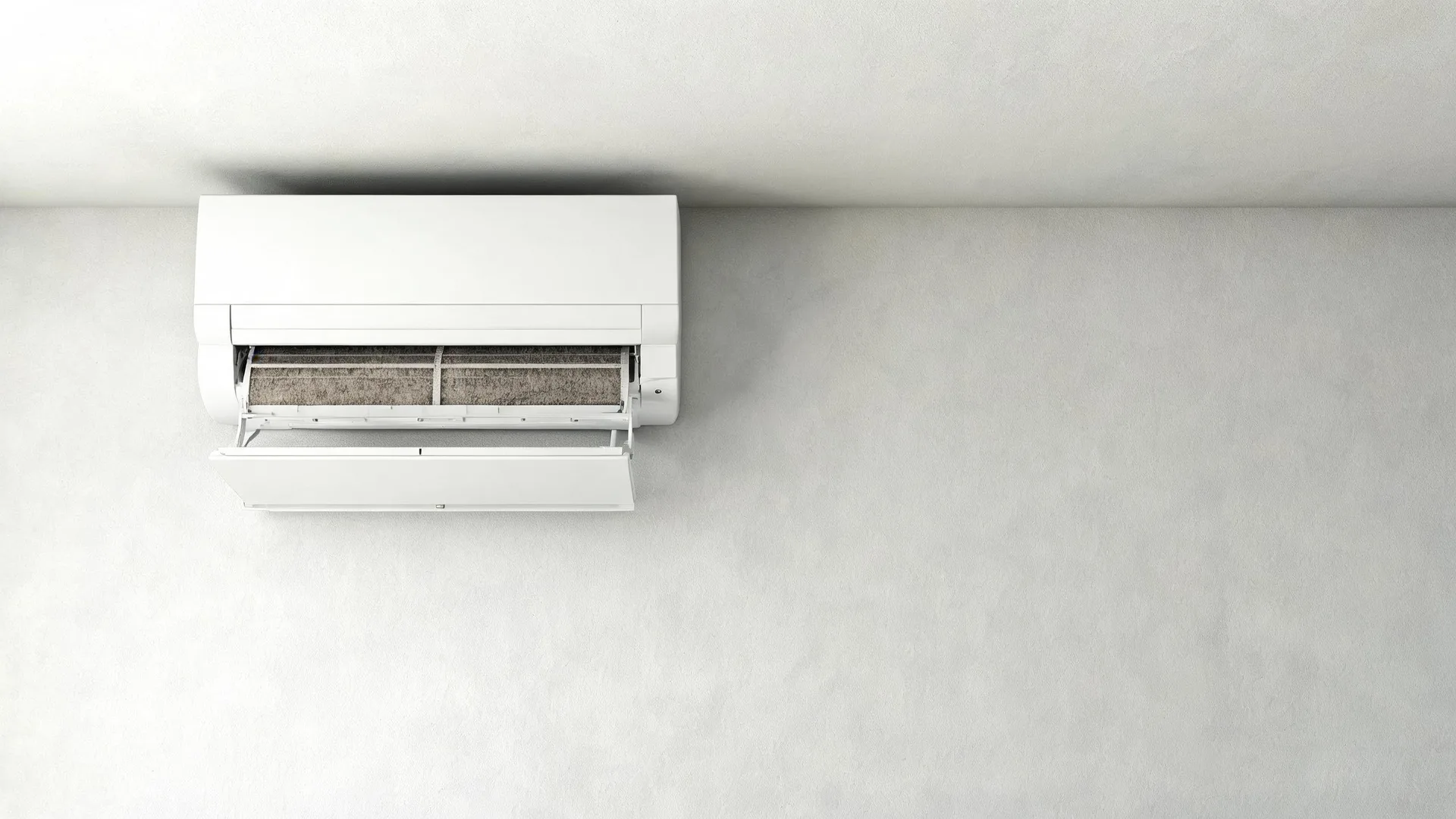
A white wall-mounted split air conditioner on a blue-grey wall, with a moonlit night sky visible through a nearby window.

Mini Split Installation in La Crosse, WI

Tell us about the job

Takes about a minute. No obligation.

New system or replacementMini-splitLa Crosse County, WI
Step 1 of 2

What ZIP code is the job in?

This county sees real storms

La Crosse County logged 195 severe weather events between 2015 and 2024. That includes 100 damaging wind events, 66 hail events, and 2 tornadoes. Winter added 21 more storms with heavy snow and ice. An outdoor condenser sits outside through all of it, taking wind and hail straight on.

Power doesn't always hold

18% of Wisconsin households went at least 24 hours without power in 2024. A mini-split needs power to run, same as a furnace blower or a water heater's controls. A storm that takes down the lines doesn't care what the thermostat is set to.

8 months
October through May, your system heats
3 months
June through August, it cools
12°F
the average winter night it heats against
80°F
the average summer afternoon it cools against
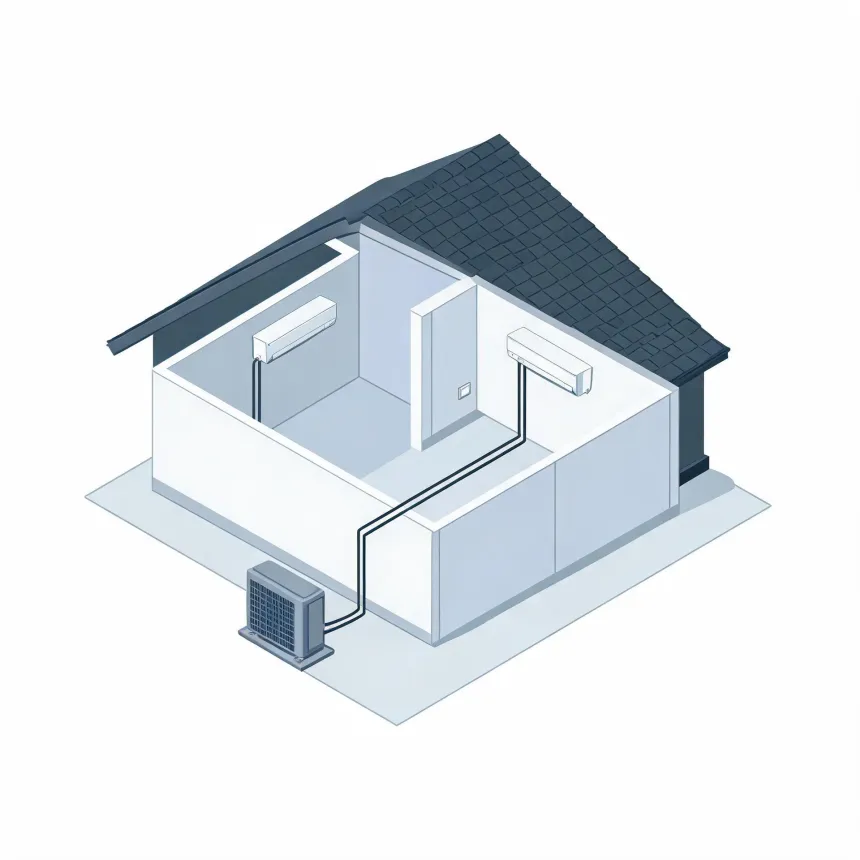
Isometric cutaway illustration of a small house with a dark shingled roof, showing two wall-mounted indoor air conditioning units in separate rooms connected by lines to an outdoor condenser unit on the ground outside.
Your system heats October through May and cools June through August.

NOAA nClimDiv, 1991–2020 normals

Electricity in La Crosse County runs 15.45 cents per kilowatt-hour, below what most of the country pays.

A mini-split with the highest efficiency rating on the shelf will take longer to earn that cost back here, so picking one for reliability and fit makes more sense than chasing the efficiency number.

Get it in before June, not during the first hot week

Cooling runs June through August
Summer afternoons average 80°F
100 damaging wind events from 2015 to 2024
Gas Heats This County, But That Doesn't Settle CoolingUtility gas heats 60.9% of homes here. A mini-split handles summer and backs up the furnace when the power or the gas doesn't.

La Crosse County falls under zone 5A, a cool, humid climate where the heating load matters more than the cooling load. Any mini-split installed here has to meet the federal minimum for a split-system heat pump: at least 14.3 Btu of heat moved per watt-hour in summer, at least 7.5 in winter. That floor applies whether the system is ducted or ductless. A unit priced below that standard shouldn't be on the table. A federal tax credit is available for qualifying equipment, which is worth asking about when comparing models.

Plan the installation around the outages, not just the heat

Where the outdoor unit goes and how it's mounted matters here. So does having a plan for heat and hot water when the power drops. Settle both while the system is being installed.

Find a contractor
A white mini-split air conditioner outdoor condenser unit mounted on metal brackets against a beige stucco exterior wall, with a blue sky and scattered clouds in the background.

The old unit comes out, it doesn't get folded in

Most mini-split installs replace something. If a furnace is handling the heat already, the old cooling setup is usually a window unit or a central AC that's on its way out. Whatever gets pulled stays out of the new system entirely. A mini-split doesn't tie into old ductwork or share a line set with what came before it. The indoor head mounts fresh, the outdoor unit sits on its own pad or bracket, and new line set runs between them. Old refrigerant from a removed central AC gets recovered, not vented. If a window unit is what's coming out, that's it for that room's cooling until the new head goes up. The breaker that fed the old equipment either gets reused or a new circuit gets run, depending on what the new system draws.

The number of zones sets the price floor

A single indoor head tied to one outdoor condenser costs less than a multi-zone setup feeding several rooms. Each added zone means another line set run, another indoor head mounted, and an outdoor unit sized to carry the combined load. Pricing a mini-split starts with deciding how many rooms actually need their own head, not just how many rooms could use one.

Where the line set has to travel changes the labor

The refrigerant line connecting the indoor head to the outdoor condenser has to run through a wall, and the shorter and more direct that path, the less work it takes. A straight shot through one exterior wall is simple. A run that has to go up through an attic, across a long interior wall, or down multiple floors takes more line set, more mounting, and more time to insulate and seal properly. The distance and the path matter more than the brand of equipment.

Picking a mini-split for this county comes down to reliability more than the efficiency sticker. With power this cheap, a unit rated above the federal minimum will take years longer to earn back what it costs up front. A model that holds up through wind and hail and starts back up clean after an outage is worth more here than a fraction of a point on the efficiency rating. Ask the installer which models they've seen hold up locally, not just which one scores highest on paper. Fit matters too. A system sized right for the rooms it serves will run steadier through a hard winter than one chosen for its rating alone.

Installation starts with a survey, not a drill. The tech walks the space where the indoor head will mount and the spot outside where the condenser will sit, and checks the wall between them for the line set path. Once that's settled, the indoor head gets mounted to a bracket on the wall, usually high up, away from direct sun or a doorway draft that would throw off the thermostat reading. A hole gets drilled through the wall for the line set, the refrigerant lines, power cable, and condensate drain bundled together and run outside to the condenser. The condenser sits on a pad or a wall bracket, leveled so condensation drains the way it should and the compressor doesn't run tilted. With everything connected, the line set gets pressure tested for leaks before any refrigerant moves through it. Then the system gets vacuumed down to pull out moisture and air, charged with refrigerant, and run through its paces: heating, cooling, and a check that the head responds to the thermostat or remote. A clean install leaves one hole in the wall, sealed and insulated around the line set, and a condenser sitting level outside.